

 Önizle
 Gönder
 Paylaş
 Detaylar
 Rehber

 Dosyayı İndir
 Benzerleri
 X-Işını
 Slayt Gösterisi
 İstatistikler
Bacchanal with Silenus
 Oil On Canvas
- WallArt
- Baroque Painting
 1600
1600- Renaissance
 164.0 x 221.0 cm
 Museo de Arte de Ponce
 Devamını Oku
Giclée / Sanat Baskısı
Hızlı üretim ve esnek bitiş seçenekleriyle müze kalitesinde giclée veya kanvas baskı. ( El Yapımı Tablo Satın Al Dijital Görsel Satışına Geç)




P118B ₺10

P118H ₺10

P118W ₺10

P438Z ₺10

P508JH ₺12

P508YH ₺12

P805H ₺10

P805Z ₺10

P919BZ ₺10

P919G ₺10

P919XJ ₺10

P959ZH ₺10

P968JZ ₺12

W106C ₺8

W218G ₺10

W218JH ₺8

W218Y ₺10

W307PJ ₺10

W316G ₺10

W316PJ ₺8

W316Y ₺10

W398PJ ₺8

W4111J ₺10

W500HY ₺15

W500JH ₺15

W692G ₺12

W849H ₺8

W940BG ₺15

W953PJ ₺8




Eserin orijinal oranlarıyla uyumlu, önceden belirlenmiş boyutlarımız arasından seçim yapın.

Çerçevenize veya duvarınıza uygun olması için ihtiyacınız olan genişlik ve yüksekliği yazın. Bir baskı yalnızca kesilebilir, görselden daha büyük hale getirilemez; bu nedenle farklı bir formdaki boyut seçimi, görselin bir kısmının kaybına neden olur. Herhangi bir baskı yapmadan önce onaylamanız için size bir dijital taslak gönderiyoruz. Bu sayfada gösterilen resim gerçek kesimi göstermez — bunu yalnızca taslak gösterir.
Dünya Çapında Teslimat (); standart 4/5 hafta yerine 2 haftada. (23 Ekim)

Dünya Çapında Ücretsiz Ekspres Kargo

Yüksek Kaliteli Keten Tuval

Tam Nakliye Sigortası

Gümrük Vergisi İadesi Garantisi

Gerçek Renk Uyumu Garantisi

100 Günlük İade Koşulları (Sadece Üretim Hatalı Ürünler İçin)

%100 Para İade Garantisi

Toplu Alım Avantajı
 Cam seçeneği yalnızca 110 cm altındaki boyutlar için mevcuttur.

Bacchanal with Silenus
Giclée / Sanat Baskısı
Baskı Boyutu
-


Toplam Fiyat
₺ 3912
A Dutch Bacchanal: Jan Gerritsz van Bronchorst’s *Bacchanal with Silenus*
Jan Gerritsz van Bronchorst's 1600 painting, *Bacchanal with Silenus*, is a captivating window into the opulent tastes and burgeoning artistic spirit of 17th-century Netherlands. This large-scale oil on canvas depicts a lavish scene – a family transformed into figures from the mythology of Bacchus, the god of wine – offering a potent blend of religious allegory, social commentary, and masterful technical execution. The painting’s immediate impact lies in its vibrant energy and the sheer indulgence of its subject matter; it's a celebration of wealth, pleasure, and the intoxicating power of the senses.
The composition is dominated by a group of twelve figures gathered around the patriarch, likely a successful wine merchant, who embodies Silenus, Bacchus’s perpetually drunken companion. His posture – leaning heavily on his supporter, raising a cup for more wine – immediately establishes the painting's central theme: unrestrained indulgence and the pursuit of sensory delight. The women surrounding him are equally striking, rendered with a sensual realism that reflects the artistic trends of the period while simultaneously hinting at the potential anxieties surrounding female sexuality within a conservative society.
Style and Technique: Bridging Mannerism and Baroque
Bronchorst’s style exemplifies a fascinating transitional moment in art history. Born in Utrecht in 1603, he emerged during a time of intense stylistic debate between the lingering influence of Mannerism and the ascendant naturalism of the Baroque. *Bacchanal with Silenus* showcases elements of both. The figures possess a certain elongated grace characteristic of Mannerist painting – particularly evident in the poses and drapery – yet Bronchorst skillfully employs light and shadow to create a palpable sense of volume and movement, anticipating the dramatic effects favored by Baroque artists.
The artist’s technique is characterized by meticulous detail and a rich palette. The use of impasto—thickly applied paint—adds texture and depth to the scene, particularly noticeable in the tambourine held by one of the women, suggesting a lively musical accompaniment to the revelry. Bronchorst's masterful handling of color – deep reds, golds, and blues – contributes significantly to the painting’s overall dramatic impact. The canvas itself, measuring 164 x 221 cm, allows for a grand scale that further enhances the immersive quality of the scene.
Symbolism and Context: Wealth, Status, and Religious Allegory
The choice of depicting a mythological scene within a domestic setting was not uncommon in Dutch portraiture during this era. It served as a means of demonstrating wealth, status, and familial piety – often subtly interwoven with religious symbolism. The inclusion of Silenus, a figure associated with intoxication and excess, could be interpreted as a veiled critique of societal vices or perhaps a celebration of the joys of earthly life.
- Bacchus: Represents abundance, fertility, and the intoxicating pleasures of wine.
- Silenus: Symbolizes folly, drunkenness, and the companion to Bacchus.
- Togas & Costumes: Denote status and adherence to classical ideals.
Furthermore, the painting reflects the broader cultural context of the Dutch Republic – a burgeoning commercial power with a thriving wine trade and a growing appreciation for artistic patronage. Bronchorst’s work stands as a testament to this dynamic period, blending religious allegory with secular indulgence within a meticulously crafted visual narrative.
Emotional Impact and Reproduction
*Bacchanal with Silenus* evokes a powerful sense of immediacy and excitement. The painting's vibrant colors, dynamic composition, and the figures’ expressions of unrestrained joy create an immersive experience for the viewer. OriginalUniqueArt offers meticulously crafted hand-painted reproductions of this remarkable artwork, allowing you to bring its captivating energy into your home or office.
Our high-quality reproductions utilize archival materials and skilled artisans to faithfully recreate Bronchorst’s original masterpiece, ensuring that you receive a timeless work of art that will be treasured for generations to come. The 164 x 221 cm size ensures a substantial presence within any interior space, making it a truly impactful addition to your collection.
Soru ve Cevaplar
"Bacchanal with Silenus" adlı eser, Jan Gerritsz Van Bronchorst kariyerinin hangi dönemine ait?
Jan Gerritsz Van Bronchorst'in kariyeri içerisinde "Bacchanal with Silenus", Late Baroque dönemine ait bir eserdir. Bu evre, eserin sanatçının diğer çalışmalarıyla karşılaştırılmasına yardımcı olur.
Jan Gerritsz Van Bronchorst imzalı "Bacchanal with Silenus" eserinde hangi konular yer alıyor?
Jan Gerritsz Van Bronchorst imzalı "Bacchanal with Silenus" şunları betimler: bacchanal, silenus, wine merchant, mythological scene, dutch painting, seventeenth century, festive gathering.
"Bacchanal with Silenus" hangi duyguyla ilişkilendiriliyor?
Jan Gerritsz Van Bronchorst imzalı "Bacchanal with Silenus" için kaydedilen duygusal ton Nostalgic şeklindedir. Bu, eserin ifade ettiği hissi özetler.
Sanatçı Biyografisi
Santi di Tito: A Counterpoint to Mannerism
Santi di Tito (1603 – 1661) emerged from the vibrant, tumultuous artistic landscape of late Renaissance and early Baroque Rome, a period defined by intense stylistic debate. His life and career represent a fascinating case study in navigating evolving artistic conventions, ultimately forging a distinctive style that stands as a crucial bridge between Mannerism and the burgeoning naturalism of the Baroque. Born in Sansepolcro, a small town in Umbria, Santi’s early training remains somewhat shrouded in mystery, with accounts suggesting influences from figures like Bronzino and Baccio Bandinelli, though definitive proof is elusive. This lack of clear lineage contributed to his unique artistic trajectory – one that deliberately distanced itself from the established norms of the time.Early Career and Roman Apprenticeship
Santi’s journey to Rome in 1558 marked a pivotal moment, placing him within the heart of the city's artistic ferment. He spent nearly a decade working alongside Giovanni de’ Vecchi and Niccolò Circignani on monumental frescoes within the Palazzo Salviati and the Sala Grande of the Belvedere at the Vatican – projects that showcased the grandeur and complexity of Mannerist painting. These early commissions exposed Santi to the prevailing stylistic trends, characterized by elongated figures, complex spatial arrangements, and a deliberate emphasis on elegance and refinement. However, rather than simply absorbing these influences, Santi began to subtly reshape them, introducing a greater sense of naturalism and a more restrained palette. The frescoes in the Belvedere, particularly *Homage of the People*, reveal his growing interest in classical forms and a desire for clarity and balance – qualities that would become hallmarks of his later work.The Studiolo of Francesco I: A Defining Period
Santi’s most significant contribution to the Roman art scene occurred during his tenure at the Palazzo Vecchio, where he was commissioned to decorate the *Studiolo* (a private study) of Francesco I de' Medici, Grand Duke of Tuscany. This project proved transformative, solidifying Santi’s distinctive style and establishing him as a leading figure in the Counter-Mannerist movement. The two paintings created for this space – *Sisters of Phaeton* and *Hercules and Iole* – exemplify his innovative approach. Unlike the crowded, theatrical compositions typical of Mannerism, Santi's works are characterized by a remarkable clarity of form, a carefully considered use of light and shadow, and a focus on idealized beauty. He deliberately avoided the excessive ornamentation and artificiality that had become associated with Mannerist painting, opting instead for a more restrained and harmonious aesthetic. This shift was consciously intended as a reaction against the prevailing *maniera* of artists like Bronzino and Federico Zuccari, whom he viewed as overly elaborate and lacking in genuine naturalism.A Reformist Style: Embracing Classical Ideals
Santi’s artistic philosophy can be understood within the broader context of the Counter-Reformation. The Catholic Church was actively seeking to reform its image and promote a more accessible form of religious art, one that emphasized clarity, piety, and emotional engagement. Santi's work reflects this desire for renewal, moving away from the complex intellectualism of Mannerism towards a more direct and emotionally resonant style. He drew inspiration from classical antiquity, particularly the works of Raphael, seeking to emulate his sense of grace, harmony, and balance. This commitment to classical ideals is evident in his careful attention to proportion, his use of idealized figures, and his avoidance of excessive detail. As S. J. Freedberg noted, Santi’s style was “Raphaelesque,” a deliberate attempt to recapture the perceived purity and elegance of Raphael's art.Later Works and Legacy
Following his return to Florence in 1564, Santi continued to produce significant works throughout his career, including altarpieces for Santa Croce and frescoes for Volterra Cathedral. His *Resurrection of Lazarus* and *Supper at Emmaus*, particularly the latter, demonstrate his ability to convey profound emotion through subtle gestures and carefully rendered details. Despite his artistic achievements, Santi faced considerable financial difficulties, ultimately declaring bankruptcy in 1662. He died in poverty in 1661, largely unrecognized during his lifetime. However, his work gradually gained recognition in the 19th century, and today he is considered one of the most important figures in the Counter-Mannerist movement – a pivotal artist who helped to shape the course of European painting. His legacy lies not only in his individual masterpieces but also in his courageous challenge to established artistic conventions and his unwavering commitment to classical ideals.
Jan Gerritsz Van Bronchorst
1603 - 1661 , Netherlands
Kısa Bilgiler
- Full Name: Aert van der Neer
- Nationality: Dutch
- Date Of Birth: 1603
- Date Of Death: 1661
- Place Of Birth: Utrecht, Netherlands
- Notable Artworks:
- Moonlit Landscape
- Winter in Holland
- Artistic Movement Or Style: Landscape painting
- Artists Who Influenced This Artist: ['Rafel and Jochem Camphuysen']
- Artists Or Movements Influenced By This Artist:
- Terborch
- Metsu
İlgili Yazılar

Dutch Baroque Masters: 10 Paintings That Shaped an Era | OriginalUniqueArt
Journey through the Golden Age with our guide to the Top 10 Dutch Baroque masterpieces! Explore iconic paintings by Rembrandt, Vermeer & Frans Hals. Find museum-quality art reproductions and elevate your home decor at OriginalUniqueArt.com.
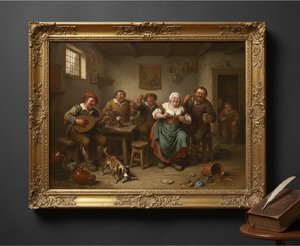
Adriaen van Ostade: A Master of Dutch Genre Painting & Social Commentary
Explore the life & work of Adriaen van Ostade, a leading Dutch Golden Age painter. Discover his realistic genre scenes, social commentary, and lasting influence on art history. Learn more at OriginalUniqueArt.

Rembrandt'ın En Ünlü 25 Eseri: Sanat Tarihine Işık Tutan Başyapıtlar
Rembrandt'ın en ünlü 25 eserini keşfedin! Hollanda Altın Çağı'nın bu Barok dehasının ışık ve gölge oyunlarıyla dolu portreleri, tarihi resimleri sizi büyüleyecek. Sanat baskıları ve ev dekorasyonu için OriginalUniqueArt.com'da Rembrandt koleksiyonunu inceleyin.
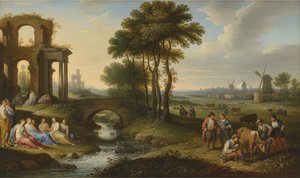
Cornelis van Poelenburch: Bridging Mannerism & the Dutch Baroque Landscape
Discover Cornelis van Poelenburch, a pivotal Dutch Baroque landscape painter bridging Mannerism & Italianate styles. Explore his life, key works, and lasting influence on 17th-century art with OriginalUniqueArt.

Golden Age Reflections: Dutch Baroque Painting & Cultural Innovation
Explore the Dutch Golden Age of painting! Discover key artists like Vermeer & ter Borch, their innovative techniques, and the rich cultural context behind these Baroque masterpieces. Learn about collecting & appreciating this iconic art period.