

 Önizleme yap
 Paylaş
 Paylaş
 Detayları Gör

 İndir
İndir
 Benzerlerini gör
 X-Işını
 Slayt Gösterisi
 İstatistikler
Tribulations of Saint Anthony


 Tümünü Gör
El Yapımı Yağlı Boya Reproduksiyon
Sanatçılarımız tarafından sipariş üzerine hazırlanan; istediğiniz boyut ve çerçevede, tuval üzerine el boyaması yağlı boya. ( Baskı Moduna Geç Dijital Görsele Geç)




P118B $10

P118H $10

P118W $10

P438Z $10

P508JH $12

P508YH $12

P805H $10

P805Z $10

P919BZ $10

P919G $10

P919XJ $10

P959ZH $10

P968JZ $12

W106C $8

W218G $10

W218JH $8

W218Y $10

W307PJ $10

W316G $10

W316PJ $8

W316Y $10

W398PJ $8

W4111J $10

W500HY $15

W500JH $15

W692G $12

W849H $8

W940BG $15

W953PJ $8




Eserin orijinal oranlarıyla uyumlu, önceden belirlenmiş boyutlarımız arasından seçim yapın.

Belirli bir çerçeveye veya alana uyması için kendi boyutlarınızı girebilirsiniz. Seçtiğiniz boyut orijinal görüntünün oranlarıyla eşleşmiyorsa, sanat eserini kırparak veya ek el boyaması öğelerle resmi uzatarak ayarlayacağız. Üretim başlamadan önce onayınız için dijital bir taslak gönderilecektir.
Lütfen ekrandaki önizlemenin gerçek kırpmayı veya uzatmayı yansıtmadığını unutmayın. Nihai kompozisyonu yalnızca hazırlanan taslak doğru şekilde gösterecektir.
Özel boyutlar mevcut olsa da, orijinal oranları korumak adına önceden tanımlanmış listeden bir boyut seçmenizi öneririz.
Siparişten sonra, OriginalUniqueArt.com ekibi talimatlar için müşteriye e-posta gönderecek ve bir taslak önizleme sunacaktır
Dünya Çapında Teslimat (); standart 5 hafta yerine 3/4 haftada. (13 Eylül). Kaliteden ödün verilmez.

Dünya Çapında Ücretsiz Ekspres Kargo

Yüksek Kaliteli Keten Tuval

Tam Kapsamlı Nakliye Sigortası

Gümrük Vergisi İade Garantisi

Gerçek Renk Uyumu Garantisi

100 Günlük İade Politikası (Sadece Kusurlu Ürünler İçin)

%100 Para İade Garantisi

Toplu Alım İndirimi
 Cam seçeneği yalnızca 110 cm altındaki boyutlar için mevcuttur.

Tribulations of Saint Anthony
Reproduksiyon Tekniği
Reproduksiyon Boyutu
-


Toplam Tutar
$ 300
A Portrait of Existential Dread: Exploring James Ensor’s “Tribulations of Saint Anthony”
James Ensor's "Tribulations of Saint Anthony," painted in 1887, stands as a cornerstone of Symbolist art and a haunting meditation on human suffering. More than just a depiction of biblical imagery—Saint Anthony battling demons—the painting delves into profound psychological themes that resonate powerfully with viewers even today. Created during Ensor’s formative years at the Académie Royale des Beaux-Arts in Brussels, it represents a decisive break from academic conventions and establishes him as a pioneer of Expressionism.- Subject Matter & Narrative: The artwork portrays Saint Anthony, a hermit revered for his piety and ascetic devotion, confronting demonic forces—a visual representation of spiritual struggle. However, Ensor eschews traditional heroic narratives; instead, he presents a scene of palpable unease and despair. The figures are not idealized saints but ordinary men grappling with inner turmoil, reflecting the anxieties prevalent in late 19th-century Europe.
- Style & Technique: Ensor’s distinctive style is characterized by bold lines, jarring juxtapositions of color, and a deliberately unsettling perspective. He employs thick impasto—a technique where paint is applied thickly onto the canvas—creating textured surfaces that heighten the emotional impact of the scene. The artist utilizes a muted palette dominated by browns and greys, punctuated by splashes of crimson and yellow, mirroring the psychological intensity he seeks to convey.
Historical Context: Symbolism’s Grip on Artistic Vision
“Tribulations of Saint Anthony” emerged from the burgeoning Symbolist movement, which reacted against realism's obsession with objective representation. Symbolists believed that art should explore inner states of mind and emotions rather than merely mirroring external reality. Influenced by thinkers like Nietzsche and Kierkegaard, they sought to express spiritual truths through evocative imagery and suggestive symbolism—a deliberate departure from the dominant artistic trends of the time. Ensor’s work aligns perfectly with this intellectual climate, reflecting a growing disillusionment with societal values and an exploration of existential anxieties.- Symbolism & Imagery: The painting is laden with symbolic elements that contribute to its unsettling atmosphere. The desolate lake serves as a metaphor for the subconscious mind—a realm of hidden fears and unresolved conflicts. The birds circling overhead represent both freedom and vulnerability, highlighting the precariousness of human existence. Most notably, Ensor’s masterful use of grotesque imagery – particularly the demonic figures – underscores the pervasive presence of evil and challenges viewers to confront uncomfortable truths about themselves.
- Emotional Impact: “Tribulations of Saint Anthony” isn't intended to inspire comfort or reassurance; rather, it compels contemplation. The viewer is confronted with a scene of profound psychological distress—a visual embodiment of existential angst. Ensor’s deliberate distortions and unsettling perspective force us to confront the darker aspects of human experience, leaving an indelible impression on the psyche.
A Legacy Enduring Through Reproduction
Today, reproductions of “Tribulations of Saint Anthony” continue to captivate audiences worldwide. OriginalUniqueArt.com offers exceptionally detailed prints that faithfully capture Ensor’s masterful technique and emotive power—allowing collectors and interior designers alike to experience the artwork's profound impact firsthand. Consider incorporating this iconic piece into your space as a reminder of the enduring fascination with confronting inner demons and embracing the complexities of human consciousness.Sanatçı Özgeçmişi
James Ensor: A Pioneer of Expressionism and Surrealism
James Sidney Edouard Ensor (Ostend, 13 April 1860-19 November 1949) was a Belgian painter and printmaker, an important influence on expressionism and surrealism who lived in Ostend for almost his entire life. He was associated with the artistic group Les XX.
Early Life and Artistic Training
Ensor’s father, James Frederic Ensor, born in Brussels to English parents, was a cultivated man who studied engineering in England and Germany. Ensor’s mother, Maria Catharina Haegheman, was Belgian. Ensor himself lacked interest in academic study and left school at the age of fifteen to begin his artistic training with two local painters. From 1877 to 1880 he attended the Académie Royale des Beaux-Arts in Brussels, where one of his fellow students was Fernand Khnopff. Ensor first exhibited his work in 1881.
The Emergence of Expressionist Style
During the late 19th century much of Ensor’s work was rejected as scandalous, particularly his painting Christ’s Entry Into Brussels (1888–89). The Belgium art critic Octave Maus famously summed up the response from contemporaneous art critics to Ensor's innovative (and often scathingly political) work: “Ensor is the leader of a clan. Ensor is the limelight. Ensor sums up and concentrates certain principles which are considered to be anarchistic. In short, Ensor is a dangerous person who has great changes. ... He is consequently marked for blows. It is at him that all the harquebuses are aimed. It is on his head that are dumped the most aromatic containers of the so-called serious critics.” Some of Ensor's contemporaneous work reveals his defiant response to this criticism.
Key Works and Recurring Themes
Ensor’s artistic style evolved dramatically over time, reflecting a profound engagement with psychological exploration and social critique. Initially influenced by Rembrandt, Redon, Goya, Japanese woodcuts, Brueghelian images and contemporary spoofs, Ensor developed a highly personal iconography and design. He rejected French Impressionism and Symbolism and lent himself to the expressive qualities of light, line, colour and the grotesque and macabre motifs such as carnival masks and skeletons, which he rendered in massive tableaux such as *The Aureoles of Christ* (1885–86) and *Skeletons Fighting over a Hanged Man* (1891). These grotesque metamorphoses culminate in Ensor’s most well-known and monumental mask tableau: *Christ’s Entry Into Brussels* (1888–89, oil on canvas, Los Angeles, J. Paul Getty Museum).
Legacy and Influence
Ensor is now widely recognized as a pivotal figure in the transition from 19th-century Symbolism to early 20th-century Expressionism and Surrealism—a true pioneer of modern art. His fearless exploration of the subconscious, his embrace of grotesque imagery, and his rejection of academic conventions paved the way for future generations of artists who dared to challenge artistic norms. Despite facing initial resistance, Ensor eventually gained recognition in his later years, being named a Baron by King Albert I in 1929 and awarded the Légion d’honneur in 1933. He died in Ostend in 1949, leaving behind a body of work that continues to captivate, disturb, and inspire.

James Ensor
1860 - 1949 , Belçika
Kısa Bilgiler
- Artistic Movement Or Style: Expressionism, Surrealism
- Artists Who Influenced This Artist:
- Bruegel the Elder
- Francisco Goya
- Whistler
- Date Of Birth: April 13, 1860
- Date Of Death: November 19, 1949
- Full Name: James Sidney Edouard Ensor
- Nationality: Belgian
- Notable Artworks:
- The Scandalized Masks
- Skeletons Fighting...
- Christ's Entry into Brussels
- Place Of Birth: Ostend, Belgium
İlgili Makaleler

Sir Alfred Munnings' Masterpieces: 25 Paintings That Define Equine Art | OriginalUniqueArt
Explore 25 iconic Sir Alfred Munnings paintings! Discover the beauty of British Impressionism, equine art & rural England. Find museum-quality reproductions and elevate your home decor with OriginalUniqueArt. Explore the full collection online.

James Abbott McNeill Whistler'ın En İyi 25 Eseri: Sanat ve Dekorasyon Rehberi | OriginalUniqueArt
James Abbott McNeill Whistler'ın en iyi 25 eserini keşfedin! Amerikan empresyonizminin öncüsü Whistler'ın nocturne resimleri, portreleri ve sanat tarihine damga vuran diğer başyapıtları OriginalUniqueArt.com'da. Ev dekorasyonunuz için lüks tabloları inceleyin.
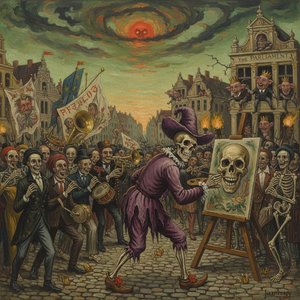
James Ensor's Grotesque Visions: Social Commentary & Artistic Innovation
Explore the unsettling yet captivating world of James Ensor, a pioneer of Expressionism. Discover his satirical masterpieces, symbolic imagery & lasting influence on modern art. High-quality reproductions available at OriginalUniqueArt.
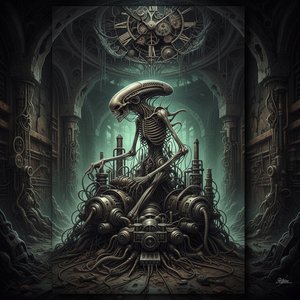
H.R. Giger's Biomechanical Visions: Surrealism, Technology & Existential Dread
Explore the haunting biomechanical world of H.R. Giger, creator of Alien. Discover his surrealist masterpieces, existential themes & lasting impact on art and culture. A guide for collectors.

Beyond Reality: A Definitive Guide to the Dreamlike World of Symbolist Painting
Explore the evocative world of Symbolist painting. Discover how masters like Gustave Moreau rejected realism to capture dreams, myths, and the subconscious through fine art history and expert analysis.


