Baskı Satışına Geç
 Tümünü Gör







































 Herhangi bir kenarı 105 cm'den (yaklaşık 41 inç) büyük olan sanat eserleri veya reprodüksiyonlar için çerçeve, demonte edilmiş bir kit halinde gönderilecektir. Bu yöntem, güvenli teslimat sağlar ve taşıma sırasında oluşabilecek hasarları önler.


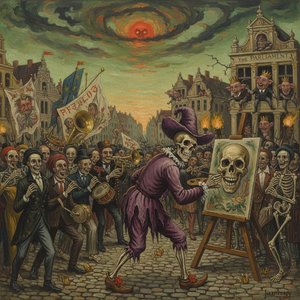
A Nightmarish Feast: James Ensor’s “Skeletons Fighting Over a Pickled Herring”
James Ensor's "Skeletons Fighting Over a Pickled Herring" isn’t merely a painting; it’s an unsettling plunge into the subconscious, a visceral confrontation with artistic critique, and a testament to the artist’s uniquely dark vision. Completed in 1891, this oil on canvas immediately grabs the viewer with its jarring composition – two skeletal figures locked in a furious struggle over a single, glistening pickled herring. It's a scene both grotesque and strangely compelling, embodying the core tenets of Expressionism and offering a potent commentary on the anxieties of the era.
Ensor’s background profoundly shaped his artistic approach. Born in Ostend, Belgium, to an English father and a Belgian mother, he navigated a world of cultural contrasts – a duality that permeated his work. His family's souvenir shop, overflowing with exotic masks and curiosities, provided a constant stream of visual stimuli, fueling his fascination with disguise and the hidden aspects of human nature. This early exposure fostered a deliberate rejection of academic formality, leading him to forge his own path, one characterized by raw emotion and unconventional imagery.
Decoding the Symbols: Herring, Skeletons, and the Critics
The painting’s symbolism is layered and deliberately provocative. The pickled herring itself is arguably the most significant element. In 1891, it represented a symbol of artistic mediocrity – a cheap, mass-produced delicacy that reflected the perceived decline in standards within the art world. Ensor was facing considerable criticism for his increasingly unconventional style, and this painting can be interpreted as a direct response to those detractors. The skeletons, stark and devoid of flesh, represent these critics themselves: figures stripped bare, reduced to their most fundamental and judgmental aspects.
The positioning of the figures is crucial. They are locked in an intimate struggle, suggesting a personal confrontation rather than a generalized critique. This intensely focused dynamic elevates the painting beyond a simple commentary on artistic judgment; it becomes a representation of internal conflict and the corrosive effects of negativity. The single herring acts as both prize and weapon – a symbol of the artist’s work being relentlessly attacked.
The Expressionist Palette: Texture, Color, and Emotional Intensity
Ensor's masterful use of oil paint is integral to the painting’s impact. He employs a deliberately rough technique, applying thick layers of pigment with visible brushstrokes – a hallmark of Expressionism. The colors are vibrant yet unsettling; the pale flesh of the skeletons contrasts sharply with the dark background and the sickly yellow hue of the herring. This deliberate manipulation of color and texture isn't merely decorative; it’s designed to evoke a strong emotional response, mirroring the painting’s underlying sense of unease and aggression.
The inclusion of the partially obscured figure in a red shirt and green pants adds another layer of complexity. Some scholars believe this represents a third party – perhaps a patron or influential critic – further emphasizing the theme of external pressure and artistic struggle. The overall effect is one of heightened drama, drawing the viewer into the chaotic scene.
A Timeless Masterpiece: Reproduction and Artistic Legacy
"Skeletons Fighting Over a Pickled Herring" remains a powerfully resonant work, demonstrating Ensor’s genius for capturing the anxieties and contradictions of his time. It's a painting that refuses easy interpretation, inviting viewers to confront uncomfortable truths about criticism, ambition, and the nature of artistic creation. OriginalUniqueArt offers meticulously crafted hand-painted reproductions that faithfully capture the original’s intensity and detail, allowing you to experience this extraordinary artwork in your own space.
Whether you're an art enthusiast, a collector seeking a unique statement piece, or an interior designer searching for a touch of unsettling beauty, a reproduction of Ensor’s “Skeletons Fighting Over a Pickled Herring” is sure to provoke thought and admiration. It’s more than just a painting; it’s a window into the mind of a visionary artist.
Soru ve Cevaplar
James Ensor imzalı "Skeletons Fighting Over a Pickled Herring" eserini hangi teknik ve üslup tanımlıyor?
"Skeletons Fighting Over a Pickled Herring" adlı eserde, Acrylic On Canvas tekniği Expressionist Movement akımıyla buluşuyor.
"Skeletons Fighting Over a Pickled Herring" ışık ve karanlığı nasıl dengeliyor?
James Ensor imzalı "Skeletons Fighting Over a Pickled Herring" için kaydedilen değerler şöyledir: brilliant parlaklık, Bright Balance aydınlık.
"Skeletons Fighting Over a Pickled Herring" hangi renk tonlarını barındırıyor?
James Ensor imzalı "Skeletons Fighting Over a Pickled Herring", Neutrals bir renk paleti kullanıyor. Bu palet, eserin genel renk karakterini özetliyor.
Bu tablo hakkında daha fazla bilgi
 Gerçek Boyutta Önizle
 Paylaş
 Paylaş
 Detayları Gör
 Rehber

 İndir
İndir
 Benzer ürünler
 X-Işını
 Slayt Gösterisi
 Soru & Cevap
 İstatistikler