- Ana Sayfa

- Kanvas baskı
- Jacopo Ripanda
- Neptune and Amphitrite

 Tabloyu Sipariş Et Görseli Satın Al
 Paylaş
 Paylaş
 Detayları Gör
 Favorilere ekle

 İndir
İndir
 Benzerlerini gör
 X-Işını
 Slayt Gösterisi
Neptune and Amphitrite


 Tümünü Gör
Giclée / Sanat Baskısı
Hızlı üretim ve esnek bitiş seçenekleriyle müze kalitesinde giclée veya kanvas baskı.




P118B $10

P118H $10

P118W $10

P438Z $10

P508JH $12

P508YH $12

P805H $10

P805Z $10

P919BZ $10

P919G $10

P919XJ $10

P959ZH $10

P968JZ $12

W106C $8

W218G $10

W218JH $8

W218Y $10

W307PJ $10

W316G $10

W316PJ $8

W316Y $10

W398PJ $8

W4111J $10

W500HY $15

W500JH $15

W692G $12

W849H $8

W940BG $15

W953PJ $8




Eserin orijinal oranlarıyla uyumlu, önceden belirlenmiş boyutlarımız arasından seçim yapın.

Belirli bir çerçeveye veya alana uyması için kendi ölçülerinizi girebilirsiniz. Seçtiğiniz boyut orijinal görüntünün oranlarıyla eşleşmiyorsa, sanat eserini kırpacağız veya görüntüyü aynalanmış ya da düz dolgulu bir kenarlıkla genişleteceğiz. Üretim başlamadan önce onayınız için bir dijital taslak gönderilecektir.
Lütfen ekrandaki önizlemenin gerçek kırpma veya genişletmeyi yansıtmadığını unutmayın. Nihai kompozisyonu yalnızca taslak doğru bir şekilde gösterecektir.
Özel boyutlar mevcut olsa da, orijinal oranları korumak için önceden tanımlanmış listeden bir boyut seçmenizi öneririz.
Dünya Çapında Teslimat (); standart 4/5 hafta yerine 2 haftada. (22 Temmuz)

Dünya Çapında Ücretsiz Ekspres Kargo

Yüksek Kaliteli Keten Tuval

Tam Kapsamlı Nakliye Sigortası

Gümrük Vergisi İade Garantisi

Gerçek Renk Uyumu Garantisi

60 Günlük İade Politikası (Sadece Kusurlu Ürünler İçin)

%100 Para İade Garantisi

Toplu Alım İndirimi
 Cam seçeneği yalnızca 110 cm altındaki boyutlar için mevcuttur.

Neptune and Amphitrite
Giclée / Sanat Baskısı
Reproduksiyon Boyutu
-


Toplam Tutar
-
Eser Açıklaması
A Singular Vision: Jacopo Ripanda’s “Neptune and Amphitrite”
The fresco "Neptune and Amphitrite," executed by Jacopo Ripanda in 1505, stands as a testament to the artist's extraordinary dedication to capturing the spirit of antiquity—a pursuit that transcended mere representation and fundamentally reshaped artistic perception. Situated within the Palazzo dei Conservatori in Rome, this monumental work delves into the mythology surrounding Poseidon and his consort Amphitrite, offering viewers an immersive experience of Renaissance grandeur and intellectual curiosity.The Artist’s Instrument: A Revolutionary Device
Ripanda's contribution to art history extends far beyond the canvas itself. Recognizing the limitations of traditional methods for accurately documenting Roman monuments—particularly their perspective—he devised a groundbreaking instrument known as “the Roman Eye.” This simple device, consisting of a plumb bob and a sighting tube, allowed Ripanda to meticulously measure angles and distances with unprecedented precision, correcting distortions inherent in earlier depictions and establishing a new standard for artistic accuracy. His invention wasn’t merely about technical prowess; it represented a profound shift in thinking—a conviction that observation and measurement were crucial to unlocking the secrets of the classical world.A Symphony of Color and Texture: Technique and Style
The fresco's execution exemplifies Ripanda’s masterful technique – fresco painting, utilizing pigments mixed with lime plaster applied directly onto wet walls. This method ensured exceptional durability and vibrancy, preserving the artwork for centuries. The artist employed a rich palette dominated by blues and greens to convey the depths of the sea and evoke a sense of serene majesty. Careful brushstrokes create subtle gradations of tone and texture, lending an ethereal quality to the depiction of Neptune’s muscular form and Amphitrite's contemplative repose. Ripanda’s style aligns with the humanist ideals prevalent during the Renaissance—a focus on human anatomy and emotion alongside idealized beauty—resulting in a composition that is both aesthetically pleasing and intellectually stimulating.Mythological Narrative: Symbolism and Interpretation
“Neptune and Amphitrite” embodies profound symbolic meaning rooted in Greco-Roman mythology. Neptune, ruler of the oceans, represents power and dominion, symbolized by his trident – a weapon wielded with authority over the turbulent seas. Amphitrite, his wife, embodies serenity and grace—a counterpoint to Neptune’s forceful presence. Their intertwined figures convey themes of marital harmony and divine love, reflecting Renaissance conceptions of ideal relationships. The seascape backdrop underscores the artwork's central subject matter, reinforcing its connection to the myths of Poseidon and Amphitrite and inviting contemplation on concepts of order versus chaos.Emotional Resonance: Capturing the Sublime
Ultimately, Ripanda’s fresco transcends mere visual representation; it aspires to evoke an emotional response in the viewer—a feeling akin to “the sublime”—characterized by awe and wonder at the immensity of nature and the grandeur of divine majesty. The luminous colors and meticulous detail capture the essence of antiquity, transporting viewers back to a time when artists sought to emulate the perfection of classical art. "Neptune and Amphitrite" remains an enduring masterpiece—a testament to Ripanda’s artistic genius and his unwavering commitment to preserving and celebrating the legacy of Roman civilization.Sanatçı Özgeçmişi
Jacopo Ripanda: The Roman Eye
Jacopo Ripanda (c. 1401 – Rome, c. 1516) remains a figure shrouded in mystery—a Renaissance artist whose brilliance shone primarily through his meticulous observation and unparalleled skill in documenting the grandeur of antiquity. While biographical details are scarce, surviving evidence paints a portrait of an exceptionally gifted Bolognese painter who captivated papal patronage and cemented his place as one of the era’s foremost visual innovators. His legacy resides not merely in the canvases he created but also in the revolutionary device he devised—a simple yet ingenious instrument that fundamentally altered artistic practice and profoundly impacted how Roman monuments were perceived.- Early Life & Training: Precise information regarding Ripanda's birthdate and formative years is elusive. He emerged from Bologna’s vibrant artistic milieu, absorbing influences from masters like Ercole Grandi and Lorenzo Costa—artists known for their masterful depictions of classical themes and humanist ideals. However, unlike many Bolognese painters of his time who focused on devotional subjects, Ripanda possessed an unwavering fascination with Roman ruins and the vestiges of imperial grandeur.
- The Trajan’s Column Apparatus: Ripanda's fame ascended dramatically during Pope Alexander VI’s reign when he constructed a viewing device—a carefully calibrated eyepiece—to aid in the detailed study of Trajan’s Column. This instrument, remarkably accurate for its time, allowed him to resolve distant friezes with unprecedented clarity, capturing minute details previously inaccessible to human vision. The invention sparked considerable debate amongst scholars and artists alike, demonstrating Ripanda's intellectual curiosity and his commitment to advancing scientific observation within the artistic realm.
- Papal Commissions & Frescoes: Alexander VI recognized Ripanda’s exceptional talent and entrusted him with monumental commissions for frescoes in Rome’s Palazzo dei Conservatori—specifically, four rooms dedicated to portraying scenes from classical history. The Sala di Annibale and Sala della Lupa stand as enduring testaments to his artistic prowess, showcasing masterful compositions and vibrant color palettes that embody the humanist spirit of the Renaissance. These paintings continue to inspire admiration for their technical brilliance and expressive power.
- Style & Technique: Ripanda’s style is characterized by a distinctive blend of Emilian tradition and Roman influence—a synthesis reflected in his meticulous attention to detail, masterful use of chiaroscuro (light and shadow), and profound understanding of perspective. He skillfully employed techniques honed through observation of Trajan's Column, translating the precision of scientific inquiry into artistic execution. His works exemplify the humanist ideal of combining erudition with artistic skill.
- Legacy & Influence: Although Ripanda’s later Vatican commissions were cancelled by Pope Julius II—a setback that tragically curtailed his creative output—his groundbreaking invention and enduring frescoes secured his place in art history. Girolamo Muziano published engravings of his Trajan's Column drawings in 1576, disseminating Ripanda’s innovative approach to visual representation across Europe. Furthermore, he exerted considerable influence on subsequent artists like Baldassare Peruzzi and Michelangelo—artists who adopted Ripanda’s meticulous observational methods and embraced the challenge of accurately depicting monumental architecture.

Jacopo Ripanda
1516 , Italy
Kısa Bilgiler
- Artistic Movement Or Style: Emilian Renaissance
- Artists Or Movements Influenced By This Artist: ['Baldassare Peruzzi']
- Artists Who Influenced This Artist:
- Ercole Grandi
- Lorenzo Costa
- Date Of Death: 1516
- Full Name: Jacopo Ripanda
- Nationality: Italian
- Notable Artworks:
- St Peter Consacrates Stephen
- Neptune and Amphitrite
- Place Of Birth: Bologna, Italy
İlgili Makaleler

The Flourishing of Humanism: A Comprehensive Exploration of the Italian Renaissance Art Movement
Explore the Italian Renaissance! Discover humanist ideals, iconic masterpieces by Leonardo, Michelangelo & Raphael, and lasting artistic innovations. A comprehensive guide for art enthusiasts.

The Revival of Antiquity: Exploring the Neoclassical Movement & its Enduring Legacy
Explore the revival of classical art with our deep dive into Neoclassicism! Discover key artists like Jacques-Louis David, Enlightenment influences & lasting impact on art history. High-quality reproductions at OriginalUniqueArt.

The Revival of Antiquity: Exploring Neoclassical Art's Ideals & Enduring Legacy
Explore the revival of classical ideals in Neoclassical art! Discover Jacques-Louis David & the movement's impact on painting, sculpture & architecture. Expert insights & high-quality reproductions at OriginalUniqueArt.

Bartolomeo Pinelli: Neoclassical Linearity & Roman Topography of Memory
Explore the captivating world of Bartolomeo Pinelli, a master Italian engraver renowned for his evocative Roman scenes & historical narratives. Discover his art and legacy with OriginalUniqueArt.
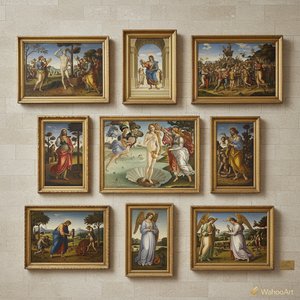
Erken Rönesans'ın Zirveleri: Sanat Tarihini Derinlemesine Etkileyen 10 Başyapıt
Erken Rönesans'ın 10 başyapıtıyla sanat tarihine yolculuk! Botticelli, Leonardo da Vinci gibi ustaların eserleriyle evinizi dönüştürün. OriginalUniqueArt.com’da müze kalitesinde replikalar ve benzersiz dekorasyon fikirleri keşfedin.

