Baskı Satışına Geç
 Devamını Oku







































 Herhangi bir kenarı 105 cm'den (yaklaşık 41 inç) büyük olan sanat eserleri veya reprodüksiyonlar için çerçeve, demonte edilmiş bir kit halinde gönderilecektir. Bu yöntem, güvenli teslimat sağlar ve taşıma sırasında oluşabilecek hasarları önler.


Linlithgow Palace: A Romantic Vision of Ruin
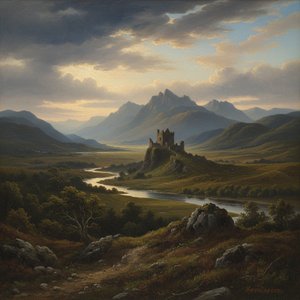
J.M.W. Turner’s “Linlithgow Palace,” completed in 1806, is more than simply a depiction of a Scottish ruin; it's a profound meditation on time, beauty, and the enduring power of nature. Painted during a pivotal moment in Turner’s artistic development, this expansive canvas – measuring an impressive 220 x 914 cm – reveals his burgeoning mastery of atmospheric perspective and his audacious departure from strict topographical realism towards a powerfully emotive landscape style. The subject itself—Linlithgow Palace, once a royal residence and military stronghold now reduced to crumbling stone—holds a poignant narrative, reflecting the transient nature of power and human ambition against the backdrop of an eternally shifting world.
- Historical Context: Turner’s visit to Linlithgow in 1801 coincided with a period of intense artistic revival influenced by classical ideals. The painting reflects this fascination, consciously echoing the traditions of classical landscape painters while imbuing them with a distinctly Romantic sensibility.
- Compositional Innovation: The artist skillfully frames the palace within a carefully constructed composition, utilizing strategically placed trees to draw the viewer’s eye and create a sense of depth that transcends mere representation. This deliberate framing elevates the scene beyond a simple record of a location, transforming it into a meticulously crafted visual experience.
A Symphony of Color and Light
Turner's palette in “Linlithgow Palace” is dominated by a restrained yet evocative range of earth tones – browns, greens, yellows, and grays—that contribute significantly to the painting’s serene mood. The sky, rendered in pale blue-gray hues, creates an atmospheric haze that softens the edges of the landscape and enhances the sense of distance. His masterful use of light is particularly noteworthy; diffused and almost ethereal, it suggests a soft overcast day, eliminating harsh shadows and emphasizing the subtle tonal variations within the scene. This technique—a hallmark of Turner’s style—creates a dreamlike quality, inviting contemplation rather than demanding immediate observation.
- Technique: Turner employed glazing techniques, layering thin washes of color over one another to build up complex tonal relationships and achieve remarkable atmospheric effects.
- Brushwork: Loose, flowing brushstrokes define the foliage and water, contributing to the painting’s overall sense of movement and fluidity.
Symbolism and Emotional Resonance
Beyond its technical brilliance, “Linlithgow Palace” is rich in symbolic meaning. The ruined palace itself serves as a potent metaphor for the passage of time and the inevitable decay of human endeavors. The inclusion of nude figures bathing in the loch adds another layer of complexity, referencing classical mythology or pastoral scenes—themes frequently explored by artists seeking to evoke notions of beauty, innocence, and harmony with nature. The painting’s overall mood is one of tranquility and nostalgia, inviting viewers to contemplate the relationship between humanity and the natural world. It's a testament to Turner’s ability to capture not just what he saw, but also how he *felt* about it – a deeply personal response translated onto canvas.
Turner’s Legacy
“Linlithgow Palace” stands as a crucial work in J.M.W. Turner's artistic journey, marking a decisive shift towards his signature style of atmospheric landscape painting. It exemplifies his innovative approach to representing light and color, foreshadowing the development of modern abstraction. A hand-painted reproduction of this iconic artwork offers an unparalleled opportunity to experience the full power and beauty of Turner’s vision – a timeless masterpiece that continues to captivate audiences today.
Soru ve Cevaplar
J.M.W. Turner imzalı "Linlithgow Palace" eserini bir slayt gösterisi olarak nasıl izleyebilirim?
"Linlithgow Palace" adlı eserin diaporama gösterisi, esere ait Slayt Gösterisi sayfasından izlenebilir.
"Linlithgow Palace" eserini kim ve hangi yılda yarattı?
"Linlithgow Palace", J.M.W. Turner tarafından 1806 yılında yaratılmıştır."
"Linlithgow Palace" eserinin telif hakkı durumu neden bu şekildedir?
J.M.W. Turner imzalı "Linlithgow Palace" adlı eser kamu malıdır - telif hakkı süresi dolmuştur statüsündedir. Telif hakları süresi sanatçının ölüm tarihinden itibaren hesaplanmaktadır ve J.M.W. Turner, 1851 yılında vefat etmiştir.
 Önizle
 Gönder
 Paylaş
 Detaylar
 Rehber

 Dosyayı İndir
 Benzerleri
 X-Işını
 Slayt Gösterisi
 Q&A
Q&A İstatistikler