
 Önizleme yap
 Paylaş
 Paylaş
 Detayları Gör

 İndir
İndir
 Benzerlerini gör
 X-Işını
 Slayt Gösterisi
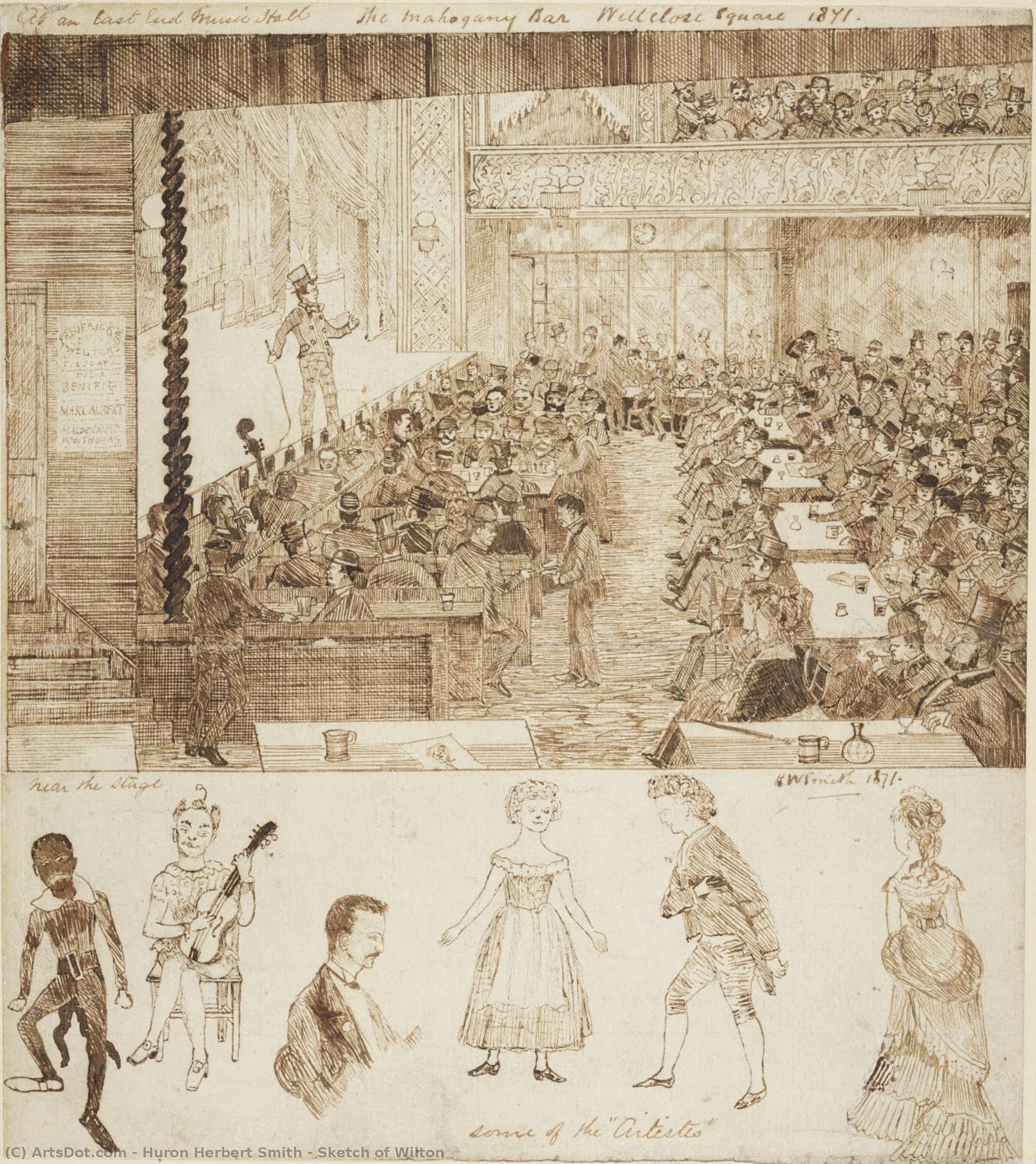
Sketch of Wilton


 Tümünü Gör
El Yapımı Yağlı Boya Reproduksiyon
Sanatçılarımız tarafından sipariş üzerine hazırlanan; istediğiniz boyut ve çerçevede, tuval üzerine el boyaması yağlı boya. ( Baskı satın al Görsel satın al)




































Eserin orijinal oranlarıyla uyumlu, önceden belirlenmiş boyutlarımız arasından seçim yapın.

Belirli bir çerçeveye veya alana uyması için kendi boyutlarınızı girebilirsiniz. Seçtiğiniz boyut orijinal görüntünün oranlarıyla eşleşmiyorsa, sanat eserini kırparak veya ek el boyaması öğelerle resmi uzatarak ayarlayacağız. Üretim başlamadan önce onayınız için dijital bir taslak gönderilecektir.
Lütfen ekrandaki önizlemenin gerçek kırpmayı veya uzatmayı yansıtmadığını unutmayın. Nihai kompozisyonu yalnızca hazırlanan taslak doğru şekilde gösterecektir.
Özel boyutlar mevcut olsa da, orijinal oranları korumak adına önceden tanımlanmış listeden bir boyut seçmenizi öneririz.
Siparişten sonra, OriginalUniqueArt.com ekibi talimatlar için müşteriye e-posta gönderecek ve bir taslak önizleme sunacaktır
Dünya Çapında Teslimat (); standart 5 hafta yerine 3/4 haftada. (21 Ağustos). Kaliteden ödün verilmez.

Dünya Çapında Ücretsiz Ekspres Kargo

Yüksek Kaliteli Keten Tuval

Tam Kapsamlı Nakliye Sigortası

Gümrük Vergisi İade Garantisi

Gerçek Renk Uyumu Garantisi

60 Günlük İade Politikası (Sadece Kusurlu Ürünler İçin)

%100 Para İade Garantisi

Toplu Alım İndirimi
 Cam seçeneği yalnızca 110 cm altındaki boyutlar için mevcuttur.

Sketch of Wilton
Reproduksiyon Tekniği
Reproduksiyon Boyutu
-


Toplam Tutar
$ 300
Sanatçı Özgeçmişi
The Botanical Visionary: The Life and Legacy of Huron Herbert Smith
In the quiet intersection where scientific rigor meets the delicate beauty of the natural world, the life of Huron Herbert Smith emerges as a profound testament to human curiosity. Born in the heart of America in Danville, Indiana, in 1883, Smith possessed an innate sensitivity to the living textures of the earth. His journey was not merely one of academic pursuit but a soulful exploration of the silent dialogues between flora and the indigenous cultures that have long revered them. Through his eyes, a plant was never just a biological specimen; it was a vessel of history, a cornerstone of tradition, and a masterpiece of evolutionary design.
Smith’s intellectual foundation was forged in the prestigious halls of Depauw University and Cornell University, where he mastered the disciplines of botany and zoology. This rigorous training provided him with the precise anatomical knowledge required for scientific excellence, yet it could not stifle his burgeoning passion for ethnobotany—the study of how people and plants interact. He possessed a rare ability to look beyond the cellular structure of a leaf to see the cultural significance embedded within its fibers, recognizing that the oral traditions and folklore of Native American tribes held as much vital truth as any laboratory finding.
A Symbiosis of Science and Artistry
The professional zenith of Smith’s career was defined by his transformative work at the Milwaukee Public Museum. Serving as the Assistant Curator of Botany and later as the head of the department, he embarked on a mission to document the botanical wisdom of Native American tribes with unparalleled detail. His approach was uniquely holistic; he understood that to truly preserve a species' importance, one had to capture both its physical form and its cultural spirit. This led to a magnificent synthesis of botanical illustration and ethnographic narrative.
His illustrations were far more than mere diagrams. They were evocative renderings that breathed life into the specimens he collected. By blending meticulous scientific accuracy with an artist's eye for light, shadow, and texture, Smith created a visual language that bridged the gap between the museum archive and the human experience. His work often focused on:
- The intricate morphology of native flora, captured with such precision that they served as vital records for future generations.
- The cultural narratives of plant use, weaving stories of medicinal, ceremonial, and nutritional importance into his scientific observations.
- The preservation of indigenous knowledge, acting as a bridge between the vanishing oral traditions of tribes like the Meskwaki and the permanent record of Western science.
A Lasting Impression on the Natural Sciences
Though his life was tragically cut short in 1933 following an automobile accident at the age of forty-nine, the impact of Huron Herbert Smith remains deeply etched in the annals of American botany. His dedication left behind a monumental botanical specimen collection, much of which is preserved and digitized at the Milwaukee Public Museum, ensuring that his meticulous observations continue to inspire researchers and artists alike. His ability to document the ethnobotany of the Ojibwe Indians and other tribes provided a crucial foundation for the field of ethnobotany as it exists today.
Smith’s historical significance lies in his refusal to separate the observer from the observed. He did not view nature as an object to be dissected, but as a living tapestry of which humanity is an integral thread. In every stroke of his illustrations and every entry in his field notes, there is a profound respect for the interconnectedness of all life. Today, we remember him not just as a curator or a scientist, but as a pioneer who taught us to read the stories written in the very greenery beneath our feet.

huron herbert smith
1883 - 1933 , United States of America
Kısa Bilgiler
- Artistic Movement Or Style: Botanical Art
- Artists Or Movements Influenced By This Artist: ['International Plant Names Index']
- Artists Who Influenced This Artist: ['Millspaugh & Nuttall']
- Date Of Birth: July 26th, 1883
- Date Of Death: February 25th, 1933
- Full Name: Huron Herbert Smith
- Nationality: American
- Notable Artworks: ['Sketch of Wilton']
- Place Of Birth: Danville, United States of America

