
 Gerçek Boyutta Önizle
 Paylaş
 Paylaş
 Detayları Gör
 Rehber

 İndir
İndir
 Benzer ürünler
 X-Işını
 Slayt Gösterisi
 Soru & Cevap
 İstatistikler
Last Judgement Triptych (exterior view)


 Tümünü Gör
Giclée / Sanat Baskısı
Hızlı üretim ve esnek bitiş seçenekleriyle müze kalitesinde giclée veya kanvas baskı. ( El Yapımı Tablo Satın Al Dijital Görsele Geç)




P118B ₺10

P118H ₺10

P118W ₺10

P438Z ₺10

P508JH ₺12

P508YH ₺12

P805H ₺10

P805Z ₺10

P919BZ ₺10

P919G ₺10

P919XJ ₺10

P959ZH ₺10

P968JZ ₺12

W106C ₺8

W218G ₺10

W218JH ₺8

W218Y ₺10

W307PJ ₺10

W316G ₺10

W316PJ ₺8

W316Y ₺10

W398PJ ₺8

W4111J ₺10

W500HY ₺15

W500JH ₺15

W692G ₺12

W849H ₺8

W940BG ₺15

W953PJ ₺8




Eserin orijinal oranlarıyla uyumlu, önceden belirlenmiş boyutlarımız arasından seçim yapın.

Çerçevenize veya duvarınıza uygun olması için ihtiyacınız olan genişlik ve yüksekliği yazın. Bir baskı yalnızca kesilebilir, görselden daha büyük hale getirilemez; bu nedenle farklı bir formdaki boyut seçimi, görselin bir kısmının kaybına neden olur. Herhangi bir baskı yapmadan önce onaylamanız için size bir dijital taslak gönderiyoruz. Bu sayfada gösterilen resim gerçek kesimi göstermez — bunu yalnızca taslak gösterir.
Dünya Çapında Teslimat (); standart 4/5 hafta yerine 2 haftada. (7 Kasım)

Dünya Çapında Ücretsiz Ekspres Kargo

Yüksek Kaliteli Keten Kanvas

Tam Nakliye Sigortası

Gümrük Vergisi İadesi Garantisi

Gerçek Renk Uyumu Garantisi

100 Günlük İade Politikası (Sadece Kusurlu Ürünler İçin)

%100 Para İade Garantisi

Toplu Alım İndirimi
 Cam seçeneği yalnızca 110 cm altındaki boyutlar için mevcuttur.

Last Judgement Triptych (exterior view)
Giclée / Sanat Baskısı
Reproduksiyon Boyutu
-


Toplam Tutar
₺ 3992
A Descent into Moral Judgment: Exploring Bosch’s Last Judgement Triptych
The enigmatic vision of Hieronymus Bosch, known as the Last Judgement Triptych, continues to fascinate art historians and captivate audiences centuries after its creation. Painted around 1504 in ’s-Hertogenbosch, Netherlands—a city brimming with religious fervor during Bosch’s lifetime—this monumental artwork transcends mere depiction; it plunges viewers into a psychological landscape of fear, repentance, and divine retribution. The painting's unsettling beauty lies not just in its meticulous detail but also in its profound exploration of human morality and the consequences of earthly transgressions.The Style and Technique: A Gothic Nightmare Embodied
Bosch’s style is undeniably distinctive—a jarring blend of realism and fantastical imagination that firmly establishes him as a pioneer of Northern Renaissance art. Departing from the idealized figures prevalent in much of his era, Bosch presents grotesque creatures and distorted human forms alongside serene saints and judges. The technique employed is masterful: oil paint on wood panels allows for incredible luminosity and textural richness, capturing the unsettling atmosphere with remarkable precision. Bosch’s meticulous layering of pigments—often incorporating iridescent glazes—creates a shimmering surface that enhances the hallucinatory quality of the scene. He meticulously rendered every element, from the thorny bushes to the grotesque faces of the damned, demonstrating an unparalleled command of artistic craft.Historical Context: Reformation Anxiety and Moral Reflection
The Last Judgement Triptych emerged during a period of intense religious upheaval—the Protestant Reformation was reshaping Europe, challenging papal authority and sparking debates about salvation. Bosch’s work reflects this societal anxiety, portraying humanity as vulnerable to divine judgment and highlighting the importance of moral conduct. The triptych itself is structured around biblical themes – the Second Coming of Christ, the weighing of souls, and the eternal reward for righteousness—but Bosch elevates these narratives beyond theological dogma into a visceral confrontation with human nature’s darker impulses. He doesn't offer comfort or reassurance; instead, he compels contemplation on our own mortality and responsibility.Symbolism: Decoding Layers of Meaning
Bosch’s imagery is rife with symbolism, drawing heavily from medieval folklore and Christian iconography. The central panel depicts a terrifying panorama of Hell—a swirling vortex populated by demons, tortured souls, and monstrous animals—representing the ultimate punishment for sin. Recurring motifs include serpents, skulls, and grotesque hybrids—symbols of corruption, death, and demonic influence. Even seemingly innocuous elements like thorns and branches carry significant weight, representing suffering and spiritual struggle. Bosch’s genius lies in his ability to convey complex theological ideas through unsettling visual metaphors, prompting viewers to grapple with profound questions about faith and morality.Emotional Impact: A Portrait of Existential Dread
The Last Judgement Triptych doesn't aim for aesthetic pleasure; it seeks to provoke emotional response—a feeling of unease, apprehension, and perhaps even horror. Bosch’s masterful use of color—particularly reds and yellows—intensifies the dramatic tension, mirroring the fiery torment of Hell. The faces of the damned are contorted in expressions of anguish and despair, conveying the inescapable reality of divine judgment. Viewing this artwork is akin to confronting one's own inner demons—a powerful reminder of our vulnerability and the imperative to strive for righteousness. It remains a testament to Bosch’s enduring ability to capture the anxieties of his time and to communicate timeless truths about human existence.Soru ve Cevaplar
Jheronimus Bosch imzalı "Last Judgement Triptych (exterior view)" hangi duyguyu hissettiriyor?
Jheronimus Bosch imzalı "Last Judgement Triptych (exterior view)" eserinin yansıttığı ruh hali Dramatic, duygusal tonu ise Mysterious'dur.
Jheronimus Bosch imzalı "Last Judgement Triptych (exterior view)" eserinin renk kompozisyonu nasıl kurgulanmıştır?
Jheronimus Bosch imzalı "Last Judgement Triptych (exterior view)" eserinin renk analizi, Statement bir kontrast ve Strong Color Unity bir uyum sergilemektedir.
Jheronimus Bosch imzalı "Last Judgement Triptych (exterior view)" eserinin bir baskısını nasıl temin edebilirim?
Jheronimus Bosch imzalı "Last Judgement Triptych (exterior view)" eserinin bir baskısını edinmek için, sadece Sanat Baskısı sayfasından sipariş verebilirsiniz: pamuklu kanvas veya arşivlik kanvas kağıt üzerine yüksek kaliteli sanat baskısı.
Sanatçı Özgeçmişi
A Netherlandish Enigma: The Life and Art of Hieronymus Bosch
Hieronymus Bosch, born around 1450 in ’s-Hertogenbosch, Netherlands—then part of Brabant—remains one of art history’s most perplexing figures. His world pulsed with late medieval religious fervor, folklore, and a creeping unease about societal change – forces that fueled his extraordinary artistic imagination. Descended from a family steeped in painting tradition—his grandfather, Jan van Aken, and father, Anthonius van Aken—Bosch likely honed his skills within the family workshop, absorbing the conventions of Netherlandish art while simultaneously forging his own distinctive path. Biographical details are frustratingly sparse; records offer tantalizing glimpses but leave much to speculation, enhancing the artist’s aura of mystery. He married Aleyt Goyaerts van den Meerveen sometime before 1481, securing a degree of financial stability through her family's holdings—though little else is known about his personal life.Fantastical Visions and Symbolic Depth
Bosch’s artistic style captivated audiences with its jarring juxtaposition of meticulous detail and hallucinatory imagery. Primarily working on oak panels using oil paint, he achieved luminous colors and intricate textures, surpassing the stylistic norms of his time. While early works mirrored traditional Netherlandish painting's realism, Bosch swiftly moved beyond mere imitation, developing a profoundly original vision rooted in medieval folklore and apocalyptic anxieties. His canvases aren’t simply representations; they are allegorical landscapes populated by bizarre creatures—grotesque demons, fantastical animals—and unsettling scenes that seem ripped from dreams. Religious themes dominate much of his oeuvre, but these are rarely straightforward depictions of biblical narratives. Instead, Bosch employed symbolism to explore complex moral and theological concepts, confronting viewers with the perils of sin, the allure of earthly pleasures, and the inevitability of divine judgment. His figures—human and monstrous alike—embodied vice, temptation, and spiritual corruption, creating a disconcerting effect that continues to resonate centuries later.Masterpieces of Moral Allegory
Bosch’s most celebrated achievement is undoubtedly *The Garden of Earthly Delights* (c. 1490-1510)—a triptych that remains one of art history's most debated works. When unfolded, it presents a panoramic vision of paradise, earthly life, and hell—a complex allegorical representation of humanity’s fall from grace. The left panel depicts Eden, brimming with fantastical flora and fauna; the central panel portrays a hedonistic world consumed by sensual desire; and the right panel offers a terrifying glimpse into infernal torment. Alongside *The Garden*, *The Last Judgement Triptych* (c. 1480-1490) powerfully conveys both heavenly bliss and divine retribution, while *Ascent of the Blessed* (c. 1480-1490) captures ethereal beauty—a testament to Bosch’s mastery of oil paint and his ability to evoke profound psychological states. Smaller works like *Epiphany* (c. 1495) showcase his innovative technique and intricate symbolism, revealing a mind perpetually wrestling with existential questions about faith, morality, and human nature.Influence and Legacy
Identifying Bosch’s direct influences is challenging due to the originality of his vision—though scholars suggest connections to medieval folklore, religious texts emphasizing apocalyptic themes, and societal anxieties surrounding heresy. Nevertheless, Bosch decisively surpassed stylistic conventions, establishing himself as a pioneer of Netherlandish painting and forging an artistic legacy that transcends time. His impact on subsequent artists is undeniable: Pieter Bruegel the Elder adopted similar thematic concerns and compositional approaches; Surrealist painters like Salvador Dalí and Max Ernst drew inspiration from Bosch’s dreamlike imagery and exploration of the subconscious. Even today, Bosch's unsettling visions continue to fascinate and provoke discussion—solidifying his place as a singular artist whose influence persists across artistic movements and generations. His paintings serve as invaluable windows into the intellectual and spiritual landscape of the late fifteenth and early sixteenth centuries, questioning established norms and paving the way for groundbreaking artistic expression. He died in 1516, leaving behind a body of work that continues to haunt and inspire—ensuring Bosch’s enduring status as one of art history's most unforgettable voices.
Jheronimus Bosch
1450 - 1516 , Hollanda
Kısa Bilgiler
- Artistic Movement Or Style: Surrealizm ve Sembolizm
- Artists Or Movements Influenced By This Artist: ['Pieter Bruegel']
- Date Of Birth: c. 1450
- Date Of Death: 1516
- Full Name: Hieronymus Bosch
- Nationality: Hollandalı
- Notable Artworks:
- Dünyanın Bahçesi
- Son Yargı Triptiği
- Tanrısal Çıkış
- Place Of Birth: Den Bosch, Netherlands
Benzer Yazılar

Mastering the Surface: A Historical and Technical Guide to the Art of Oil on Panel Painting
Explore the profound history and technical brilliance of oil on panel painting. From Renaissance masters to modern techniques, discover why this rigid support offers unparalleled precision and permanence for fine art lovers and collectors.

The Northern Renaissance: A Flourishing of Realism, Religious Reform & Artistic Innovation
Explore the Northern Renaissance! Discover Jan van Eyck's innovations, religious shifts, & key artists of this influential period. Expert analysis and insights into Early Netherlandish painting at OriginalUniqueArt.

Sacred Narratives Embodied: A Comprehensive Exploration of Religious Iconography in Art History
Explore the rich history of religious iconography in art! Discover symbolism, movements & masterpieces from Byzantine to Renaissance periods. Expert insights for collectors and enthusiasts at OriginalUniqueArt.
Oil on Panel Masters: 10 Paintings That Revolutionized Art |
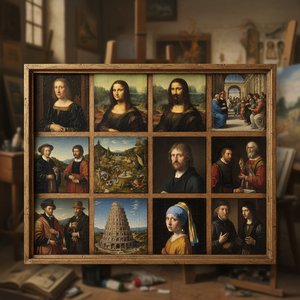
Journey through 10 legendary 'Oil on Panel' masterpieces by Van Eyck, Bosch & Bruegel. Explore the stories behind these iconic Renaissance & Baroque paintings and find museum-quality art reproductions to elevate your home decor. Discover all masterpieces on !

Hieronymus Bosch'un En İyi 25 Eseri: Sanat Tarihinin Gizemli Dehası | OriginalUniqueArt
Hieronymus Bosch'un en iyi 25 eserini keşfedin! Ortaçağ ve Rönesans sanatının gizemli dehası, dini sembolizm ve fantastik dünyalarıyla evinizi sanatsal bir şölene dönüştürün. Yüksek kaliteli tablolar OriginalUniqueArt’ta. Koleksiyonu inceleyin!


