
 Gerçek Boyutta Önizle
 Paylaş
 Paylaş
 Detayları Gör
 Rehber

 İndir
İndir
 Benzer ürünler
 X-Işını
 Slayt Gösterisi
 Soru & Cevap
 İstatistikler
Animal studies

- 86.0 x 182.0 cm


 Tümünü Gör
Giclée / Sanat Baskısı
Hızlı üretim ve esnek bitiş seçenekleriyle müze kalitesinde giclée veya kanvas baskı. ( El Yapımı Tablo Satın Al Dijital Görsele Geç)




P118B ₺10

P118H ₺10

P118W ₺10

P438Z ₺10

P508JH ₺12

P508YH ₺12

P805H ₺10

P805Z ₺10

P919BZ ₺10

P919G ₺10

P919XJ ₺10

P959ZH ₺10

P968JZ ₺12

W106C ₺8

W218G ₺10

W218JH ₺8

W218Y ₺10

W307PJ ₺10

W316G ₺10

W316PJ ₺8

W316Y ₺10

W398PJ ₺8

W4111J ₺10

W500HY ₺15

W500JH ₺15

W692G ₺12

W849H ₺8

W940BG ₺15

W953PJ ₺8




Eserin orijinal oranlarıyla uyumlu, önceden belirlenmiş boyutlarımız arasından seçim yapın.

Çerçevenize veya duvarınıza uygun olması için ihtiyacınız olan genişlik ve yüksekliği yazın. Bir baskı yalnızca kesilebilir, görselden daha büyük hale getirilemez; bu nedenle farklı bir formdaki boyut seçimi, görselin bir kısmının kaybına neden olur. Herhangi bir baskı yapmadan önce onaylamanız için size bir dijital taslak gönderiyoruz. Bu sayfada gösterilen resim gerçek kesimi göstermez — bunu yalnızca taslak gösterir.
Dünya Çapında Teslimat (); standart 4/5 hafta yerine 2 haftada. (8 Kasım)

Dünya Çapında Ücretsiz Ekspres Kargo

Yüksek Kaliteli Keten Kanvas

Tam Nakliye Sigortası

Gümrük Vergisi İadesi Garantisi

Gerçek Renk Uyumu Garantisi

100 Günlük İade Politikası (Sadece Kusurlu Ürünler İçin)

%100 Para İade Garantisi

Toplu Alım İndirimi
 Cam seçeneği yalnızca 110 cm altındaki boyutlar için mevcuttur.

Animal studies
Giclée / Sanat Baskısı
Reproduksiyon Boyutu
-


Toplam Tutar
₺ 3996
Observation and Line
The drawing Animal Studies presents a monochrome arrangement of biological forms rendered in pen and ink on paper. The composition focuses on several distinct subjects: birds and a fish. A bird occupies the upper left corner, its wings positioned as if in flight. Below and to the right, additional avian figures are placed across the frame. Centrally located, a fish swims in an upward direction. There is no background landscape or environmental context provided within the work.
The technique relies on precise linework and hatching to define the anatomy of each creature. Fine lines create the texture of feathers, while closely spaced strokes suggest the scales of the fish. The artist uses cross-hatching to build tonal depth, creating a range of gray values from light to dark. This method establishes the physical volume of the bodies through the interplay of light and shadow. The edges of the wings and fins are defined by sharp, deliberate marks that emphasize the organic shapes of the subjects.
Context and Symbolism
Created in ’s-Hertogenbosch, Netherlands, before 1516, this work emerged during a period of religious change and humanist thought. The anatomical accuracy of the birds and fish reflects the scientific interests of the Renaissance era. While the depiction is observational, the subjects carry specific meanings within the artist's broader framework. The birds can be viewed as symbols of spiritual movement or divine grace, while the upward motion of the fish relates to themes of fertility and rebirth.
The lack of color and the use of a single medium focus the viewer on the structural details of the natural world. This restraint directs attention toward the physical reality of the animals. The work presents a quiet study of form, where the meticulous rendering of scales and plumage invites a close examination of biological detail. Through these precise marks, the artist captures the tension between the physical presence of the creatures and the deeper theological themes prevalent in the early sixteenth century.
Soru ve Cevaplar
Jheronimus Bosch imzalı "Animal studies" reprodüksiyonu nereye asılmalı?
Panoramic formundaki "Animal studies" reprodüksiyonunun bir Living Room için uygun olduğu önerilmektedir.
Orijinal Jheronimus Bosch imzalı "Animal studies" eserini nerede görebilirim?
"Animal studies" eserinin orijinalini Staatliche Museen zu Berlin, Berlin, Germany bünyesinde görebilirsiniz.
Jheronimus Bosch imzalı "Animal studies" ne kadar tanınıyor?
"Animal studies", Iconic düzeyinde bir popülerliğe sahiptir.
Sanatçı Özgeçmişi
A Netherlandish Enigma: The Life and Art of Hieronymus Bosch
Hieronymus Bosch, born around 1450 in ’s-Hertogenbosch, Netherlands—then part of Brabant—remains one of art history’s most perplexing figures. His world pulsed with late medieval religious fervor, folklore, and a creeping unease about societal change – forces that fueled his extraordinary artistic imagination. Descended from a family steeped in painting tradition—his grandfather, Jan van Aken, and father, Anthonius van Aken—Bosch likely honed his skills within the family workshop, absorbing the conventions of Netherlandish art while simultaneously forging his own distinctive path. Biographical details are frustratingly sparse; records offer tantalizing glimpses but leave much to speculation, enhancing the artist’s aura of mystery. He married Aleyt Goyaerts van den Meerveen sometime before 1481, securing a degree of financial stability through her family's holdings—though little else is known about his personal life.Fantastical Visions and Symbolic Depth
Bosch’s artistic style captivated audiences with its jarring juxtaposition of meticulous detail and hallucinatory imagery. Primarily working on oak panels using oil paint, he achieved luminous colors and intricate textures, surpassing the stylistic norms of his time. While early works mirrored traditional Netherlandish painting's realism, Bosch swiftly moved beyond mere imitation, developing a profoundly original vision rooted in medieval folklore and apocalyptic anxieties. His canvases aren’t simply representations; they are allegorical landscapes populated by bizarre creatures—grotesque demons, fantastical animals—and unsettling scenes that seem ripped from dreams. Religious themes dominate much of his oeuvre, but these are rarely straightforward depictions of biblical narratives. Instead, Bosch employed symbolism to explore complex moral and theological concepts, confronting viewers with the perils of sin, the allure of earthly pleasures, and the inevitability of divine judgment. His figures—human and monstrous alike—embodied vice, temptation, and spiritual corruption, creating a disconcerting effect that continues to resonate centuries later.Masterpieces of Moral Allegory
Bosch’s most celebrated achievement is undoubtedly *The Garden of Earthly Delights* (c. 1490-1510)—a triptych that remains one of art history's most debated works. When unfolded, it presents a panoramic vision of paradise, earthly life, and hell—a complex allegorical representation of humanity’s fall from grace. The left panel depicts Eden, brimming with fantastical flora and fauna; the central panel portrays a hedonistic world consumed by sensual desire; and the right panel offers a terrifying glimpse into infernal torment. Alongside *The Garden*, *The Last Judgement Triptych* (c. 1480-1490) powerfully conveys both heavenly bliss and divine retribution, while *Ascent of the Blessed* (c. 1480-1490) captures ethereal beauty—a testament to Bosch’s mastery of oil paint and his ability to evoke profound psychological states. Smaller works like *Epiphany* (c. 1495) showcase his innovative technique and intricate symbolism, revealing a mind perpetually wrestling with existential questions about faith, morality, and human nature.Influence and Legacy
Identifying Bosch’s direct influences is challenging due to the originality of his vision—though scholars suggest connections to medieval folklore, religious texts emphasizing apocalyptic themes, and societal anxieties surrounding heresy. Nevertheless, Bosch decisively surpassed stylistic conventions, establishing himself as a pioneer of Netherlandish painting and forging an artistic legacy that transcends time. His impact on subsequent artists is undeniable: Pieter Bruegel the Elder adopted similar thematic concerns and compositional approaches; Surrealist painters like Salvador Dalí and Max Ernst drew inspiration from Bosch’s dreamlike imagery and exploration of the subconscious. Even today, Bosch's unsettling visions continue to fascinate and provoke discussion—solidifying his place as a singular artist whose influence persists across artistic movements and generations. His paintings serve as invaluable windows into the intellectual and spiritual landscape of the late fifteenth and early sixteenth centuries, questioning established norms and paving the way for groundbreaking artistic expression. He died in 1516, leaving behind a body of work that continues to haunt and inspire—ensuring Bosch’s enduring status as one of art history's most unforgettable voices.
Jheronimus Bosch
1450 - 1516 , Hollanda
Kısa Bilgiler
- Artistic Movement Or Style: Surrealizm ve Sembolizm
- Artists Or Movements Influenced By This Artist: ['Pieter Bruegel']
- Date Of Birth: c. 1450
- Date Of Death: 1516
- Full Name: Hieronymus Bosch
- Nationality: Hollandalı
- Notable Artworks:
- Dünyanın Bahçesi
- Son Yargı Triptiği
- Tanrısal Çıkış
- Place Of Birth: Den Bosch, Netherlands
Benzer Yazılar
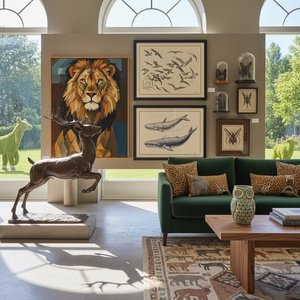
Sanatta Hayvanlar: İç Mekân Tasarımında Sembolizm ve Estetik Dönüşüm
Sanatta hayvanların sembolik anlamlarını keşfedin! Türk resim sanatından iç mekan tasarımına kadar kapsamlı rehberimizle evinizi dönüştürün. OriginalUniqueArt ile kaliteli yağlı boya tablolar ve özel portre siparişleri.

Wild Wonders: 10 Iconic Artworks That Capture the Spirit of Animals
Journey through history with 10 iconic animal artworks. From classical portraits to modern wildlife masterpieces, explore the stories behind these timeless pieces. Find museum-quality art reproductions and decor inspiration at OriginalUniqueArt.com. Discover all masterpieces online.

Wild Wonders: Top 10 Masterpieces That Capture the Spirit of Animals
Journey through history with 10 iconic animal paintings that define art mastery. From classical portraits to modern wildlife fine art, explore the stories behind these timeless masterpieces and find museum-quality reproductions for your decor. Discover all masterpieces on OriginalUniqueArt.com

Wild Wonders: Top 10 Masterpieces That Bring Animals to Life
Journey through history with 10 iconic animal paintings. From classical portraits to impressionist wonders, explore the stories behind these timeless masterpieces. Find museum-quality art reproductions and decor inspiration at OriginalUniqueArt.com. Discover all masterpieces on OriginalUniqueArt.com

Soaring Spirits: 10 Masterpieces That Capture the Beauty of Birds
Embark on a visual journey through 10 iconic bird paintings. From Impressionist strokes to contemporary wildlife art, discover the stories behind these timeless masterpieces and find museum-quality reproductions for your decor. Explore the full collection online at OriginalUniqueArt.com.


