Contemporary Realism · 1957
Falling Warrior (Henry Moore, 1957)
Falling Warrior, Henry Moore (1898–1986) tarafından yapıldı. 1957 yılına aittir. Contemporary Realism akımına aittir. Bronze ile yapılmıştır. Liverpool, Birleşik Krallıkdaki National Museums Liverpool bünyesinde korunmaktadır. Boyutları 48 × 147 cm'dir.
- 1957
- Bronze
- 48 × 147 cm
- National Museums Liverpool

 El Yapımı Yağlı Boya Tablo
 Paylaş
 Paylaş
 Bilgi formu


 İndir
 Benzer ürünler
 Slayt Gösterisi
 Soru & Cevap

 İstatistikler
Falling Warrior hakkında kısa bilgi
- Başlık
- Falling Warrior
- Sanatçı
- Henry Moore (1898–1986)
- Sanatçının doğum yeri
- Castleford, Birleşik Krallık
- Tarih
- 1957
- Teknik
- Bronze
- Boyutlar
- 48 × 147 cm
- Nerede görülebilir
- National Museums Liverpool, Liverpool, Birleşik Krallık
- Dönem
- Modern
- Konu
- bronze sculpture, female figure, reclining pose, minimalism, organic form, tranquility
Falling Warrior neyi betimliyor?
A Symphony of Bronze and Bone: The Essence of Falling Warrior
In the quiet halls of Tate Britain, there exists a moment of profound stillness captured in bronze—a masterpiece that breathes with the weight of history and the lightness of spirit. Henry Moore’s “Falling Warrior,” created between 1956 and 1957, is far more than a mere sculpture; it is a meditation on the very nature of existence. As one approaches this monumental work, the eye is immediately drawn to the fluid, undulating lines that define the female form. The figure lies horizontally, her body a landscape of soft curves and deliberate voids, evoking a sense of both immense strength and heartbreaking vulnerability. It is a piece that does not merely occupy space but commands it, inviting the viewer into a silent dialogue about resilience in the face of inevitable decline.
The brilliance of Moore’s technique lies in his ability to marry the tactile reality of metal with the ethereal quality of movement. Through a masterful process of modeling clay and subsequent bronze casting, Moore achieved a surface texture that feels alive. One can trace the subtle depressions and ridges that mimic the contours of flesh and bone, creating a rhythmic vitality that suggests the figure is caught in a single, breathless moment of transition. His pioneering use of negative space—the intentional piercing of the form—allows light to pass through the sculpture, integrating the surrounding environment into the artwork itself. This interplay of solid mass and hollow void creates a dynamic tension, making the bronze appear deceptively supple, as if the warrior might stir at any moment.
Modernism Rooted in the Earth
To understand the soul of “Falling Warrior,” one must look to the rugged landscapes of Yorkshire, where Henry Moore first learned to see the world. The rolling hills and weathered stones of his youth are echoed in the organic abstractions of this piece. While the sculpture sits firmly within the mid-century movements of Abstract Expressionism and Surrealism, it avoids the coldness often associated with pure abstraction. Instead, Moore utilizes a semi-abstract language to explore deep psychological states. The pose—a female figure with an arm outstretched in what could be interpreted as either defiance or surrender—serves as a universal symbol for the human condition. It captures the duality of our existence: the struggle to remain upright and the eventual, graceful acceptance of our own mortality.
For the discerning collector or interior designer, “Falling Warrior” represents an unparalleled opportunity to introduce a sense of timelessness and intellectual depth into a space. A high-quality reproduction of this work brings with it the prestige of British Modernism and the calming influence of organic form. Whether placed in a sunlit gallery, a sophisticated study, or as a focal point in a contemporary living space, the sculpture’s presence is transformative. It offers more than decoration; it provides a window into a profound aesthetic experience, where the boundaries between the human body and the natural world dissolve into a single, hauntingly beautiful expression of life.
Falling Warrior adlı eseri hangi müze bünyesinde barındırmaktadır?
National Museums Liverpool
Liverpool, Birleşik Krallık
Taş ve Tuval Üzerine Kazınmış Bir Miras: Liverpool Ulusal Müzeleri'ni Keşfetmek Denizcilik tarihi, endüstriyel çabalar ve sanatsal yeniliğin derinden işlendiği canlı Liverpool şehrinin kalbinde, sadece eserlerin depolandığı bir yer olmaktan çok daha fazlası olan Liverpool Ulusal Müzeleri yatıyor. Merseyside'ın evrimine tanıklık eden, binlerce yıllık insan yaratıcılığını kutlayan yaşayan bir kronik. Genellikle Londra’nın kültürel yörüngesine hapsolmuş büyük, merkezi müzelerin aksine, NML Kuzeybatı’nın dirençli ruhuna kök salmış ve herkes için erişilebilir olmaya kendini adamış farklı bir bölgesel kimlikle gelişiyor.


Falling Warrior için yüksek çözünürlüklü görseller

Protected by copyright: these files are for personal reference, not a licence to republish.
Henry Moore, Falling Warrior (1957), National Museums Liverpool.
Falling Warrior hakkında sorular ve cevaplar
"Falling Warrior" adlı eserin orijinali hangi müzede bulunuyor?
Orijinal Henry Moore imzalı "Falling Warrior", National Museums Liverpool, Liverpool, Birleşik Krallık bünyesinde bulunmaktadır. Bir reprodüksiyon, eserin evde sergilenmesine olanak tanır.
Henry Moore imzalı "Falling Warrior" hangi tarihte yapılmıştır?
Henry Moore imzalı "Falling Warrior", 1957 yılında yaratılmıştır.
Henry Moore imzalı "Falling Warrior" eserinde hangi teknik kullanıldı?
Henry Moore, "Falling Warrior" adlı eserinde Bronze tekniğini kullanmıştır. Bu teknik, orijinal eserin maddi doğasını tanımlar.
Orijinal Henry Moore imzalı "Falling Warrior" eserinin boyutları nedir?
Orijinal Henry Moore imzalı "Falling Warrior" eseri 147 x 48 cm boyutlarındadır.
Henry Moore imzalı "Falling Warrior" neyi betimliyor?
"Falling Warrior" eserinin konuları bronze sculpture, female figure, reclining pose, minimalism, organic form, tranquility, monumental art şeklindedir.
Henry Moore imzalı "Falling Warrior" eserinin görüntüsü serbestçe çoğaltılabilir mi?
Henry Moore imzalı "Falling Warrior" için telif hakkı durumu: eser telif hakları ile korunmaya devam etmektedir kapsamındadır. Bu durum, görüntünün çoğaltmalarının serbestçe yapılıp yapılamayacağını belirler.
"Falling Warrior" eserinin yaratıcısı kim?
"Falling Warrior", Henry Moore tarafından yaratılmıştır. Bu sayfadaki bilgiler Henry Moore imzalı orijinal esere aittir.
Henry Moore imzalı "Falling Warrior" hangi sanat akımına dahil?
Henry Moore imzalı "Falling Warrior" adlı eserin dahil olduğu akım Contemporary Realism akımıdır. Bu sınıflandırma, çalışmayı ilgili sanatçılar ve sanat eserleri arasında konumlandırır.
"Falling Warrior" adlı eser, Henry Moore kariyerinin hangi dönemine ait?
"Falling Warrior", Henry Moore sanatçısının Mature Period dönemini temsil etmektedir."
Sanatçı hakkında, Henry Moore

1898–1986, Birleşik Krallık
Henry Moore
A Life Sculpted in Form: The World of Henry Moore Henry Spencer Moore OM CH FBA (30 July 1898 – 31 August 1986) was an English visual artist. He is best known for his semi-abstract monumental bronze sculptures—particularly the reclining figure—which revolutionized modern British sculpture and established him as one of the most influential artists of the twentieth century. His journey from humble beginnings in Castleford, Yorkshire, to international acclaim exemplifies unwavering dedication to artistic exploration and a profound connection to both human form and the natural world. Early Life and Artistic Beginnings Henry Spencer Moore was born in Castleford, West Yorkshire, England, on July 30, 1898, the son of Raymond Spencer Moore (1848–1922) and Mary Baker.
Henry Moore Hakkında Henry Moore tarafından yapılmış öne çıkan eserler
Henry Moore tarafından yapılan diğer eserler
 Reclining Figure
 Sculptural Objects (Cramer 47)
 Sheep 1
 A Miner at Work1942
Falling Warrior üzerine denemeler
 Romantic Realism's Finest: 10 Masterpieces for Your Home | OriginalUniqueArtExplore 10 defining masterpieces of Romantic Realism! Discover Courbet, Millet & Daumier's powerful paintings—capturing emotion and social …
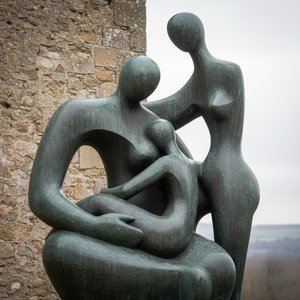 Henry Moore: Sculpting Modernity – Form, Emotion & the Human ConditionExplore the revolutionary sculptures of Henry Moore – abstract forms, reclining figures & powerful expressions of the human condition. Disc…
 Cubist Expressionism's 10 Defining Masterpieces | Art for Your HomeExplore 10 defining Cubist Expressionism masterpieces by Picasso, Braque & more. Discover the stories behind these bold, geometric painting…