

 Önizleme yap
 Paylaş
 Paylaş
 Detayları Gör

 İndir
İndir
 Benzerlerini gör
 X-Işını
 Slayt Gösterisi
 İstatistikler
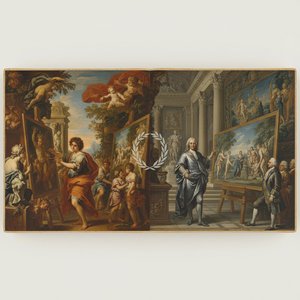
Lady with lapdog

 Tümünü Gör
Giclée / Sanat Baskısı
Hızlı üretim ve esnek bitiş seçenekleriyle müze kalitesinde giclée veya kanvas baskı. ( El yapımı tablo satın al Dijital Görsele Geç)




































Eserin orijinal oranlarıyla uyumlu, önceden belirlenmiş boyutlarımız arasından seçim yapın.

Belirli bir çerçeveye veya alana uyması için kendi ölçülerinizi girebilirsiniz. Seçtiğiniz boyut orijinal görüntünün oranlarıyla eşleşmiyorsa, sanat eserini kırpacağız veya görüntüyü aynalanmış ya da düz dolgulu bir kenarlıkla genişleteceğiz. Üretim başlamadan önce onayınız için bir dijital taslak gönderilecektir.
Lütfen ekrandaki önizlemenin gerçek kırpma veya genişletmeyi yansıtmadığını unutmayın. Nihai kompozisyonu yalnızca taslak doğru bir şekilde gösterecektir.
Özel boyutlar mevcut olsa da, orijinal oranları korumak için önceden tanımlanmış listeden bir boyut seçmenizi öneririz.
Dünya Çapında Teslimat (); standart 4/5 hafta yerine 2 haftada. (15 Eylül)

Dünya Çapında Ücretsiz Ekspres Kargo

Yüksek Kaliteli Keten Tuval

Tam Kapsamlı Nakliye Sigortası

Gümrük Vergisi İade Garantisi

Gerçek Renk Uyumu Garantisi

100 Günlük İade Politikası (Sadece Kusurlu Ürünler İçin)

%100 Para İade Garantisi

Toplu Alım İndirimi
 Cam seçeneği yalnızca 110 cm altındaki boyutlar için mevcuttur.

Lady with lapdog
Giclée / Sanat Baskısı
Reproduksiyon Boyutu
-


Toplam Tutar
$ 80
Sanatçı Özgeçmişi
The Florentine Master of Mannerist Drama
Girolamo Macchietti stands as a luminous figure within the vibrant, often turbulent landscape of late 16th-century Florence. A painter whose brush captured the very essence of the Mannerist transition, his life and work reflect the sophisticated evolution from High Renaissance stability to the heightened emotionality and complex compositions that would eventually pave the way for the Baroque era. Born in Florence around 1535 or 1541, Macchietti emerged from a rich artistic lineage, receiving his formative training under the meticulous Michele Tosini. This early education provided him with a foundation of realism and a mastery of color that he would later infuse with the characteristic artifice and psychological depth defining the Mannerist style.
The trajectory of Macchietti’s career was irrevocably shaped by his proximity to the giants of his age, most notably Giorgio Vasari. During the transformative years between 1556 and 1562, Macchietti served as a vital assistant in Vasari's monumental task of decorating the Palazzo Vecchio. Working within the Salone dei Cinquecenti alongside Mirabello Cavalori, he was immersed in a world of grand-scale fresco painting and complex allegorical narratives. This period of intense collaboration did more than merely hone his technical proficiency; it integrated him into the very heart of Florentine civic identity, exposing him to the grandeur and political symbolism that would permeate his later religious and mythological commissions.
A Legacy of Myth and Devotion
As Macchietti’s individual voice matured, his oeuvre began to showcase a remarkable ability to navigate both the sacred and the profane. His participation in the decoration of Francesco I Medici’s prestigious studiolo remains one of his most celebrated achievements. In works such as Jason and Medea (1570) and The Baths of Pozzuoli (1572), he demonstrated a masterful command over composition, using bold colors and dramatic lighting to breathe life into classical legends. These canvases are not merely illustrations of myth but are profound explorations of human passion and tension, rendered with the elongated forms and sophisticated elegance typical of the Florentine school.
Beyond the mythological realms of the Medici court, Macchietti’s spiritual devotion found expression in powerful altarpieces that anchored the religious life of Florence. His Martyrdom of Saint Lawrence for Santa Maria Novella serves as a testament to his ability to evoke profound piety through dramatic movement and light. Whether painting the celestial glory of the Apotheosis of San Lorenzo for the Empoli Cathedral or more intimate religious scenes, he maintained a consistent focus on the psychological weight of his subjects. His later travels, including a significant period in Rome and a two-year sojourn in Spain between 1587 and 1589, further expanded his artistic horizons, though much of his most enduring impact remains rooted in the Florentine tradition.
The historical significance of Girolamo Macchietti lies in his role as a bridge between eras. His work embodies the following characteristics:
- Stylistic Fluidity: The seamless integration of Tosini’s realism with Vasari’s grand Mannerist vision.
- Narrative Complexity: An ability to weave intricate mythological and biblical stories into cohesive, emotionally resonant visual experiences.
- Technical Mastery: A sophisticated use of color, light, and composition that anticipated the dramatic intensity of the coming Baroque period.
Today, as we look upon his surviving works, from the striking Portrait of Lorenzo de' Medici to his evocative religious panels, we witness the hand of an artist who was both a student of tradition and a pioneer of change. Macchietti’s legacy is etched into the very walls of Florence, reminding us of a time when art was a profound dialogue between classical antiquity, religious fervor, and the burgeoning complexity of the modern soul.

Girolamo Macchietti
1535 - 1592 , Italy
Kısa Bilgiler
- Artistic Movement Or Style: Mannerist
- Artists Or Movements Influenced By This Artist: ['Giorgio Vasari']
- Artists Who Influenced This Artist: ['Michele di Ridolfo']
- Date Of Birth: ca. 1535/1541
- Date Of Death: 1592
- Full Name: Girolamo di Francesco di Mariotto Macchietti
- Nationality: Italian
- Notable Artworks:
- Baths at Pozzuoli
- Portrait of Lorenzo de’ Medici
- Allegorical
- Place Of Birth: Florence, Italy
İlgili Makaleler
Simon Vouet: A Baroque Master's Journey from Italian Influence to French Classicism
Explore the life & art of Simon Vouet, a pivotal French Baroque painter who introduced Italian styles to France. Discover his masterpieces and lasting influence on 17th-century art.

Barok Sanatın Zirveleri: Evinizi Büyüleyecek 10 Eser ve Hikayeleri
Barok sanatın en etkileyici 10 başyapıtını keşfedin! Caravaggio, Rembrandt ve daha fazlasının eserleriyle evinizi dönüştürün. Sanat tarihi, renkler ve duygularla dolu bu yolculukta OriginalUniqueArt.com'da müze kalitesinde replikalar bulun. Koleksiyonu çevrimiçi inceleyin!

Italian Baroque Unlocked: High-Drama Art That Hits Hard
Dive into the high-drama world of Italian Baroque art. Discover how chiaroscuro, intense emotion, and theatrical lighting redefined aesthetics. Explore the visceral power of the Counter-Reformation through a modern lens with expert insights from OriginalUniqueArt.com.

The Visceral Stage: Exploring Dramatic Narratives & Emotional Intensity in Baroque Art
Explore the dramatic world of Baroque art! Discover iconic masters like Caravaggio & Rembrandt, their techniques, and the movement's lasting impact. Expert insights for collectors & enthusiasts at OriginalUniqueArt.

Barok Draması: Çağdaş İç Mekanlara Görkem ve Duygu Katmak
Barok sanatının görkemini evinize taşıyın! OriginalUniqueArt'ta el yapımı tablolar, uzman sanat danışmanlığı ve özel siparişlerle iç mekanlarınıza zarafet katıyoruz. Chiaroscuro tekniğiyle hayat bulan eserlerimizi keşfedin.