

 Önizleme yap
 Paylaş
 Paylaş
 Detayları Gör

 İndir
İndir
 Benzerlerini gör
 X-Işını
 Slayt Gösterisi
 İstatistikler
Cato
 Acrylic On Canvas
- WallArt
- Venetian Baroque
 1660
1660 117.0 x 106.0 cm
 Hermitage Müzesi
 Tümünü Gör
El Yapımı Yağlı Boya Reproduksiyon
Sanatçılarımız tarafından sipariş üzerine hazırlanan; istediğiniz boyut ve çerçevede, tuval üzerine el boyaması yağlı boya. ( Baskı Moduna Geç Dijital Görsele Geç)




P118B $10

P118H $10

P118W $10

P438Z $10

P508JH $12

P508YH $12

P805H $10

P805Z $10

P919BZ $10

P919G $10

P919XJ $10

P959ZH $10

P968JZ $12

W106C $8

W218G $10

W218JH $8

W218Y $10

W307PJ $10

W316G $10

W316PJ $8

W316Y $10

W398PJ $8

W4111J $10

W500HY $15

W500JH $15

W692G $12

W849H $8

W940BG $15

W953PJ $8




Eserin orijinal oranlarıyla uyumlu, önceden belirlenmiş boyutlarımız arasından seçim yapın.

Belirli bir çerçeveye veya alana uyması için kendi boyutlarınızı girebilirsiniz. Seçtiğiniz boyut orijinal görüntünün oranlarıyla eşleşmiyorsa, sanat eserini kırparak veya ek el boyaması öğelerle resmi uzatarak ayarlayacağız. Üretim başlamadan önce onayınız için dijital bir taslak gönderilecektir.
Lütfen ekrandaki önizlemenin gerçek kırpmayı veya uzatmayı yansıtmadığını unutmayın. Nihai kompozisyonu yalnızca hazırlanan taslak doğru şekilde gösterecektir.
Özel boyutlar mevcut olsa da, orijinal oranları korumak adına önceden tanımlanmış listeden bir boyut seçmenizi öneririz.
Siparişten sonra, OriginalUniqueArt.com ekibi talimatlar için müşteriye e-posta gönderecek ve bir taslak önizleme sunacaktır
Dünya Çapında Teslimat (); standart 5 hafta yerine 3/4 haftada. (13 Eylül). Kaliteden ödün verilmez.

Dünya Çapında Ücretsiz Ekspres Kargo

Yüksek Kaliteli Keten Tuval

Tam Kapsamlı Nakliye Sigortası

Gümrük Vergisi İade Garantisi

Gerçek Renk Uyumu Garantisi

100 Günlük İade Politikası (Sadece Kusurlu Ürünler İçin)

%100 Para İade Garantisi

Toplu Alım İndirimi
 Cam seçeneği yalnızca 110 cm altındaki boyutlar için mevcuttur.

Cato
Reproduksiyon Tekniği
Reproduksiyon Boyutu
-


Toplam Tutar
$ 300
Giovanni Battista Langetti’s Dramatic Vision: An Exploration of ‘Cato’
Giovanni Battista Langetti (1635 – 22 October 1676) stands as a cornerstone of Venetian Baroque, embodying the visceral energy and theatrical grandeur championed by Caravaggesque painting while simultaneously cultivating his own distinctive artistic voice. Born in Genoa, Italy, Langetti’s formative years were steeped in the influence of masters like Assereto and Pietro da Cortona, absorbing stylistic precepts that would subsequently permeate his oeuvre—a testament to unwavering dedication to conveying profound emotion and executing masterful technique. His relocation to Venice marked a pivotal moment, establishing him as an integral participant within a burgeoning artistic landscape characterized by innovation and expressive fervor.The Subject Matter: A Moment of Intense Suffering
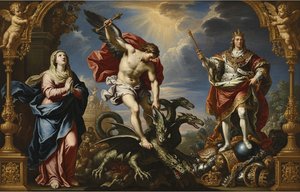
‘Cato,’ painted in 1660, depicts Christ’s agonizing torment during his crucifixion—a scene meticulously rendered with unflinching realism that aligns squarely with Langetti's commitment to Caravaggesque principles. The central figure dominates the composition, portraying Jesus with a posture conveying profound distress and pain. His arms are raised aloft, clutching a knife – a potent symbol of sacrificial suffering and defiance against Roman authority. The artist’s masterful use of chiaroscuro—the dramatic interplay between light and shadow—amplifies the emotional impact of the image, highlighting Christ's flesh and emphasizing the contours of his body with luminous illumination.Stylistic Influences & Technique: Caravaggesque Realism Elevated
Langetti’s artistic approach draws heavily from Caravaggio’s revolutionary technique, prioritizing direct observation and capturing fleeting expressions of emotion. However, unlike Caravaggio’s austere palette, Langetti employs a richer color scheme—particularly reds and golds—to imbue the painting with vibrancy and grandeur. The artist skillfully blends oil paints to achieve textural nuances that heighten the sense of physicality and immediacy. Furthermore, Langetti's meticulous attention to detail extends beyond mere representation; he strives to convey psychological depth, capturing the palpable agony etched upon Christ’s face.Historical Context & Symbolism: Resistance Against Tyranny
‘Cato’ emerged during a period marked by religious fervor and political upheaval—the Counter-Reformation in Rome profoundly impacted artistic sensibilities. The depiction of Christ's suffering served as a powerful visual reminder of Christian martyrdom and underscored the importance of unwavering faith amidst oppression. The knife held aloft symbolizes not only physical pain but also spiritual resistance against Roman tyranny, mirroring the broader anxieties surrounding papal authority during Langetti’s time.Emotional Impact & Artistic Legacy: A Masterpiece of Baroque Expression
Ultimately, ‘Cato’ transcends mere visual representation; it resonates with profound emotional depth—a testament to Langetti's artistic genius and his ability to capture the essence of human experience. The painting continues to captivate viewers centuries later, inspiring admiration for its dramatic composition, masterful technique, and enduring symbolic significance. Giovanni Battista Langetti cemented his place as a pivotal voice in Venetian Baroque, leaving behind an indelible mark on art history—a legacy characterized by unwavering conviction in conveying emotion and elevating realism to unparalleled heights.Sanatçı Özgeçmişi
The Dramatic Voice of Venetian Caravaggismo
Giovanni Battista Langetti stands as a pivotal figure in the Venetian Baroque, embodying the fervor and theatricality of Caravaggesque painting while simultaneously forging his own distinctive artistic vision. Born in Genoa in 1635, Langetti’s early training was shaped by exposure to prominent masters such as Assereto and Pietro da Cortona, whose stylistic principles provided him with a foundational mastery of form and composition. His formative years were further enriched by the mentorship of Giovanni Francesco Cassana, a period that honed his artistic sensibilities and prepared him for the competitive and vibrant art scene of Italy. However, it was Venice itself that truly captivated him, becoming the epicenter of his prolific career and providing the perfect stage for his exploration of light and shadow.
By the 1650s, Langetti had established himself within the Venetian landscape, swiftly adopting a strikingly Caravaggesque style. This approach was defined by tenebrism—a dramatic interplay of intense light and deep, enveloping shadows—and an uncompromising commitment to realism. For Langetti, this stylistic choice was far more than mere imitation of Caravaggio; it was a deliberate embrace of expressive power, used to translate profound human emotions onto the canvas. His work became a bridge between the gritty naturalism of the early 17th century and the grander, more theatrical flourishes of the late Baroque period.
Mastery of Narrative and Emotional Depth
The true brilliance of Langetti’s oeuvre lies in his ability to breathe life into biblical narratives and historical subjects, imbuing them with a psychological depth that resonates across centuries. He excelled at portraying figures caught in moments of extreme tension or spiritual crisis. In works such as Diogenes & Alexander, Langetti captures the legendary clash between philosophical wisdom and imperial power through breathtaking precision and theatrical lighting. His ability to manipulate texture and light allows the viewer to feel the weight of the historical moment, making the ancient past feel immediate and visceral.
This mastery of drama is equally evident in his religious compositions, where he explores themes of suffering, devotion, and faith. In Mary Magdalene at the Foot of the Cross, the artist utilizes the stark contrasts of the Caravaggesque tradition to highlight the raw emotion of the subject, creating a powerful meditation on grief and piety. Even in more singular character studies, such as his depiction of Cato, Langetti employs intense realism and rich, saturated colors to convey the internal struggles of his subjects. His technique ensures that every brushstroke contributes to the overarching narrative of human experience.
Legacy and Artistic Significance
Langetti’s contribution to the Venetian school of painting remains a significant chapter in the history of Italian art. While he operated within the established traditions of his time, his unique ability to blend Genoese training with Venetian colorism and Caravaggesque drama created a legacy of emotional intensity. His work serves as a testament to the enduring power of the Baroque era—a period where the boundaries between the painted image and the lived experience were blurred through the masterful use of light.
Today, Langetti is remembered not just as a follower of style, but as an innovator who helped define the dramatic vocabulary of his age. His paintings continue to captivate audiences, offering a window into a world of profound shadows and brilliant highlights, where every figure tells a story of triumph, tragedy, or quiet contemplation.

giovanni battista langetti
1635 - 1676 , Italy
Kısa Bilgiler
- Artistic Movement Or Style: Venetian Baroque
- Artists Or Movements Influenced By This Artist:
- Johann Karl Loth
- Antonio Zanchi
- Artists Who Influenced This Artist:
- Assereto
- Pietro da Cortona
- Giovanni Francesco Cassana
- Date Of Birth: 1635
- Full Name: Giovanni Battista Langetti
- Nationality: Italian
- Notable Artworks:
- Diogenes & Alexander
- Joseph Interpreting the Baker’s Dream
- The good samaritan
- Place Of Birth: Genoa, Italy
İlgili Makaleler

The Visceral Stage: Exploring Dramatic Narratives & Emotional Intensity in Baroque Art
Explore the dramatic world of Baroque art! Discover iconic masters like Caravaggio & Rembrandt, their techniques, and the movement's lasting impact. Expert insights for collectors & enthusiasts at OriginalUniqueArt.

Jacopo Tintoretto'nun En İyi 25 Eseri: Venedik Rönesansı'nın Dramatik Dehası | OriginalUniqueArt
Jacopo Tintoretto'nun en iyi 25 eserini keşfedin! Venedik Rönesansı'nın dramatik dehasının ardındaki hikayeleri, teknikleri ve renk paletlerini öğrenin. Ev dekorasyonunuz için lüks sanat baskıları OriginalUniqueArt'ta. Koleksiyonu şimdi keşfedin!
The Dramatic Flourish: Exploring Themes of Power, Faith & Emotion in Baroque Artworks
Explore the dramatic world of Baroque art! Discover masters like Zurbarán & the powerful influence of religious zeal on painting techniques. Expert insights for collectors and enthusiasts.

The Golden Age Reforged: Dramatic Realism & Religious Zeal in Spanish Baroque Art
Explore the dramatic world of Spanish Baroque art! Discover masters like Zurbarán & the powerful influence of religious zeal on painting techniques – a guide for collectors and enthusiasts.

The Dramatic Flourish: Exploring the Baroque Movement's Enduring Legacy in Art History
Explore the dramatic world of Baroque art! Discover iconic artists like Caravaggio & Rubens, defining techniques, and its lasting impact on art history. Expert insights for collectors & enthusiasts at OriginalUniqueArt.