
 Önizle
 Gönder
 Paylaş
 Detaylar
 Rehber

 Dosyayı İndir
 Benzerleri
 X-Işını
 Slayt Gösterisi
 İstatistikler
Yedi
 Tuval Üzerine Akrilik Boya
- Duvar Sanatı
- Contemporary Realism
 1983
1983- Çağdaş
 250.0 x 250.0 cm
 Devamını Oku
Çevrimiçi önizlemeden çok daha yüksek kalitede, iyileştirilmiş ve yüksek çözünürlüklü bir dijital görüntü satın alın.
Her dosya, uzman ekibimiz tarafından gelişmiş araçlar ve titiz manuel rötuş teknikleri kullanılarak özenle hazırlanır. Her görüntünün olağanüstü netliğe, kusursuz renk doğruluğuna ve ince ayrıntılara sahip olduğundan emin oluruz.
Son dosya; profesyonel, editoryal ve baskı süreçlerinde anında kullanıma uygun şekilde optimize edilerek 72 saat içinde e-posta yoluyla teslim edilir. Bu, seçkin tasarım stüdyoları, yayıncılar ve galerilerin güvendiği aynı kalite standartlarındadır.
Dijital Görsel
Kişisel kullanım, baskı ve yaratıcı projeleriniz için yüksek çözünürlüklü bir dosya indirin. ( Baskı Satışına Geç El Yapımı Tablo Satın Al)
Her Dijital Görüntü Siparişine Dahil Olanlar
Profesyonel Dijital Teslimat Garantisi
OriginalUniqueArt.com seçtiğinizde, sadece bir görsel edinmekle kalmaz; titizlikle hazırlanmış, profesyonelce iyileştirilmiş dijital bir sanat eserine sahip olur ve memnuniyet garantisiyle güvence altına alınırsınız. Siparişinizle birlikte otomatik olarak sunulan her şey şunlardır:

Hızlı E-posta ile Teslimat
Yüksek çözünürlüklü dijital görüntü dosyanız, siparişinizin ardından en geç 72 saat içinde e-posta ile size gönderilecek ve hemen kullanıma hazır olacaktır.

Yapay Zeka Destekli Dijital Dosya
Sanat eseriniz; maksimum detay, netlik ve renk doğruluğu sağlamak amacıyla gelişmiş yapay zeka araçları ve manuel düzenleme kullanılarak profesyonelce optimize edilmektedir.

Ömür Boyu Ücretsiz Yeniden Gönderim
Dosyanızı yanlışlıkla mı sildiniz yoksa kayıp mı oldu? Endişelenmeyin; dosyanızı dilediğiniz zaman size ücretsiz olarak tekrar göndereceğiz.

Asla İthalat Ücreti Ödemeyin
Sanat eserinizin tadını gümrük vergisi, harç veya teslimat ücreti ödemeden anında çıkarın; dijital indirmeler her zaman vergiden muaftır.

Renk Doğruluğu Garantisi
Profesyonel araçlar ve renk yönetimi kullanarak dijital görselinizin orijinal renklere mümkün olduğunca yakın yansıtılmasını sağlıyoruz.

100 Günlük Memnuniyet Garantisi
If you're not satisfied with your digital image, we'll revise it or refund 100% within 100 days - no questions asked.

100% Para İadesi Garantisi
Memnun kalmadınız mı? Dijital dosyanızı teslim aldıktan sonraki 100 gün içinde, hiçbir soru sorulmaksızın tam para iadesi alabilirsiniz.

Toplu Sipariş İndirimleri
Buy 3 images, save 10% - Buy 5, save 15% - Buy 10+, save 20%. Great for creative projects, galleries, and agencies.
Gerhard Richter’s “July”: A Dance Between Chance and Memory
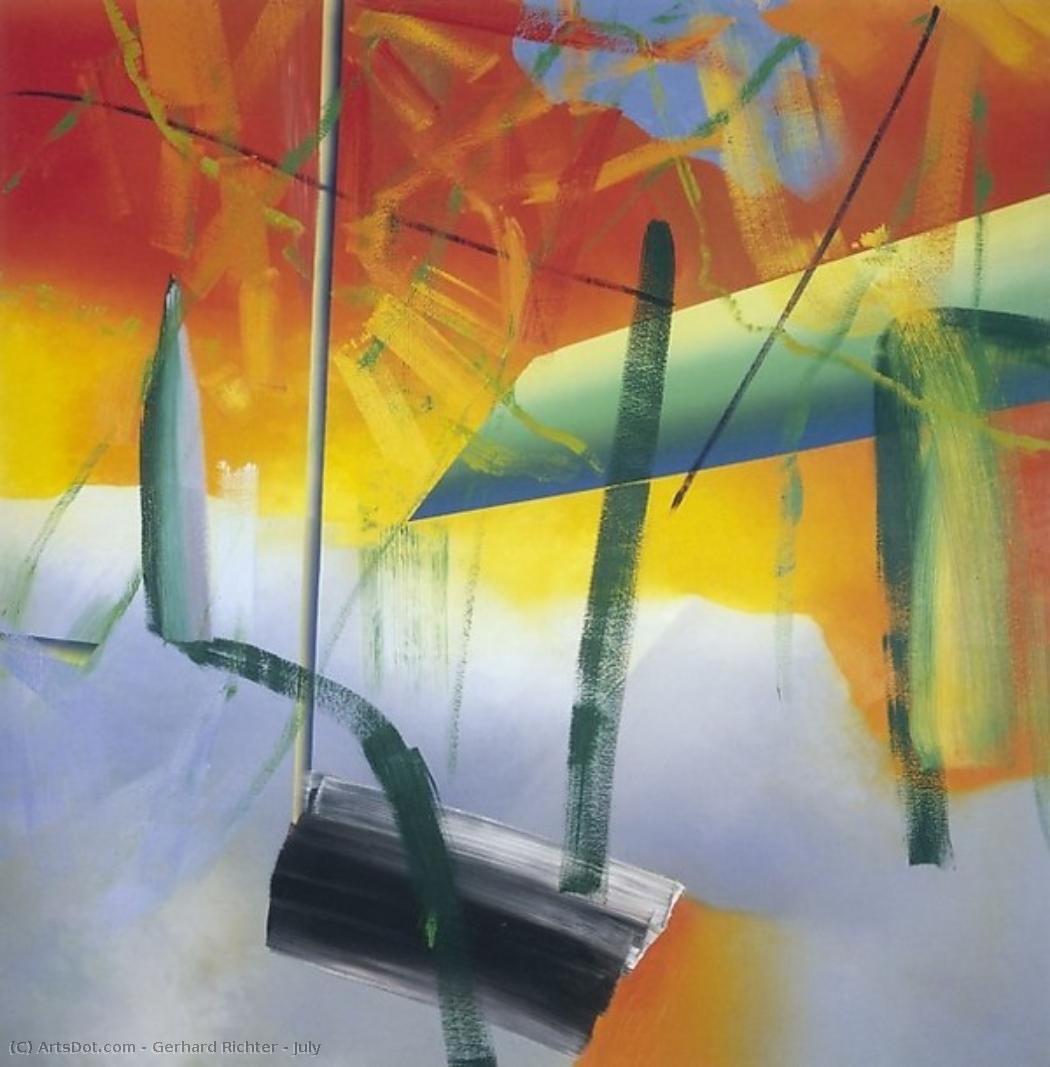
Gerhard Richter's "July," created in 1983, stands as a cornerstone of his oeuvre—a testament to his unwavering commitment to exploring the boundaries between representation and abstraction. Measuring an impressive 250 x 250 cm, this monumental canvas commands attention not merely for its size but for the profound emotional resonance it conveys. Richter’s artistic journey began in Dresden, Germany, amidst the turbulent backdrop of postwar Europe—a formative experience that instilled within him a deep skepticism toward ideological dogma and fueled an enduring fascination with uncertainty. This inherent restlessness is palpable throughout his work, including “July,” where he deliberately resists categorization, constantly shifting between approaches and blurring stylistic distinctions.The Technique of Controlled Chaos: Squeegee and Layered Paint
At the heart of "July’s" visual impact lies Richter's groundbreaking technique—a method that defies conventional artistic conventions. Rather than meticulously recreating a photograph or adhering to a preconceived image, he initiates his creative process by applying paint thickly onto the canvas. Subsequently, he employs a squeegee—a tool traditionally used in printing—to scrape away portions of the pigment, generating a textured surface characterized by subtle blurring and layering. This seemingly paradoxical approach embodies Richter’s core philosophy: embracing chance while maintaining artistic control. The resulting surface is remarkably complex, revealing glimpses of underlying colors and forms beneath the uppermost layers—a deliberate disruption of visual clarity that invites prolonged contemplation. As Richter himself described it, “I don't want to paint what I see; I want to paint how I remember.” This technique speaks volumes about his artistic vision – a desire to capture not just the surface appearance of reality but also its intangible essence.A Landscape Fragmented: Composition and Symbolism
The painting’s composition is equally significant in conveying its emotional depth. Dominating the canvas is a vertical element—often interpreted as a pole or stick—which serves as an anchor amidst swirling forms. Alongside this central axis resides a boat, positioned on the right side of the image, suggesting a serene waterscape and hinting at themes of journey and reflection. Scattered throughout the scene are hints of foliage and avian life—elements that contribute to the overall atmosphere and evoke memories of summertime tranquility. Two figures appear subtly integrated into the landscape, their presence adding a human scale to the expansive abstract space. These elements aren’t depicted with photographic precision; instead, they exist as fragments of recollection—symbols of experience filtered through time and perception.Historical Context: Embracing Uncertainty Amidst Cold War Shadows
“July” was created during the early 1980s—a period marked by the lingering anxieties of the Cold War and a palpable sense of disillusionment following decades of ideological conflict. Richter’s artistic exploration coincided with a broader cultural shift toward questioning established norms and embracing ambiguity. His rejection of representational art aligns powerfully with this zeitgeist, reflecting a desire to grapple with existential questions about identity and perception—themes that resonate deeply within the artwork's visual language. The painting embodies a spirit of experimentation—a refusal to adhere to stylistic conventions—that anticipates the developments of postmodern art and cements Richter’s legacy as one of the most influential artists of our time.Emotional Resonance: A Meditation on Memory and Perception
Ultimately, “July” transcends mere visual depiction; it functions as a meditation on memory and perception itself. The painting's muted palette—dominated by shades of green and gray—creates an atmosphere of contemplative stillness. Its textured surface invites viewers to engage in a tactile experience—to consider the materiality of art alongside its conceptual content. Like all of Richter’s work, “July” resists easy interpretation, prompting us to confront our own subjective understanding of reality. It's a painting that lingers in the mind long after viewing—a testament to Richter’s ability to capture not just what he sees but also how he feels—a profound achievement for an artist dedicated to exploring the complexities of human experience.Soru ve Cevaplar
"Yedi", Gerhard Richter’in sıkça işlediği konular arasında nerede duruyor?
Gerhard Richter'in yinelenen temaları picasso legacy, postwar expression, german identity, formal experimentation, chance & control içerir; "Yedi" ise color field, texture, landscape, pole, boat, figures, atmosphere, uncertainty üzerine odaklanır.
Renkleri göz önüne alındığında, Gerhard Richter imzalı "Yedi" hangi oda için önerilir?
Gerhard Richter imzalı "Yedi" eserinin Toprak tonları renkleri, önerilen mekanı olan Oturma Odası ile mükemmel bir uyum içindedir.
Gerhard Richter imzalı "Yedi", aranan Contemporary Realism eserleri arasında mı?
Katalogdaki Contemporary Realism eserleri arasında "Yedi", İkonik olarak kaydedilmiştir.
Sanatçı Biyografisi
Bölünmüş Bir Hayatın İzleri: Gerhard Richter’in İlk Yılları ve Sanatsal Oluşumu
Gerhard Richter’in hikayesi, 20. yüzyıl Almanya’sının parçalanmış tarihiyle ayrılmaz bir biçimde birbirine bağlıdır. 1932 yılında Dresden’de doğan sanatçının çocukluğu, yükselen bir Nasyonal Sosyalist rejimin gölgesinde şekillendi. Savaş yıllarında ailesinin defalarca yer değiştirmek zorunda kaldığı bu formative dönem, onda derin bir belirsizlik duygusu ve on yıllar boyunca sanatsal pratiğine nüfuz edecek olan sorgulayıcı bir ruh yarattı. Reichenau ve Waltersdorf’taki erken çocukluk yıllarının huzurlu manzaraları, çatışmaların gelişiyle kısa sürede bozuldu ve bu durum ruh dünyasında silinmez izler bıraktı. Babası, Nazi partisinin ateşli bir destekçisi olmasa da, otoriter yönetim altındaki hayatın zorluklarını bir öğretmen olarak göğüslerken; annesi aile içinde edebiyat ve müziğe duyulan sevgiyi besledi. Bu ikilik —koşulların pragmatik bir kabulu ile kültürel ifadeye duyulan derin özlem— Richter’in kendi sanatsal yaklaşımının belirleyici bir özelliği haline geldi. 1951 yılında Dresden Güzel Sanatlar Akademisi'nde resmi eğitimine başladı; başlangıçta Doğu Almanya devletinin dayattığı sosyalist realizm geleneğinin içine hapsolmuş durumdaydı. Ancak bu kısıtlı ortamda bile, ideolojik sınırlamalara duyulan artan hoşnutsuzluk ve daha geniş yaratıcı olanakları keşfetme arzusuyla beslenen bir sanatsız özgürlük tutkusu yüzeyin altında sessizce kaynamaya devam ediyordu.Sınırlardan Kaçış: Düsseldorf ve Üslup Arayışı
1961 yılı, sanatçının kaderini değiştiren dönüm noktası oldu. Richter, eşi Marianne Eufinger ile birlikte Doğu Almanya’dan kaçma yönünde cesur bir karar alarak, Düsseldorf’un yükselen sanat sahnesine sığındı. Bu hamle, onun sanatsal yolculuğunda radikal bir kırılmayı temsil ediyordu. Batı Almanya’nın sunduğu bu yeni ortam, deney ve yeniliğin sadece izin verilen değil, aynı zamanda aktif olarak teşvik edildiği özgürleştirici bir atmosfer sunuyordu. Düsseldorf’ta; kimlik, temsil ve tarihin mirası gibi sorularla boğuşan canlı bir sanat topluluğuyla karşılaştı. Sosyalist realizmin katı üslup kurallarını hızla parçalamaya başladı ve erken olgunluk dönemini tanımlayacak olan yoğun bir keşif sürecine girdi. Bu dönemde, fotoğrafları şaşırtıcı bir hassasiyetle yeniden yaratan fotorealizmden, cesur renkler ve dinamik fırça darbeleriyle karakterize edilen soyut kompozisyonlara kadar birbirinden tamamen farklı görünen yaklaşımlar arasında gidip geldi. Sigmar Polke ile gerçekleştirdiği iş birliği, yerleşik sanatsal normlara duydukları ortak şüpheyi ve reklam ile kitle iletişim araçlarından alınan imgelerin kullanımını yansıtan, kasıtlı olarak belirsiz bir etiket olan ‘Kapitalist Realizm’ teriminin doğmasına yolak açtı. Bu dönem, tek bir üslup bulma çabasından ziyade, üslup bütünlüğü kavramını sorgulamak ve çelişkiyi temel bir ilke olarak benimsemek üzerine kuruluydu.Sınırların Bulanıklaşması: Fotorealizm, Soyutlama ve Tesadüfün Gücü
Richter’in sanatsal sözlüğü, 1960’lar boyunca ve sonrasında olağanüstü bir teknik ve tema yelpazesini kapsayacak şekilde genişledi. Genellikle aile fotoğraflarına veya gazete görüntülerine dayanan fotorealistik tabloları, gerçekliğin basit kopyaları değil; algının ve temsilin doğasına yönelik derin araştırmalardır. Bu görüntüleri neredeyse klinik bir mesafeyle titizlikle işleyerek, izleyiciyi fotografik hakikatin içsel belirsizliğiyle yüzleşmeye zorlar. Aynı zamanda Richter, canlı renkler ve jestsel izlerle katmanlanmış tuvaller yaratarak soyutlamanın derinliklerine daldı. Bu soyut çalışmalar, genellikle cam temizlemek için kullanılan spatulalar (squeegees) aracılığıyla gerçekleştirilir; sanatçı bu araçları tuval yüzeyinde sürükleyerek boyayı öngörülemez şekillerde manipüle eder. Tesadüfe ve kendiliğindenliğe duyulan bu bağlılık, kontrolü bırakmasına ve beklenmedik sonuçlara kapı açmasına olanca sanatsal felsefesinin merkezinde yer alır. Renkli karelerin sistematik düzenlemeleri olan ‘Renk Çizelgeleri’ (Color Charts) ise, sanatsal ifadenin geleneksel kavramlarına meydan okuyarak resmin tanımını bizzat sorgular. Bu eserler bireysel estetik tercihlerle ilgili değil, rengin özündeki özellikleri ve organizasyonel olasılıklarını keşfetmekle ilgilidir.Miras ve Etki: Çağdaş Sanatın Ustası
Gerhard Richter’in çağdaş sanat üzerindeki etkisi yadsınamaz. Kurallara meydan okuma cesareti, teknik konusundaki amansız denemeleri ve tarihsel ile politik temalarla kurduğu derin bağ, onu zamanımızın en önemli sanatçılarından biri olarak konumlandırmıştır. Eserlerini tek bir üslup çerçevesine hapsetme girişimlerine direnerek, kolayca kategorize edilmeyi her zaman reddetmiştir. Bu tanımlanmayı reddediş, teknik ustalığı ve entelektüel titizliğiyle birleştiğinde, ona geniş çaplı eleştirel beğeni ve ticari başarı kazandırmıştır; tabloları müzayedelerde düzenli olarak rekor fiyatlara alıcı bulmaktadır. Ancak piyasa değerinin ötesinde, çok daha derin bir anlam yatar. Richter’in sanatı; hafıza, kimlik ve parçalanmış bir dünyada anlam arayışı gibi meselelerle boğuşarak modern varoluşun karmaşıklığına hitap eder. O, cevaplar sunmak yerine sorular sorar; izleyiciyi kendi ön yargılarıyla yüzleşmeye ve eleştirel bir diyaloğa girmeye davet eder. Onun etkisi, yenilikçi tekniklerine ve sanatsal keşfe olan sarsılmaz bağlılığına kapılan, onun izinden giden sayısız sanatçının eserlerinde görülebilir. Richter’in mirası sadece güzel nesneler yaratmakla ilgili değildir; resmin kendi olasılıklarını genişletmekle ilgilidir. Zorlayıcı ve derin yankı uyandıran işleriyle izleyiciyi etkilemeye ve düşündürmeye devam eden, çağdaş sanatın hayati bir gücü olmaya devam etmektedir.
Gerhard Richter
1932 - , Almanya
Kısa Bilgiler
- Artistic Movement Or Style:
- Fotorealizm
- Soyut sanat
- Artists Or Movements Influenced By This Artist: ['Sigmar Polke']
- Artists Who Influenced This Artist:
- Jean Arp
- Pablo Picasso
- Date Of Birth: 9 Şubat 1932
- Full Name: Gerhard Richter
- Nationality: Alman
- Notable Artworks:
- Gilbert
- S. ile Çocuk
- Place Of Birth: Dresden, Almanya