Baskıyı satın al Görseli Satın Al
 Paylaş
 Paylaş
 Detayları Gör
 Favorilere ekle

 İndir
İndir
 Benzerlerini gör
 X-Işını
 Slayt Gösterisi
Korn


 Tümünü Gör
El Yapımı Yağlı Boya Reproduksiyon
Sanatçılarımız tarafından sipariş üzerine hazırlanan; istediğiniz boyut ve çerçevede, tuval üzerine el boyaması yağlı boya.




P118B $10

P118H $10

P118W $10

P438Z $10

P508JH $12

P508YH $12

P805H $10

P805Z $10

P919BZ $10

P919G $10

P919XJ $10

P959ZH $10

P968JZ $12

W106C $8

W218G $10

W218JH $8

W218Y $10

W307PJ $10

W316G $10

W316PJ $8

W316Y $10

W398PJ $8

W4111J $10

W500HY $15

W500JH $15

W692G $12

W849H $8

W940BG $15

W953PJ $8




Eserin orijinal oranlarıyla uyumlu, önceden belirlenmiş boyutlarımız arasından seçim yapın.

Belirli bir çerçeveye veya alana uyması için kendi boyutlarınızı girebilirsiniz. Seçtiğiniz boyut orijinal görüntünün oranlarıyla eşleşmiyorsa, sanat eserini kırparak veya ek el boyaması öğelerle resmi uzatarak ayarlayacağız. Üretim başlamadan önce onayınız için dijital bir taslak gönderilecektir.
Lütfen ekrandaki önizlemenin gerçek kırpmayı veya uzatmayı yansıtmadığını unutmayın. Nihai kompozisyonu yalnızca hazırlanan taslak doğru şekilde gösterecektir.
Özel boyutlar mevcut olsa da, orijinal oranları korumak adına önceden tanımlanmış listeden bir boyut seçmenizi öneririz.
Siparişten sonra, OriginalUniqueArt.com ekibi talimatlar için müşteriye e-posta gönderecek ve bir taslak önizleme sunacaktır
Dünya Çapında Teslimat (); standart 5 hafta yerine 3/4 haftada. (22 Temmuz). Kaliteden ödün verilmez.

Dünya Çapında Ücretsiz Ekspres Kargo

Yüksek Kaliteli Keten Tuval

Tam Kapsamlı Nakliye Sigortası

Gümrük Vergisi İade Garantisi

Gerçek Renk Uyumu Garantisi

60 Günlük İade Politikası (Sadece Kusurlu Ürünler İçin)

%100 Para İade Garantisi

Toplu Alım İndirimi
 Cam seçeneği yalnızca 110 cm altındaki boyutlar için mevcuttur.

Korn
Reproduksiyon Tekniği
Reproduksiyon Boyutu
-


Toplam Tutar
-
Eser Açıklaması
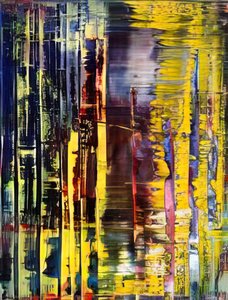
Gerhard Richter’s ‘Korn’: A Burst of Abstract Energy
Created in 1982, ‘Korn’ (Grain) is a compelling example of Gerhard Richter's mastery of abstract expressionism. This dynamic painting showcases his signature gestural style and profound exploration of color, texture, and the very act of painting itself.Decoding the Abstract Form
‘Korn’ eschews traditional representation, offering instead a vibrant field of layered colors and energetic brushstrokes. There is no discernible subject matter in the conventional sense; rather, Richter invites viewers to engage directly with the *physicality* of the paint and the emotional resonance of its application. The composition feels deliberately unbalanced, creating a visual tension that draws the eye across the canvas. Fragmented shapes and loose lines intersect and overlap, fostering a sense of constant movement and spontaneity.Technique & Materials: Impasto and Layering
Richter’s technique in ‘Korn’ is characterized by a generous use of oil paint applied with both brush and squeegee – a hallmark of his abstract work. The *impasto*—thickly layered paint—creates a rich, tactile surface that begs to be experienced beyond the visual. This layering isn't merely about building up texture; it’s also about obscuring and revealing, creating depth and complexity within the seemingly chaotic arrangement. The diffuse lighting suggests an indoor studio environment, emphasizing the intimate connection between artist and canvas.Historical Context: Post-War German Art
Gerhard Richter emerged as a significant figure in post-war German art, grappling with questions of history, memory, and representation. Born in Dresden in 1932, he experienced firsthand the devastation of World War II and the subsequent division of Germany. His artistic journey began under the constraints of Socialist Realism in East Germany before he defected to West Germany in 1961. ‘Korn’, created during a period of established international recognition, reflects Richter’s ongoing exploration of abstraction as a means of both liberation *and* questioning artistic conventions. He deliberately avoided clear narratives or political statements, instead focusing on the inherent qualities of painting itself.Symbolism & Emotional Impact
While ‘Korn’ resists definitive interpretation, its energetic composition and vibrant palette evoke powerful emotions. The swirling colors and dynamic brushwork can be seen as representing internal turmoil, a burst of creative energy, or even the chaotic nature of modern life. The title itself, “Korn” (Grain), is intriguing. It could allude to organic forms, the building blocks of life, or perhaps the granular texture of the paint itself – a subtle reminder of the material reality underlying the abstract image. Ultimately, the painting’s symbolism remains open-ended, allowing viewers to project their own experiences and interpretations onto its surface.Collecting & Interior Design
‘Korn’ is held in prestigious collections, including the Daros Collection in Zurich and the Kunstsammlung Nordrhein-Westfalen in Düsseldorf. Its bold colors and dynamic composition make it a striking focal point for any space.- For collectors: ‘Korn’ represents a pivotal moment in Richter's career and exemplifies his innovative approach to abstract painting.
- For interior designers: The painting’s vibrant energy can inject life into modern interiors, while its complex texture adds depth and sophistication. It pairs well with minimalist furnishings or serves as a counterpoint to more traditional décor.
Sanatçı Özgeçmişi
A Life Shaped by Division: The Early Years and Artistic Formation of Gerhard Richter
Gerhard Richter’s artistic journey began in Dresden, Germany, amidst the turbulent backdrop of postwar Europe and the looming shadow of Soviet influence. Born on February 9, 1932, his childhood was profoundly impacted by displacement – his family repeatedly relocated during the Nazi era and subsequently under communist rule—experiences that instilled within him a fundamental skepticism toward ideological dogma and fueled an enduring fascination with uncertainty. His father, a schoolteacher navigating the constraints of East German society, fostered a love for literature and music in the home, while his mother nurtured a keen eye for detail and observation. These formative influences would prove crucial to Richter’s artistic sensibility, shaping his approach to representation and informing his exploration of complex themes throughout his career. Early Artistic Training: Socialist Realism and Beyond Richter commenced formal training at Dresden Academy of Fine Arts in 1951, initially immersing himself in the dominant aesthetic of socialist realism—a style dictated by the East German state that prioritized idealized depictions of labor and social harmony. Despite this initial engagement with established artistic conventions, Richter harbored a burgeoning desire for creative freedom, recognizing the limitations imposed by ideological constraints. He actively sought ways to transcend these boundaries, experimenting with diverse techniques and styles—from expressive brushstrokes to meticulous detail—demonstrating an early aptitude for artistic innovation. Recognizing the need for broader exposure, he relocated to Düsseldorf in 1961, joining a vibrant community of artists grappling with questions of identity and confronting the legacy of history. This pivotal move propelled him into the heart of West German art culture, where experimentation and critique flourished. The Düsseldorf School: Photorealism and Conceptual Inquiry Düsseldorf became Richter’s crucible for artistic transformation. He embraced photorealism—a style characterized by painstakingly accurate reproductions of photographic images—as a means of interrogating the nature of perception and representation. Simultaneously, he engaged in conceptual inquiry, questioning the very definition of painting itself through unconventional approaches like color charts and squeegee prints. His collaboration with Sigmar Polke yielded the provocative term ‘Capitalist Realism,’ encapsulating their shared disillusionment with prevailing artistic norms and their appropriation of imagery from advertising and mass media—a deliberate challenge to accepted aesthetic standards. Richter’s oeuvre reflects a continuous dialogue between observation and abstraction, realism and chance—a testament to his unwavering commitment to artistic exploration and his refusal to adhere to stylistic conventions. Major Achievements and Artistic Legacy Throughout his prolific career spanning decades, Gerhard Richter achieved remarkable success as both an artist and a cultural figure. His paintings consistently commanded record prices at auction, cementing his position among the most influential artists of our time—a testament to his technical virtuosity and intellectual rigor. However, Richter’s artistic legacy extends far beyond commercial acclaim; it resides in his profound engagement with historical and political themes—his willingness to confront uncomfortable truths and challenge conventional narratives. His work serves as a catalyst for critical dialogue, prompting viewers to contemplate the complexities of modern existence and questioning their own assumptions about reality. Richter's influence can be seen in the artistic endeavors of countless artists who have drawn inspiration from his pioneering techniques and his unwavering dedication to creative exploration—a legacy that transcends stylistic boundaries and affirms the enduring power of art to provoke thought and inspire action. Richter remains a vital voice in contemporary art, continuing to captivate audiences with his challenging and emotionally resonant creations—a testament to his artistic genius and his indelible mark on the history of visual culture.- Notable Paintings: Abstract Painting 610-1, Gilbert
- Techniques Employed: Photorealism, Color Charts, Squeegee Prints
- Influential Collaborations: Sigmar Polke
- Conceptual Frameworks: Capitalist Realism

Gerhard Richter
1932 - , Almanya
Kısa Bilgiler
- Artistic Movement Or Style:
- Fotorealizm
- Soyut sanat
- Artists Or Movements Influenced By This Artist: ['Sigmar Polke']
- Artists Who Influenced This Artist:
- Jean Arp
- Pablo Picasso
- Date Of Birth: 9 Şubat 1932
- Full Name: Gerhard Richter
- Nationality: Alman
- Notable Artworks:
- Gilbert
- S. ile Çocuk
- Place Of Birth: Dresden, Almanya
İlgili Makaleler

Morris Louis: Pioneering Color Field Painting & Abstract Expressionism's Legacy
Explore the groundbreaking abstract expressionism of Morris Louis, a pioneer of Color Field painting. Discover his innovative techniques, influential series & lasting legacy in post-war American art. Learn more at OriginalUniqueArt.
Jacob Kainen: A Pioneer of American Color Field Painting & Abstract Expressionism
Explore the life & work of Jacob Kainen, a pivotal figure in American Abstract Expressionism and Color Field painting. Discover his journey from Social Realism to vibrant abstraction and lasting influence on 20th-century art.

Carl Newman: Exploring Abstraction's Spiritual Resonance Through Color Field Painting
Explore the profound spiritual resonance of Color Field Painting with insights into Rothko, Newman & Still. Discover the techniques & legacy of this influential abstract art movement.

Gene Davis: Chromatic Explorations of Color Field Painting & the Washington Color School
Explore the vibrant world of Gene Davis and the Washington Color School. Discover his iconic stripe paintings, innovative techniques, and lasting impact on American abstract art. A deep dive for collectors & enthusiasts.
Beatrice Parsons: A Study in Abstract Expressionism & the Poetics of Color Field Painting
Explore the captivating world of Beatrice Parsons, a pioneering British abstract expressionist. Discover her journey from garden watercolors to evocative color field paintings and learn about her place within art history.