Menü
ÜCRETSİZ SANAT DANIŞMANLIĞI
Baskıyı satın al Baskıyı satın alGörseli Satın Al Görseli Satın Al PaylaşPaylaş
Detayları GörDetayları Gör Favorilere ekle Favorilere ekle İndirİndir Benzerlerini görBenzerlerini gör X-IşınıX-Işını Slayt GösterisiSlayt Gösterisi

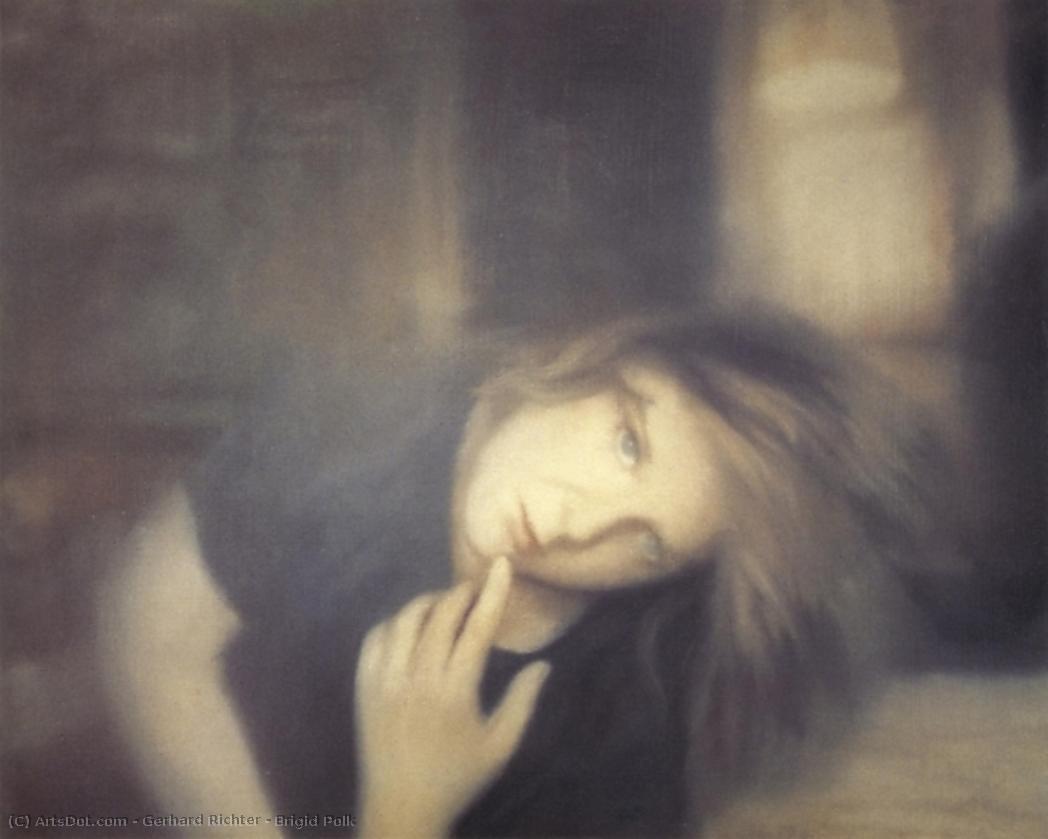
Brigid Polk

Gerhard Richter’in eserleri (1932 doğumlu) soyut sanat ve fotoğraf gerçekçiliği ile bilinir. Kapitalist Realizm terimini Sigmar Polke ile birlikte ortaya koyarak çağdaş sanat üzerinde etkisini göstermiştir.

El Yapımı Yağlı Boya Reproduksiyon

Sanatçılarımız tarafından sipariş üzerine hazırlanan; istediğiniz boyut ve çerçevede, tuval üzerine el boyaması yağlı boya.

P118B $10
P118H $10
P118W $10
P438Z $10
P508JH $12
P508YH $12
P805H $10
P805Z $10
P919BZ $10
P919G $10
P919XJ $10
P959ZH $10
P968JZ $12
W106C $8
W218G $10
W218JH $8
W218Y $10
W307PJ $10
W316G $10
W316PJ $8
W316Y $10
W398PJ $8
W4111J $10
W500HY $15
W500JH $15
W692G $12
W849H $8
W940BG $15
W953PJ $8

Standard
custom
CM
INCH

Eserin orijinal oranlarıyla uyumlu, önceden belirlenmiş boyutlarımız arasından seçim yapın.

genişlik
yükseklik

Belirli bir çerçeveye veya alana uyması için kendi boyutlarınızı girebilirsiniz. Seçtiğiniz boyut orijinal görüntünün oranlarıyla eşleşmiyorsa, sanat eserini kırparak veya ek el boyaması öğelerle resmi uzatarak ayarlayacağız. Üretim başlamadan önce onayınız için dijital bir taslak gönderilecektir.
Lütfen ekrandaki önizlemenin gerçek kırpmayı veya uzatmayı yansıtmadığını unutmayın. Nihai kompozisyonu yalnızca hazırlanan taslak doğru şekilde gösterecektir.
Özel boyutlar mevcut olsa da, orijinal oranları korumak adına önceden tanımlanmış listeden bir boyut seçmenizi öneririz.

Değiştirilebilecek örneklere dair: Yüzün müşteri fotoğrafıyla değiştirilmesi; Evcil hayvan eklenmesi (örneğin kedinin köpek ile değiştirilmesi); Arka plana gizli bir mesaj dahil edilmesi; Arka plan manzarasının veya öğelerinin değiştirilmesi.
Siparişten sonra, OriginalUniqueArt.com ekibi talimatlar için müşteriye e-posta gönderecek ve bir taslak önizleme sunacaktır

Dünya Çapında Teslimat (); standart 5 hafta yerine 3/4 haftada. (20 Temmuz). Kaliteden ödün verilmez.

why_choose_icon
Dünya Çapında Ücretsiz Ekspres Kargo
why_choose_icon
Yüksek Kaliteli Keten Tuval
why_choose_icon
Tam Kapsamlı Nakliye Sigortası
why_choose_icon
Gümrük Vergisi İade Garantisi
why_choose_icon
Gerçek Renk Uyumu Garantisi
why_choose_icon
60 Günlük İade Politikası (Sadece Kusurlu Ürünler İçin)
why_choose_icon
%100 Para İade Garantisi
why_choose_icon
Toplu Alım İndirimi

Toplam Fiyat

-

reproduction

Brigid Polk

Reproduksiyon Tekniği

Reproduksiyon Boyutu

-

Toplam Tutar

-

Hızlı Bilgiler

  • Title: Brigid Polk
  • Medium: Painting
  • Year: 1971
  • Movement: Capitalist Realism
  • Artistic style: Abstract Expressionism
  • Influences: Minimalism
  • Dimensions: 100 x 125 cm

Eser Açıklaması

Brigid Polk: A Meditation on Memory and Texture

Gerhard Richter’s “Brigid Polk” (1971) presents a deceptively simple image – a woman reclining on her side against a muted wall – yet it encapsulates the core tenets of Richter's artistic philosophy: a preoccupation with photographic representation filtered through layers of abstraction. This painting exemplifies his signature style, dubbed ‘Capitalist Realism,’ which deliberately obscures the source material while simultaneously capturing its essence.

  • Subject Matter & Composition: The portrait depicts Brigid Polk, a figure rendered in muted tones and subtly blurred contours. Richter’s masterful use of layering—evident in the textured surface achieved through multiple coats of paint—creates an atmosphere of quiet contemplation. The woman's pose is deliberately languid, conveying a sense of repose and introspection that invites viewers to consider themes of vulnerability and stillness.
  • Technique: Richter employs a technique characterized by applying thin layers of pigment onto canvas, followed by sanding down the surface to achieve a velvety smoothness. This process mimics the appearance of photographic prints, specifically halftone screens—a deliberate nod to the burgeoning influence of photography on artistic practice during the period. The subtle gradations of color contribute to the painting’s ethereal quality.
  • Historical Context: Created in 1971, “Brigid Polk” sits firmly within Richter's formative years as an artist grappling with the anxieties and uncertainties of post-war Germany. Following the devastation of World War II and the subsequent division of Berlin, Richter’s artistic vision was shaped by a desire to explore the complexities of perception and memory—concepts central to his oeuvre.
  • Symbolism & Emotional Impact: While devoid of overt narrative content, “Brigid Polk” speaks volumes about the artist's engagement with psychological states. The blurred contours suggest an elusive quality, mirroring the difficulty of capturing fleeting moments or reconstructing past experiences. More broadly, it embodies Richter’s exploration of how images can evoke emotion and provoke contemplation without resorting to explicit representation.

Richter’s deliberate obfuscation isn't merely stylistic; it reflects a deeper philosophical stance—a questioning of the very notion of objective reality. He seeks not to reproduce what is seen but rather to distill its emotional resonance, transforming photographic images into canvases that resonate with profound psychological depth.

  • Material Considerations: The painting utilizes acrylic pigment on canvas, chosen for its durability and ability to achieve a luminous finish. Richter’s meticulous attention to detail—evident in the subtle variations of tone and texture—underscores his commitment to mastering traditional painting techniques while simultaneously embracing the possibilities offered by contemporary materials.

"Brigid Polk" stands as a testament to Gerhard Richter's enduring legacy as one of Germany’s most influential artists. Its understated beauty and contemplative mood continue to captivate audiences worldwide, cementing its place within the canon of 20th-century art.


Sanatçı Özgeçmişi

A Life Shaped by Division: The Early Years and Artistic Formation of Gerhard Richter

Gerhard Richter’s artistic journey began in Dresden, Germany, amidst the turbulent backdrop of postwar Europe and the looming shadow of Soviet influence. Born on February 9, 1932, his childhood was profoundly impacted by displacement – his family repeatedly relocated during the Nazi era and subsequently under communist rule—experiences that instilled within him a fundamental skepticism toward ideological dogma and fueled an enduring fascination with uncertainty. His father, a schoolteacher navigating the constraints of East German society, fostered a love for literature and music in the home, while his mother nurtured a keen eye for detail and observation. These formative influences would prove crucial to Richter’s artistic sensibility, shaping his approach to representation and informing his exploration of complex themes throughout his career. Early Artistic Training: Socialist Realism and Beyond Richter commenced formal training at Dresden Academy of Fine Arts in 1951, initially immersing himself in the dominant aesthetic of socialist realism—a style dictated by the East German state that prioritized idealized depictions of labor and social harmony. Despite this initial engagement with established artistic conventions, Richter harbored a burgeoning desire for creative freedom, recognizing the limitations imposed by ideological constraints. He actively sought ways to transcend these boundaries, experimenting with diverse techniques and styles—from expressive brushstrokes to meticulous detail—demonstrating an early aptitude for artistic innovation. Recognizing the need for broader exposure, he relocated to Düsseldorf in 1961, joining a vibrant community of artists grappling with questions of identity and confronting the legacy of history. This pivotal move propelled him into the heart of West German art culture, where experimentation and critique flourished. The Düsseldorf School: Photorealism and Conceptual Inquiry Düsseldorf became Richter’s crucible for artistic transformation. He embraced photorealism—a style characterized by painstakingly accurate reproductions of photographic images—as a means of interrogating the nature of perception and representation. Simultaneously, he engaged in conceptual inquiry, questioning the very definition of painting itself through unconventional approaches like color charts and squeegee prints. His collaboration with Sigmar Polke yielded the provocative term ‘Capitalist Realism,’ encapsulating their shared disillusionment with prevailing artistic norms and their appropriation of imagery from advertising and mass media—a deliberate challenge to accepted aesthetic standards. Richter’s oeuvre reflects a continuous dialogue between observation and abstraction, realism and chance—a testament to his unwavering commitment to artistic exploration and his refusal to adhere to stylistic conventions. Major Achievements and Artistic Legacy Throughout his prolific career spanning decades, Gerhard Richter achieved remarkable success as both an artist and a cultural figure. His paintings consistently commanded record prices at auction, cementing his position among the most influential artists of our time—a testament to his technical virtuosity and intellectual rigor. However, Richter’s artistic legacy extends far beyond commercial acclaim; it resides in his profound engagement with historical and political themes—his willingness to confront uncomfortable truths and challenge conventional narratives. His work serves as a catalyst for critical dialogue, prompting viewers to contemplate the complexities of modern existence and questioning their own assumptions about reality. Richter's influence can be seen in the artistic endeavors of countless artists who have drawn inspiration from his pioneering techniques and his unwavering dedication to creative exploration—a legacy that transcends stylistic boundaries and affirms the enduring power of art to provoke thought and inspire action. Richter remains a vital voice in contemporary art, continuing to captivate audiences with his challenging and emotionally resonant creations—a testament to his artistic genius and his indelible mark on the history of visual culture.
  • Notable Paintings: Abstract Painting 610-1, Gilbert
  • Techniques Employed: Photorealism, Color Charts, Squeegee Prints
  • Influential Collaborations: Sigmar Polke
  • Conceptual Frameworks: Capitalist Realism
Richter’s enduring influence stems from his unwavering pursuit of artistic innovation and his profound engagement with the complexities of human experience.
Gerhard Richter

Gerhard Richter

1932 - , Almanya

Kısa Bilgiler

  • Artistic Movement Or Style:
    • Fotorealizm
    • Soyut sanat
  • Artists Or Movements Influenced By This Artist: ['Sigmar Polke']
  • Artists Who Influenced This Artist:
    • Jean Arp
    • Pablo Picasso
  • Date Of Birth: 9 Şubat 1932
  • Full Name: Gerhard Richter
  • Nationality: Alman
  • Notable Artworks:
    • Gilbert
    • S. ile Çocuk
  • Place Of Birth: Dresden, Almanya
Temalara, stillere ve özelliklere göre düzenlenmiş sanat eserlerini keşfedin.