
 Gerçek Boyutta Önizle
 Paylaş
 Paylaş
 Detayları Gör
 Rehber

 İndir
İndir
 Benzer ürünler
 X-Işını
 Slayt Gösterisi
 Soru & Cevap
 İstatistikler
Misti Again - A Memory


 Tümünü Gör
Bu sayfada sergilenen eser telif hakkı yasasıyla korunmaktadır; bu da yasal olarak eserin birebir kopyasını oluşturamayacağımız veya satamayacağımız anlamına gelir. Bu koruma, aşağıdakiler gibi uluslararası anlaşmalar kapsamında uygulanmaktadır: Bern Sözleşmesi ve aşağıdakiler de dahil olmak üzere ulusal yasalarca belirlenen ABD Telif Hakkı Kanunu - 17. Başlık.
Bu yöntem, koruma altındaki sanat eserinin kopyalanmasını veya çoğaltılmasını içermediği için telif hakkı düzenlemelerine tam uyum sağlar. Bunun yerine, yaratıcı bir yeniden yorumlamadır; orijinalinden etkilenen ancak onunla aynı olmayan yeni bir tablodur.
Giclée / Sanat Baskısı
Hızlı üretim ve esnek bitiş seçenekleriyle müze kalitesinde giclée veya kanvas baskı. ( El Yapımı Tablo Satın Al Dijital Görsele Geç)




P118B ₺10

P118H ₺10

P118W ₺10

P438Z ₺10

P508JH ₺12

P508YH ₺12

P805H ₺10

P805Z ₺10

P919BZ ₺10

P919G ₺10

P919XJ ₺10

P959ZH ₺10

P968JZ ₺12

W106C ₺8

W218G ₺10

W218JH ₺8

W218Y ₺10

W307PJ ₺10

W316G ₺10

W316PJ ₺8

W316Y ₺10

W398PJ ₺8

W4111J ₺10

W500HY ₺15

W500JH ₺15

W692G ₺12

W849H ₺8

W940BG ₺15

W953PJ ₺8




Eserin orijinal oranlarıyla uyumlu, önceden belirlenmiş boyutlarımız arasından seçim yapın.

Çerçevenize veya duvarınıza uygun olması için ihtiyacınız olan genişlik ve yüksekliği yazın. Bir baskı yalnızca kesilebilir, görselden daha büyük hale getirilemez; bu nedenle farklı bir formdaki boyut seçimi, görselin bir kısmının kaybına neden olur. Herhangi bir baskı yapmadan önce onaylamanız için size bir dijital taslak gönderiyoruz. Bu sayfada gösterilen resim gerçek kesimi göstermez — bunu yalnızca taslak gösterir.
Dünya Çapında Teslimat (); standart 4/5 hafta yerine 2 haftada. (6 Kasım)

Dünya Çapında Ücretsiz Ekspres Kargo

Yüksek Kaliteli Keten Kanvas

Tam Nakliye Sigortası

Gümrük Vergisi İadesi Garantisi

Gerçek Renk Uyumu Garantisi

100 Günlük İade Politikası (Sadece Kusurlu Ürünler İçin)

%100 Para İade Garantisi

Toplu Alım İndirimi
 Cam seçeneği yalnızca 110 cm altındaki boyutlar için mevcuttur.

Misti Again - A Memory
Giclée / Sanat Baskısı
Reproduksiyon Boyutu
-


Toplam Tutar
₺ 3992
Misti Again – A Memory: An Exploration of Landscape and Emotion
The painting “Misti Again – A Memory,” created in 1957 by Georgia O’Keeffe, stands as a quintessential embodiment of the artist's signature style—a masterful blend of abstraction and observation that captures not just visual beauty but also profound emotional resonance. This monumental canvas depicts a solitary mountain range bathed in hazy pastel hues beneath an expansive sky dominated by delicate clouds, offering viewers a glimpse into O’Keeffe’s deeply personal vision of the American Southwest.Composition and Technique: Simplifying Nature's Complexity
O’Keeffe’s approach to portraying the landscape was revolutionary for its time. Rather than striving for photographic realism—a trend prevalent in many artistic circles—she deliberately reduced the mountain range to simplified geometric forms, emphasizing essential contours and tonal variations. The artist utilized a technique known as alla prima, applying paint directly onto the canvas without any underpainting or blending, resulting in textured surfaces that convey palpable energy and immediacy. This bold decision allowed her to distill the grandeur of nature into its purest essence, prioritizing feeling over meticulous detail. Careful consideration was given to color palettes—primarily muted pinks, blues, and greys—creating a harmonious visual experience that reflects the subtle shifts of light and atmosphere characteristic of desert landscapes.Historical Context: Modernism's Embrace of Subjectivity
“Misti Again – A Memory” emerged during O’Keeffe’s prolific period in New Mexico, where she established her studio and cultivated an enduring fascination with the region’s geological formations and flora. This era coincided with the ascendance of modernist art movements—such as Abstract Expressionism—which championed spontaneity and emotional expression as antidotes to the formalism of earlier artistic traditions. Influenced by artists like Willem de Kooning and Jackson Pollock, O’Keeffe deliberately rejected representational conventions, opting instead for a visual language that prioritized inner experience. The painting reflects the broader intellectual currents of its time, signaling a shift away from objective observation toward subjective interpretation—a pivotal moment in art history.Symbolism: Mountains as Vessels of Memory and Resilience
Mountains have long held symbolic significance across cultures, representing stability, permanence, and spiritual aspiration. In O’Keeffe's oeuvre, they frequently serve as metaphors for inner strength and resilience—themes that resonate powerfully within “Misti Again – A Memory.” The pale pink hue of the mountain base evokes a sense of tranquility and contemplation, while the towering peaks symbolize unwavering determination against adversity. Furthermore, the pervasive cloud cover symbolizes the passage of time and the ephemeral nature of experience, reminding viewers to appreciate the beauty of each moment. O’Keeffe's masterful use of color and form contributes to this layered symbolism, inviting viewers to contemplate profound questions about existence and perception.Emotional Impact: Capturing a Momentary Sublime
Ultimately, “Misti Again – A Memory” succeeds in conveying an overwhelming sense of awe—a feeling known as the sublime—that arises from confronting the immensity and grandeur of nature. The painting’s muted colors and textured surfaces evoke a contemplative mood, encouraging viewers to immerse themselves in the scene's serene beauty. It is precisely this ability to elicit emotion that distinguishes O’Keeffe’s work from more purely decorative styles, establishing it as an enduring testament to the transformative power of art. Viewing this piece inspires reflection on our relationship with the natural world and the importance of preserving its majesty for future generations.Soru ve Cevaplar
"Misti Again - A Memory" neyi betimliyor ve nasıl bir atmosfere sahip?
"Misti Again - A Memory", landscape, mountains, clouds, pink hue, color palette, abstraction, american art konularını işlerken Serene bir atmosfer sunmaktadır.
Georgia O’Keeffe imzalı "Misti Again - A Memory" eserinin renkleri nasıl bir duygu uyandırıyor?
Georgia O’Keeffe imzalı "Misti Again - A Memory" eserinin Monochrome paleti, Tranquil duygusal tonuyla bir bütünlük sergiliyor. Renk, bir eserin duyguyu aktarma yollarından biridir.
"Misti Again - A Memory" eserinde güçlü ışık-gölge kontrastları görülüyor mu?
Georgia O’Keeffe imzalı "Misti Again - A Memory", açık ve koyu alanlar arasında Serene bir kontrast sergiliyor.
Sanatçı Özgeçmişi
Early Life and Artistic Foundations
Georgia Totto O’Keeffe, a name synonymous with American modernism, emerged from the unassuming landscape of Sun Prairie, Wisconsin, in 1887. Born into a family of Irish and Hungarian descent engaged in dairy farming, young Georgia displayed an artistic inclination early on, deciding by age ten that she would dedicate her life to art. This determination was nurtured through lessons with local watercolorist Sara Mann, followed by formal studies at the School of the Art Institute of Chicago from 1905 to 1906 and later at the University of Virginia. However, it was her encounter with Arthur Wesley Dow’s principles – emphasizing personal expression and a harmonious balance of color and line – that truly ignited her artistic path. Dow's teachings steered O’Keeffe away from strict realism toward a more subjective and emotionally resonant approach to art, an approach that would define her career. These formative years weren’t without their challenges; periods of illness and dissatisfaction led her to temporarily abandon painting, but the creative impulse always drew her back, evolving with each new experience and influence.New York and the Stieglitz Circle
A pivotal moment arrived in 1916 when O’Keeffe’s abstract charcoal drawings were discovered by Alfred Stieglitz, a renowned photographer and art dealer. He exhibited her work without her prior knowledge, sparking a dialogue that would profoundly shape both their lives and the course of American art. Stieglitz recognized an exceptional talent in O’Keeffe, one that resonated with his own modernist sensibilities. He invited her to New York City in 1918, providing not only professional support but also fostering a deep personal connection. Their relationship blossomed into marriage in 1924, creating a dynamic artistic partnership and intellectual exchange. Stieglitz championed O’Keeffe’s work, showcasing it at his gallery “291” and promoting her as a leading figure in the American avant-garde. During this period, she began to develop her signature style – bold, simplified forms and intensely saturated colors – initially expressed through depictions of New York skyscrapers and, most famously, magnified flower paintings. These floral works, often interpreted (though consistently denied by O’Keeffe herself) as veiled representations of female anatomy, challenged conventional notions of beauty and sexuality in art.The Allure of the Southwest
While New York provided a crucial platform for her early success, it was the landscapes of the American Southwest that truly captivated O’Keeffe’s imagination and profoundly influenced her artistic vision. Her first visit to New Mexico in 1929 marked the beginning of a lifelong love affair with the region's stark beauty, vibrant colors, and unique cultural heritage. The vastness of the desert, the dramatic rock formations, and the ancient Pueblo architecture resonated deeply within her, inspiring a new series of paintings that reflected the spirit of the land. Works like *Cow’s Skull: Red, White, and Blue* (1931) and *Summer Days* (1936) are powerful testaments to this influence, transforming seemingly mundane objects into iconic symbols of the American West. She eventually settled permanently in New Mexico in 1949 following Stieglitz’s death, establishing a home and studio in Abiquiu that became integral to her artistic process and identity.Major Achievements & Legacy
Georgia O’Keeffe achieved remarkable success throughout her career, becoming one of the most celebrated artists of her time. Her pioneering use of abstraction revolutionized American painting, paving the way for future generations of innovators. She garnered critical acclaim for her monumental flower paintings, which continue to inspire awe and contemplation. Furthermore, she established herself as a prominent figure in the feminist art movement, challenging societal expectations and asserting her own artistic autonomy. O’Keeffe's enduring legacy lies not only in her artistic masterpieces but also in her unwavering commitment to artistic integrity and her profound connection to the natural world. Her work remains a powerful reminder of the transformative power of art and the beauty of simplicity.Notable Works & Museum Presence
- Red Canna: Exemplifies her early exploration of floral abstraction.
- Cow’s Skull: Red, White, and Blue (1931): A powerful symbol of the American Southwest and a meditation on mortality.
- Summer Days (1936): Captures the essence of the New Mexico landscape with its vibrant colors and simplified forms.
- Jimson Weed/White Flower No. 1: A monumental floral painting that showcases her mastery of scale and composition.
- Georgia O'Keeffe Museum (Santa Fe)
- Museum of Modern Art (New York)
- Art Institute of Chicago
- National Gallery of Art (Washington, D.C.)

Georgia O’Keeffe
1887 - 1986 , Amerika Birleşik Devletleri
Kısa Bilgiler
- Artistic Movement Or Style: Modernizm
- Artists Who Influenced This Artist:
- Arthur Wesley Dow
- Alfred Stieglitz
- Date Of Birth: November 15, 1887
- Date Of Death: March 6, 1986
- Full Name: Georgia Totto O'Keeffe
- Nationality: Amerikalı
- Notable Artworks:
- Kırmızı Çubuk
- Boğa Kafası: Kırmızı Beyaz Mavi
- Place Of Birth: Sun Prairie, USA
Benzer Yazılar

Evocations of Place: A Historical Journey Through Landscape Art
Explore the rich history of landscape art with OriginalUniqueArt. Discover renowned artists, movements like Impressionism & Romanticism, and expert guidance for collecting timeless pieces. Find your perfect serene escape today!

Katsushika Hokusai'nin En İyi 25 Eseri: Japon Sanatının İkonik Şaheserleri | OriginalUniqueArt
Katsushika Hokusai'nin en iyi 25 eserini keşfedin! Kanagawa'daki Büyük Dalga ve Fuji Dağı gibi ikonik ukiyo-e baskılarının hikayelerini öğrenin. Japon sanatının büyüsünü evinize taşıyın. OriginalUniqueArt.com'da yüksek kaliteli sanat reproduksiyonları.
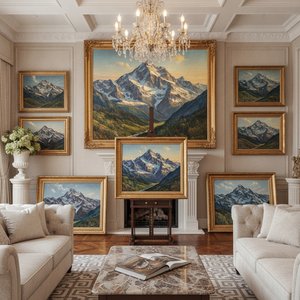
Majestic Peaks: Curating Exquisite Mountain Oil Paintings & Masterpiece Reproductions for Luxury Interiors
Elevate luxury interiors with exquisite mountain oil painting reproductions. From Romanticism to the Hudson River School, OriginalUniqueArt offers bespoke, hand-painted masterpieces and large-scale murals tailored for hotel designers and elite collectors worldwide.

Romantik Resmin Zirveleri: Evinizi Sanatla Süsleyen 10 Usta Manzara
Romantizm sanatının en etkileyici 10 başyapıtını keşfedin! Friedrich, Turner gibi ustaların büyüleyici manzaralarıyla evinizi dönüştürün. Sanat tarihi ve dekorasyon rehberi OriginalUniqueArt.com'da tüm koleksiyonu inceleyin.

Georgia O'Keeffe: Redefining Modernism Through Symbolism & the American Landscape
Explore the captivating world of Georgia O'Keeffe! Discover her groundbreaking flower paintings, New Mexico landscapes & lasting impact on American Modernism. Expert analysis and insights.


