Önizle
 Gönder
 Paylaş
 Detaylar
 Rehber

 Dosyayı İndir
 Benzerleri
 X-Işını
 Slayt Gösterisi
 Q&A
Q&A İstatistikler
Girl with a Brazier

- 55.0 x 68.0 cm


 Devamını Oku
Giclée / Sanat Baskısı
Hızlı üretim ve esnek bitiş seçenekleriyle müze kalitesinde giclée veya kanvas baskı. ( El Yapımı Tablo Satın Al Dijital Görsel Satışına Geç)




P118B ₺10

P118H ₺10

P118W ₺10

P438Z ₺10

P508JH ₺12

P508YH ₺12

P805H ₺10

P805Z ₺10

P919BZ ₺10

P919G ₺10

P919XJ ₺10

P959ZH ₺10

P968JZ ₺12

W106C ₺8

W218G ₺10

W218JH ₺8

W218Y ₺10

W307PJ ₺10

W316G ₺10

W316PJ ₺8

W316Y ₺10

W398PJ ₺8

W4111J ₺10

W500HY ₺15

W500JH ₺15

W692G ₺12

W849H ₺8

W940BG ₺15

W953PJ ₺8




Eserin orijinal oranlarıyla uyumlu, önceden belirlenmiş boyutlarımız arasından seçim yapın.

Çerçevenize veya duvarınıza uygun olması için ihtiyacınız olan genişlik ve yüksekliği yazın. Bir baskı yalnızca kesilebilir, görselden daha büyük hale getirilemez; bu nedenle farklı bir formdaki boyut seçimi, görselin bir kısmının kaybına neden olur. Herhangi bir baskı yapmadan önce onaylamanız için size bir dijital taslak gönderiyoruz. Bu sayfada gösterilen resim gerçek kesimi göstermez — bunu yalnızca taslak gösterir.
Dünya Çapında Teslimat (); standart 4/5 hafta yerine 2 haftada. (31 Ekim)

Dünya Çapında Ücretsiz Ekspres Kargo

Yüksek Kaliteli Keten Tuval

Tam Nakliye Sigortası

Gümrük Vergisi İadesi Garantisi

Gerçek Renk Uyumu Garantisi

100 Günlük İade Koşulları (Sadece Üretim Hatalı Ürünler İçin)

%100 Para İade Garantisi

Toplu Alım Avantajı
 Cam seçeneği yalnızca 110 cm altındaki boyutlar için mevcuttur.

Girl with a Brazier
Giclée / Sanat Baskısı
Baskı Boyutu
-


Toplam Fiyat
₺ 3931
A Beacon in the Darkness: The Luminous Soul of Georges de la Tour
In the quietude of the seventeenth century, amidst the religious and political tremors of France, Georges de la Tour crafted a visual language that spoke not of grand battles or opulent courts, but of the profound intimacy found in a single flicker of light. His masterpiece, Girl with a Brazier, serves as a breathtaking testament to this mastery. The painting presents a young woman captured in profile, her form emerging from an enveloping, velvety darkness. She holds a brazier with a delicate, almost reverent touch, and it is this small, contained heat source that dictates the entire emotional landscape of the work. There is no vast landscape or distracting background here; there is only the girl, the glow, and the profound silence that surrounds them.
The brilliance of this piece lies in its command of tenebrism, a dramatic technique popularized by Caravaggio but refined by de la สTour into something far more meditative. While other Baroque artists used extreme light and shadow to create theatrical tension, de la Tour uses it to sculpt peace. The light does not merely strike the subject; it caresses her skin, defines the soft curve of her cheek, and illuminates her hands with a warmth that feels tangible. Through meticulous layering of oil glazes, the artist achieved a smooth, luminous surface where the transitions from brilliant highlight to impenetrable shadow are seamless, creating a sense of depth that invites the viewer to lean closer, as if sharing a private moment in the dead of night.
Symbolism and the Quietude of the Baroque
Beyond its technical prowess, Girl with a Brazier is a vessel for deep, contemplative symbolism. The light source—a humble brazier—acts as a metaphor for many things: the warmth of faith, the spark of human knowledge, or perhaps the fragile persistence of hope in a turbulent world. During de la Tour's lifetime, the Duchy of Lorraine was a place of significant religious tension between Catholics and Huguenots. While his work often features religious themes, it is stripped of dogmatic aggression, replaced instead by a quiet empathy and a focus on the universal human experience. The girl’s inward gaze suggests a state of introspection, making the painting an ideal centerpiece for spaces designed for reflection, study, or quiet repose.
For the discerning collector or interior designer, this artwork offers more than mere decoration; it provides an atmosphere. The composition's reliance on organic shapes and the stark contrast of light against shadow allows it to integrate beautifully into diverse settings. In a modern, minimalist room, its dramatic chiaroscuro can act as a bold, soulful anchor. In a more traditional, classical study, it complements the richness of dark woods and heavy textures. To possess a reproduction of this caliber is to bring a piece of history into the home—a piece that does not shout for attention but commands it through its silent, glowing dignity.
Soru ve Cevaplar
Georges De La Tour imzalı "Girl with a Brazier" eserini hangi teknik ve üslup tanımlıyor?
"Girl with a Brazier", Oil On Canvas tekniğiyle Baroque üslubunda hazırlanmıştır.
Georges De La Tour imzalı "Girl with a Brazier" eserinin renk kimliği nedir?
"Girl with a Brazier", Phthalo Green (#1d1919) tarafından yönetilen Earthy bir palet ile tanımlanmaktadır."
Georges De La Tour imzalı "Girl with a Brazier" eserinde hangi konular yer alıyor?
Georges De La Tour imzalı "Girl with a Brazier" şunları betimler: religious symbolism, solitary figure, dramatic lighting, introspection, candlelight scene, baroque art, mystery & shadow.
Sanatçı Biyografisi
Georges de La Tour (1593-1652): French Baroque Master of Dramatic Chiaroscuro & Tenebrism
Georges de La Tour, a name that resonates with the hushed reverence reserved for masters of light and shadow, remains one of the most compelling figures of the French Baroque. Born in 1593 in Vic-sur-Seille, a small town nestled within the Duchy of Lorraine, his life unfolded against a backdrop of religious fervor and political upheaval. While details surrounding his early training remain somewhat elusive—scholars speculate about potential journeys to Italy or apprenticeships with local artists like Jacques Bellange—the seeds of his artistic vision were undoubtedly sown in this environment. He wasn’t born into an artistically established family; his father was a baker, yet the circumstances of his mother's lineage hint at a possible connection to nobility, a subtle influence perhaps reflected in the dignity and quiet grace that permeate his work.
Early Life & Artistic Influences
Georges de La Tour’s formative years were marked by the turbulent political landscape of Lorraine under Habsburg rule. Despite limited formal education—he reportedly received instruction from Jacques Bellange—his innate talent for drawing quickly emerged, demonstrating an exceptional sensitivity to observation and form. Crucially, he absorbed the artistic currents circulating throughout Europe during his youth, notably the dramatic innovations championed by Caravaggio in Rome. This encounter with Caravaggism profoundly shaped De La Tour’s aesthetic sensibilities, instilling him with a fascination for tenebrism—the technique of employing extreme contrasts between light and dark to heighten emotional impact.
The Utrecht School & Artistic Synthesis
De La Tour's artistic development accelerated during his time in Utrecht, where he encountered the influential Utrecht School painters. Artists like Hendrick Terbrugghen championed a style characterized by luminous color palettes and meticulous detail—a stylistic divergence from Caravaggio’s darker palette. However, De La Tour skillfully integrated elements of Dutch Caravaggisti into his own distinctive vision, forging a synthesis that retained Caravaggio's dramatic intensity while tempering it with a refined sense of composition and tonal gradation. This blending of influences resulted in a style that was both powerful and restrained—a hallmark of his oeuvre.
Major Works & Recurring Themes
Georges de La Tour’s artistic legacy rests upon a remarkable corpus of paintings that explore profound themes of faith, doubt, and human emotion. His most celebrated works—including The Fortune-Teller (circa 1630), Adoration of the Shepherds (circa 1640), Saint Joseph Carpenter (circa 1652)—are imbued with an atmosphere of solemn contemplation, achieved through masterful manipulation of candlelight and subtle tonal shifts. These scenes depict ordinary individuals confronted by divine presence—a deliberate choice that underscores De La Tour’s conviction in the transformative power of spiritual experience.
A Rediscovered Legacy & Enduring Appeal
For decades after his death in 1652, Georges de La Tour’s work languished in obscurity, largely unrecognized and frequently misattributed. However, a resurgence of scholarly interest in the mid-20th century—fueled by pioneering research conducted by Hermann Voss—began to illuminate De La Tour's artistic genius and solidify his place as a pivotal figure in European art history. His innovative use of tenebrism—combined with his psychological insight into human character—continues to captivate audiences today, reminding us that even amidst the complexities of life, there remains an enduring fascination for the serene beauty of faith and contemplation. De La Tour’s influence can be discerned in subsequent artists who wrestled with similar questions of spirituality and artistic expression—a testament to his lasting impact on the trajectory of Western art.

Georges De La Tour
1593 - 1652 , Fransa
Kısa Bilgiler
- Artistic Movement Or Style: Tenebrism
- Artists Or Movements Influenced By This Artist: ['French Classicism']
- Artists Who Influenced This Artist:
- Caravaggio
- Hendrick Terbrugghen
- Date Of Birth: Mart 13, 1593
- Full Name: Georges de La Tour
- Nationality: Fransa
- Notable Artworks:
- Fortune Teller
- Adoration Shepherds
- Tears Saint Peter
- Saint Joseph Carpenter
- Place Of Birth: Vic-le-Comte, Fransa
İlgili Yazılar

Maurice Quentin de La Tour: Light, Shadow & the Rococo Portrait
Explore the captivating world of Maurice Quentin de La Tour, a master of Rococo portraiture. Discover his innovative pastel techniques, intimate depictions of French aristocracy, and lasting artistic legacy. Learn more at OriginalUniqueArt.

Georges Seurat'ın En İyi 25 Eseri: İzlenimcilikten Modern Sanata Bir Yolculuk
Georges Seurat'ın en iyi 25 eserini keşfedin! İzlenimcilik ve Noktacılık akımının öncüsü bu Fransız ressamın renkli dünyasına yolculuk yapın. Sanat baskıları ve ev dekorasyonu için OriginalUniqueArt.com'da koleksiyonu inceleyin.
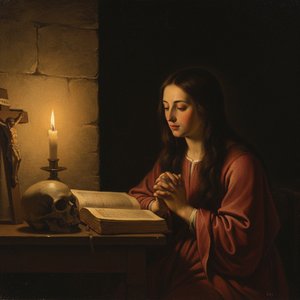
Georges de La Tour: Luminosity, Spirituality & Realism in Baroque Painting
Discover the captivating world of Georges de La Tour, a Baroque master renowned for his dramatic chiaroscuro & spiritual realism. Explore key works, influences, and his remarkable rediscovery. Learn more at OriginalUniqueArt.

Georges Braque'ın En İyi 25 Eseri: Kübizm ve Modern Sanatın İkonları | OriginalUniqueArt
Georges Braque'ın en iyi 25 eserini keşfedin! Kübizm hareketinin öncüsü olan bu ikonik tablolar, modern sanatın ruhunu yansıtıyor. Sanat tarihine yolculuk yapın ve evinizi OriginalUniqueArt.com'un yüksek kaliteli baskılarıyla zenginleştirin.

Francisco Goya'nın En İyi 25 Eseri: İspanyol Ruhunun Derinlikleri Sanatta
Francisco Goya'nın en iyi 25 eserini keşfedin! İspanyol ressamının Romantizm akımındaki başyapıtları, tarihi tabloları ve portrelerinin derin anlamlarını öğrenin. Ev dekorasyonunuz için lüks sanat baskıları OriginalUniqueArt.com’da.