Baskı Satışına Geç
 Devamını Oku







































 Herhangi bir kenarı 105 cm'den (yaklaşık 41 inç) büyük olan sanat eserleri veya reprodüksiyonlar için çerçeve, demonte edilmiş bir kit halinde gönderilecektir. Bu yöntem, güvenli teslimat sağlar ve taşıma sırasında oluşabilecek hasarları önler.


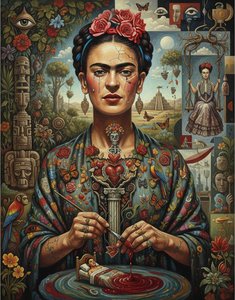
Frida Kahlo’s “The Suicide of Dorothy Hale”: A Surrealist Echo of Grief
Dorothy Hale's tragic demise in 1938 captivated the artistic world, prompting Frida Kahlo to embark on a poignant exploration of grief and psychological turmoil. Commissioned by Clare Boothe Luce—a fervent admirer of Hale and Kahlo’s friendship—the painting transcends mere portraiture; it becomes a visceral embodiment of Hale's final moments and a testament to Kahlo’s masterful manipulation of surrealist principles. Completed in 1938, “The Suicide of Dorothy Hale” resides within the Museo Frida Kahlo, offering visitors an intimate glimpse into Kahlo’s creative process and her profound engagement with themes of vulnerability and existential contemplation.- Subject Matter: The artwork depicts three women—Dorothy Hale herself, Clare Boothe Luce, and Rosa Rolanda—suspended in a dramatic tableau against a turbulent sky dominated by swirling clouds and a towering skyscraper. This juxtaposition immediately establishes an atmosphere of unease and impending doom, reflecting the anxieties prevalent during the Great Depression era.
- Style & Technique: Kahlo’s signature style seamlessly blends Surrealist influences with Mexican folk art traditions. The composition is meticulously crafted—characterized by sharp geometric lines delineating the skyscraper’s structure juxtaposed against fluid, curvilinear forms representing Hale and Luce—creating a dynamic interplay between rigidity and fluidity. Kahlo employed oil paints on masonite, applying thick brushstrokes that convey textural richness and imbue the scene with palpable emotion.
- Historical Context: Hale's suicide sparked considerable debate within American society regarding gender roles and societal pressures faced by women of privilege. Luce’s patronage underscores this preoccupation with social commentary—a hallmark of Kahlo’s artistic vision—demonstrating her commitment to confronting uncomfortable truths about human experience.
- Symbolism & Emotional Impact: The central figure—Hale—lies prone on the ground, gazing upwards toward a distant haloed light—symbolizing introspection and yearning for transcendence amidst despair. The crimson-brown earth beneath Hale’s body serves as grounding element—evoking themes of mortality and remembrance. Kahlo's deliberate use of muted tones—primarily whites, grays, and blues—amplifies the painting’s melancholic mood, fostering contemplation on loss and resilience.
Exploring Surrealist Influences: Composition & Color Palette
Kahlo’s masterful command of surrealist techniques is evident in every aspect of “The Suicide of Dorothy Hale.” The artist skillfully utilizes perspective—flattening the spatial depth to heighten the dreamlike quality of the scene—and employs a carefully calibrated color palette—characterized by dominant blues and grays—to convey emotional nuance. These hues contribute to an overall atmosphere of solemnity and introspection, mirroring Kahlo’s own preoccupation with psychological states during her lifetime. The artist's meticulous attention to detail—particularly in rendering Hale’s posture and facial expression—captures the essence of grief and vulnerability—transforming the painting into a profound meditation on human suffering.- Compositional Dynamics: Kahlo arranges the figures diagonally across the canvas, drawing the viewer's gaze from left to right—creating a sense of movement and instability that reflects Hale’s precarious position as she descends toward her final resting place. The skyscraper looms in the background—representing urban isolation and oppressive structures—further emphasizing the painting’s thematic concerns about societal constraints.
- Color Harmony: Kahlo’s color choices—primarily whites, grays, blues, and reds—are deliberately restrained—enhancing the painting's ethereal quality while simultaneously conveying emotional intensity. The crimson-brown earth beneath Hale’s body serves as grounding element—symbolizing remembrance and confronting mortality—underscoring Kahlo’s artistic exploration of profound existential questions.
A Legacy of Emotion: Frida Kahlo’s Artistic Vision
“The Suicide of Dorothy Hale” stands apart as a testament to Kahlo's unwavering commitment to portraying human emotion with unflinching honesty—a characteristic that distinguishes her oeuvre from more conventional artistic representations. The painting’s enduring appeal lies in its ability to resonate deeply with viewers—provoking contemplation on themes of grief, loss, vulnerability, and the transformative power of art. Kahlo’s masterful technique—characterized by thick brushstrokes and meticulous attention to detail—captures the essence of Hale's final moments—transforming the artwork into a poignant memorial and an enduring symbol of artistic courage. Its place within the Museo Frida Kahlo ensures that Kahlo’s profound vision continues to inspire generations of artists and admirers alike.Soru ve Cevaplar
"Dorothy Hale Ölümü" eserinin telif hakkı durumu neden bu şekildedir?
Frida Kahlo imzalı "Dorothy Hale Ölümü" adlı eser kamu malıdır - telif hakkı süresi dolmuştur statüsündedir. Telif hakları süresi sanatçının ölüm tarihinden itibaren hesaplanmaktadır ve Frida Kahlo, 1954 yılında vefat etmiştir.
"Dorothy Hale Ölümü" eserini kim yarattı?
"Dorothy Hale Ölümü" eserinin arkasındaki sanatçı Frida Kahlo'tir. Eser, Frida Kahlo adına kataloglanmıştır.
"Dorothy Hale Ölümü" adlı eserin Surrealist Dreams akımının arkasındaki ulusal köken nedir?
"Dorothy Hale Ölümü", Meksika doğumlu Frida Kahlo tarafından Surrealist Dreams akımı içerisinde yaratılmıştır. Sanatçının kökeni, eseri Surrealist Dreams akımının Meksikali sanatçılar tarafından uygulanan biçimine bağlamaktadır."
 Önizle
 Gönder
 Paylaş
 Detaylar
 Rehber

 Dosyayı İndir
 Benzerleri
 X-Işını
 Slayt Gösterisi
 Q&A
Q&A İstatistikler