Metin boyutu

() ·

Sizin için, elle yapılmış bir tablo

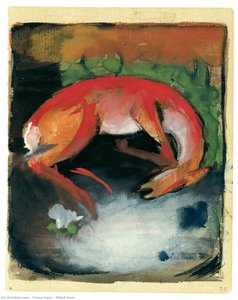
Resting Animal

El Yapımı Yağlı Boya Reproduksiyon

Sanatçılarımız tarafından sipariş üzerine hazırlanan; istediğiniz boyut ve çerçevede, tuval üzerine el boyaması yağlı boya. ( Baskı Satışına Geç Dijital Görsele Geç)

Eser Açıklaması

Franz Marc’s 'Resting Animal' (1913) is a poignant Expressionist watercolor capturing introspective sadness through loose brushstrokes & muted tones. Explore this evocative piece, reflecting vulnerability and a timeless mood.

Sanatçı Biyografisi

Franz Marc’ın ikonik hayvan tabloları, canlı renkleri ve ruhsal temalarıyla öne çıkan Alman dışavurumcu sanatçı Franz Marc (1880-1916)’nın mirasıdır. Doğanın özünü anlamaya yönelik bir arayış olan bu sanatçı yaşamında derin bir ruhsal arayış yaşadı. Münih Güzel Sanatlar Akademisi’nde eğitim aldıktan sonra Wassily Kandinsky ile birlikte Der Blaue Reiter grubunu kurdu ve Alman dışavurumculuğunun dor

...den/dan ·

Bölüm 1

Boyutu ne kadar olmalı?

Boyutu değiştirmek için kaydırın; soldaki resim çerçevenin gerçek genişliğini göstermektedir. Orijinal oranlar korunmuştur.

Standart
özel boyutlu
CM
INCH

Eserin orijinal oranlarıyla uyumlu, önceden belirlenmiş boyutlarımız arasından seçim yapın.

genişlik
yükseklik

Çerçevenize veya duvarınıza uygun olması için ihtiyacınız olan genişlik ve yüksekliği yazın. Bu eser el boyamasıdır; bu nedenle farklı bir formdaki boyutlar için sanatçı, resmin etrafına biraz daha fazla boya ekleyebilir veya kenarlardan biraz kırpabilir — seçim sizin. Boyama işlemi başlamadan önce onaylamanız için size bir dijital taslak gönderiyoruz. Bu sayfada gösterilen resim gerçek sonucu yansıtmamaktadır; gerçek sonucu yalnızca taslak göstermektedir.

Bölüm 2

Nasıl teslim edilmeli?

Gergin kanvasın kenarlarını seçin

Çerçevenizi seçin

Corner sample of the WhiteWrap canvas edge finish, stretched on masif ahşap bars
Beyaz kenar bitişi ₺1
Corner sample of the BlurSideWrap canvas edge finish, stretched on masif ahşap bars
Bulanık kenar bitişi ₺1
Corner sample of the ExtendedWrap canvas edge finish, stretched on masif ahşap bars
Kenar boyalı ₺1
Corner sample of the P118B picture frame: kalıplanmış polistiren, 5 cm wide and 3 cm thick
P118B ₺10
Corner sample of the P118H picture frame: kalıplanmış polistiren, 5 cm wide and 3 cm thick
P118H ₺10
Corner sample of the P118W picture frame: kalıplanmış polistiren, 5 cm wide and 3 cm thick
P118W ₺10
Corner sample of the P438Z picture frame: kalıplanmış polistiren, 5.5 cm wide and 3.5 cm thick
P438Z ₺10
Corner sample of the P508JH picture frame: kalıplanmış polistiren, 7 cm wide and 3.5 cm thick
P508JH ₺12
Corner sample of the P508YH picture frame: kalıplanmış polistiren, 7 cm wide and 3.5 cm thick
P508YH ₺12
Corner sample of the P805H picture frame: kalıplanmış polistiren, 5 cm wide and 3.5 cm thick
P805H ₺10
Corner sample of the P805Z picture frame: kalıplanmış polistiren, 5 cm wide and 3.5 cm thick
P805Z ₺10
Corner sample of the P919BZ picture frame: kalıplanmış polistiren, 7 cm wide and 3.5 cm thick
P919BZ ₺10
Corner sample of the P919G picture frame: kalıplanmış polistiren, 7 cm wide and 3.5 cm thick
P919G ₺10
Corner sample of the P919XJ picture frame: kalıplanmış polistiren, 7 cm wide and 3.5 cm thick
P919XJ ₺10
Corner sample of the P959ZH picture frame: kalıplanmış polistiren, 5 cm wide and 3 cm thick
P959ZH ₺10
Corner sample of the P968JZ picture frame: kalıplanmış polistiren, 6 cm wide and 4 cm thick
P968JZ ₺12
Corner sample of the W106C picture frame: masif ahşap, 5 cm wide and 3 cm thick
W106C ₺8
Corner sample of the W218G picture frame: masif ahşap, 5 cm wide and 3 cm thick
W218G ₺10
Corner sample of the W218JH picture frame: masif ahşap, 5 cm wide and 3 cm thick
W218JH ₺8
Corner sample of the W218Y picture frame: masif ahşap, 5 cm wide and 3 cm thick
W218Y ₺10
Corner sample of the W307PJ picture frame: masif ahşap, 6 cm wide and 3 cm thick
W307PJ ₺10
Corner sample of the W316G picture frame: masif ahşap, 6 cm wide and 3 cm thick
W316G ₺10
Corner sample of the W316PJ picture frame: masif ahşap, 6 cm wide and 3 cm thick
W316PJ ₺8
Corner sample of the W316Y picture frame: masif ahşap, 6 cm wide and 3 cm thick
W316Y ₺10
Corner sample of the W398PJ picture frame: masif ahşap, 5 cm wide and 3 cm thick
W398PJ ₺8
Corner sample of the W4111J picture frame: masif ahşap, 6.5 cm wide and 3.5 cm thick
W4111J ₺10
Corner sample of the W500HY picture frame: masif ahşap, 7 cm wide and 5 cm thick
W500HY ₺15
Corner sample of the W500JH picture frame: masif ahşap, 7 cm wide and 5 cm thick
W500JH ₺15
Corner sample of the W692G picture frame: masif ahşap, 8 cm wide and 4 cm thick
W692G ₺12
Corner sample of the W849H picture frame: masif ahşap, 5 cm wide and 3 cm thick
W849H ₺8
Corner sample of the W940BG picture frame: masif ahşap, 7.5 cm wide and 4.5 cm thick
W940BG ₺15
Corner sample of the W953PJ picture frame: masif ahşap, 6 cm wide and 3.5 cm thick
W953PJ ₺8
Corner sample of the H24-GOLD picture frame: alçıyla işlenmiş oyma ahşap, 10 cm wide and 6 cm thick
H24-GOLD ₺30
Corner sample of the H24-SILVER picture frame: alçıyla işlenmiş oyma ahşap, 10 cm wide and 6 cm thick
H24-SILVER ₺30
Corner sample of the H36-GOLD picture frame: alçıyla işlenmiş oyma ahşap, 15 cm wide and 6.5 cm thick
H36-GOLD ₺45
Corner sample of the H36-SILVER picture frame: alçıyla işlenmiş oyma ahşap, 15 cm wide and 6.5 cm thick
H36-SILVER ₺45

Çerçeve Kenarlığı: . Çerçeve dahil toplam boyut: .

Bölüm 3

Bunu kim boyuyor ve herhangi bir şey değişmeli mi?

Değiştirilebilecek örneklere göz atın: Yüzü müşteri fotoğrafıyla değiştirme; Evcil hayvan ekleme (örneğin, kediyi köpek ile değiştirme); Arka plana gizli bir mesaj dahil etme; Arka plan manzarasını veya öğelerini değiştirme.
Siparişten sonra, OriginalUniqueArt.com ekibi talimatlar için müşteriye e-posta gönderecek ve bir taslak önizleme sunacaktır

Dünya Çapında Teslimat (); standart 5 hafta yerine 3/4 haftada. (8 Kasım). Kaliteden ödün verilmez.

Bölüm 4

Son dokunuşlar

Müzedekiler gibi bir isimlik mi?

İşlemeli Bronz Plaka Detayları

This elegant plaque features the artist's name and the title of the artwork, finely engraved for a timeless presentation.

It is made from bronze with a refined, elegant finish. The text is precisely laser-engraved for a sharp and permanent result. Measuring 9x2 cm, the plaque is compact yet easy to read. It's built to be durable and scratch-resistant, offering a professional, museum-quality look. Mounting is simple thanks to the included adhesive backing.

Şeffaf Akrilik Plaka Detayları

The plaque includes essential engraved details such as the artist's name, the title of the artwork, the date it was created, the type of media used-like oil on canvas or watercolor-a brief description of the piece, and a QR code that links to the complete artwork information.

It is crafted from clear acrylic, offering a sleek, modern appearance. The text is UV-engraved in black to ensure strong visual contrast. With a size of 10x15 cm, it ensures optimal readability. It comes equipped with two metal hooks for secure wall mounting. The plaque is designed to be weather-resistant, making it suitable for various environments, and it includes interactive features that work seamlessly with smartphone scanning.

Siyah Akrilik Plaka Detayları

This elegant plaque includes engraved information such as the artist's name, the title of the artwork, the date it was created, the type of media used (like oil on canvas or watercolor), a short description of the artwork, and a QR code for quick access to more information.

The plaque itself is made from refined black acrylic with a premium finish. The text is laser-engraved in white for high contrast and readability. Its size is 10x15 cm, designed to be easy to read. It comes with two metal hooks for professional mounting. The design is sleek and fits any interior style. It is also weather-resistant and durable, with built-in digital integration for mobile compatibility.

Koruyucu vernik mi?

Ne zaman ihtiyacınız var?

Bölüm 5

Sipariş ettiğiniz şekilde, tablonuz

Resting Animal

Reproduksiyon Tekniği

Reproduksiyon Boyutu

-

Seçkin Kıdemli Sanatçı

Daha fazla detay, incelik ve ek üretim süresi

-

Reproduksiyon Çerçevesi

-

-

Herhangi bir kenarı 105 cm'den (yaklaşık 41 inç) büyük olan sanat eserleri veya reprodüksiyonlar için çerçeve, demonte edilmiş bir kit halinde gönderilecektir. Bu yöntem, güvenli teslimat sağlar ve taşıma sırasında oluşabilecek hasarları önler.

Profesyonel montaj gereklidir; bu ürün kendin yap (DIY) tarzı bir ürün değildir.
Kit; ahşap tutkalı (pakete dahil değildir), kanvas germe pensi ve tutkal kururken çıtaların dik durmasını sağlayacak işkenceler kullanılarak, deneyimli bir profesyonel çerçeveci tarafından monte edilmeli ve kanvas gerilmelidir. Hatalı montaj veya dengesiz kanvas gerginliği sanat eserine kalıcı zarar verebilir ve bu durum garantimiz kapsamında değildir.

  • Tüm masif ahşap çıtalar dahildir, montaj için hassas bir şekilde ölçülmüştür.

  • Paket içeriğinde bulunan vidalar ve köşe birleşimleri için ustanız tarafından temin edilmesi gereken, ancak pakete dahil olmayan ahşap tutkalı ile monte edilir.

  • Profesyonel araçlar gereklidir ve pakete dahil değildir: bir tuval germe aparatı (gerdirici) ve yapıştırıcı kururken çıtaların dik durmasını sağlayacak kıskaçlar.

Önemli:
Köşe bağlantıları için ahşap tutkalı gereklidir; tutkal tamamen kuruyana kadar çıtalar işkenceler ile sabitlenmelidir ve monte edilmiş çerçeve üzerindeki kanvasın gerilmesi için bir kanvas germe pensine ihtiyaç duyulur. Bunların hiçbiri kit içerisinde yer almamaktadır. Lütfen bu boyutu sipariş etmeden önce deneyimli bir profesyonel çerçeve ustası ile anlaşın.

Eser Etiketi

-

-

Koruyucu Vernik Katmanı

Parlak Vernik (renkleri canlandırır; ışığa ve neme karşı koruma sağlar)

-

Eserimi Özelleştir

Değiştirilebilecek örneklere göz atın: Yüzü müşteri fotoğrafıyla değiştirin; Evcil hayvan ekleyin (örneğin, kediyi köpek ile değiştirin); Arka plana gizli bir mesaj dahil edin; Arka plan manzarasını veya öğelerini değiştirin.

-

Hızlı Teslimat

Dünya Çapında Teslimat (); standart 5 hafta yerine 3/4 hafta içinde. (8 Kasım). Kaliteden ödün verilmez.

-

Hızlı Gönderim

için dünya çapında 5 haftalık teslimat süresi. (15 Kasım).

Dahil

Toplam Tutar

₺ 14800

Toplam Tutar ₺ 14800

Cam seçeneği yalnızca 110 cm altındaki boyutlar için mevcuttur.

Her siparişle birlikte gelir

  • Dünya Çapında Ücretsiz Ekspres Kargo
  • Yüksek Kaliteli Keten Kanvas
  • Tam Nakliye Sigortası
  • Gümrük Vergisi İadesi Garantisi
  • Gerçek Renk Uyumu Garantisi
  • 100 Günlük İade Politikası (Sadece Kusurlu Ürünler İçin)
  • %100 Para İade Garantisi
  • Toplu Alım İndirimi

A Moment of Quietude: Exploring Franz Marc’s ‘Resting Animal’ (1913)

Franz Marc's *Resting Animal*, painted in 1913, is a captivating watercolor that embodies the core tenets of early Expressionism. More than just a depiction of an animal at rest, it’s a poignant exploration of inner life, vulnerability, and the search for spiritual connection with nature – themes central to Marc's artistic vision.

Subject & Style: Beyond Realistic Representation

The artwork presents a somewhat abstracted figure, likely a deer or similar ungulate, enveloped in a mood of quiet contemplation. While not explicitly detailed, the form is recognizable enough to evoke empathy and invite projection. Marc deliberately moves away from strict realism, favoring instead an expressive style characterized by loose brushstrokes and simplified forms. This isn’t about *what* is depicted, but *how* it feels. The diagonal composition contributes to a sense of unease or inward focus, mirroring the animal's introspective state. Marc wasn’t interested in portraying animals as simply biological creatures; he saw them as possessing an inherent spirituality and purity lacking in human society.

Technique & Materials: Watercolor’s Emotional Range

Executed in watercolor on paper, *Resting Animal* showcases Marc's masterful handling of the medium. The wet-on-wet technique creates soft edges and blended colors, enhancing the dreamlike quality of the scene. The layering of washes builds texture and depth despite the flattened perspective. This approach allows for a fluidity that perfectly complements the subject’s relaxed posture and the overall melancholic mood. The muted tones – grays, browns, and subtle blues – further contribute to this somber atmosphere, while still allowing light to subtly permeate the composition.

Historical Context: Der Blaue Reiter & A World on the Brink

1913 was a pivotal year for Marc, deeply involved with the *Der Blaue Reiter* (The Blue Rider) group alongside Wassily Kandinsky and other avant-garde artists. This collective sought to move beyond purely representational art, exploring spirituality, symbolism, and emotional expression through abstraction and bold color. The looming shadow of World War I also casts a subtle weight over this work; a sense of premonition and fragility permeates many artworks created in the years leading up to the conflict. Marc’s focus on the natural world can be interpreted as a yearning for peace and harmony amidst growing societal tensions.

Symbolism & Emotional Impact: A Universal Language

The symbolism within *Resting Animal* is deliberately understated, allowing for multiple interpretations. The animal's posture – leaning forward, head lowered – suggests vulnerability, introspection, and perhaps even a sense of weariness. It’s an image that resonates with the human condition, inviting viewers to contemplate their own moments of solitude and reflection. The painting isn’t about sadness itself, but about acknowledging and accepting it as part of life's spectrum. The dark background emphasizes this feeling of isolation, while also serving to highlight the animal’s form. Marc believed animals were closer to a primal spiritual truth than humans, and this work invites us to reconnect with that innate sense of peace and belonging.

For Collectors & Designers: Bringing Expressionism into Your Space

*Resting Animal* is an exceptional example of Franz Marc’s unique artistic voice. Its subdued palette and evocative imagery make it a versatile piece for interior design, lending itself well to both modern and traditional settings. A high-quality reproduction would serve as a striking focal point in a study, living room, or bedroom – offering a touch of contemplative beauty and intellectual depth. Its enduring appeal lies in its ability to transcend time and culture, speaking directly to the universal human experience.

Soru ve Cevaplar

Renkleri göz önüne alındığında, Franz Marc imzalı "Resting Animal" hangi oda için önerilir?

Franz Marc imzalı "Resting Animal" eserinin Earthy renkleri, önerilen mekanı olan Living Room ile mükemmel bir uyum içindedir.

Öğrenciler için Franz Marc imzalı "Resting Animal" hakkında bir bilgi notu mevcut mu?

Franz Marc imzalı "Resting Animal" için bir Bilgi Notu sayfası mevcuttur: öğrenciler ve sınıf kullanımı için tasarlanmış, sanat eseri hakkında yazdırılabilir bir bilgi formu.

"Resting Animal" eserinin yazarı ve yapım yılı nedir?

Franz Marc, "Resting Animal" adlı eseri 1913 yılında yaptı.

Bu tablo hakkında daha fazla bilgi

Gerçek Boyutta Önizle AR ile önizle Baskı Satışına Geç Dijital Görsele Geç Paylaş
Detayları Gör Rehber Favorilere ekle İndir Benzer ürünler X-Işını Slayt Gösterisi Soru & Cevap İstatistikler

Rakamlarla

  • 1913boyandığı yıl
  • 29seçilebilecek çerçeveler
  • kendi oranlarında, standart boyutlar
  • 5boyamak ve teslim etmek için gereken haftalar
Franz Marc

Franz Marc

1880 - 1916, Almanya

Franz Marc hakkında kısa bilgiler

  • Artistic Movement Or Style: Dışavurumculuk
  • Artists Who Influenced This Artist:
    • Vincent van Gogh
    • Robert Delaunay
  • Date Of Birth: 8 Şubat 1880
  • Date Of Death: 4 Mart 1916
  • Full Name: Franz Moritz Wilhelm Marc
  • Nationality: Alman
  • Notable Artworks:
    • Tierschicksale
    • Kızıl Geyik
    • Gökyüzü Şelalesi
  • Place Of Birth: Münih, Almanya

Sanatçı Özgeçmişi

Franz Marc (1880-1916): Pioneer of German Expressionism

Franz Moritz Wilhelm Marc, born on February 8, 1880, in Munich, Germany, was a painter whose brief but intensely focused career irrevocably altered the course of German Expressionism. His story is one of profound spiritual seeking translated into a vibrant visual language—a quest to understand the essence of life through the purity he found in the natural world, particularly within the animal kingdom. Initially influenced by his father, Wilhelm Marc, a landscape painter, young Franz’s artistic path wasn't immediately certain. He briefly contemplated theology, grappling with questions of faith and existence before ultimately dedicating himself to art at the Academy of Fine Arts in Munich. These early explorations into religious thought would remain deeply embedded within his work, shaping his belief that art could be a conduit for spiritual experience. His academic training provided him with technical foundations, but it was encounters with the works of Vincent van Gogh during visits to Paris that truly ignited his artistic vision. Van Gogh’s emotive use of color and raw expression resonated profoundly with Marc, liberating him from conventional techniques and setting him on a path toward a more subjective and emotionally charged style.

Early Influences and Artistic Development

Marc's formative years were marked by a fascination with both Romantic literature and theology—a duality that would permeate his artistic sensibility throughout his life. His father’s landscape paintings instilled in him an appreciation for the grandeur of nature, while his mother’s Calvinist upbringing fostered a contemplative spirit. He studied drawing first with Gabriel Hackl and then painting with Wilhelm von Diez at Munich Academy, absorbing the stylistic conventions of academic naturalism alongside nascent explorations into Impressionistic color innovations. However, it was his encounter with Van Gogh's paintings during Parisian excursions that fundamentally reshaped his artistic perspective. As Marc himself eloquently expressed, “Van Gogh is for me the most authentic, the greatest, the most poignant painter I know.” He recognized in Van Gogh’s bold use of color and unflinching portrayal of emotion a liberation from formal constraints—a freedom to express inner spiritual truths without resorting to representational accuracy. This influence propelled him toward simplification and heightened emotional intensity, mirroring Symbolist ideals that championed the artist as martyr.

The Birth of Der Blaue Reiter

Marc’s artistic journey took an extraordinary turn in 1907 with his relocation to Paris—a pivotal moment fueled by a desire for creative renewal following a period of personal turmoil. During this time, he immersed himself in the vibrant artistic milieu of the city and encountered artists who profoundly impacted his stylistic evolution. Notably, Robert Delaunay’s exploration of abstract forms and chromatic harmonies broadened Marc's horizons beyond traditional representation. This encounter spurred him toward experimentation with geometric abstraction—a departure from Impressionistic color palettes that signaled a decisive shift toward conveying spiritual concepts through simplified shapes and bold hues. Simultaneously, he cultivated friendships with fellow artists who shared his conviction that art could transcend the material realm and engage in dialogue with deeper existential questions. He joined August Macke and Wassily Kandinsky to establish *Der Blaue Reiter* (The Blue Rider) in 1911—a collective dedicated to forging a new artistic path rooted in Symbolist principles. This group’s inaugural exhibition showcased not only Marc's own work but also that of other avant-garde artists, cementing Der Blaue Reiter’s reputation as the epicenter of German Expressionism and initiating a dialogue about art’s capacity for spiritual expression.

Animal Painting: A Spiritual Quest

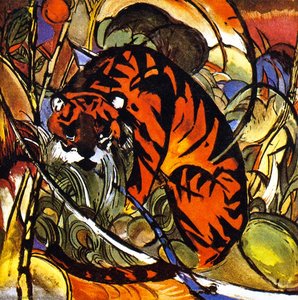
Marc’s artistic preoccupation with animals began in earnest around 1907—a fascination driven by both anatomical curiosity and a profound belief that animals embodied an inherent purity and connection to nature absent from human society. He viewed animals as symbols of innocence, harmony, and spiritual transcendence—subjects he approached with reverence and meticulous attention to detail. Unlike Impressionists who sought to capture fleeting visual impressions, Marc aimed to distill the essence of his subjects into their fundamental forms—reducing figures to geometric shapes that conveyed emotional intensity without resorting to realistic depiction. Paintings like *The Tiger* (1912) exemplify this stylistic approach—a monumental composition characterized by assertive color choices and a deliberate simplification of form that encapsulates Marc’s artistic vision. He believed animals possessed an inner luminosity—a spiritual radiance—that mirrored the divine presence he perceived in the natural world. This conviction fueled his relentless pursuit of expressive abstraction, mirroring Symbolist ideals that championed the artist as martyr.

Legacy and Recognition

Franz Marc tragically perished on March 4, 1916, during the Battle of Verdun—a devastating loss for the art world and a poignant reminder of the fragility of artistic creativity amidst the tumult of wartime conflict. Despite his untimely demise, Marc’s influence endured—inspiring generations of artists who embraced his stylistic innovations and championed his unwavering commitment to conveying spiritual truths through abstract forms and symbolic color. His paintings continue to captivate audiences today with their emotional depth and profound contemplation of existential themes—a testament to the enduring power of art to transcend the boundaries of time and place. Marc’s legacy extends beyond his artistic achievements; he remains a symbol of intellectual integrity, spiritual courage, and unwavering devotion to his craft—a figure whose work continues to resonate with viewers seeking solace and inspiration in the face of adversity. His contribution to German Expressionism solidified his position as one of the most important artists of the 20th century—a visionary who dared to explore the intersection between art, spirituality, and the sublime beauty of the natural world.

Hızlı Bilgiler

  • year: 1913
  • medium: Watercolor on paper
  • movement: Expressionism
  • subject: Animal, Introspection

Sanat Bilgisi Testi

Her soru için yalnızca bir doğru cevap bulunmaktadır.

Soru 1:
To which art movement does Franz Marc's 'Resting Animal' (1913) most closely belong?
Soru 2:
What is a prominent characteristic of the technique used in 'Resting Animal'?
Soru 3:
The description notes the composition is dominated by what type of lines?
Soru 4:
What overall mood or feeling does the artwork evoke, according to the description?