
 Önizleme yap
 Paylaş
 Paylaş
 Detayları Gör

 İndir
İndir
 Benzerlerini gör
 X-Işını
 Slayt Gösterisi
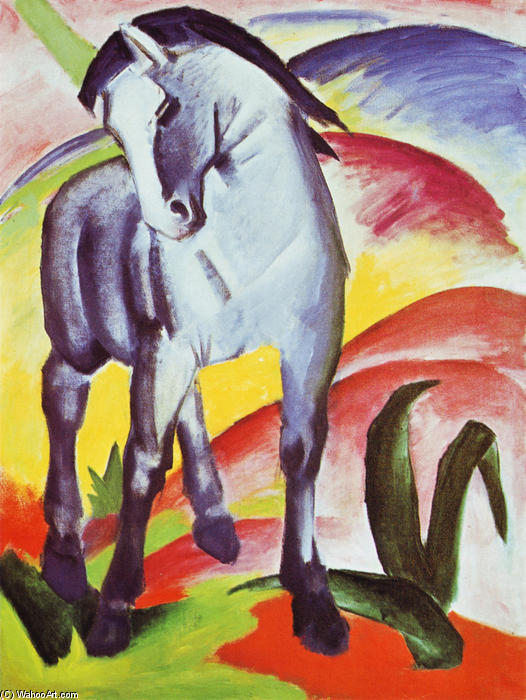
Blue Horse I
 Oil On Canvas
- WallArt
- German Expressionism
 1911
1911- Early Medieval
 112.0 x 84.0 cm
 Tümünü Gör
Giclée / Sanat Baskısı
Hızlı üretim ve esnek bitiş seçenekleriyle müze kalitesinde giclée veya kanvas baskı. ( El boyaması versiyona geç Görsele Geç)




P118B $10

P118H $10

P118W $10

P438Z $10

P508JH $12

P508YH $12

P805H $10

P805Z $10

P919BZ $10

P919G $10

P919XJ $10

P959ZH $10

P968JZ $12

W106C $8

W218G $10

W218JH $8

W218Y $10

W307PJ $10

W316G $10

W316PJ $8

W316Y $10

W398PJ $8

W4111J $10

W500HY $15

W500JH $15

W692G $12

W849H $8

W940BG $15

W953PJ $8




Eserin orijinal oranlarıyla uyumlu, önceden belirlenmiş boyutlarımız arasından seçim yapın.

Belirli bir çerçeveye veya alana uyması için kendi ölçülerinizi girebilirsiniz. Seçtiğiniz boyut orijinal görüntünün oranlarıyla eşleşmiyorsa, sanat eserini kırpacağız veya görüntüyü aynalanmış ya da düz dolgulu bir kenarlıkla genişleteceğiz. Üretim başlamadan önce onayınız için bir dijital taslak gönderilecektir.
Lütfen ekrandaki önizlemenin gerçek kırpma veya genişletmeyi yansıtmadığını unutmayın. Nihai kompozisyonu yalnızca taslak doğru bir şekilde gösterecektir.
Özel boyutlar mevcut olsa da, orijinal oranları korumak için önceden tanımlanmış listeden bir boyut seçmenizi öneririz.
Dünya Çapında Teslimat (); standart 4/5 hafta yerine 2 haftada. (10 Ağustos)

Dünya Çapında Ücretsiz Ekspres Kargo

Yüksek Kaliteli Keten Tuval

Tam Kapsamlı Nakliye Sigortası

Gümrük Vergisi İade Garantisi

Gerçek Renk Uyumu Garantisi

60 Günlük İade Politikası (Sadece Kusurlu Ürünler İçin)

%100 Para İade Garantisi

Toplu Alım İndirimi
 Cam seçeneği yalnızca 110 cm altındaki boyutlar için mevcuttur.

Blue Horse I
Giclée / Sanat Baskısı
Reproduksiyon Boyutu
-


Toplam Tutar
$ 80
Eser Açıklaması
Franz Marc’s “Blue Horse I”: A Window into the Soul
The early 20th century witnessed an explosion of artistic innovation, challenging established conventions and forging new paths for visual expression. Among these transformative movements, German Expressionism emerged as a powerful force, driven by a desire to convey subjective emotional experience rather than merely represent external reality. At the heart of this movement stood Franz Marc (1880-1916), a visionary painter whose vibrant canvases pulsed with spiritual longing and an intimate understanding of the natural world – particularly its animal inhabitants. “Blue Horse I,” painted in 1911, stands as a quintessential example of Marc’s groundbreaking style, offering a profound glimpse into his unique artistic vision and the broader currents of modern art.
Marc's approach to painting was deeply rooted in his belief that art could serve as a conduit for spiritual insight. Initially influenced by his father’s landscape work, he briefly considered a career in theology before dedicating himself fully to art at the Academy of Fine Arts in Munich. This early exploration of religious thought profoundly shaped his artistic philosophy, leading him to seek representations that transcended mere imitation and instead aimed to capture the essence of life's deeper truths. “Blue Horse I” embodies this ethos perfectly; it’s not simply a depiction of a horse, but an evocation of its spirit, its connection to the earth, and perhaps even a reflection of Marc’s own yearning for transcendence.
A Symphony of Color and Form
“Blue Horse I” immediately captivates with its bold palette and dynamic composition. Marc masterfully employs vivid blues – ranging from deep navy to lighter shades – as the dominant hue, symbolizing not just color but also spirituality and a profound connection to the divine. These cool tones are skillfully contrasted with bursts of red, yellow, and green in the landscape backdrop, creating a visual tension that mirrors the emotional complexity within the painting. The brushstrokes themselves are loose and expressive, contributing to the work’s sense of immediacy and movement. Marc's technique is characterized by an intuitive approach, prioritizing feeling over meticulous detail – a hallmark of Expressionist art.
The horse itself is rendered with simplified forms and rounded edges, reminiscent of Cubist influences while retaining a distinctly organic quality. Its head is turned slightly, as if in contemplation or perhaps searching for something beyond the frame. The positioning of the animal within the landscape – centered yet subtly off-balance – creates a dynamic interplay between subject and environment. The horse’s gaze, directed towards an unseen point, invites the viewer to share in its silent observation, fostering a sense of shared mystery.
Context and Legacy
“Blue Horse I” was created during a pivotal period for Marc and his artistic circle, Der Blaue Reiter (The Blue Rider), a group dedicated to exploring spiritual themes through art. This collective sought to break free from the constraints of academic tradition and embrace a more intuitive and emotionally driven approach to painting. The influence of Vincent van Gogh is palpable in Marc’s use of color and expressive brushwork, yet he forged his own distinctive style—one deeply rooted in symbolism and personal vision.
Beyond its immediate aesthetic qualities, “Blue Horse I” holds significant historical importance. It represents a crucial step in the development of 20th-century Western painting, foreshadowing movements like Cubism, Futurism, and Surrealism. Marc’s exploration of color, emotion, and spirituality paved the way for subsequent generations of artists to challenge conventional notions of representation and delve into the depths of human experience. The painting's enduring appeal lies in its ability to resonate with viewers on a deeply emotional level, prompting reflection on themes of nature, spirituality, and the search for meaning.
Bringing “Blue Horse I” Home
OriginalUniqueArt offers meticulously crafted hand-painted reproductions of “Blue Horse I,” allowing you to experience the full impact of Marc’s masterpiece in your own space. Each reproduction is created by skilled artists who painstakingly recreate the painting's vibrant colors, dynamic brushstrokes, and evocative atmosphere. Available in a range of sizes and materials, our reproductions provide an authentic representation of this iconic work, bringing its beauty and emotional depth into your home or office.
For art enthusiasts seeking to delve deeper into Franz Marc’s oeuvre or the broader context of Expressionism, we encourage you to explore the resources listed below:
- Wikipedia: https://en.wikipedia.org/wiki/Franz_Marc
- Franz Marc Museum: https://en.wikipedia.org/wiki/Franz_Marc_Museum
- Blue Horse I (Google Art Project): https://en.wikipedia.org/wiki/Blue_Horse_I
Discover the transformative power of “Blue Horse I” with a OriginalUniqueArt reproduction – a timeless masterpiece brought to life.
Sanatçı Özgeçmişi
Franz Marc (1880-1916): Pioneer of German Expressionism
Franz Moritz Wilhelm Marc, born on February 8, 1880, in Munich, Germany, was a painter whose brief but intensely focused career irrevocably altered the course of German Expressionism. His story is one of profound spiritual seeking translated into a vibrant visual language—a quest to understand the essence of life through the purity he found in the natural world, particularly within the animal kingdom. Initially influenced by his father, Wilhelm Marc, a landscape painter, young Franz’s artistic path wasn't immediately certain. He briefly contemplated theology, grappling with questions of faith and existence before ultimately dedicating himself to art at the Academy of Fine Arts in Munich. These early explorations into religious thought would remain deeply embedded within his work, shaping his belief that art could be a conduit for spiritual experience. His academic training provided him with technical foundations, but it was encounters with the works of Vincent van Gogh during visits to Paris that truly ignited his artistic vision. Van Gogh’s emotive use of color and raw expression resonated profoundly with Marc, liberating him from conventional techniques and setting him on a path toward a more subjective and emotionally charged style.Early Influences and Artistic Development
Marc's formative years were marked by a fascination with both Romantic literature and theology—a duality that would permeate his artistic sensibility throughout his life. His father’s landscape paintings instilled in him an appreciation for the grandeur of nature, while his mother’s Calvinist upbringing fostered a contemplative spirit. He studied drawing first with Gabriel Hackl and then painting with Wilhelm von Diez at Munich Academy, absorbing the stylistic conventions of academic naturalism alongside nascent explorations into Impressionistic color innovations. However, it was his encounter with Van Gogh's paintings during Parisian excursions that fundamentally reshaped his artistic perspective. As Marc himself eloquently expressed, “Van Gogh is for me the most authentic, the greatest, the most poignant painter I know.” He recognized in Van Gogh’s bold use of color and unflinching portrayal of emotion a liberation from formal constraints—a freedom to express inner spiritual truths without resorting to representational accuracy. This influence propelled him toward simplification and heightened emotional intensity, mirroring Symbolist ideals that championed the artist as martyr.The Birth of Der Blaue Reiter
Marc’s artistic journey took an extraordinary turn in 1907 with his relocation to Paris—a pivotal moment fueled by a desire for creative renewal following a period of personal turmoil. During this time, he immersed himself in the vibrant artistic milieu of the city and encountered artists who profoundly impacted his stylistic evolution. Notably, Robert Delaunay’s exploration of abstract forms and chromatic harmonies broadened Marc's horizons beyond traditional representation. This encounter spurred him toward experimentation with geometric abstraction—a departure from Impressionistic color palettes that signaled a decisive shift toward conveying spiritual concepts through simplified shapes and bold hues. Simultaneously, he cultivated friendships with fellow artists who shared his conviction that art could transcend the material realm and engage in dialogue with deeper existential questions. He joined August Macke and Wassily Kandinsky to establish *Der Blaue Reiter* (The Blue Rider) in 1911—a collective dedicated to forging a new artistic path rooted in Symbolist principles. This group’s inaugural exhibition showcased not only Marc's own work but also that of other avant-garde artists, cementing Der Blaue Reiter’s reputation as the epicenter of German Expressionism and initiating a dialogue about art’s capacity for spiritual expression.Animal Painting: A Spiritual Quest
Marc’s artistic preoccupation with animals began in earnest around 1907—a fascination driven by both anatomical curiosity and a profound belief that animals embodied an inherent purity and connection to nature absent from human society. He viewed animals as symbols of innocence, harmony, and spiritual transcendence—subjects he approached with reverence and meticulous attention to detail. Unlike Impressionists who sought to capture fleeting visual impressions, Marc aimed to distill the essence of his subjects into their fundamental forms—reducing figures to geometric shapes that conveyed emotional intensity without resorting to realistic depiction. Paintings like *The Tiger* (1912) exemplify this stylistic approach—a monumental composition characterized by assertive color choices and a deliberate simplification of form that encapsulates Marc’s artistic vision. He believed animals possessed an inner luminosity—a spiritual radiance—that mirrored the divine presence he perceived in the natural world. This conviction fueled his relentless pursuit of expressive abstraction, mirroring Symbolist ideals that championed the artist as martyr.Legacy and Recognition
Franz Marc tragically perished on March 4, 1916, during the Battle of Verdun—a devastating loss for the art world and a poignant reminder of the fragility of artistic creativity amidst the tumult of wartime conflict. Despite his untimely demise, Marc’s influence endured—inspiring generations of artists who embraced his stylistic innovations and championed his unwavering commitment to conveying spiritual truths through abstract forms and symbolic color. His paintings continue to captivate audiences today with their emotional depth and profound contemplation of existential themes—a testament to the enduring power of art to transcend the boundaries of time and place. Marc’s legacy extends beyond his artistic achievements; he remains a symbol of intellectual integrity, spiritual courage, and unwavering devotion to his craft—a figure whose work continues to resonate with viewers seeking solace and inspiration in the face of adversity. His contribution to German Expressionism solidified his position as one of the most important artists of the 20th century—a visionary who dared to explore the intersection between art, spirituality, and the sublime beauty of the natural world.
Franz Marc
1880 - 1916 , Almanya
Kısa Bilgiler
- Artistic Movement Or Style: Dışavurumculuk
- Artists Who Influenced This Artist:
- Vincent van Gogh
- Robert Delaunay
- Date Of Birth: 8 Şubat 1880
- Date Of Death: 4 Mart 1916
- Full Name: Franz Moritz Wilhelm Marc
- Nationality: Alman
- Notable Artworks:
- Tierschicksale
- Kızıl Geyik
- Gökyüzü Şelalesi
- Place Of Birth: Münih, Almanya
İlgili Makaleler

German Expressionism's 10 Defining Masterpieces | Art for Your Home
Explore 10 defining German Expressionism masterpieces – from Munch's 'The Scream' to Kandinsky’s abstracts. Discover the artists, stories & bold colors behind this powerful art movement. Find museum-quality reproductions at OriginalUniqueArt.com.
Marc Chagall'ın En İyi 25 Eseri: Rüyalar ve Renklerle Dolu Bir Sanat Yaşamı | OriginalUniqueArt
Marc Chagall'ın en ikonik 25 eserini keşfedin! Rüya gibi renkler, Yahudi folkloru ve modern sanatın büyülü dünyasına yolculuk yapın. Sanat tarihinin bu önemli figürünün tablolarını inceleyin ve evinizi OriginalUniqueArt kalitesiyle süsleyin. Koleksiyonu online keşfedin!

Slate Blue Masterpieces: 10 Iconic Paintings & Timeless Home Decor Ideas
Immerse yourself in the captivating world of slate blue! Explore 10 iconic paintings by Monet, Van Gogh & Renoir. Discover their stories, techniques & find museum-quality art reproductions for your home at .

Franz Marc: Expressionism, Spirituality & the Animal Symbolism of a Modern Master
Explore the profound world of Franz Marc's Expressionist paintings. Discover his spiritual connection to animals, innovative use of color, and lasting impact on modern art history. Learn more at OriginalUniqueArt.
The Allure of Azure: Exploring the Symbolic & Aesthetic Depths of Blue in Art History
Explore the rich history of blue in art! Discover its symbolism, from ancient pigments to modern masterpieces by Kandinsky & Seurat. Uncover the psychological impact and cultural meanings behind this captivating hue.



