

 Önizleme yap
 Paylaş
 Paylaş
 Detayları Gör

 İndir
İndir
 Benzerlerini gör
 X-Işını
 Slayt Gösterisi
Untitled (624)

 Tümünü Gör
El Yapımı Yağlı Boya Reproduksiyon
Sanatçılarımız tarafından sipariş üzerine hazırlanan; istediğiniz boyut ve çerçevede, tuval üzerine el boyaması yağlı boya. ( Baskı satın al Görsel satın al)




































Eserin orijinal oranlarıyla uyumlu, önceden belirlenmiş boyutlarımız arasından seçim yapın.

Belirli bir çerçeveye veya alana uyması için kendi boyutlarınızı girebilirsiniz. Seçtiğiniz boyut orijinal görüntünün oranlarıyla eşleşmiyorsa, sanat eserini kırparak veya ek el boyaması öğelerle resmi uzatarak ayarlayacağız. Üretim başlamadan önce onayınız için dijital bir taslak gönderilecektir.
Lütfen ekrandaki önizlemenin gerçek kırpmayı veya uzatmayı yansıtmadığını unutmayın. Nihai kompozisyonu yalnızca hazırlanan taslak doğru şekilde gösterecektir.
Özel boyutlar mevcut olsa da, orijinal oranları korumak adına önceden tanımlanmış listeden bir boyut seçmenizi öneririz.
Siparişten sonra, OriginalUniqueArt.com ekibi talimatlar için müşteriye e-posta gönderecek ve bir taslak önizleme sunacaktır
Dünya Çapında Teslimat (); standart 5 hafta yerine 3/4 haftada. (24 Ağustos). Kaliteden ödün verilmez.

Dünya Çapında Ücretsiz Ekspres Kargo

Yüksek Kaliteli Keten Tuval

Tam Kapsamlı Nakliye Sigortası

Gümrük Vergisi İade Garantisi

Gerçek Renk Uyumu Garantisi

60 Günlük İade Politikası (Sadece Kusurlu Ürünler İçin)

%100 Para İade Garantisi

Toplu Alım İndirimi
 Cam seçeneği yalnızca 110 cm altındaki boyutlar için mevcuttur.

Untitled (624)
Reproduksiyon Tekniği
Reproduksiyon Boyutu
-


Toplam Tutar
$ 300
Sanatçı Özgeçmişi
The Lyricism of Form: The Life and Legacy of Fausto Melotti
In the grand tapestry of twentieth-century Italian art, few threads are as delicate yet structurally profound as those woven by Fausto Melotti. Born in 1901 amidst the rugged beauty of Rovereto, nestled near the Dolomites, Melotti’s early life was marked by a unique intersection of scientific rigor and avant-garde passion. His formative years were shaped by the turbulence of the First World War, which forced his family to flee the Alpine fighting for the cultural sanctuary of Florence. It was here that a fascinating duality began to take root in his soul: while he pursued the disciplined logic of physics and mathematics at the University of Pisa, he simultaneously immersed himself in the burgeoning artistic movements that would later define his visual language.
Moving to Milan in 1924, Melotti entered a whirlwind of intellectual and creative energy. He became an integral part of the influential Gruppo 7 architectural collective, collaborating with visionaries like Giuseppe Terragni and Gino Pollini. This period was transformative, as it bridged the gap between the structural precision of industrial design and the expressive freedom of fine art. His education at the Accademia di Brermia, studying under the master sculptor Adolfo Wildt alongside contemporaries like Lucio Fontana, provided him with a classical foundation that he would eventually deconstruct and reimagine through the lens of modern abstraction.
A Symphony of Abstraction and Materiality
Melotti’s artistic evolution is a captivating journey from the aggressive dynamism of Futurism to a more poetic, ethereal abstraction. In his early years, he worked closely with the Futurist icons such as Fortunato Depero, absorbing their fascination with movement, speed, and the disruption of traditional forms. However, as his career matured, Melotti moved away from the loud, fragmented energy of the Futurists toward a style that felt more like a silent musical composition. His work began to breathe with a rhythmic, lyrical quality, where space was not merely an empty void but an active participant in the sculpture itself.
His mastery extended across diverse media, most notably in his groundbreaking approach to ceramics and bronze. Melotti possessed a rare ability to treat heavy, industrial materials as if they were weightless, creating works that seemed to float or vibrate within their environment. His sculptures often featured:
- Geometric Precision: A lingering influence from his mathematical studies, manifesting in clean lines and balanced proportions.
- Musicality: An inherent sense of rhythm and cadence, where the placement of elements mirrored the structure of a musical score.
- Spatial Interplay: The use of "negative space" to create a dialogue between the solid object and the surrounding atmosphere.
- Textural Sensitivity: A profound respect for the tactile nature of clay and the weathered surfaces of bronze.
Historical Significance and Eternal Resonance
The significance of Fausto Melotti lies in his ability to reconcile the opposing forces of his era: the mechanical and the organic, the mathematical and the poetic, the industrial and the handcrafted. He was a theorist as much as a creator, providing a philosophical backbone to the post-war Italian art scene. His work served as a bridge between the historical weight of classical sculpture and the radical possibilities of mid-century abstraction, influencing generations of artists who sought to find beauty in simplicity and structure.
Even today, Melotti’s legacy continues to resonate within the halls of major museums and private collections worldwide. His ability to capture the "music of shapes" ensures that his work remains timeless. Whether examining a delicate ceramic piece or a monumental bronze, one encounters the same profound truth: that art, at its most potent, is a harmonious balance of order and emotion. Through his hands, the rigid laws of physics were transformed into the fluid poetry of the visual arts, leaving behind an indelible mark on the history of modernism.

fausto melotti
1901 - 1986
Kısa Bilgiler
- Artistic Movement Or Style: Futurist & Post-war Art
- Artists Or Movements Influenced By This Artist: ['Futurism']
- Artists Who Influenced This Artist: ['Kandinsky']
- Date Of Birth: 1901
- Date Of Death: 1986
- Full Name: Fausto Melotti
- Nationality: Italian
- Notable Artworks:
- Untitled (624)
- I Sette savi
- Place Of Birth: Rovereto, Italy
İlgili Makaleler

Bronze Sculptures That Defined Art History | OriginalUniqueArt
Journey through art history with our Top 10 bronze sculptures! Explore masterpieces by Rodin, Michelangelo & more. Discover stories behind iconic statues and find museum-quality reproductions for your home decor at OriginalUniqueArt.com.

The Enduring Form: Exploring Themes & Techniques in Sculpture Across Historical Periods
Explore the rich history of sculpture from ancient masterpieces to contemporary innovations. Discover key techniques, influential artists & investment potential for discerning art collectors.

The Alchemy of Clay: A Collector's Guide to the Mastery, Texture, and Timeless Form of Ceramic Art
Discover the profound beauty of ceramic art. Our expert guide explores the alchemy of clay, texture, and glaze, offering collectors deep insights into mastering earth and fire to create timeless, sculptural masterpieces for any curated collection.
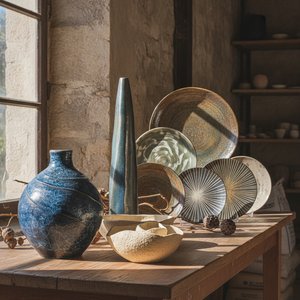
The Art of Ceramics: A Guide to Mastery, Texture, and Timeless Form for the Discerning Collector
Explore the profound elegance of ceramic art. From master glazes to sculptural forms, our expert guide offers discerning collectors deep insights into the mastery, texture, and timeless value of fine ceramics for sophisticated collections and luxury interiors.

The Enduring Form: Sculpture Across History, Technique & Emotional Resonance
Explore the rich history of sculpture with OriginalUniqueArt. Discover key techniques, influential artists & investment potential for discerning collectors. Expert insights into valuing and collecting timeless masterpieces.

