Metin boyutu

() ·

Sizin için, elle yapılmış bir tablo

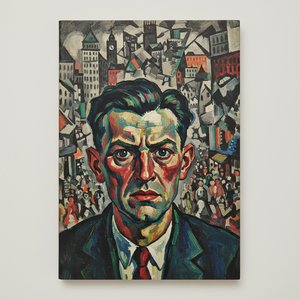
Dancing in the Ice Palace

El Yapımı Yağlı Boya Reproduksiyon

Sanatçılarımız tarafından sipariş üzerine hazırlanan; istediğiniz boyut ve çerçevede, tuval üzerine el boyaması yağlı boya. ( Baskı Satışına Geç Dijital Görsele Geç)

Eser Açıklaması

Experience 'Dancing in the Ice Palace' by Ernst Ludwig Kirchner, a frenzied German Expressionist masterpiece of chaotic dance and stark black-and-white contrasts. Explore this intense portrayal of movement and emotion – discover or own a unique piece.

Sanatçı Biyografisi

Ernst Ludwig Kirchner (1880-1938): Alman Ekspresyonizminin önde gelen ismi ve Die Brücke grubunun kurucu üyesiydi. Şehrin atmosferini, insan figürünü çarpıcı renklerle ve duygusal ifadelerle yakalayan eserleriyle sanat tarihine geçti.

...den/dan ·

Bölüm 1

Boyutu ne kadar olmalı?

Boyutu değiştirmek için kaydırın; soldaki resim çerçevenin gerçek genişliğini göstermektedir. Orijinal oranlar korunmuştur.

Standart
özel boyutlu
CM
INCH

Eserin orijinal oranlarıyla uyumlu, önceden belirlenmiş boyutlarımız arasından seçim yapın.

genişlik
yükseklik

Çerçevenize veya duvarınıza uygun olması için ihtiyacınız olan genişlik ve yüksekliği yazın. Bu eser el boyamasıdır; bu nedenle farklı bir formdaki boyutlar için sanatçı, resmin etrafına biraz daha fazla boya ekleyebilir veya kenarlardan biraz kırpabilir — seçim sizin. Boyama işlemi başlamadan önce onaylamanız için size bir dijital taslak gönderiyoruz. Bu sayfada gösterilen resim gerçek sonucu yansıtmamaktadır; gerçek sonucu yalnızca taslak göstermektedir.

Bölüm 2

Nasıl teslim edilmeli?

Gergin kanvasın kenarlarını seçin

Çerçevenizi seçin

Corner sample of the WhiteWrap canvas edge finish, stretched on masif ahşap bars
Beyaz kenar bitişi ₺1
Corner sample of the BlurSideWrap canvas edge finish, stretched on masif ahşap bars
Bulanık kenar bitişi ₺1
Corner sample of the ExtendedWrap canvas edge finish, stretched on masif ahşap bars
Kenar boyalı ₺1
Corner sample of the P118B picture frame: kalıplanmış polistiren, 5 cm wide and 3 cm thick
P118B ₺10
Corner sample of the P118H picture frame: kalıplanmış polistiren, 5 cm wide and 3 cm thick
P118H ₺10
Corner sample of the P118W picture frame: kalıplanmış polistiren, 5 cm wide and 3 cm thick
P118W ₺10
Corner sample of the P438Z picture frame: kalıplanmış polistiren, 5.5 cm wide and 3.5 cm thick
P438Z ₺10
Corner sample of the P508JH picture frame: kalıplanmış polistiren, 7 cm wide and 3.5 cm thick
P508JH ₺12
Corner sample of the P508YH picture frame: kalıplanmış polistiren, 7 cm wide and 3.5 cm thick
P508YH ₺12
Corner sample of the P805H picture frame: kalıplanmış polistiren, 5 cm wide and 3.5 cm thick
P805H ₺10
Corner sample of the P805Z picture frame: kalıplanmış polistiren, 5 cm wide and 3.5 cm thick
P805Z ₺10
Corner sample of the P919BZ picture frame: kalıplanmış polistiren, 7 cm wide and 3.5 cm thick
P919BZ ₺10
Corner sample of the P919G picture frame: kalıplanmış polistiren, 7 cm wide and 3.5 cm thick
P919G ₺10
Corner sample of the P919XJ picture frame: kalıplanmış polistiren, 7 cm wide and 3.5 cm thick
P919XJ ₺10
Corner sample of the P959ZH picture frame: kalıplanmış polistiren, 5 cm wide and 3 cm thick
P959ZH ₺10
Corner sample of the P968JZ picture frame: kalıplanmış polistiren, 6 cm wide and 4 cm thick
P968JZ ₺12
Corner sample of the W106C picture frame: masif ahşap, 5 cm wide and 3 cm thick
W106C ₺8
Corner sample of the W218G picture frame: masif ahşap, 5 cm wide and 3 cm thick
W218G ₺10
Corner sample of the W218JH picture frame: masif ahşap, 5 cm wide and 3 cm thick
W218JH ₺8
Corner sample of the W218Y picture frame: masif ahşap, 5 cm wide and 3 cm thick
W218Y ₺10
Corner sample of the W307PJ picture frame: masif ahşap, 6 cm wide and 3 cm thick
W307PJ ₺10
Corner sample of the W316G picture frame: masif ahşap, 6 cm wide and 3 cm thick
W316G ₺10
Corner sample of the W316PJ picture frame: masif ahşap, 6 cm wide and 3 cm thick
W316PJ ₺8
Corner sample of the W316Y picture frame: masif ahşap, 6 cm wide and 3 cm thick
W316Y ₺10
Corner sample of the W398PJ picture frame: masif ahşap, 5 cm wide and 3 cm thick
W398PJ ₺8
Corner sample of the W4111J picture frame: masif ahşap, 6.5 cm wide and 3.5 cm thick
W4111J ₺10
Corner sample of the W500HY picture frame: masif ahşap, 7 cm wide and 5 cm thick
W500HY ₺15
Corner sample of the W500JH picture frame: masif ahşap, 7 cm wide and 5 cm thick
W500JH ₺15
Corner sample of the W692G picture frame: masif ahşap, 8 cm wide and 4 cm thick
W692G ₺12
Corner sample of the W849H picture frame: masif ahşap, 5 cm wide and 3 cm thick
W849H ₺8
Corner sample of the W940BG picture frame: masif ahşap, 7.5 cm wide and 4.5 cm thick
W940BG ₺15
Corner sample of the W953PJ picture frame: masif ahşap, 6 cm wide and 3.5 cm thick
W953PJ ₺8
Corner sample of the H24-GOLD picture frame: alçıyla işlenmiş oyma ahşap, 10 cm wide and 6 cm thick
H24-GOLD ₺30
Corner sample of the H24-SILVER picture frame: alçıyla işlenmiş oyma ahşap, 10 cm wide and 6 cm thick
H24-SILVER ₺30
Corner sample of the H36-GOLD picture frame: alçıyla işlenmiş oyma ahşap, 15 cm wide and 6.5 cm thick
H36-GOLD ₺45
Corner sample of the H36-SILVER picture frame: alçıyla işlenmiş oyma ahşap, 15 cm wide and 6.5 cm thick
H36-SILVER ₺45

Çerçeve Kenarlığı: . Çerçeve dahil toplam boyut: .

Bölüm 3

Bunu kim boyuyor ve herhangi bir şey değişmeli mi?

Değiştirilebilecek örneklere göz atın: Yüzü müşteri fotoğrafıyla değiştirme; Evcil hayvan ekleme (örneğin, kediyi köpek ile değiştirme); Arka plana gizli bir mesaj dahil etme; Arka plan manzarasını veya öğelerini değiştirme.
Siparişten sonra, OriginalUniqueArt.com ekibi talimatlar için müşteriye e-posta gönderecek ve bir taslak önizleme sunacaktır

Dünya Çapında Teslimat (); standart 5 hafta yerine 3/4 haftada. (3 Kasım). Kaliteden ödün verilmez.

Bölüm 4

Son dokunuşlar

Müzedekiler gibi bir isimlik mi?

İşlemeli Bronz Plaka Detayları

This elegant plaque features the artist's name and the title of the artwork, finely engraved for a timeless presentation.

It is made from bronze with a refined, elegant finish. The text is precisely laser-engraved for a sharp and permanent result. Measuring 9x2 cm, the plaque is compact yet easy to read. It's built to be durable and scratch-resistant, offering a professional, museum-quality look. Mounting is simple thanks to the included adhesive backing.

Şeffaf Akrilik Plaka Detayları

The plaque includes essential engraved details such as the artist's name, the title of the artwork, the date it was created, the type of media used-like oil on canvas or watercolor-a brief description of the piece, and a QR code that links to the complete artwork information.

It is crafted from clear acrylic, offering a sleek, modern appearance. The text is UV-engraved in black to ensure strong visual contrast. With a size of 10x15 cm, it ensures optimal readability. It comes equipped with two metal hooks for secure wall mounting. The plaque is designed to be weather-resistant, making it suitable for various environments, and it includes interactive features that work seamlessly with smartphone scanning.

Siyah Akrilik Plaka Detayları

This elegant plaque includes engraved information such as the artist's name, the title of the artwork, the date it was created, the type of media used (like oil on canvas or watercolor), a short description of the artwork, and a QR code for quick access to more information.

The plaque itself is made from refined black acrylic with a premium finish. The text is laser-engraved in white for high contrast and readability. Its size is 10x15 cm, designed to be easy to read. It comes with two metal hooks for professional mounting. The design is sleek and fits any interior style. It is also weather-resistant and durable, with built-in digital integration for mobile compatibility.

Koruyucu vernik mi?

Ne zaman ihtiyacınız var?

Bölüm 5

Sipariş ettiğiniz şekilde, tablonuz

Dancing in the Ice Palace

Reproduksiyon Tekniği

Reproduksiyon Boyutu

-

Seçkin Kıdemli Sanatçı

Daha fazla detay, incelik ve ek üretim süresi

-

Reproduksiyon Çerçevesi

-

-

Herhangi bir kenarı 105 cm'den (yaklaşık 41 inç) büyük olan sanat eserleri veya reprodüksiyonlar için çerçeve, demonte edilmiş bir kit halinde gönderilecektir. Bu yöntem, güvenli teslimat sağlar ve taşıma sırasında oluşabilecek hasarları önler.

Profesyonel montaj gereklidir; bu ürün kendin yap (DIY) tarzı bir ürün değildir.
Kit; ahşap tutkalı (pakete dahil değildir), kanvas germe pensi ve tutkal kururken çıtaların dik durmasını sağlayacak işkenceler kullanılarak, deneyimli bir profesyonel çerçeveci tarafından monte edilmeli ve kanvas gerilmelidir. Hatalı montaj veya dengesiz kanvas gerginliği sanat eserine kalıcı zarar verebilir ve bu durum garantimiz kapsamında değildir.

  • Tüm masif ahşap çıtalar dahildir, montaj için hassas bir şekilde ölçülmüştür.

  • Paket içeriğinde bulunan vidalar ve köşe birleşimleri için ustanız tarafından temin edilmesi gereken, ancak pakete dahil olmayan ahşap tutkalı ile monte edilir.

  • Profesyonel araçlar gereklidir ve pakete dahil değildir: bir tuval germe aparatı (gerdirici) ve yapıştırıcı kururken çıtaların dik durmasını sağlayacak kıskaçlar.

Önemli:
Köşe bağlantıları için ahşap tutkalı gereklidir; tutkal tamamen kuruyana kadar çıtalar işkenceler ile sabitlenmelidir ve monte edilmiş çerçeve üzerindeki kanvasın gerilmesi için bir kanvas germe pensine ihtiyaç duyulur. Bunların hiçbiri kit içerisinde yer almamaktadır. Lütfen bu boyutu sipariş etmeden önce deneyimli bir profesyonel çerçeve ustası ile anlaşın.

Eser Etiketi

-

-

Koruyucu Vernik Katmanı

Parlak Vernik (renkleri canlandırır; ışığa ve neme karşı koruma sağlar)

-

Eserimi Özelleştir

Değiştirilebilecek örneklere göz atın: Yüzü müşteri fotoğrafıyla değiştirin; Evcil hayvan ekleyin (örneğin, kediyi köpek ile değiştirin); Arka plana gizli bir mesaj dahil edin; Arka plan manzarasını veya öğelerini değiştirin.

-

Hızlı Teslimat

Dünya Çapında Teslimat (); standart 5 hafta yerine 3/4 hafta içinde. (3 Kasım). Kaliteden ödün verilmez.

-

Hızlı Gönderim

için dünya çapında 5 haftalık teslimat süresi. (10 Kasım).

Dahil

Toplam Tutar

₺ 23352

Toplam Tutar ₺ 23352

Cam seçeneği yalnızca 110 cm altındaki boyutlar için mevcuttur.

Her siparişle birlikte gelir

  • Dünya Çapında Ücretsiz Ekspres Kargo
  • Yüksek Kaliteli Keten Kanvas
  • Tam Nakliye Sigortası
  • Gümrük Vergisi İadesi Garantisi
  • Gerçek Renk Uyumu Garantisi
  • 100 Günlük İade Politikası (Sadece Kusurlu Ürünler İçin)
  • %100 Para İade Garantisi
  • Toplu Alım İndirimi

Dancing in the Ice Palace: A Descent into Expressionist Frenzy

Ernst Ludwig Kirchner’s “Dancing in the Ice Palace” is not merely a depiction of a scene; it's an immersion into the turbulent heart of German Expressionism. Executed with a raw, almost violent energy, this artwork captures a moment of frenzied celebration – or perhaps desperate escape – within a structure that feels both alluring and profoundly unsettling. The image immediately confronts the viewer with its stark duality: black and white dominate, creating a visual tension that mirrors the emotional core of the piece. Kirchner’s masterful manipulation of line is central to this effect; thick, jagged strokes define every figure and architectural element, generating a sense of agitation and unease that permeates the entire composition.

The Language of Distortion: Technique and Style

  • Woodcut Roots: The artwork’s execution strongly suggests a woodcut printing process. This technique, favored by Kirchner and his contemporaries, lends itself perfectly to the piece's dramatic impact – the crisp lines, the limited tonal range, and the deliberate flattening of perspective all speak to this method.
  • Expressionist Core: “Dancing in the Ice Palace” is a quintessential example of German Expressionism’s core tenets. Kirchner, like his peers, rejected academic realism in favor of conveying subjective emotions and psychological states. The distorted figures, the chaotic composition, and the overall sense of disorientation are all hallmarks of this movement.
  • Line as Emotion: Kirchner wasn't interested in representing form accurately; instead, he used line to express raw emotion. The lines aren’t simply outlines; they are conduits for anxiety, alienation, and a desperate yearning for connection.

Symbolism Within the Chaos

The scene depicted is rife with symbolic potential. The “ice palace” itself can be interpreted as representing a fragile, artificial world – perhaps mirroring the anxieties of modern life or the instability of the political climate in early 20th-century Germany. The dancing figures, lost in their own movements, evoke feelings of isolation and alienation. Their obscured faces suggest a loss of identity, while their frenzied activity hints at a desperate attempt to find meaning within chaos. The stark contrast between black and white amplifies these themes, representing opposing forces or perhaps the duality of human experience – light versus darkness, joy versus despair.

A Window into Kirchner’s World

Created by Ernst Ludwig Kirchner during a period of intense artistic experimentation and personal struggle, “Dancing in the Ice Palace” offers a poignant glimpse into the artist's worldview. Born in 1880, Kirchner navigated a rapidly changing Germany, experiencing displacement and disillusionment that profoundly shaped his art. His work reflects not just aesthetic concerns but also a deep engagement with the social and psychological anxieties of his time. This piece stands as a testament to Kirchner’s ability to translate personal turmoil into a powerfully expressive artwork – a timeless exploration of human emotion and the unsettling beauty of chaos.

Soru ve Cevaplar

Ernst Ludwig Kirchner imzalı "Dancing in the Ice Palace" ev dekorasyonunda nasıl kullanılabilir?

Ernst Ludwig Kirchner imzalı "Dancing in the Ice Palace" için kaydedilen iki öneri; kullanım (Statement) ve alan (Living Room) şeklindedir.

"Dancing in the Ice Palace" için önerilen baskı formatı nedir; hangi boyut ve hangi yönlendirme ile basılmalıdır?

"Dancing in the Ice Palace" için önerilen baskı düzeni, Large boyutunda ve Square yönlendirmesindedir.

"Dancing in the Ice Palace" neyi betimliyor?

Ernst Ludwig Kirchner imzalı "Dancing in the Ice Palace" şunları betimler: dance, ice palace, expressionism, chaos, distortion, black & white, figures.

Bu tablo hakkında daha fazla bilgi

Gerçek Boyutta Önizle AR ile önizle Baskı Satışına Geç Dijital Görsele Geç Paylaş
Detayları Gör Rehber Favorilere ekle İndir Benzer ürünler X-Işını Slayt Gösterisi Soru & Cevap İstatistikler

Rakamlarla

  • 29seçilebilecek çerçeveler
  • kendi oranlarında, standart boyutlar
  • 5boyamak ve teslim etmek için gereken haftalar
Ernst Ludwig Kirchner

Ernst Ludwig Kirchner

1880 - 1938, Almanya

Ernst Ludwig Kirchner hakkında kısa bilgiler

  • Artistic Movement Or Style: İkinci Dünya Savaşı Ekspresyonizmi
  • Artists Who Influenced This Artist:
    • Albrecht Dürer
    • Vincent van Gogh
    • Edvard Munch
  • Date Of Birth: 6 Mayıs 1880
  • Date Of Death: 15 Haziran 1938
  • Full Name: Ernst Ludwig Kirchner
  • Nationality: Alman
  • Notable Artworks:
    • Şehir Sokakları
    • Dansçı Üçlüsü
    • Kendinden Portresi
  • Place Of Birth: Aschaffenburg, Almanya

Sanatçı Özgeçmişi

Ernst Ludwig Kirchner (1880-1938): A Life Forged in Expression

Ernst Ludwig Kirchner, a name inextricably linked to the visceral heart of German Expressionism, emerged from a period brimming with transformative upheaval—a genesis marked by displacement and fueled by an unwavering artistic conviction. His birth in Aschaffenburg, Bavaria, in 1880, initiated a journey profoundly shaped by familial circumstance and imbued with an early awareness of societal shifts. The landscapes of his formative years – dictated largely by his father’s profession as a paper scientist— instilled within him a sense of detachment that would become a recurring motif throughout his oeuvre, informing not only his subject matter but also the very essence of his artistic vision. From Frankfurt to Perlen, and ultimately settling in Chemnitz, Kirchner absorbed the anxieties inherent in Germany's accelerating modernization, immersing himself in an intellectual milieu characterized by fervent debate regarding artistic direction and social reform. Despite initial inclinations toward architecture at Königliche Technische Hochschule Dresden—a pursuit that provided him with foundational technical skills alongside exposure to humanist ideals—it was painting, driven by admiration for masters like Albrecht Dürer and a resolute rejection of academic formalism, that cemented his artistic path. He found kinship amongst fellow rebels – Fritz Bleyl, Karl Schmidt-Rottluff, Erich Heckel – forging bonds that irrevocably altered the trajectory of 20th-century art.

Early Life and Artistic Formation

Kirchner’s childhood was marked by frequent relocations due to his father's career demands, fostering a sensitivity to change and observation—qualities that would translate into meticulous detail in his paintings. He attended schools in Frankfurt and Perlen until securing the prestigious professorship at Chemnitz College of Technology, where he honed his artistic skills alongside kindred spirits who shared a radical worldview. This formative period witnessed the blossoming of his intellectual curiosity and cemented his commitment to exploring new artistic horizons—a pursuit that would culminate in his enrollment at Dresden’s Hochschule für Bildende Künste (Royal Academy of Fine Arts), where he studied architecture alongside fellow Expressionist pioneers. However, it was not architectural design alone that captivated him; rather, the intensive study of drawing and painting—particularly life drawing—provided him with invaluable techniques for capturing human form and emotion. His early artistic explorations were profoundly influenced by the works of Dürer and Rembrandt, whose mastery of etching and chiaroscuro served as models for Kirchner’s own printmaking endeavors. He recognized in these artists a kindred spirit—a dedication to portraying reality with uncompromising honesty and an unwavering belief in the transformative power of art.

Die Brücke: A Collective Pursuit of Expression

Kirchner's artistic trajectory took its decisive turn in 1905 when he joined *Die Brücke* (“The Bridge”), an avant-garde collective dedicated to forging a new aesthetic language—one that rejected the conventions of Impressionism and Academic painting. Alongside Bleyl, Schmidt-Rottluff, and Heckel, Kirchner established a studio in Dresden where they engaged in collaborative experimentation—a crucible for artistic innovation fueled by shared intellectual convictions. The group’s inspiration drew heavily from sources outside the mainstream art world—primitive art from Africa and Oceania; the bold chromatic palette of Vincent van Gogh; and Edvard Munch's haunting exploration of psychological anxieties. Rejecting idealized beauty, *Die Brücke* embraced distortion, jarring color combinations, and expressive brushwork to convey the pervasive sense of alienation and unease characterizing modern life. Kirchner’s early paintings—such as *The Street* (1908)—capture this atmosphere with remarkable acuity, depicting urban landscapes populated by figures rendered in fragmented forms and vibrant hues—a stylistic hallmark that distinguishes him from his contemporaries. The collective's ethos extended beyond mere artistic technique; it encompassed a broader philosophical stance—a rejection of bourgeois complacency and an embrace of spontaneity and emotional intensity.

Style and Technique: Exploring Psychological Depth

Kirchner’s distinctive artistic style is characterized by several key elements—most notably, his masterful manipulation of color and brushstroke. He eschewed the subtle gradations of Impressionistic painting in favor of bold, unmixed hues that heightened the expressive force of his compositions. His brushstrokes were energetic and visible, conveying a palpable sense of movement and dynamism—a technique he honed through extensive plein air studies and meticulous studio practice. Kirchner’s figures—often depicted nude or semi-nude—were rendered with unflinching realism but also subjected to distortion—a stylistic device that served to amplify emotional impact and convey psychological complexity. He employed techniques borrowed from Expressionist predecessors like Munch and Picasso, prioritizing subjective experience over objective representation. The influence of primitive art—particularly African sculpture—is evident in Kirchner’s sculptural works and informs his approach to form—a deliberate rejection of academic conventions in favor of a more primal aesthetic. His meticulous attention to detail—captured with charcoal and pastel—further underscores his commitment to portraying the human figure with uncompromising honesty.

Legacy and Recognition

Kirchner's artistic output spanned decades, culminating in a prolific oeuvre encompassing paintings, prints, sculptures, and decorative arts. Despite facing considerable opposition from conservative critics and institutions—particularly during the Nazi era—his work gained posthumous acclaim as a cornerstone of German Expressionism. In 1933, the Nazis deemed Kirchner’s art “degenerate”—a designation that resulted in the confiscation and destruction of numerous artworks—representing a devastating blow to his artistic career and personal life. Tragically afflicted by illness—likely schizophrenia—Kirchner retreated to Davos, Switzerland, where he continued to paint landscapes imbued with melancholic beauty. He succumbed to suicide on June 15, 1938, marking the end of a remarkable artistic journey. Nevertheless, Kirchner’s legacy persists as an enduring testament to the transformative power of art—a voice that continues to resonate across generations of artists and critics alike. His paintings—characterized by their uncompromising honesty and profound psychological depth—remain among the most iconic images of the Expressionist movement—solidifying his place as one of Germany's foremost artistic innovators.
  • Notable Works: *The Street*, *Nude Dancers*, *Five Women*, *Landscape with Figures*
  • Influences: Albrecht Dürer, Vincent van Gogh, Edvard Munch, Primitive Art (African & Oceanic)
Current Meta Description: Ernst Ludwig Kirchner (1880-1938): Key German Expressionist & Die Brücke co-founder. Explore bold, emotive paintings of urban life, nudes & landscapes. Current Meta Keywords: Ernst Ludwig Kirchner, Kirchner paintings, German Expressionism, Die Brücke, Expressionist art, Berlin street scenes, Woodcut prints, Modern German art, Nude figures, Kirchner artwork

Hızlı Bilgiler

  • Artistic style: Expressionist, Geometric
  • Subject or theme: Dance, Celebration
  • Notable elements: Bold lines, stark contrast
  • Movement: German Expressionism