Baskı Satışına Geç
 Devamını Oku







































 Herhangi bir kenarı 105 cm'den (yaklaşık 41 inç) büyük olan sanat eserleri veya reprodüksiyonlar için çerçeve, demonte edilmiş bir kit halinde gönderilecektir. Bu yöntem, güvenli teslimat sağlar ve taşıma sırasında oluşabilecek hasarları önler.


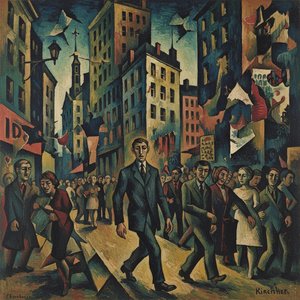
Berlin Street Scene in Berlin: Decoding Kirchner’s Expressionist Vision
Ernst Ludwig Kirchner’s *Street Scene in Berlin*, painted in 1913, transcends mere depiction; it embodies the palpable anxiety and alienation that gripped Germany on the cusp of World War I. More than just capturing a cityscape, this black-and-white sketch serves as a cornerstone of German Expressionism—a movement driven by an urgent desire to convey inner emotional states rather than objective reality. Examining its composition, stylistic choices, and historical significance reveals layers of meaning that continue to resonate with audiences today.Subject Matter & Composition: Lost in the Crowd
The artwork plunges us directly into the heart of Berlin’s bustling streets, dominated by a dense throng of figures. Kirchner masterfully employs overlapping lines and fragmented forms—a technique characteristic of Cubism—to generate an overwhelming sense of claustrophobia. Imagine stepping onto that street; you wouldn't feel alone amidst the surging masses. At the center stands a woman, arguably representing vulnerability within this chaotic environment. Radiating lines accentuate her presence but simultaneously contribute to a feeling of exposure and isolation. This deliberate arrangement isn’t accidental—it powerfully evokes the isolating experience of anonymity in an increasingly overwhelming urban landscape, mirroring the anxieties prevalent during Kirchner's time. The artist skillfully uses perspective to flatten the image, eliminating traditional depth cues and immersing the viewer within this dense tableau.Artistic Style & Technique: The Power of Line
Kirchner’s style is defined by expressive, gestural linework prioritizing emotional impact over precise representation. Loose, energetic strokes convey a palpable sense of movement mirroring the rapid pace of modern life—a deliberate stylistic choice reflecting the spirit of Expressionism. The stark contrast between bold black lines and the white background amplifies the dramatic effect, highlighting the raw energy inherent in each stroke. This technique aligns perfectly with the core tenets of Expressionism – distorting reality to express inner feelings and subjective experiences. Kirchner’s masterful use of line creates a textured surface—a deliberate decision that adds depth and dynamism to the composition. The sketch itself is remarkable; Kirchner's ability to convey emotion through minimal means speaks volumes about his artistic vision.Historical Context: Weimar Germany & Expressionist Angst
Painted during Weimar Republic, Germany experienced significant social and political upheaval following the fall of the monarchy. Kirchner’s *Street Scene* captures this atmosphere of uncertainty and disillusionment—a reflection of the broader anxieties surrounding industrialization, urbanization, and societal change. The painting anticipates the horrors of World War I, foreshadowing the psychological trauma that would characterize the era. It's a poignant commentary on the human condition amidst rapid transformation, encapsulating the existential dread felt by many artists and intellectuals of the time.Symbolism & Emotional Impact: Beyond Representation
Beyond its visual elements, *Street Scene* operates on a symbolic level. The woman’s posture—looking out from the crowd—represents both vulnerability and defiance. The radiating lines symbolize exposure and isolation, mirroring the artist's own feelings of alienation during this period. Kirchner doesn’t aim for literal depiction; instead, he seeks to communicate profound emotional truths about human experience—a testament to Expressionism’s enduring power to provoke contemplation and inspire empathy. This artwork remains a compelling reminder that art can transcend mere visual beauty, delving into the complexities of psychological states and capturing the essence of an era defined by anxiety and transformation.Soru ve Cevaplar
Ernst Ludwig Kirchner imzalı "Berlin Sokak Sahnesi" için hangi baskı boyutu öneriliyor?
"Berlin Sokak Sahnesi" için önerilen baskı boyutu Büyük Boy'dır. Aynı oranlarda diğer boyutlar da mevcuttur.
"Berlin Sokak Sahnesi" eserinin üslubu, yaratıcısının dönemle nasıl bir ilişki içindedir?
Ernst Ludwig Kirchner imzalı "Berlin Sokak Sahnesi", yaratıcısının Modern Dönem döneminde, German Expressionism akımı içerisinde yer almaktadır.
"Berlin Sokak Sahnesi" ile benzer eserler var mı?
"Berlin Sokak Sahnesi" ile benzer eserler, eserin Benzerleri sayfasında listelenmektedir.
 Önizle
 Gönder
 Paylaş
 Detaylar
 Rehber

 Dosyayı İndir
 Benzerleri
 X-Işını
 Slayt Gösterisi
 Q&A
Q&A İstatistikler