

 Önizle
 Gönder
 Paylaş
 Detaylar
 Rehber

 Dosyayı İndir
 Benzerleri
 X-Işını
 Slayt Gösterisi
 İstatistikler
Tafel 77 - Basia. Sifonoforalar
 Tuval Üzerine Akrilik Boya
- Duvar Sanatı
- Victorian Scientific Illustration
 1904
1904 Smithsonian Libraries and Archives
 Devamını Oku
El Yapımı Yağlı Boya Reproduksiyon
Sanatçılarımız tarafından sipariş üzerine hazırlanan; istediğiniz boyut ve çerçevede, tuval üzerine el boyaması yağlı boya. ( Baskı Satışına Geç Dijital Görsel Satışına Geç)




P118B $10

P118H $10

P118W $10

P438Z $10

P508JH $12

P508YH $12

P805H $10

P805Z $10

P919BZ $10

P919G $10

P919XJ $10

P959ZH $10

P968JZ $12

W106C $8

W218G $10

W218JH $8

W218Y $10

W307PJ $10

W316G $10

W316PJ $8

W316Y $10

W398PJ $8

W4111J $10

W500HY $15

W500JH $15

W692G $12

W849H $8

W940BG $15

W953PJ $8




Eserin orijinal oranlarıyla uyumlu, önceden belirlenmiş boyutlarımız arasından seçim yapın.

Belirli bir çerçeveye veya alana uyması için kendi boyutlarınızı girebilirsiniz. Seçtiğiniz boyut orijinal görüntünün oranlarıyla eşleşmiyorsa, sanat eserini kırparak veya ek el boyaması öğelerle resmi uzatarak ayarlayacağız. Üretim başlamadan önce onayınız için dijital bir taslak gönderilecektir.
Lütfen ekrandaki önizlemenin gerçek kırpmayı veya uzatmayı yansıtmadığını unutmayın. Nihai kompozisyonu yalnızca hazırlanan taslak doğru şekilde gösterecektir.
Özel boyutlar mevcut olsa da, orijinal oranları korumak adına önceden tanımlanmış listeden bir boyut seçmenizi öneririz.
Siparişten sonra, OriginalUniqueArt.com ekibi talimatlar için müşteriye e-posta gönderecek ve bir taslak önizleme sunacaktır
Dünya Çapında Teslimat (); standart 5 hafta yerine 3/4 haftada. (25 Eylül). Kaliteden ödün verilmez.

Dünya Çapında Ücretsiz Ekspres Kargo

Yüksek Kaliteli Keten Tuval

Tam Nakliye Sigortası

Gümrük Vergisi İadesi Garantisi

Gerçek Renk Uyumu Garantisi

100 Günlük İade Koşulları (Sadece Üretim Hatalı Ürünler İçin)

%100 Para İade Garantisi

Toplu Alım Avantajı
 Cam seçeneği yalnızca 110 cm altındaki boyutlar için mevcuttur.

Tafel 77 - Basia. Sifonoforalar
Baskı Tekniği
Baskı Boyutu
-


Toplam Fiyat
$ 300
Ernst Haeckel’s “Tafel 77 – Basia. Siphonophorae”: A Window into Victorian Scientific Wonder
Ernst Heinrich Philipp August Haeckel, geboren 1834 in Potsdam und gestorben 1919, war mehr als nur ein Wissenschaftler; er war eine außergewöhnliche Persönlichkeit, deren tiefgreifende Neugier und brillante Einsichten die Art der Betrachtung von Leben selbst für immer veränderten. Seine frühen Jahre waren geprägt von einer Liebe zum natürlichen Weltraum, die weit über die konventionelle Bildung hinausging – eine Leidenschaft, die durch die Mutter unterstützte und einem Kindheitsleben gewidmet wurde, das sich mit der Sammlung von Naturspechriften beschäftigte. Diese frühe Förderung legte den Grundstein für eine Karriere, die ihn über Jahrzehnte hinweg führte und zu bahnbrechenden Entdeckungen in Zoologie, Meeresbiologie, Philosophie und vor allem zu einer einzigartigen künstlerischen Sprache gelangte. Haeckel hinterließ ein Vermächtnis, das nicht nur durch wissenschaftliche Fortschritte definiert ist, sondern auch untrennbar mit seiner außergewöhnlichen Fähigkeit verbunden ist, die Welt um ihn herum auf eine Weise zu sehen und darzustellen, die sowohl faszinierend als auch tiefgründig beeindruckt.- Das Werk Selbst: “Tafel 77 – Basia. Siphonophorae” ist ein beeindruckendes Beispiel für Haeckel’s künstlerische Vision innerhalb des wissenschaftlichen Kontextes des frühen 20. Jahrhunderts. Dieses großformatige Aquarell zeigt eine detaillierte Darstellung von neun verschiedenen Arten von Quallen, wobei jede Qualle mit einzigartigen Formen und Größen gefüllt ist. Die Komposition ist außergewöhnlich komplex und betont die Schönheit der Natur durch präzise Beobachtung und wissenschaftliche Genauigkeit.
- Der Künstler und Sein Stil: Haeckel gehörte zur Bewegung des Jugendstil (Art Nouveau), einer europäischen Kunstströmung, die sich durch ihre Verwendung von natürlichen Formen und Ornamenten sowie ihren Fokus auf Ästhetik und Funktionabilität auszeichnete. Seine Aquarelltechnik ist besonders hervorzuheben – eine Methode, die ihm ermöglichte, außergewöhnliche Farbintensität und Detailtreue zu erreichen, während gleichzeitig eine gewisse Leichtigkeit und Bewegung eingefangen wurde.
- Historischer Kontext: Haeckel lebte in einer Zeit großer wissenschaftlicher Aufklärung und Herausforderungen. Die Entwicklung der Darwinistischen Evolutionstheorie hatte tiefgreifende Auswirkungen auf das Verständnis von Leben und Naturphilosophie und inspirierte Wissenschaftler wie Haeckel zu neuen künstlerischen Ausdrucksformen, die sowohl wissenschaftliche Erkenntnisse als auch ästhetische Schönheit vereinigten.
- Symbolik und Bedeutung: Die Darstellung der Quallen geht über reine Beobachtung hinaus und wird zum Symbol für verschiedene Konzepte innerhalb von Haeckel’s Philosophie. Er betrachtete die Qualle als ein Beispiel für Anpassung an ihre Umgebung und als Ausdruck eines komplexen sozialen Lebens, was Haeckel’s Ideen über Evolution und Gemeinschaft widerspiegelt.
- Emotionale Wirkung: Ein hochwertiges Druck dieser Tafel wird nicht nur einen Blickfang in jedes Wohnzimmer darstellen, sondern auch eine Verbindung zum Wunder der Natur herstellen und Erinnerungen an die Schönheit und Komplexität des Lebens hervorrufen. Die ruhige Farbgebung und die präzise Darstellung verleihen dem Bild eine besondere Tiefe und lassen den Betrachter tief nachdenken über die Geheimnisse der biologischen Welt.
Warum Eine Reproduktion Wählen?
Eine hochwertige Reproduktion von “Tafel 77 – Basia. Siphonophorae” bietet Ihnen eine Möglichkeit, ein Meisterwerk der wissenschaftlichen Kunst zu besitzen und gleichzeitig einen einzigartigen Dekorationsgegenstand für Ihr Zuhause zu schaffen. OriginalUniqueArt.com bietet eine umfangreiche Auswahl an Drucken in verschiedenen Größen und Materialien, die sicherstellen, dass Sie das perfekte Stück Kunst finden, um Ihre persönliche Sammlung oder Ihr Wohnambiente aufzuwerten. Lassen Sie sich von der Schönheit dieser außergewöhnlichen Darstellung inspirieren und bringen Sie einen Hauch von wissenschaftlichem Wunder und künstlerischem Stil in Ihr Leben!Sanatçı Biyografisi
Ernst Haeckel: A Pioneer of Biology and Artistic Vision
Ernst Heinrich Philipp August Haeckel (1834-1919) stands as a monumental figure in the annals of science and art, a man whose relentless curiosity and profound insights reshaped our understanding of life itself. Born into a family steeped in legal tradition in Potsdam, Prussia – a lineage that included prominent lawyers – Haeckel’s early fascination with the natural world quickly eclipsed any inherited legal aspirations. He possessed an innate drive to observe, classify, and ultimately, comprehend the intricate tapestry of existence, a passion nurtured by his mother's love for botany and a childhood spent collecting specimens. This formative period laid the groundwork for a career that would span decades, yielding groundbreaking discoveries in zoology, marine biology, philosophy, and, crucially, a uniquely compelling visual language. Haeckel’s legacy isn’t solely rooted in scientific advancement; it’s inextricably linked to his extraordinary artistic talent, particularly evident in his meticulously rendered illustrations – works that profoundly influenced the burgeoning Art Nouveau movement.Early Life and Scientific Foundations
Haeckel's formal education began at the Domgymnasium, a prestigious cathedral school in Merseburg, where he demonstrated an exceptional aptitude for learning and a remarkable independence of thought. He then pursued studies in medicine at Berlin and Würzburg, immersing himself in the rigorous disciplines of anatomy and physiology under esteemed mentors like Albert von Kölliker, Franz Leydig, Rudolf Virchow, and Johannes Peter Müller. These formative years instilled within him a deep respect for scientific methodology and a fascination with the underlying principles governing the natural world. Crucially, his encounter with Charles Darwin’s *On the Origin of Species* in 1860 served as a catalyst, igniting a fervent commitment to evolutionary theory and shaping his subsequent research trajectory. Haeckel quickly recognized the transformative potential of Darwin's ideas and dedicated himself to popularizing and expanding upon them within Germany – a role that would both elevate him to prominence and ultimately lead to controversy.Revolutionary Discoveries and the Recapitulation Theory
Haeckel’s scientific career blossomed during his tenure as professor of zoology at the University of Jena, beginning in 1861. He embarked on extensive expeditions – traversing the Canary Islands, Mediterranean Sea, Norway, Croatia, Egypt, Turkey, and Greece – meticulously documenting thousands of previously unknown species, primarily within the realms of radiolaria and medusae. His systematic approach to classification resulted in the naming of nearly seven hundred new marine invertebrates, solidifying his reputation as a leading authority in his field. Perhaps Haeckel’s most enduring contribution lies in his development of the “recapitulation theory,” often referred to as “ontogeny recapitulates phylogeny.” This provocative concept posited that an organism's embryonic development mirrors its evolutionary history – essentially suggesting that a creature briefly embodies all stages of its lineage. While now largely discredited due to subsequent discoveries in genetics, this theory, powerfully illustrated through his stunning artistic renderings, captivated the public imagination and profoundly influenced scientific thought at the time. His detailed illustrations, particularly those found in *Kunstformen der Natur* (Art Forms of Nature), weren’t merely depictions of marine life; they were visual arguments for his evolutionary theories, showcasing a remarkable synthesis of science and art.Artistic Influence and ‘Kunstformen der Natur’
Beyond his scientific achievements, Haeckel was a gifted artist whose illustrations transcended the boundaries of mere documentation. *Kunstformen der Natur* (1897), a monumental work comprising over 100 meticulously rendered plates, stands as a testament to his artistic vision and scientific rigor. These images – depicting everything from jellyfish and sea urchins to insects and plants – are not simply beautiful; they’re imbued with a sense of dynamism and evolutionary narrative. Haeckel's ability to capture the essence of each organism through precise detail and evocative composition profoundly influenced the Art Nouveau movement, which embraced organic forms, flowing lines, and a celebration of nature’s beauty. His work demonstrated that scientific observation could be elevated to an art form, creating a powerful bridge between the natural world and artistic expression. The influence can still be seen in contemporary design and illustration today.Controversies and Lasting Legacy
Despite his significant contributions to science and art, Haeckel’s career was not without controversy. His fervent advocacy for Darwinism often clashed with religious dogma, and he became embroiled in heated debates regarding the origins of humanity. Furthermore, Haeckel embraced ideas rooted in scientific racism – a disturbing aspect of his legacy that demands careful consideration. He promoted the concept of “racial hygiene,” advocating for selective breeding to improve the perceived genetic quality of populations. These views are unequivocally reprehensible and should not be excused or minimized. However, it’s crucial to acknowledge that Haeckel's work was produced within a specific historical context – a time when scientific ideas were rapidly evolving, often influenced by prevailing social biases. Despite these troubling aspects, Ernst Haeckel remains a pivotal figure in the history of science, an artist whose illustrations continue to inspire awe and wonder, and a complex individual whose life and work warrant continued scrutiny and critical engagement. His legacy is one of both remarkable achievement and profound ethical challenges, reminding us that scientific progress must always be tempered by moral responsibility.
ernst heinrich philipp august haeckel
1834 - 1919 , Germany
Kısa Bilgiler
- Artistic Movement Or Style: Art Nouveau influence
- Artists Or Movements Influenced By This Artist: ['Art Nouveau']
- Artists Who Influenced This Artist: ['Charles Darwin']
- Date Of Birth: February 16, 1834
- Date Of Death: August 9, 1919
- Full Name: Ernst Heinrich Philipp August Haeckel
- Nationality: German
- Notable Artworks:
- Kunstformen der Natur
- Tafel 7 - Epibulia. Siphonophorae
- Place Of Birth: Potsdam, Germany
İlgili Yazılar
Kay Rasmus Nielsen: A Golden Age Illustrator's Enchanting Legacy of Symbolism & Narrative
Explore the captivating world of Kay Rasmus Nielsen, a celebrated Golden Age illustrator renowned for his Art Nouveau fairy tale art & Disney contributions. Discover his unique style, enduring legacy, and how to collect his enchanting works.
Victorian Illustration: The Golden Age of Narrative Art and Intricate Detail
Explore the exquisite world of Victorian Illustration. Discover the masters of the Golden Age, from Arthur Rackham to Edmund Dulac, through an in-depth historical journey into the era's unparalleled detail and narrative artistry.
Max Ernst'in En İyi 25 Eseri: Sürrealizmin Derinliklerinde Sanat ve Dekor Rehberi
Max Ernst'in en iyi 25 eserini keşfedin! Sürrealizmin büyülü dünyasına dalın, resimlerin ardındaki hikayeleri öğrenin ve evinizi modern sanatla zenginleştirin. Yüksek kaliteli tablolar OriginalUniqueArt.com’da.
Edmund Dulac: A Master of Golden Age Illustration – Exploring Myth, Symbolism & Art Nouveau Legacy
Explore the captivating world of Edmund Dulac, a master of Golden Age illustration! Discover his enchanting fairy tales, Art Nouveau style, and lasting influence on art & design. Learn about *The Rubaiyat* and more.
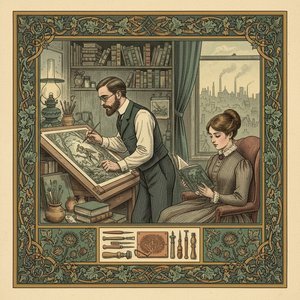
The Refined Aesthetic of Victorian Illustration: A Study in Narrative & Technique
Explore the captivating world of Victorian illustration! Discover Pre-Raphaelite influences, key artists like Rossetti & Stephens, and the era's rich narrative detail. A deep dive for art enthusiasts.

