

 Önizleme yap
 Paylaş
 Paylaş
 Detayları Gör

 İndir
İndir
 Benzerlerini gör
 X-Işını
 Slayt Gösterisi
 İstatistikler
Kyffin Williams (1918–2006), Seated at a Table
 Contemporary Realism
 1978
1978- Modern
 27.0 x 32.0 cm
 Llyfrgell Genedlaethol Cymru / The National Library of Wales
 Tümünü Gör
Çevrimiçi önizlemeden çok daha üstün, yüksek çözünürlüklü ve iyileştirilmiş bir dijital görüntü satın alın.
Her dosya, uzman ekibimiz tarafından gelişmiş araçlar ve titiz manuel rötuş teknikleri kullanılarak özenle hazırlanır. Her görüntünün olağanüstü netliğe, kusursuz renk doğruluğuna ve ince ayrıntılara sahip olduğundan emin oluruz.
Son dosya; profesyonel, editoryal ve baskı süreçlerinde anında kullanıma uygun şekilde optimize edilerek 72 saat içinde e-posta yoluyla teslim edilir. Bu, seçkin tasarım stüdyoları, yayıncılar ve galerilerin güvendiği aynı kalite standartlarındadır.
Dijital Görsel
Kişisel sergileme, baskı ve yaratıcı projeleriniz için yüksek çözünürlüklü bir dosya indirin. ( Baskı Moduna Geç El yapımı tablo satın al)
Her Dijital Görüntü Siparişinde Dahil Olanlar
Uzman Dijital Teslimat, Garantili
OriginalUniqueArt.com seçtiğinizde, sadece bir görsel edinmekle kalmaz; titizlikle hazırlanmış, profesyonelce iyileştirilmiş dijital bir sanat eserine sahip olur ve memnuniyet garantisiyle güvence altına alınırsınız. Siparişinizle birlikte otomatik olarak sunulan her şey şunlardır:

Hızlı E-posta ile Teslimat
Yüksek çözünürlüklü dijital görüntü dosyanız, siparişinizin üzerinden en geç 72 saat geçmeden e-posta ile size gönderilecektir; hemen kullanıma hazırdır.

Yapay Zeka İle İyileştirilmiş Dijital Dosya
Sanat eseriniz; maksimum detay, netlik ve renk doğruluğu sağlamak amacıyla gelişmiş yapay zeka araçları ve manuel düzenleme kullanılarak profesyonelce optimize edilmektedir.

Ömür Boyu Ücretsiz Yeniden Gönderim
Dosyanızı yanlışlıkla mı sildiniz yoksa kayıp mı oldu? Endişelenmeyin; dosyanızı dilediğiniz zaman size ücretsiz olarak tekrar göndereceğiz.

Hiçbir Zaman İthalat Ücreti Ödemeyin
Sanat eserinizin tadını gümrük vergisi, harç veya teslimat ücreti ödemeden anında çıkarın; dijital indirmeler her zaman vergiden muaftır.

Renk Doğruluğu Garantisi
Profesyonel araçlar ve renk yönetimi kullanarak dijital görselinizin orijinal renklere mümkün olduğunca yakın yansıtılmasını sağlıyoruz.

100 Günlük Memnuniyet Garantisi
If you're not satisfied with your digital image, we'll revise it or refund 100% within 100 days - no questions asked.

100% Para İadesi Garantisi
Memnun kalmadınız mı? Dijital dosyanızı teslim aldıktan sonraki 100 gün içinde, hiçbir soru sorulmaksızın tam para iadesi alabilirsiniz.

Toplu Sipariş İndirimleri
Buy 3 images, save 10% - Buy 5, save 15% - Buy 10+, save 20%. Great for creative projects, galleries, and agencies.
An Intimate Encounter: The Quiet Soul of Enslin du Plessis
In the quiet corners of art history, certain works possess the unique ability to freeze a fleeting moment of domestic tranquility, turning a simple afternoon into an eternal study of companionship. Seated at a Table, painted in 1978 by the evocative Enslin du Plessis, is such a masterpiece. The painting presents us with a profound sense of stillness, capturing a man in a moment of repose, his formal attire—a suit and tie—suggesting a life of structure and perhaps a recent return from the professional world. Yet, all the rigidity of his outward appearance melts away through the presence of his feline companion, nestled warmly upon his lap. This juxtaposition between the formal human element and the soft, instinctive comfort of the cat creates an atmosphere that is both deeply personal and universally relatable.
The composition invites the viewer to sit at the table alongside the subject. The arrangement of objects—the bottles that hint at a shared meal or a solitary drink, the humble cup resting near the edge, and the surrounding chairs—builds a narrative of lived-in reality. There is no grand drama here, only the subtle beauty of existence. Through his masterful use of light and shadow, du Plessis directs our gaze not just to the man, but to the textures of the scene, making the viewer feel the weight of the moment and the silent communication between human and animal.
Technique and the Art of Observation
Enslin du Plessis, a self-taught master whose journey was shaped by the keen eye of a journalist, brings a unique observational depth to this work. Unlike those trained in rigid academic traditions, his technique is rooted in an innate sensitivity to how light interacts with form. In Seated at a Table, we see a sophisticated handling of texture and tone that breathes life into the canvas. The way the light catches the edge of the glassware and the subtle folds of the man's suit demonstrates a profound understanding of materiality.
The artist’s ability to convey emotion through brushwork is particularly striking in this portrait. There is a softness to the rendering of the cat that contrasts beautifully with the more defined, structural elements of the room. This delicate balance of precision and fluidity ensures that the painting does not feel like a mere photographic reproduction, but rather an emotional interpretation of a memory. For collectors and interior designers, this technique offers a rich visual experience; the painting possesses a depth that changes depending on the lighting of a room, making it a dynamic centerpiece for any curated space.
A Timeless Addition to the Modern Interior
For those seeking to infuse their living spaces with a sense of peace and historical weight, this reproduction offers an unparalleled opportunity. The emotional impact of the piece lies in its ability to evoke nostalgia and a longing for simplicity. It is a work that speaks to the heart of the home, making it an ideal selection for a study, a library, or a quiet sitting room where conversation and reflection are encouraged.
Integrating such a high-quality reproduction into an interior design scheme allows for a sophisticated dialogue between classical portraiture and contemporary aesthetics. The muted palette and intimate subject matter complement both traditional decor and modern minimalist styles, providing a focal point that is both intellectually stimulating and visually soothing. To possess this work is to hold a piece of 1970s serenity, a reminder that even in a bustling world, there is profound beauty to be found in the quietest of moments.
Sanatçı Özgeçmişi
A Life Painted in Serenity: The World of Enslin du Plessis
Enslin Hercules du Plessis, born in Standerton, Transvaal, South Africa, in 1894, was an artist whose life unfolded as a quiet dedication to capturing the beauty of the landscapes that surrounded him. Though initially forging a path as a journalist, it was the allure of light and form—the subtle nuances of color and texture—that ultimately claimed his artistic soul. His journey wasn’t one of formal training; instead, du Plessis honed his skills through observation and an innate sensitivity to the world around him, a self-taught mastery that would become a defining characteristic of his work. The early years were marked by service during World War I, where he acted as a correspondent for South African newspapers, witnessing scenes that undoubtedly shaped his perspective but didn’t immediately translate into artistic expression. It wasn't until the 1920s, after settling in London and working within the bustling world of journalism, that painting began to take hold as more than just a pastime.From Journalism to Impressionistic Visions
Du Plessis’ transition from journalist to artist was gradual but resolute. He initially worked for Argus South African Newspapers while simultaneously exploring his burgeoning talent with paint. The late 1920s saw him begin exhibiting, first with the London Group in 1928 and gaining full membership by 1929. This association proved pivotal, exposing him to a network of like-minded artists and fostering an environment where experimentation and individual expression were valued. His style quickly evolved into a delicate Impressionism, characterized by soft brushstrokes, muted palettes, and a focus on capturing the atmosphere and light of his chosen subjects. He wasn’t interested in grand narratives or dramatic compositions; rather, he sought to portray the quiet beauty of everyday life—a sun-dappled garden, a peaceful canal scene, the comforting interior of a home.- Early Influences: While lacking formal training, du Plessis’ work demonstrates an affinity for Impressionistic principles, likely gleaned from exposure to European masters and contemporary British painters.
- The Power of Observation: His journalistic background instilled a keen eye for detail and a sensitivity to the nuances of his surroundings, qualities that translated directly into his paintings.
Themes of Home and Landscape
Du Plessis’ oeuvre is remarkably consistent in its thematic focus. He gravitated towards scenes of domestic tranquility—interiors bathed in soft light, still lifes depicting simple objects imbued with a sense of warmth and nostalgia—and the idyllic landscapes of England's Cotswolds and Buckinghamshire. His paintings are not merely representations of places; they are evocations of mood and feeling. Home Work, for example, captures the peaceful rhythm of domestic life, while scenes like Via del Fossa, Lucca, Italy transport the viewer to a serene Italian canal, bathed in golden light. He frequently returned to South Africa, but it was England that became his primary artistic muse, offering a wealth of inspiration in its rolling hills, quaint villages, and gentle countryside. His work often features boats, canals, and waterways—symbols perhaps of journeys taken, both literal and metaphorical.Recognition and Legacy
Throughout his career, du Plessis exhibited extensively with prominent galleries such as Goupil, Arlington, Leicester, Roland Browse and Delbanco, and the London Group. Contemporary Art Society and Arts Council acquired his work, and his paintings found their way into numerous public collections in both Britain and South Africa, including the Johannesburg Art Gallery, William Humphreys Art Gallery, and the University of Wits Art Galleries. In 1972, he was awarded the South African Akademie Medal of Honour for painting, a testament to his enduring contribution to the art world. While perhaps not a household name, Enslin du Plessis occupies an important place in the history of Modern British art. His paintings offer a poignant glimpse into a quieter, more contemplative era—a celebration of beauty, simplicity, and the enduring power of light and atmosphere. He retired from journalism in 1956 to paint full-time, dedicating his final years entirely to his artistic pursuit, passing away in Bromley, London, in 1978 leaving behind a legacy of serene landscapes and intimate interiors that continue to captivate viewers today.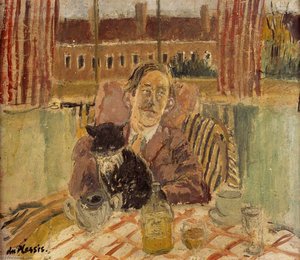
enslin du plessis
1894 - 1978
Kısa Bilgiler
- Artistic Movement Or Style: Impressionism
- Artists Or Movements Influenced By This Artist: ['Post-Impressionism']
- Artists Who Influenced This Artist:
- Claude Monet
- Pierre Auguste Renoir
- Date Of Birth: 1894
- Date Of Death: 1978
- Full Name: Enslin Du Plessis
- Nationality: British
- Notable Artworks:
- Via del Fossa
- The Mantelpiece
- Cottage Garden
- Place Of Birth: Lucca, Italy