Önizleme yap
 Paylaş
 Paylaş
 Detayları Gör

 İndir
İndir
 Benzerlerini gör
 X-Işını
 Slayt Gösterisi
 İstatistikler
Self-Portrait Pulling Cheek1910


 Tümünü Gör
El Yapımı Yağlı Boya Reproduksiyon
Sanatçılarımız tarafından sipariş üzerine hazırlanan; istediğiniz boyut ve çerçevede, tuval üzerine el boyaması yağlı boya. ( Baskı Moduna Geç Dijital Görsele Geç)




P118B $10

P118H $10

P118W $10

P438Z $10

P508JH $12

P508YH $12

P805H $10

P805Z $10

P919BZ $10

P919G $10

P919XJ $10

P959ZH $10

P968JZ $12

W106C $8

W218G $10

W218JH $8

W218Y $10

W307PJ $10

W316G $10

W316PJ $8

W316Y $10

W398PJ $8

W4111J $10

W500HY $15

W500JH $15

W692G $12

W849H $8

W940BG $15

W953PJ $8




Eserin orijinal oranlarıyla uyumlu, önceden belirlenmiş boyutlarımız arasından seçim yapın.

Belirli bir çerçeveye veya alana uyması için kendi boyutlarınızı girebilirsiniz. Seçtiğiniz boyut orijinal görüntünün oranlarıyla eşleşmiyorsa, sanat eserini kırparak veya ek el boyaması öğelerle resmi uzatarak ayarlayacağız. Üretim başlamadan önce onayınız için dijital bir taslak gönderilecektir.
Lütfen ekrandaki önizlemenin gerçek kırpmayı veya uzatmayı yansıtmadığını unutmayın. Nihai kompozisyonu yalnızca hazırlanan taslak doğru şekilde gösterecektir.
Özel boyutlar mevcut olsa da, orijinal oranları korumak adına önceden tanımlanmış listeden bir boyut seçmenizi öneririz.
Siparişten sonra, OriginalUniqueArt.com ekibi talimatlar için müşteriye e-posta gönderecek ve bir taslak önizleme sunacaktır
Dünya Çapında Teslimat (); standart 5 hafta yerine 3/4 haftada. (10 Eylül). Kaliteden ödün verilmez.

Dünya Çapında Ücretsiz Ekspres Kargo

Yüksek Kaliteli Keten Tuval

Tam Kapsamlı Nakliye Sigortası

Gümrük Vergisi İade Garantisi

Gerçek Renk Uyumu Garantisi

100 Günlük İade Politikası (Sadece Kusurlu Ürünler İçin)

%100 Para İade Garantisi

Toplu Alım İndirimi
 Cam seçeneği yalnızca 110 cm altındaki boyutlar için mevcuttur.

Self-Portrait Pulling Cheek1910
Reproduksiyon Tekniği
Reproduksiyon Boyutu
-


Toplam Tutar
$ 300
A Visceral Self-Examination: Egon Schiele’s 1910 Portrait
This striking self-portrait by Egon Schiele, created around 1910, is a powerful example of early Expressionism and offers a deeply unsettling yet captivating glimpse into the artist's psyche. More than just a likeness, it’s a raw emotional statement rendered with bold technique and psychological intensity.Decoding the Style & Technique
Schiele abandons traditional portraiture conventions in favor of an intensely personal style. The artwork is characterized by distorted anatomy, elongated features – particularly the hands pulling at the cheek – and a flattened perspective that rejects illusionistic depth. Thick, gestural brushstrokes are immediately apparent, creating a tactile surface brimming with energy. This *impasto* technique—where paint is applied so thickly it stands out from the canvas—heightens the emotional impact and emphasizes the physicality of the painting process. The color palette, while restrained, utilizes vibrant hues against a muted yellow-beige background to draw focus to the figure’s anguished expression.The Artist & His Era
Egon Schiele (1890-1918) was an Austrian artist whose brief but prolific career profoundly impacted 20th-century art. Living and working in Vienna during a period of societal upheaval and artistic innovation, he became associated with the Secession movement before forging his own unique path within Expressionism. His work often courted controversy due to its frank depictions of sexuality and psychological turmoil – themes that were largely taboo at the time. Schiele’s life was tragically cut short by the Spanish Flu pandemic, but his legacy continues to resonate today.Symbolism & Emotional Resonance
The act of pulling at the cheek is central to understanding this self-portrait. It's not merely a physical gesture; it suggests inner torment, anxiety, and self-scrutiny. The large, intensely focused eyes convey a sense of vulnerability and isolation. Schiele’s distorted features aren’t about accurate representation but rather an attempt to externalize internal states. This work embodies the Expressionist desire to depict not what things *look* like, but how they *feel*. It speaks to themes of alienation, psychological distress, and the search for identity – universal experiences that continue to resonate with viewers today.Considerations for Collectors & Designers
This self-portrait is a compelling statement piece. Its intense emotionality and unique aesthetic make it suitable for collectors seeking works with depth and historical significance. For interior designers, the artwork’s bold lines and expressive brushwork can add drama and sophistication to modern spaces. The muted background allows it to integrate into various color schemes, while its powerful imagery will undoubtedly spark conversation. A high-quality reproduction of this piece would serve as a focal point in any room, bringing a touch of artistic rebellion and psychological insight to the space.- Style: Expressionism
- Medium: Oil on Canvas (presumed)
- Themes: Self-Portraiture, Anxiety, Isolation, Psychological Turmoil
- Key Features: Distorted Anatomy, Impasto Technique, Intense Emotionality
Sanatçı Özgeçmişi
A Life Forged in Expression
Born in 1890 in Tulln an der Donau – a picturesque region with vineyards, onion-domed towers and Baroque monasteries – Egon Schiele’s life was a tempestuous journey marked by both extraordinary artistic vision and profound personal hardship. His early years were shadowed by illness and loss; his father succumbed to syphilis when Egon was just fourteen, a tragedy that would deeply resonate within his work, fueling an obsession with mortality and the fragility of existence. Raised initially by his mother and then under the somewhat controlling guardianship of his uncle Leopold Czihaczek, Schiele’s childhood lacked conventional stability but fostered a fiercely independent spirit. Even as a boy, he displayed an intense fascination with trains—a motif that subtly reappeared in later paintings—and a burgeoning talent for drawing, though this was initially met with disapproval from his father who saw it as a distraction from more practical pursuits. The early death of his sister Elvira also cast a long shadow over the young artist’s psyche. These formative experiences instilled within him a sensitivity and an emotional rawness that would become hallmarks of his artistic expression, a constant grappling with themes of life, death, and the human condition.
Early Influences & Artistic Training
Schiele's formal artistic training began at the Kunstgewerbeschule (School of Arts and Crafts) in Vienna, but he quickly found itself stifled by its conservative approach. He transferred to the Akademie der bildenden Künste (Academy of Fine Arts), only to become further disillusioned with its rigid academic traditions. This dissatisfaction led him to abandon formal training altogether, choosing instead to forge his own path—a testament to his unwavering artistic conviction. The influence of Gustav Klimt was pivotal during these early years; Schiele admired Klimt’s decorative style and exploration of symbolism, even receiving mentorship from the established artist. Klimt's bold use of color and stylized forms captivated young Schiele, shaping his aesthetic sensibilities and inspiring him to experiment with innovative techniques. However, Schiele soon diverged from Klimt's aesthetic, developing a distinctly individual voice characterized by its stark honesty and psychological intensity.
Vienna Secession & Artistic Breakthrough
Schiele joined the Vienna Secession in 1907 alongside fellow artists like Gustav Klimt, Oskar Kokoschka, and Josef Maria Olbrich—a group that championed artistic freedom and challenged the prevailing conservative values of Viennese society. The Secession’s manifesto declared a rejection of academic conventions and an embrace of expressive art as opposed to mere imitation of nature. This commitment to innovation profoundly impacted Schiele's artistic development, propelling him toward experimentation with new materials and techniques—particularly etching and lithography—that allowed him to convey emotion and psychological complexity in ways that traditional painting could not.
Major Themes & Artistic Style
Schiele’s art is immediately recognizable for its raw honesty and psychological depth. He fearlessly confronted themes often considered taboo – sexuality, death, anxiety, isolation – with an unflinching gaze. His distinctive style features elongated figures, contorted poses, and expressive lines that convey a sense of unease and emotional intensity. The human form, particularly the nude, became his primary subject, not as an object of idealized beauty but as a vessel for exploring the complexities of human experience. Schiele didn’t shy away from depicting himself in unflattering or vulnerable poses, revealing a profound level of self-awareness and introspection. Beyond self-portraiture, Schiele created numerous portraits of others, capturing their likenesses with an unsettling realism that seemed to penetrate beneath the surface. His landscapes, while less central to his work than his figurative paintings, demonstrate his mastery of form and color, often reflecting the same emotional intensity as his portraits. The use of line is particularly striking in Schiele’s work; it's not merely a tool for defining shape but an expressive force that conveys emotion and psychological tension.
Legacy & Influence
Despite facing censorship and legal challenges – including a brief imprisonment for allegedly corrupting minors with his art – Schiele gained recognition within Vienna’s avant-garde circles. His work challenged the conventions of the time, provoking both admiration and outrage. By the time of his untimely death during the Spanish flu pandemic in 1918 at the age of twenty-eight, he had established himself as a leading figure in Austrian Expressionism. Significant works such as Self-Portrait with Physalis, Couple Embracing, and Field Landscape (Kreuzberg near Krumau) stand as testaments to his artistic genius. His influence on subsequent generations of artists is undeniable, particularly those interested in exploring psychological themes and challenging conventional artistic norms. Schiele’s bold approach to form and subject matter continues to resonate with audiences today, making him one of the most important and influential figures in early 20th-century art. His paintings are now held in major museum collections worldwide, ensuring his artistic legacy endures.

Egon Şiele
1890 - 1918 , Avusturya
Kısa Bilgiler
- Artistic Movement Or Style: İkinci Ekspresyonizm
- Artists Or Movements Influenced By This Artist: ['Ekspresyonizm']
- Artists Who Influenced This Artist: ['Gustav Klimt']
- Date Of Birth: 12 Haziran 1890
- Date Of Death: 31 Ekim 1918
- Full Name: Egon Schiele
- Nationality: Avusturyalı
- Notable Artworks:
- Portre
- Çift Embracing
- Kreuzberg Manzarası
- Place Of Birth: Tulln, Avusturya
İlgili Makaleler

The Inner Landscape: Exploring Themes of Introspection in Visual Art Across Movements & Eras
Explore the captivating world of introspective art! Discover how artists across eras – from Rembrandt to Kahlo – used self-portraiture to reveal their inner worlds and emotional depths. A journey through art history & psychology.
Egon Schiele: Expressionism, Anxiety & the Modern Condition – A Comprehensive Exploration
Explore the emotionally charged world of Egon Schiele (1890-1918). Discover his Expressionist masterpieces, psychological themes, and lasting impact on modern art. A comprehensive guide for collectors & enthusiasts.
Egon Schiele'nin En İyi 25 Eseri: Duygusal Derinlik ve Sanatsal İkonlar | OriginalUniqueArt
Egon Schiele'nin en etkileyici 25 eserini keşfedin! Avusturya ekspresyonizminin güçlü portreleri, çarpıcı figüratif sanat ve duygusal derinliğiyle tanışın. Sanat tarihine yolculuk yapın ve evinizi OriginalUniqueArt'ta yüksek kaliteli baskılarla süsleyin. Koleksiyonu şimdi keşfedin!
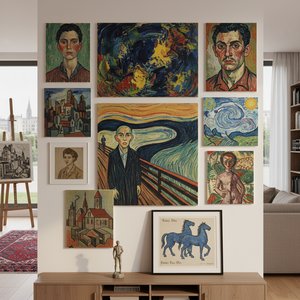
Duygu Voltanıyla Sanatı Yeniden Tanımlayan 10 Empresyonist Başyapıt
İfadeciliğin zirvesi! Van Gogh, Munch ve daha fazlasıyla 10 başyapıtı keşfedin. Sanatın duygusal gücünü deneyimleyin ve evinizi OriginalUniqueArt'tan kaliteli sanat baskılarıyla dönüştürün. Keşfetmek için tıklayın!
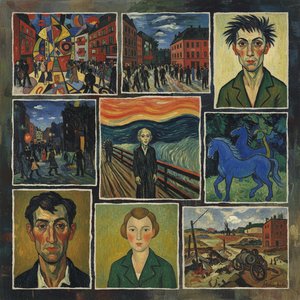
Expressionist Painting: 10 Masterpieces That Defined a Movement | OriginalUniqueArt
Explore 10 Expressionist paintings that revolutionized art! Discover Munch, Kirchner & Kandinsky's iconic works. Find museum-quality reproductions and vibrant canvas prints to elevate your home decor on OriginalUniqueArt.com.