
 Gerçek Boyutta Önizle
 Paylaş
 Paylaş
 Detayları Gör
 Rehber

 İndir
İndir
 Benzer ürünler
 X-Işını
 Slayt Gösterisi
 Soru & Cevap
 İstatistikler
Road near Galle, Ceylon

- 38.0 x 24.0 cm


 Tümünü Gör
Giclée / Sanat Baskısı
Hızlı üretim ve esnek bitiş seçenekleriyle müze kalitesinde giclée veya kanvas baskı. ( El Yapımı Tablo Satın Al Dijital Görsele Geç)




P118B ₺10

P118H ₺10

P118W ₺10

P438Z ₺10

P508JH ₺12

P508YH ₺12

P805H ₺10

P805Z ₺10

P919BZ ₺10

P919G ₺10

P919XJ ₺10

P959ZH ₺10

P968JZ ₺12

W106C ₺8

W218G ₺10

W218JH ₺8

W218Y ₺10

W307PJ ₺10

W316G ₺10

W316PJ ₺8

W316Y ₺10

W398PJ ₺8

W4111J ₺10

W500HY ₺15

W500JH ₺15

W692G ₺12

W849H ₺8

W940BG ₺15

W953PJ ₺8




Eserin orijinal oranlarıyla uyumlu, önceden belirlenmiş boyutlarımız arasından seçim yapın.

Çerçevenize veya duvarınıza uygun olması için ihtiyacınız olan genişlik ve yüksekliği yazın. Bir baskı yalnızca kesilebilir, görselden daha büyük hale getirilemez; bu nedenle farklı bir formdaki boyut seçimi, görselin bir kısmının kaybına neden olur. Herhangi bir baskı yapmadan önce onaylamanız için size bir dijital taslak gönderiyoruz. Bu sayfada gösterilen resim gerçek kesimi göstermez — bunu yalnızca taslak gösterir.
Dünya Çapında Teslimat (); standart 4/5 hafta yerine 2 haftada. (7 Kasım)

Dünya Çapında Ücretsiz Ekspres Kargo

Yüksek Kaliteli Keten Kanvas

Tam Nakliye Sigortası

Gümrük Vergisi İadesi Garantisi

Gerçek Renk Uyumu Garantisi

100 Günlük İade Politikası (Sadece Kusurlu Ürünler İçin)

%100 Para İade Garantisi

Toplu Alım İndirimi
 Cam seçeneği yalnızca 110 cm altındaki boyutlar için mevcuttur.

Road near Galle, Ceylon
Giclée / Sanat Baskısı
Reproduksiyon Boyutu
-


Toplam Tutar
₺ 3995
A Glimpse of Ceylon’s Soul: Edward Lear's “Road Near Galle, Ceylon”
Edward Lear’s “Road Near Galle, Ceylon,” painted in 1879, isn’t merely a depiction of a tropical landscape; it’s a carefully constructed window into the heart of late Victorian Sri Lanka. More than just a picturesque scene, this oil painting embodies a profound sense of observation and quiet contemplation – qualities deeply rooted in Lear's own life experiences and artistic sensibilities. The image transports us to a moment suspended in time, capturing not just the physical beauty of the region but also an atmosphere of gentle serenity and understated dignity. It’s a testament to Lear’s ability to distill complex emotions into a single, evocative composition.The Scene Unfolds: A Vibrant Tapestry of Life
The painting immediately draws the eye to a small group of figures traversing a dusty dirt road that snakes its way through a lush, palm-dominated landscape. These aren’t grand heroes or dramatic events; instead, they represent everyday life – men and women engaged in simple activities: some pausing for rest, others continuing their journey with purposeful strides. Their attire, rendered in warm, earthy tones, speaks to the practicality of rural existence while simultaneously hinting at a vibrant local culture. The backdrop is dominated by towering palm trees, their fronds reaching skyward, creating a sense of depth and scale that emphasizes the vastness of the Ceylon landscape. The light itself – a rich, golden hue – seems to bathe the scene in an eternal afternoon glow, lending it a timeless quality. Lear masterfully uses color to create a harmonious balance between the vibrant greens of the foliage and the warm browns and ochres of the road and figures, evoking a feeling of warmth and tranquility.Lear’s Technique: A Delicate Balance of Observation and Impression
Examining the painting's technique reveals Lear’s meticulous approach to capturing light and atmosphere. He employs a broken brushstroke style, layering thin washes of color to build up form and texture with remarkable subtlety. This method allows for a luminous quality, particularly evident in the dappled sunlight filtering through the palm fronds. The artist’s attention to detail is striking – from the individual folds of fabric on the figures' clothing to the intricate patterns of the foliage – yet he avoids overly precise rendering, instead favoring an impressionistic approach that captures the essence of the scene rather than a photographic likeness. The use of color is particularly noteworthy; Lear doesn’t shy away from bold hues but skillfully blends them to create a sense of depth and realism. The painting's overall effect is one of quiet beauty and understated elegance, reflecting Lear’s own artistic philosophy.Symbolism and Context: A Window into Victorian Sri Lanka
“Road Near Galle, Ceylon” offers more than just a visual pleasure; it provides a glimpse into the social and cultural context of late 19th-century Sri Lanka during the British colonial period. Lear’s depiction of everyday life—the simple routines of the villagers—reflects a nuanced understanding of the region's diverse population. The painting can be interpreted as a celebration of Ceylon’s natural beauty and its people, while subtly acknowledging the presence of foreign influence. Lear himself was a keen observer of human nature and a master of capturing fleeting moments of emotion in his art. His own experiences with illness and isolation likely informed his ability to imbue his paintings with a sense of melancholy and introspection. The painting’s title itself—"Road Near Galle, Ceylon"—suggests a deliberate focus on the journey, both literal and metaphorical, that defines human existence.Bringing Lear's Vision Home: Reproductions and Artistic Legacy
Today, “Road Near Galle, Ceylon” stands as a testament to Edward Lear’s artistic genius. High-quality reproductions offer an accessible way to experience the painting’s beauty and evoke its evocative atmosphere. Whether displayed in a living room, study, or gallery, this artwork invites contemplation and offers a connection to a bygone era. Consider framing options that complement the painting's rich colors and textures – a natural linen canvas would be particularly fitting, allowing the artwork to truly shine. Explore various sizes to find one that best suits your space and aesthetic preferences. By investing in a reproduction of “Road Near Galle, Ceylon,” you’re not simply acquiring an image; you’re inheriting a piece of art history—a window into the soul of Ceylon and the perceptive eye of Edward Lear.Soru ve Cevaplar
Edward Lear imzalı "Road near Galle, Ceylon" eserinin yapım tarihi ve üslubu nedir?
"Road near Galle, Ceylon", 1879 yılında Romanticism akımının bir eseri olarak yaratılmıştır. Tarih ve akım, sanat eserini sanat tarihinde konumlandırır.
"Road near Galle, Ceylon" eserini kim yarattı ve hangi tarzda?
Edward Lear, "Road near Galle, Ceylon" adlı eserini Romanticism akımı içerisinde yaratmıştır.
"Road near Galle, Ceylon" eserini kim ve hangi yılda yarattı?
Edward Lear, "Road near Galle, Ceylon" adlı eseri 1879 yılında yaptı.
Sanatçı Özgeçmişi
Edward Lear (1812-1888): The Poet of Nonsense and Light
Edward Lear, a name synonymous with whimsical verse and delightfully peculiar illustrations, was far more than the purveyor of limericks and fantastical creatures that often define his legacy. Born in 1812 in Holloway, North London, into a family teeming with twenty-one children, Lear’s early life was marked by both financial instability and a burgeoning artistic talent. His father, Jeremiah Lear, faced hardship after the Napoleonic Wars, forcing young Edward to begin earning a living through his drawings at the tender age of fifteen. This necessity, however, ignited a lifelong passion that would see him traverse continents and capture the world in vibrant hues and playful lines. The shadow of familial difficulty, coupled with early health challenges – including epilepsy and bouts of melancholia he termed “the Morbids” – instilled within Lear a sense of gentle solitude and an inclination towards imaginative escape, qualities profoundly reflected in his art and writing.Early Influences: Precision and Observation
Lear’s artistic journey began with meticulous precision. Initially employed by the Zoological Society, he honed his skills illustrating birds and animals, demonstrating a remarkable eye for detail and anatomical accuracy. This early work demanded unwavering observation—a characteristic that would serve as a cornerstone of his subsequent endeavors. The Society tasked him with documenting the diverse avian species inhabiting Britain’s natural habitats, requiring painstaking sketches and detailed renderings that adhered to scientific standards. These formative years instilled in Lear an appreciation for meticulous draughtsmanship and fostered a deep understanding of animal anatomy—skills he would carry forward throughout his career. Beyond the Zoological Society, Lear was influenced by Romantic painters like John Constable and Thomas Gainsborough, whose landscapes championed atmospheric perspective and conveyed a sense of sublime beauty. He absorbed their techniques for capturing light and color, incorporating them into his own artistic practice.Travel & Landscape Painting: Capturing Exotic Visions
Lear’s fascination with the natural world extended far beyond the confines of British ornithology. Driven by an insatiable curiosity and a desire to experience new cultures, he embarked on extensive travels throughout Europe and beyond—a journey that irrevocably shaped his artistic vision. His expeditions to Italy, Greece, Egypt, and Morocco exposed him to breathtaking vistas and vibrant palettes—inspiring him to develop a distinctive style characterized by atmospheric perspective and delicate brushwork. He meticulously studied the geological formations, vegetation patterns, and climatic conditions of these regions, translating his observations into evocative watercolors that captured the essence of their beauty. Lear’s landscapes are imbued with a palpable sense of wonder—reflecting his own profound appreciation for the grandeur of nature. Consider *The Dong with luminous nose*, where Lear masterfully employs chiaroscuro to create dramatic contrasts between light and shadow, emphasizing the contours of the landscape and conveying an emotional resonance that transcends mere visual representation.The Poet of Nonsense: A Revolution in Verse
While celebrated as a painter, it is perhaps for his literary contributions that Edward Lear is most widely remembered. His “nonsense” poetry—particularly his limericks—revolutionized children’s literature and captivated audiences of all ages. *A Book of Nonsense*, published in 1846 under the pseudonym "Derry down Derry," introduced a world populated by owls and pussycats sailing in pea-green boats, dongs with luminous noses, and other delightfully absurd creations. These verses weren’t merely frivolous; they were imbued with a subtle melancholy and a playful subversion of conventional logic. Lear didn't simply invent nonsense words; he crafted entire worlds governed by their own internal rules, inviting readers to suspend disbelief and embrace the joy of imagination. He challenged established poetic conventions—rejecting rhyme schemes and meter in favor of spontaneous rhythm and lyrical beauty. His limericks explored themes of loneliness, longing, and the absurdity of existence, cloaked within a veneer of whimsicality—yet beneath the surface lay a poignant awareness of human vulnerability.Legacy & Enduring Charm
Lear’s influence extends far beyond the realm of children's literature. He pioneered a new form of poetic expression, liberating verse from rigid structures and embracing playful experimentation. His landscapes, though often overshadowed by his poetry, demonstrate a keen artistic sensibility and a mastery of watercolor technique. He was a true polymath—artist, illustrator, musician (he composed musical settings for Tennyson’s poems), author, and poet—whose diverse talents converged to create a unique and enduring legacy. He championed innovation while retaining an unwavering commitment to aesthetic beauty—a testament to his artistic integrity. His paintings can be found in esteemed collections like The Ashmolean Museum, Oxford, a beacon of Victorian art and a celebration of Lear’s singular vision. Edward Lear's life, marked by both personal struggles and creative triumphs, serves as a poignant reminder that even amidst darkness, there is always room for light, laughter, and the boundless possibilities of the human spirit—a sentiment perfectly encapsulated in his enduring masterpiece, *The Owl and the Pussy-Cat*.
Edward Lear
1812 - 1888 , İngiltere
Kısa Bilgiler
- Artistic Movement Or Style: Nonsense
- Date Of Birth: May 12, 1812
- Date Of Death: January 29, 1888
- Full Name: Edward Lear
- Nationality: British
- Notable Artworks:
- The Owl and the Pussycat
- Illustrations of Parrots
- Place Of Birth: London, UK
Benzer Yazılar

John Constable'ın En İyi 25 Eseri: İngiliz Manzaralarının Büyüsü OriginalUniqueArt'ta
John Constable'ın en iyi 25 eserini keşfedin! İngiliz manzara sanatının büyülü dünyasına dalın, romantizm akımını ve kırsal yaşamı yansıtan tablolarla evinizi zenginleştirin. Sanat reproduksiyonları OriginalUniqueArt'ta.

Evocations of Place: A Historical Journey Through Landscape Art
Explore the rich history of landscape art with OriginalUniqueArt. Discover renowned artists, movements like Impressionism & Romanticism, and expert guidance for collecting timeless pieces. Find your perfect serene escape today!

Romantik Resmin Zirveleri: Evinizi Sanatla Süsleyen 10 Usta Manzara
Romantizm sanatının en etkileyici 10 başyapıtını keşfedin! Friedrich, Turner gibi ustaların büyüleyici manzaralarıyla evinizi dönüştürün. Sanat tarihi ve dekorasyon rehberi OriginalUniqueArt.com'da tüm koleksiyonu inceleyin.

Evocations of Place: A Historical Journey Through Landscape Art
Explore the rich history of landscape art with OriginalUniqueArt. Discover renowned artists, movements like Impressionism & tonalism, and expert guidance for collecting timeless pieces. Find your perfect serene escape today!
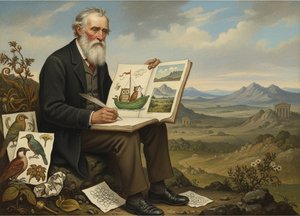
Edward Lear: A Life Beyond Nonsense – Landscape, Illustration & the Poetics of Isolation
Explore the life of Edward Lear beyond his nonsense poems. Discover his stunning landscape paintings, travel illustrations & the poignant themes of isolation in this expert art history analysis.