
 Önizle
 Gönder
 Paylaş
 Detaylar
 Rehber

 Dosyayı İndir
 Benzerleri
 X-Işını
 Slayt Gösterisi
 Q&A
Q&A İstatistikler
Portrait of Anthony de Wale

- 71.0 x 60.0 cm


 Devamını Oku
Giclée / Sanat Baskısı
Hızlı üretim ve esnek bitiş seçenekleriyle müze kalitesinde giclée veya kanvas baskı. ( El Yapımı Tablo Satın Al Dijital Görsel Satışına Geç)




P118B ₺10

P118H ₺10

P118W ₺10

P438Z ₺10

P508JH ₺12

P508YH ₺12

P805H ₺10

P805Z ₺10

P919BZ ₺10

P919G ₺10

P919XJ ₺10

P959ZH ₺10

P968JZ ₺12

W106C ₺8

W218G ₺10

W218JH ₺8

W218Y ₺10

W307PJ ₺10

W316G ₺10

W316PJ ₺8

W316Y ₺10

W398PJ ₺8

W4111J ₺10

W500HY ₺15

W500JH ₺15

W692G ₺12

W849H ₺8

W940BG ₺15

W953PJ ₺8




Eserin orijinal oranlarıyla uyumlu, önceden belirlenmiş boyutlarımız arasından seçim yapın.

Çerçevenize veya duvarınıza uygun olması için ihtiyacınız olan genişlik ve yüksekliği yazın. Bir baskı yalnızca kesilebilir, görselden daha büyük hale getirilemez; bu nedenle farklı bir formdaki boyut seçimi, görselin bir kısmının kaybına neden olur. Herhangi bir baskı yapmadan önce onaylamanız için size bir dijital taslak gönderiyoruz. Bu sayfada gösterilen resim gerçek kesimi göstermez — bunu yalnızca taslak gösterir.
Dünya Çapında Teslimat (); standart 4/5 hafta yerine 2 haftada. (31 Ekim)

Dünya Çapında Ücretsiz Ekspres Kargo

Yüksek Kaliteli Keten Tuval

Tam Nakliye Sigortası

Gümrük Vergisi İadesi Garantisi

Gerçek Renk Uyumu Garantisi

100 Günlük İade Koşulları (Sadece Üretim Hatalı Ürünler İçin)

%100 Para İade Garantisi

Toplu Alım Avantajı
 Cam seçeneği yalnızca 110 cm altındaki boyutlar için mevcuttur.

Portrait of Anthony de Wale
Giclée / Sanat Baskısı
Baskı Boyutu
-


Toplam Fiyat
₺ 3931
A Window into 17th Century Dutch Society: The Portrait of Anthony de Wale
David Bailly’s “Portrait of Anthony de Wale,” painted in 1636, is more than just a likeness; it's a meticulously crafted window into the world of 17th-century Holland. Housed within the esteemed Rijksmuseum in Amsterdam, this oil painting on panel offers a profound glimpse into the life and aspirations of a prominent figure – Anthony de Wale, a theologian at Leiden University. Bailly’s skill isn’t merely technical; it's evident in his ability to imbue the subject with an aura of quiet contemplation, inviting the viewer into a private moment of reflection.
(Image: Portrait of Anthony de Wale by David Bailly)
The Baroque Embrace: Light, Shadow, and Symbolism
Bailly’s masterful command of the Baroque technique is immediately apparent. The painting utilizes a dramatic chiaroscuro – a stark contrast between light and shadow – to create a palpable sense of depth and three-dimensionality. This isn't simply about depicting form; it’s about evoking emotion. Notice how the soft illumination focuses on de Wale’s face, highlighting his serious expression and drawing our attention to his gaze, directed squarely at the viewer. This direct engagement fosters a feeling of intimacy, as if he is sharing a private thought.
Beyond the technical brilliance, the painting is rich in symbolism. De Wale's holding of a small book or manuscript – a clear reference to scholarly pursuits – speaks volumes about his status and intellectual standing within society. The choice of black robe with a white collar further emphasizes his position of authority and respectability. The inclusion of elements like the subtle suggestion of a skull (often found in vanitas paintings, though not overtly present here) hints at the fleeting nature of earthly existence – a common theme explored by Bailly during this period.
David Bailly: A Master of Detail and Dutch Golden Age Portraiture
David Bailly was a pivotal figure in the Dutch Golden Age art scene. Born in Leiden in 1584, his artistic journey began under the tutelage of his father, a calligrapher and fencing master, and later with skilled craftsmen like Jacques de Gheyn II and Cornelius van der Voort. His travels to Italy during the winter of 1608 – a ‘Grand Tour’ that exposed him to the innovations of the Roman artistic tradition – profoundly shaped his style. Bailly's portraits are characterized by their remarkable detail, capturing not just physical appearance but also personality and social standing. He was particularly renowned for his vanitas paintings, exploring themes of mortality and the transience of life with a poignant sensitivity.
Bringing Bailly’s Vision Home: High-Quality Reproductions
OriginalUniqueArt offers exquisite, hand-painted reproductions of “Portrait of Anthony de Wale,” allowing you to experience the artistry and historical significance of this masterpiece in your own home. Each reproduction meticulously recreates Bailly's use of light, shadow, and symbolic detail, ensuring an authentic representation of the original painting. To explore more about David Bailly’s life and work, we encourage you to visit Wikipedia (https://en.wikipedia.org/wiki/David_Bailly) or delve deeper into the Rijksmuseum's collection at /art/list/?Filter=A@D3BLAV-The-Rijksmuseum-Amsterdam-Netherlands. And for a closer look, you can view the painting on Google Arts & Culture: https://artsandculture.google.com/asset/portrait-of-anthony-de-wale-1573-1639-bailly-david/igFvXK0N0j51rw?hl=en.
Soru ve Cevaplar
"Portrait of Anthony de Wale" ne tür renkler kullanıyor?
"Portrait of Anthony de Wale" eserinin renkleri Earthy bir palet oluşturmaktadır. Bu sınıflandırma, baskın renk ailelerini tanımlar.
David Bailly imzalı "Portrait of Anthony de Wale" eserinin kompozisyonuna hangi renk yön veriyor?
David Bailly imzalı "Portrait of Anthony de Wale" eserinin baskın rengi Phthalo Green (#302c25)'dır.
"Portrait of Anthony de Wale" ne zaman yapıldı?
David Bailly imzalı "Portrait of Anthony de Wale" eserinin yapım tarihi 1636 olarak kaydedilmiştir.
Sanatçı Biyografisi
David Bailly: A Life in Dutch Golden Age Art
Early Life and Training (1584-1608)
- Birth and Family: David Bailly was born in Leiden, Netherlands, in 1584. His father, Peter Bailly, was a Flemish immigrant who worked as a calligrapher and fencing master.
- Early Artistic Education: He initially received drawing instruction from his father and the copper engraver Jacques de Gheyn. This foundational training instilled in him a strong draftsmanship.
- Apprenticeships: Bailly further honed his skills through apprenticeships with Adriaan Verburg, a surgeon-painter in Leiden, and Cornelius van der Voort, a portrait painter in Amsterdam. These experiences exposed him to different artistic techniques and subject matter.
The Grand Tour and Early Career (1608-1613)
- Continental Travels: In the winter of 1608, Bailly embarked on a ‘Grand Tour,’ traveling through Frankfurt, Nuremberg, Augsburg, Hamburg, Tyrol, and Venice before reaching Rome. This journey was crucial for his artistic development.
- Italian Influence: He spent five months in Venice working as a journeyman, absorbing the influences of Italian Renaissance and Venetian art. His return voyage included commissions from German princes, including the Duke of Brunswick.
Artistic Development and Style (1613-1657)
- Diverse Subject Matter: Upon returning to the Netherlands in 1613, Bailly began painting a variety of subjects, including still lifes and portraits. He became known for his self-portraits and depictions of students and professors at the University of Leiden.
- Vanitas Paintings: A significant portion of his oeuvre consists of *vanitas* paintings – symbolic works that reflect on the transience of life, often featuring flowers, candles, and other ephemeral objects. These paintings demonstrate a philosophical depth alongside artistic skill.
- Portraiture Style: His portrait style is characterized by realism and attention to detail, capturing the likenesses and personalities of his sitters with sensitivity.
Major Achievements and Guild Membership
- Guild Leadership: In 1648, Bailly was elected headman of the Leiden Guild of St. Luke, a testament to his standing within the artistic community.
- Teaching Legacy: He served as a teacher and mentor to his nephews, Harmen and Pieter Steenwijck, passing on his knowledge and skills to the next generation.
Influences and Historical Significance
- Artistic Influences: Bailly was influenced by the Italian masters he encountered during his Grand Tour, as well as by Dutch predecessors in portraiture and still life painting.
- Impact on Dutch Art: He contributed to the flourishing of art during the Dutch Golden Age, particularly through his insightful *vanitas* paintings that reflected the era’s preoccupation with mortality and spirituality.
- Legacy: While not as widely recognized today as some of his contemporaries, David Bailly remains an important figure in the history of Dutch art, representing a blend of technical skill, intellectual depth, and artistic innovation.

David Bailly
1584 - 1657 , Netherlands
Kısa Bilgiler
- Name: David Bailly
- Movement: Dutch Golden Age painting
- Birth Date: 1584
- Death Date: 1657
- Influenced:
- Harmen Steenwijck
- Pieter Steenwijck
- Birth Place: Leiden, Netherlands
- Nationality: Dutch
- Date Of Birth: 1584
- Date Of Death: 1657
- Influenced By:
- Adriaan Verburg
- Cornelius van der Voort
- Jacques de Gheyn
- Notable Works:
- Self-Portrait with Vanitas Symbols
- Portrait of Anthony de Wale
- Place Of Birth: Leiden, Netherlands
İlgili Yazılar

About Us
Discover our story! We bring world-class art into your life through expert curation, personalized creations, and free previews. Trusted by individuals and businesses since 2000.

Francisco Goya'nın En İyi 25 Eseri: İspanyol Ruhunun Derinlikleri Sanatta
Francisco Goya'nın en iyi 25 eserini keşfedin! İspanyol ressamının Romantizm akımındaki başyapıtları, tarihi tabloları ve portrelerinin derin anlamlarını öğrenin. Ev dekorasyonunuz için lüks sanat baskıları OriginalUniqueArt.com’da.

Golden Age Reflections: Dutch Baroque Painting & Cultural Innovation
Explore the Dutch Golden Age of painting! Discover key artists like Vermeer & ter Borch, their innovative techniques, and the rich cultural context behind these Baroque masterpieces. Learn about collecting & appreciating this iconic art period.
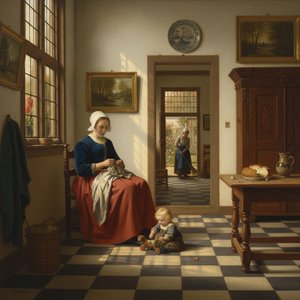
Pieter de Hooch: Illuminating Dutch Domestic Life & Golden Age Charm
Explore the captivating world of Pieter de Hooch, a master of Dutch Golden Age painting. Discover his innovative use of light, intimate domestic scenes, and lasting influence on art history. Learn more at OriginalUniqueArt.

Dutch Baroque Masters: 10 Paintings That Shaped an Era | OriginalUniqueArt
Journey through the Golden Age with our guide to the Top 10 Dutch Baroque masterpieces! Explore iconic paintings by Rembrandt, Vermeer & Frans Hals. Find museum-quality art reproductions and elevate your home decor at OriginalUniqueArt.com.