

 Önizle
 Gönder
 Paylaş
 Detaylar
 Rehber

 Dosyayı İndir
 Benzerleri
 X-Işını
 Slayt Gösterisi
 İstatistikler
Portrait for JEON Woo
 Contemporary Realism
 1911
1911 65.0 x 45.0 cm
 Devamını Oku
Giclée / Sanat Baskısı
Hızlı üretim ve esnek bitiş seçenekleriyle müze kalitesinde giclée veya kanvas baskı. ( El Yapımı Tablo Satın Al Dijital Görsel Satışına Geç)




P118B $10

P118H $10

P118W $10

P438Z $10

P508JH $12

P508YH $12

P805H $10

P805Z $10

P919BZ $10

P919G $10

P919XJ $10

P959ZH $10

P968JZ $12

W106C $8

W218G $10

W218JH $8

W218Y $10

W307PJ $10

W316G $10

W316PJ $8

W316Y $10

W398PJ $8

W4111J $10

W500HY $15

W500JH $15

W692G $12

W849H $8

W940BG $15

W953PJ $8




Eserin orijinal oranlarıyla uyumlu, önceden belirlenmiş boyutlarımız arasından seçim yapın.

Belirli bir çerçeveye veya alana uyması için kendi ölçülerinizi girebilirsiniz. Seçtiğiniz boyut orijinal görüntünün oranlarıyla eşleşmiyorsa, sanat eserini kırpacağız veya görüntüyü aynalanmış ya da düz dolgulu bir kenarlıkla genişleteceğiz. Üretim başlamadan önce onayınız için bir dijital taslak gönderilecektir.
Lütfen ekrandaki önizlemenin gerçek kırpma veya genişletmeyi yansıtmadığını unutmayın. Nihai kompozisyonu yalnızca taslak doğru bir şekilde gösterecektir.
Özel boyutlar mevcut olsa da, orijinal oranları korumak için önceden tanımlanmış listeden bir boyut seçmenizi öneririz.
Dünya Çapında Teslimat (); standart 4/5 hafta yerine 2 haftada. (26 Eylül)

Dünya Çapında Ücretsiz Ekspres Kargo

Yüksek Kaliteli Keten Tuval

Tam Nakliye Sigortası

Gümrük Vergisi İadesi Garantisi

Gerçek Renk Uyumu Garantisi

100 Günlük İade Koşulları (Sadece Üretim Hatalı Ürünler İçin)

%100 Para İade Garantisi

Toplu Alım Avantajı
 Cam seçeneği yalnızca 110 cm altındaki boyutlar için mevcuttur.

Portrait for JEON Woo
Giclée / Sanat Baskısı
Baskı Boyutu
-


Toplam Fiyat
$ 80
Sanatçı Biyografisi
Maurits Cornelis Escher: The Architect of Impossible Worlds
Born in Leeuwarden, Netherlands, in 1898, Maurits Cornelis Escher was a graphic artist whose singular vision transformed the world of printmaking. For most of his life, he remained largely unrecognized within the established art world, a quiet observer and meticulous craftsman working primarily for personal satisfaction. It wasn’t until the late twentieth century that his intricate and mathematically-driven creations – impossible constructions, tessellations, reflections, and metamorphoses – gained widespread acclaim, cementing his place as one of the most innovative and enduring artists of the 20th century. Escher's legacy lies not just in his stunning visual artistry but also in his profound engagement with fundamental concepts of geometry, perspective, and infinity.
Escher’s early life offered little indication of the extraordinary career that lay ahead. He initially pursued a path in architecture at the Haarlem School of Architecture, a decision influenced by his father's profession. However, he quickly realized his true passion resided in drawing and printmaking, abandoning architectural studies to dedicate himself fully to artistic pursuits. This shift was supported by Samuel Jesserun de Mesquita, a teacher who recognized Escher’s exceptional talent and encouraged him to follow his artistic inclinations. His formative years were marked by an intense study of nature – insects, landscapes, and plants – meticulously rendered in detailed drawings that would later serve as the foundation for his complex compositions.
A pivotal moment in Escher's career occurred during his travels through Italy and Spain in the 1920s. He was particularly captivated by the intricate tilework of the Alhambra palace in Granada and the Mezquita-Cathedral of Córdoba, marveling at their geometric patterns and repeating motifs. These experiences ignited a deep fascination with tessellations – the art of covering a surface with repeating shapes without gaps or overlaps – which would become a central theme throughout his work. He began experimenting with woodcuts and lithographs, translating these visual discoveries into tangible forms. The influence of Giorgio de Chirico’s surrealist paintings, particularly *The Song of Love*, introduced him to the concept of juxtaposing seemingly unrelated objects in unsettling yet intriguing ways – a technique he would masterfully employ throughout his career.
Mathematical Foundations and Artistic Innovation
Escher's art is inextricably linked to mathematics. He wasn’t a mathematician himself, but he cultivated close relationships with leading figures like George Pólya, Roger Penrose, and Donald Coxeter, seeking their insights into the underlying principles governing his creations. These collaborations fueled his exploration of concepts such as infinity, perspective, symmetry, and hyperbolic geometry. His work isn't simply decorative; it’s a rigorous investigation of mathematical possibilities, demonstrating how geometric rules can be manipulated to create illusions of depth, movement, and transformation.
Key elements in Escher’s artistic vocabulary include impossible objects – constructions that defy our intuitive understanding of three-dimensional space—such as *Hand with Reflecting Sphere* (1935) and *Drawing Hands* (1948). These works exploit the limitations of human perception, presenting visual paradoxes that challenge our assumptions about reality. His tessellations, exemplified by *Sky and Water I* (1937), demonstrate his mastery of repeating patterns and intricate arrangements. Escher’s use of perspective—often employing forced perspective to create dramatic illusions—further enhances the sense of disorientation and wonder in his images. The recurring motifs – birds, fish, animals, and human figures – are not merely decorative elements but contribute to the overall narrative and thematic complexity of his work.
Major Works and Recognition
Escher’s oeuvre is remarkably extensive, comprising over 300 prints, woodcuts, lithographs, and mezzotints. Some of his most celebrated works include *Relativity* (1953), a stunning depiction of gravity warping space; *Waterfall* (1961), which visually represents the flow of water through an impossible landscape; and *Metamorphosis I, II, and III* (1937-1938), showcasing his ability to transform one image into another through intricate geometric manipulations. His work gained significant recognition in the late 20th century, largely thanks to the efforts of Martin Gardner, a popular science writer who featured Escher’s art in his *Mathematical Games* column in *Scientific American*. This exposure sparked widespread interest and led to numerous exhibitions around the world.
Legacy and Influence
Maurits Cornelis Escher died in 1972, leaving behind a body of work that continues to fascinate and inspire. His art transcends categorization, blending elements of geometry, mathematics, surrealism, and printmaking into a uniquely captivating style. Escher’s influence can be seen in various fields, including architecture, graphic design, and computer animation. His exploration of impossible spaces and optical illusions has captivated artists and designers for decades, demonstrating the enduring power of his innovative vision. He remains an icon of artistic ingenuity, a testament to the boundless possibilities of human creativity when combined with rigorous intellectual inquiry.

chae yongshin
1898 - 1972 , South Korea
Kısa Bilgiler
- Artistic Movement Or Style: Graphic art, Printmaking
- Artists Or Movements Influenced By This Artist:
- Rene Magritte
- Martin Gardner
- Artists Who Influenced This Artist:
- George Arnold Escher
- Roger Penrose
- Date Of Birth: 17 June 1898
- Date Of Death: 27 March 1972
- Full Name: Maurits Cornelis Escher
- Nationality: Dutch
- Notable Artworks:
- Hand with Reflecting Sphere
- Drawing Hands
- Relativity
- Waterfall
- Ascending and Descending
- Place Of Birth: Leeuwarden, Netherlands
İlgili Yazılar
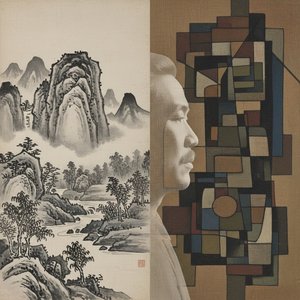
Yi Eungro: Bridging East & West in the Landscape of Korean Modernism
Explore the captivating world of Yi Eungro (Lee Ungno), a pivotal figure in Korean modernism. Discover his unique fusion of Eastern and Western artistic traditions, abstract masterpieces, and lasting legacy. A must-read for discerning art collectors.
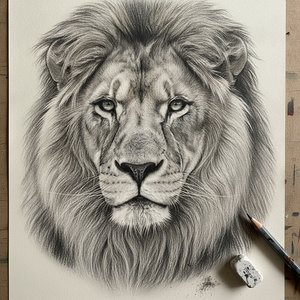
Mastering Graphite Pencil: The Ultimate Expert Guide to Achieving Depth, Texture, and Hyper-Realistic Detail
Elevate your artistry with our expert guide to mastering graphite pencil. Learn professional techniques for achieving profound depth, intricate textures, and hyper-realistic details through advanced shading, layering, and precision tool mastery designed for serious art students.

The Timeless Beauty of Chinese Calligraphy: An Exploration of Ink, Spirit, and the Art of the Brush
Embark on a profound journey through the soul of Chinese calligraphy. Explore the historical mastery of ink, brush, and script, from ancient Zhuanshu to elegant running script, and discover how this timeless art form reflects the enduring spirit of classical East Asian aesthetics.
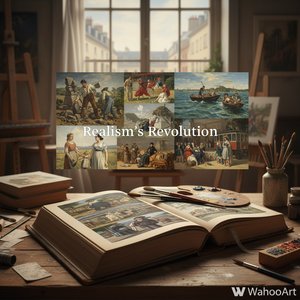
Gerçekçiliğin İzleri: Evinizi Sanatla Taşıyan 10 Başyapıt
Gerçekçiliğin zirvesi! Courbet, Millet ve daha fazlasıyla 10 başyapıtı keşfedin. Sanat tarihinin en etkileyici eserleri ile evinizi dönüştürün. OriginalUniqueArt.com'da online tablo koleksiyonunu inceleyin!

Xie Zhiliu: A Legacy of Ink Wash Painting & Modern Chinese Literati Tradition
Explore the legacy of Xie Zhiliu, a master of Chinese ink wash painting & prominent figure in modern art. Discover his techniques, influences, and contributions to literati tradition. A guide for discerning collectors.