

 Gönder
 Paylaş
 Detaylar
 Rehber

 Dosyayı İndir
 Benzerleri
 Slayt Gösterisi
 Q&A
Q&A İstatistikler
Uzun Mesafe Bilgileri
 Bronz Heykel
- Contemporary Minimalism
 1983
1983 1900.0 x 1800.0 cm
 British Council
 Devamını Oku
Bu sayfada sergilenen eser telif hakkı yasasıyla korunmaktadır; bu da yasal olarak eserin birebir kopyasını oluşturamayacağımız veya satamayacağımız anlamına gelir. Bu koruma, aşağıdakiler gibi uluslararası anlaşmalar kapsamında uygulanmaktadır: Bern Sözleşmesi ve aşağıdakiler de dahil olmak üzere ulusal yasalarca belirlenen ABD Telif Hakkı Kanunu - 17. Başlık.
Bu yöntem, koruma altındaki sanat eserinin kopyalanmasını veya çoğaltılmasını içermediği için telif hakkı düzenlemelerine tam uyum sağlar. Bunun yerine, yaratıcı bir yeniden yorumlamadır; orijinalinden etkilenen ancak onunla aynı olmayan yeni bir tablodur.
Giclée / Sanat Baskısı
Hızlı üretim ve esnek bitiş seçenekleriyle müze kalitesinde giclée veya kanvas baskı. ( El Yapımı Tablo Satın Al Dijital Görsel Satışına Geç)




































Eserin orijinal oranlarıyla uyumlu, önceden belirlenmiş boyutlarımız arasından seçim yapın.

Çerçevenize veya duvarınıza uygun olması için ihtiyacınız olan genişlik ve yüksekliği yazın. Bir baskı yalnızca kesilebilir, görselden daha büyük hale getirilemez; bu nedenle farklı bir formdaki boyut seçimi, görselin bir kısmının kaybına neden olur. Herhangi bir baskı yapmadan önce onaylamanız için size bir dijital taslak gönderiyoruz. Bu sayfada gösterilen resim gerçek kesimi göstermez — bunu yalnızca taslak gösterir.
Dünya Çapında Teslimat (); standart 4/5 hafta yerine 2 haftada. (30 Ekim)

Dünya Çapında Ücretsiz Ekspres Kargo

Yüksek Kaliteli Keten Tuval

Tam Nakliye Sigortası

Gümrük Vergisi İadesi Garantisi

Gerçek Renk Uyumu Garantisi

100 Günlük İade Koşulları (Sadece Üretim Hatalı Ürünler İçin)

%100 Para İade Garantisi

Toplu Alım Avantajı
 Cam seçeneği yalnızca 110 cm altındaki boyutlar için mevcuttur.

Uzun Mesafe Bilgileri
Giclée / Sanat Baskısı
Baskı Boyutu
-


Toplam Fiyat
₺ 3929
Bill Woodrow’s “Long Distance Information”: A Dialogue Between Decay and Invention
Bill Woodrow’s monumental sculpture, “Long Distance Information,” crafted in 1983, stands as a striking testament to the burgeoning New Sculpture movement of the early eighties. More than just an assemblage of discarded materials—a car bonnet, walkie-talkies, and a long-lens camera—it embodies a profound engagement with themes of obsolescence, vulnerability, and ultimately, creative reimagining. Woodrow’s work emerged from a reaction against the prevailing conceptual art trends of the decade, rejecting reductive abstraction for an expressive exploration of form and materiality. The Lisson Gallery served as crucial platform to showcase this bold aesthetic shift, capturing the spirit of experimentation championed by artists like Richard Deacon and Tony Cragg.- Subject Matter & Context: Woodrow’s choice of materials—specifically a repurposed car bonnet—immediately establishes a connection to the anxieties surrounding Britain's economic downturn during that period. The sculpture speaks to the disillusionment felt by many young artists confronting societal challenges and questioning established artistic conventions.
- Style & Technique: The sculpture’s aesthetic leans heavily on Surrealist influences, particularly Freud’s concept of “the uncanny.” Woodrow deliberately disrupts familiar forms—the car bonnet is transformed into instruments of communication—creating a jarring juxtaposition that destabilizes perception. His technique involves meticulous welding and assemblage, resulting in a robust yet fragile structure that reflects the paradoxical nature of its subject matter.
- Symbolism & Imagery: The central image – a crow perched atop an umbrella – carries significant symbolic weight. Crow represents death and decay, mirroring the deterioration of industrial society, while the umbrella symbolizes protection and resilience. Woodrow’s deliberate fragmentation of the bonnet underscores the idea that beauty can emerge from ruin.
- Emotional Impact: “Long Distance Information” isn't merely visually arresting; it evokes a palpable sense of melancholy mingled with optimism. The sculpture compels viewers to contemplate the passage of time and the transformative power of artistic intervention. Woodrow’s work invites contemplation on how we confront change and find meaning in unexpected places.
Exploring Surrealist Roots & Freud's Influence
Woodrow’s artistic vision finds its inspiration in Sigmund Freud’s psychoanalytic theories, specifically his exploration of the subconscious mind and the unsettling experience of encountering familiar objects imbued with hidden meanings. Like many Surrealists before him, Woodrow deliberately disrupts logical associations to provoke emotional responses and challenge conventional understandings of reality. The fractured bonnet serves as a visual metaphor for this destabilization—a deliberate rejection of straightforward representation in favor of evocative imagery.Materiality & Process: A Celebration of Found Objects
The sculpture’s remarkable achievement lies in its ability to elevate humble materials – discarded automotive components – into objects of artistic contemplation. Woodrow's skillful welding technique transforms these remnants into a cohesive whole, demonstrating an unwavering commitment to craftsmanship and textural richness. The resulting surface is deliberately rough and uneven, mirroring the weathered patina of industrial decay but simultaneously conveying a sense of purposeful creation.Contemporary Relevance & Artistic Legacy
“Long Distance Information” continues to resonate powerfully today, reflecting anxieties about environmental degradation and societal transformation that remain pertinent. Woodrow’s pioneering approach to sculpture—embracing the unexpected beauty inherent in repurposed materials—established a precedent for subsequent generations of artists who sought to redefine artistic expression through experimentation and engagement with social concerns. It stands as an enduring reminder that art can confront uncomfortable truths while simultaneously fostering imaginative possibilities.Soru ve Cevaplar
Bill Woodrow imzalı "Uzun Mesafe Bilgileri" eserinin formatına hangi yerleşim uygundur?
Bill Woodrow imzalı "Uzun Mesafe Bilgileri" eserinin Panoramik formatı, Oturma Odası için önerilmektedir. Format ve alanın birleşimi, bir reprodüksiyonun yerleşimi konusunda yol göstericidir.
Bill Woodrow imzalı "Uzun Mesafe Bilgileri" eserinin renk kimliği nedir?
Bill Woodrow imzalı "Uzun Mesafe Bilgileri", baskın rengin Bronz-altın (#dba73a) olduğu Pastel tonlar bir palet kullanıyor.
"Uzun Mesafe Bilgileri" eserinde kontrast ve uyum nasıl bir araya geliyor?
Bill Woodrow imzalı "Uzun Mesafe Bilgileri" eserinin renk kompozisyonu, Yumuşak bir kontrast ile Uyumlu Palet bir uyumu bir araya getiriyor.
Sanatçı Biyografisi
The Alchemy of the Discarded
In the quiet corners of Oxfordshire, near Henley-on-Thames, a story began in 1948 that would eventually transform the very nature of British sculpture. Bill Woodrow did not seek out marble or fine clay; instead, his eyes were drawn to the overlooked remnants of a changing society. During his formative years at Winchester College of Art, St. Martin’s, and Chelsea, he developed a way of seeing that turned the debris of London streets into something entirely new. He wandered through scrap yards and skips, gathering the bones of consumer culture—car bonnets, washing machines, and twin tubs—to build his visions.
His early method was one of surgical reconstruction. He would take a discarded object, perhaps a piece of domestic machinery, and cut into its skin with the precision of a craftsman. By reattaching these fragments through umbilical-like connections or embedding them in plaster, he made it appear as though these objects were being excavated from a layer of modern history. There was a certain magic in how a baked bean can became a pipe, or how a spin dryer could be reshaped into the frame of a bicycle. He worked with a sense of chance and improvisation, letting the original shape of the waste dictate the final form.
A Dialogue with Decay and Memory
As the 1980s arrived, his work began to carry a heavier weight, both physically and emotionally. The economic shifts in Britain brought a sense of redundancy and loss, themes that Woodrow captured by manipulating larger, more imposing objects like car doors and heavy steel. His sculptures from this era, such as Long Distance Information, spoke to the anxieties of a period marked by recession. He used the weathered surfaces of metal to tell stories of time passing and the inevitable decay of man-made things.
The artist’s fascination with the uncanny allowed him to bridge the gap between the familiar and the unsettling. He often drew upon the idea of the strange, where a broken umbrella or a perched crow could evoke a sense of psychological tension. This period saw him moving toward more permanent materials, embracing the strength of welded steel and the weight of bronze. While his early works felt like found relics, his later pieces became more deliberate constructions, using the traditional medium of bronze to offer a satirical look at history and public monuments.
Recognition and Lasting Impressions
His career was marked by significant milestones that brought his peculiar vision to the global stage. He reached a high point in 1986 when he was named a finalist for the Turner Prize, a moment that solidified his place within the New British Sculpture movement. His work traveled far beyond London, appearing in the São Paulo Biennial and in galleries from California to Oslo. He even contributed to the public landscape of London, selecting a theme of nature's strength over man for a project at the Fourth Plinth in Trafalgar Square.
Beyond the physical objects, his legacy resides in the way he reconfigured our perception of value. Through his hands, the following achievements and honors were realized:
- Elected as a Royal Academician in 2002.
- Recipient of the Anne Gerber Award from the Seattle Museum of Art in 1988.
- Served as a Trustee for both the Tate Galleries and the Imperial War Museum.
- Created influential works held in the collections of the British Museum and the Victoria and Albert Museum.
He remained a maker who worked with his hands, often traveling to new locations to create works in situ, using whatever materials were at hand to respond to the environment. His life's work remains a profound exploration of how we treat what we no longer need.

Bill Woodrow
1948 - , United Kingdom
Kısa Bilgiler
- Artists Who Influenced This Artist: ['Anthony Caro']
- Full Name: Bill Woodrow
- Nationality: British
- Notable Artworks:
- Long Distance Information
- Twin Tub with Guitar
- Bucket, Mop and Starfish
- Blue Bird, Black Bomb
- In Awe of the Pawnbroker
- Place Of Birth: Oxford, United Kingdom
- Date Of Birth: 1948
İlgili Yazılar

Bronze Age to Modern Masters: 10 Sculptures That Redefined Art | OriginalUniqueArt
Journey through art history with 10 legendary bronze sculptures – from Michelangelo's David to Rodin’s Thinker. Explore the stories, techniques & timeless beauty of these masterpieces. Find museum-quality reproductions & elevate your home decor on OriginalUniqueArt.com.

Bronze Sculptures That Defined Art History | OriginalUniqueArt
Journey through art history with our Top 10 bronze sculptures! Explore masterpieces by Rodin, Michelangelo & more. Discover stories behind iconic statues and find museum-quality reproductions for your home decor at OriginalUniqueArt.com.
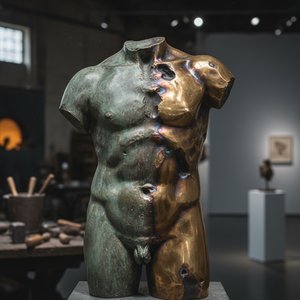
Bronz Heykelin Kalıcı Mirası: Tarih, Teknikler ve Çağdaş Yorumlar
Bronz heykelin tarihini, antik döküm tekniklerini ve çağdaş yorumlarını keşfedin. Uzman analizler, restorasyon bilgileri ve koleksiyon rehberleri ile sanat dünyasına adım atın. Sanat yatırımcıları için ideal kaynak!

The Enduring Form: Sculpture Across History, Technique & Emotional Resonance
Explore the rich history of sculpture with OriginalUniqueArt. Discover key techniques, influential artists & investment potential for discerning collectors. Expert insights into valuing and collecting timeless masterpieces.

The Enduring Form: Exploring Themes & Techniques in Sculpture Across Historical Periods
Explore the rich history of sculpture from ancient masterpieces to contemporary innovations. Discover key techniques, influential artists & investment potential for discerning art collectors.
