Baskı Satışına Geç
 Tümünü Gör







































 Herhangi bir kenarı 105 cm'den (yaklaşık 41 inç) büyük olan sanat eserleri veya reprodüksiyonlar için çerçeve, demonte edilmiş bir kit halinde gönderilecektir. Bu yöntem, güvenli teslimat sağlar ve taşıma sırasında oluşabilecek hasarları önler.


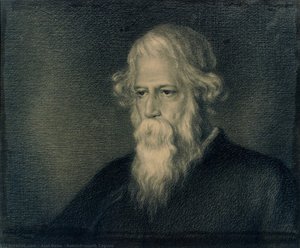
Rabindranath Tagore: A Portrait of Wisdom and Reflection
The painting “Rabindranath Tagore” by Atul Basu stands as a testament to the enduring power of portraiture—a genre that transcends mere likeness, striving instead for an embodiment of character and intellect. Executed in 1944 during a period marked by profound artistic experimentation and intellectual ferment within Bengal’s art scene, this piece exemplifies Basu's signature style: meticulous detail combined with a subtle tonal palette that captures the essence of his subject’s gaze.- Subject Matter: The artwork focuses on Rabindranath Tagore, arguably India’s most celebrated poet and musician—a figure revered for his lyrical prose and humanist philosophy. Basu skillfully portrays Tagore's face with remarkable accuracy, capturing the subtle nuances of expression that convey a deep sense of contemplation.
- Style & Technique: Basu employs oil paints on plywood, utilizing a technique characterized by smooth blending and careful layering to achieve an impressionistic effect. The artist’s masterful brushstrokes create texture without overwhelming the overall tonal harmony, allowing Tagore's visage to dominate the composition.
- Historical Context: Painted in the aftermath of World War II, “Rabindranath Tagore” reflects the broader artistic trends of its time—a move away from rigid academic conventions toward a more emotive and psychologically driven approach. Basu’s work aligns with the burgeoning interest in capturing inner states rather than simply representing external appearances.
- Symbolism: The painting's muted color scheme – predominantly browns, creams, and greys – contributes to its contemplative mood. These hues evoke feelings of serenity and introspection, mirroring Tagore’s own philosophical outlook on life and art. Furthermore, the framing device—a simple wooden frame—adds a layer of formality and suggests an appreciation for tradition alongside artistic innovation.
- Emotional Impact: Viewing “Rabindranath Tagore” evokes a sense of quiet dignity and profound thoughtfulness. Basu succeeds in conveying Tagore’s intellectual curiosity and spiritual depth through his gaze, inviting the viewer to engage in a dialogue about wisdom, beauty, and the human condition. It's a portrait that lingers in the mind long after viewing, prompting reflection on the enduring legacy of one of India’s literary giants.
Further Exploration & Artistic Influences
Basu’s artistic vision was undoubtedly shaped by European Impressionism and Post-Impressionism—particularly Walter Sickert's exploration of psychological landscapes. This influence is evident in Basu’s careful attention to tonal gradations and his ability to convey mood through subtle color choices. The artist’s refusal to participate in the British Empire Exhibition underscores his commitment to artistic integrity and a rejection of commercial pressures, mirroring the values championed by many prominent artists of his era.Notable Works & Exhibitions
Basu's oeuvre includes “Sphinx” (oil on plywood), which similarly demonstrates his mastery of oil paints and textural manipulation—a technique that elevates the artwork beyond mere representation to capture a deeper emotional resonance. His paintings have been showcased in prestigious institutions such as Victoria Memorial Hall, bolstering his reputation as one of Bengal’s foremost artistic voices.Reproductions & Decorative Applications
A high-quality reproduction of “Rabindranath Tagore” would bring a touch of contemplative elegance to any interior space—particularly in areas designed for relaxation and intellectual pursuits. Its muted palette and masterful composition align seamlessly with contemporary design sensibilities, offering collectors and decorators alike an opportunity to appreciate Basu’s artistic legacy. Consider framing it in a natural wood frame to enhance its visual impact and preserve the artwork's original character.Soru ve Cevaplar
Atul Basu hangi takma adlar veya alternatif isimlerle tanınmaktadır?
Atul Basu, Atul Bose isimleriyle de tanınmaktadır.
Atul Basu imzalı "Rabindranath Tagore" ziyaretçileri hangi bölgelerden geliyor?
"Rabindranath Tagore" için bir İstatistikler sayfası mevcuttur. Bu sayfa; eserin ve sanatçının diğer çalışmalarının aylık ziyaret sayılarını, ülke ve dil kırılımlarıyla birlikte grafiklerle sunar.
Atul Basu imzalı "Rabindranath Tagore" hangi sanat akımına dahil?
"Rabindranath Tagore", Graphic art akımına ait bir eserdir. Bu akım, eserin dahil olduğu sanatsal geleneği ifade eder.
Bu tablo hakkında daha fazla bilgi
 Gerçek Boyutta Önizle
 Paylaş
 Paylaş
 Detayları Gör
 Rehber

 İndir
İndir
 Benzer ürünler
 X-Işını
 Slayt Gösterisi
 Soru & Cevap
 İstatistikler