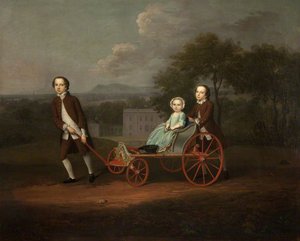
Yağlı Boya Versiyonu
 Peter Du Cane hakkında her şey







































 Herhangi bir kenarı 105 cm'den (yaklaşık 41 inç) büyük olan sanat eserleri veya reprodüksiyonlar için çerçeve, demonte edilmiş bir kit halinde gönderilecektir. Bu yöntem, güvenli teslimat sağlar ve taşıma sırasında oluşabilecek hasarları önler.


Mr Peter du Cane (1713–1803): A Portrait of Quiet Dignity Amidst Georgian Elegance
Arthur William Devis’s “Mr Peter du Cane” stands as a quintessential example of the conversation piece—a genre that flourished in Britain during the mid-18th century and captured not merely likeness but also social status and psychological nuance. Painted in 1749, this portrait offers a glimpse into the refined tastes of Georgian England, reflecting an era obsessed with displaying wealth and cultivating intellectual pursuits. The artwork’s enduring appeal lies in its masterful execution and subtle portrayal of human character.- Subject Matter: The painting depicts Peter du Cane, a gentleman of considerable standing, seated on a stone outcrop overlooking a tranquil landscape. This deliberate positioning—the man elevated above the natural world—was typical of the conversation piece format, intended to stimulate discussion amongst viewers about virtue and social responsibility.
- Style & Technique: Devis employed a realistic style informed by the influence of Flemish masters like Anthony van Dyck, prioritizing meticulous detail and tonal gradation. The artist skillfully utilized chiaroscuro – dramatic contrasts between light and shadow – to sculpt the figure’s form and imbue it with depth and solidity. Notice particularly how Devis captures the texture of Du Cane's coat and waistcoat, demonstrating a dedication to capturing surface qualities accurately.
- Color Palette: The palette is dominated by earthy hues—browns, ochres, and muted greens—creating an atmosphere of understated elegance. However, the striking blue of Du Cane’s waistcoat provides a vibrant focal point, subtly highlighting his aristocratic status against the backdrop of the landscape. This careful color choice contributes to the overall mood of serenity and contemplation.
- Historical Context: The portrait reflects the broader cultural preoccupation with portraying individuals as embodiments of moral virtue during the Enlightenment. Du Cane’s dignified posture and gaze convey an air of composure and intellect—qualities valued by Georgian society. It's a testament to Devis's ability to distill complex psychological states into visual form.
- Symbolism: The landscape itself serves as a symbolic element, representing the gentleman’s connection to nature and suggesting a harmonious balance between human ambition and natural beauty. Furthermore, Du Cane’s attire—the coat adorned with gold trim—symbolizes wealth and social prestige, reinforcing the portrait's message about status and accomplishment.
Soru ve Cevaplar
Peter Du Cane adlı bu eser el ile mi boyanmıştır yoksa baskı mıdır?
El ile boyanmıştır: eğitimli bir ressam, Peter Du Cane eserini keten kanvas üzerine yağlı boya ile yeniden çalışır.
Peter Du Cane için hangi boyutu seçmeliyim?
Orijinal eser 74 x 53 cm boyutlarındadır. Boyutlar 38.3 x 26.1 cm (₺10035) ile 244.6 x 166.3 cm (₺76270) arasında değişmektedir; bu sayfadaki tablo ana seçenekleri ve fiyatlarını listelemektedir.
Teslimat ne kadar sürer?
Dünya çapında ücretsiz ekspres kargo ile teslimat 4 ila 5 hafta sürmektedir; bu sayfa üzerinden acil üretim seçeneği de sunulmaktadır. Hiçbir koşul aranmaksızın, 100 gün içinde tam iade ile ürünü geri gönderebilirsiniz.
Peter Du Cane adlı eserin orijinali nerede?
Orijinal eser Harris Museum - Art Gallery, Preston koleksiyonunda yer almaktadır.
Arthur William Devis, Peter Du Cane eserinde hangi tekniği/malzemeyi kullanmıştır?
Tuval Üzerine Akrilik Boya
Bu tablo hakkında daha fazla bilgi
 Gerçek Boyutta Önizle

 Paylaş
 Paylaş
 Detayları Gör
 Bilgi formu


 İndir
 Benzer ürünler
 X-Işını
 Slayt Gösterisi
 Soru & Cevap

 İstatistikler