

 Gönder
 Paylaş
 Detaylar
 Rehber

 Dosyayı İndir
 Benzerleri
 Slayt Gösterisi
 İstatistikler
Five Pieces for Orchestra, op. 16/5 – First written copy
 Giclée Print
- Digital
- Expressionist Atonality
Expressionist Atonality
 1909
1909 36.0 x 28.0 cm
 Arnold Schönberg Center
 Devamını Oku
El Yapımı Yağlı Boya Reproduksiyon
Sanatçılarımız tarafından sipariş üzerine hazırlanan; istediğiniz boyut ve çerçevede, tuval üzerine el boyaması yağlı boya. ( Baskı Satışına Geç Dijital Görsel Satışına Geç)




































Eserin orijinal oranlarıyla uyumlu, önceden belirlenmiş boyutlarımız arasından seçim yapın.

Belirli bir çerçeveye veya alana uyması için kendi boyutlarınızı girebilirsiniz. Seçtiğiniz boyut orijinal görüntünün oranlarıyla eşleşmiyorsa, sanat eserini kırparak veya ek el boyaması öğelerle resmi uzatarak ayarlayacağız. Üretim başlamadan önce onayınız için dijital bir taslak gönderilecektir.
Lütfen ekrandaki önizlemenin gerçek kırpmayı veya uzatmayı yansıtmadığını unutmayın. Nihai kompozisyonu yalnızca hazırlanan taslak doğru şekilde gösterecektir.
Özel boyutlar mevcut olsa da, orijinal oranları korumak adına önceden tanımlanmış listeden bir boyut seçmenizi öneririz.
Siparişten sonra, OriginalUniqueArt.com ekibi talimatlar için müşteriye e-posta gönderecek ve bir taslak önizleme sunacaktır
Dünya Çapında Teslimat (); standart 5 hafta yerine 3/4 haftada. (27 Eylül). Kaliteden ödün verilmez.

Dünya Çapında Ücretsiz Ekspres Kargo

Yüksek Kaliteli Keten Tuval

Tam Nakliye Sigortası

Gümrük Vergisi İadesi Garantisi

Gerçek Renk Uyumu Garantisi

100 Günlük İade Koşulları (Sadece Üretim Hatalı Ürünler İçin)

%100 Para İade Garantisi

Toplu Alım Avantajı
 Cam seçeneği yalnızca 110 cm altındaki boyutlar için mevcuttur.

Five Pieces for Orchestra, op. 16/5 – First written copy
Baskı Tekniği
Baskı Boyutu
-


Toplam Fiyat
$ 300
A Window into Schoenberg's Revolutionary Soundscape
This meticulously crafted hand-painted reproduction offers an intimate glimpse into the genesis of Arnold Schoenberg’s groundbreaking “Five Pieces for Orchestra, op. 16/5,” a composition born from a summer of intense creative exploration in 1909. The original score, painstakingly preserved and now faithfully recreated, is not merely musical notation; it's a tangible artifact of a pivotal moment in the history of Western music – a testament to Schoenberg’s radical departure from traditional tonal harmony and his pioneering embrace of atonality.
- The Context: Steinakirchen 1909 The summer of 1909 found Schoenberg, alongside fellow modernist giants Zemlinsky, Berg, Webern, and Oppenheimer, sequestered in the idyllic Austrian village of Steinakirchen. This period proved extraordinarily productive, yielding not only the “Five Pieces” but also the Piano Piece op. 11 and the unsettling monodrama, *Erwartung* (Waiting), foreshadowing his later explorations into expressionism.
- Strauss’s Vision Schoenberg's correspondence with Richard Strauss reveals a deliberate intention to create music that eschewed grand symphonic structures. He envisioned “short orchestra pieces” – fleeting moments of color and mood, prioritizing emotional impact over architectural form. This directive shaped the very essence of *Five Pieces*.
- “Musical Prose” The score’s syntax is deliberately unconventional: atextonic melodies, thematic absence, and an emphasis on dynamic variation. Schoenberg termed this approach “musical prose,” describing it as music unlike anything heard before – a bold proclamation of new tonal beauty, seeking out unexpected accents and contrasts, and exploring previously uncharted emotional territories.
Decoding the Score: Technique and Style
The hand-painted reproduction faithfully captures the intricate details of Schoenberg’s original score. The delicate lines representing individual notes, the precise placement of rests, and the nuanced markings indicating dynamics and tempo are rendered with exceptional care. The artist has skillfully recreated the characteristic handwriting style prevalent in early 20th-century musical scores, adding to the piece's historical authenticity. Note the use of clefs and staves – fundamental elements of musical notation that define the structure and organization of the composition.
- Material & Technique The reproduction utilizes archival quality paper mimicking the texture of period manuscripts, and traditional hand-painting techniques to achieve a level of detail and nuance that digital reproductions simply cannot replicate.
- Color Palette While a black and white photograph represents the original score, this reproduction employs a subtle tonal palette – primarily grays and browns – evocative of aged parchment, further enhancing its historical feel.
Symbolism and Emotional Resonance
More than just a musical score, this piece embodies Schoenberg’s revolutionary spirit. The “Five Pieces” represent a deliberate rejection of established conventions, a fearless exploration of dissonance and atonality, and an attempt to capture the raw essence of human emotion without the constraints of traditional harmony. The emphasis on "speaking music," as Schoenberg himself described it, suggests a desire for direct communication – a musical language that transcends words and speaks directly to the listener’s soul.
- Atonality's Impact The piece exemplifies atonality, a compositional technique where no single note is inherently "correct" or establishes a tonal center. This creates a sense of instability and ambiguity, reflecting the anxieties and uncertainties of the modern age.
- Emotional Intensity Despite its unconventional structure, the score conveys a profound emotional intensity – a blend of melancholy, longing, and perhaps even a hint of unease. The carefully crafted dynamics and melodic contours contribute to this powerful effect.
Dimensions & Acquisition
This hand-painted reproduction measures 36 x 28 cm (14 x 11 inches), making it suitable for display in a variety of settings – from private study to art gallery. It’s an ideal addition to any collection of modern art, musical memorabilia, or simply as a conversation starter.
Sanatçı Biyografisi
ilk yıllar ve müzikal başlangıçlar
arnold schoenberg, Avusturya asıllı Amerikalı bir besteci olarak 13 Eylül 1874 tarihinde Viyana, Avusturya'da dünyaya geldi. Babasının bir ayakkabı dükkanı sahibi olması nedeniyle ilk yılları mütevazı bir başlangıçla geçti. Ancak bu durum, Schoenberg'in müziğe olan doğuştan gelen tutkusunun önüne geçemedi ve bu derin sevgi, onun müzik alanında büyük ölçüde kendi kendini eğitmesine vesile oldu.müzikal evrim ve önemli eserler
Schoenberg'in verklärte nacht (1899) gibi erken dönem eserleri, Brahms ve Wagner tarzlarının büyüleyici bir sentezini sergiliyordu. Sanatçının gelişimiyle birlikte, anton webern ve alban berg ile birlikte İkinci Viyana Okulu'nun merkezi figürü haline geldi. string quartet no. 2 (1907–1908), erwartung (1909) ve pierrot lunaire (1912) gibi besteleri, onun atonaliteye yönelik yenilikçi yaklaşımının en çarpıcı örnekleri oldu.öğretmenlik, göç ve sonraki yaşam
Nazilerin iktidara gelmesiyle birlikte, müziklerini "yozlaşmış" olarak yaftalayan baskılar sonucunda Schoenberg, 1933 yılında Prusya Sanat Akademisi'nden istifa etmek zorunda kaldı. Daha sonra Amerika Birleşik Devletleri'ne göç ederek, bugün tesislerine onuruna isim verilen Kaliforniya Üniversitesi, Los Angeles'ta (UCLA) dersler verdi (1936–1944). [https://OriginalUniqueArt.ca/@/arnold-schoenberg](OriginalUniqueArt üzerinden Schoenberg'in yaşamı ve eserleri hakkında daha fazlasını keşfedin).- Schoenberg, film müziği alanlarını keşfetti ve daha tonal müzikler yazarak chamber symphony no. 2 eserini 1939 yılında tamamladı.
- Byron'dan esinlenerek ode to napoleon (1942) adlı eserinde faşist tiranları hicvetti.
- Savaş sonrası Viyana ona fahri vatandaşlık teklif etti ancak o, string trio (1946) eserinde tasvir edildiği üzere, hastalıkla mücadele ediyordu.
miras ve etki
Dünya Holokost'un dehşetine tanıklık ederken, Schoenberg kurbanları a survivor from warsaw (1947) adlı eseriyle ölümsüzleştirdi. İsrail Konservatuvarı ve Müzik Akademisi, onu 1951 yılında onursal başkan seçti. [https://OriginalUniqueArt.com/@@/a@d3bqc7-the-museum-destroyed-by-fire-(united-states)](Eserlerinin etkisi hakkında daha fazla bilgi edinmek için OriginalUniqueArt'u ziyaret edin). Önemli noktalar:- Schoenberg'in yenilikçi müziği, 20. yüzyıl klasik müziğinin en etkili ve tartışmalı eserleri arasında yer almıştır.
- En az üç nesil besteci, onun bu biçimsel ilkelerini geliştirerek ileriye taşımıştır.
- Estetik ve müzik tarihi görüşleri, müzikologlar Theodor W. Adorno ve Carl Dahlhaus üzerinde derin izler bırakmıştır.

Arnold Schoenberg
1874 - 1951 , Avusturya
Kısa Bilgiler
- Artistic Movement Or Style: On iki ton tekniği; Dışavurumculuk
- Artists Or Movements Influenced By This Artist:
- Anton Webern
- Alban Berg
- Artists Who Influenced This Artist:
- Johannes Brahms
- Richard Wagner
- Date Of Birth: 13 Eylül 1874
- Date Of Death: 1951
- Full Name: Arnold Schoenberg
- Nationality: Avusturya-Amerikalı
- Notable Artworks:
- Suite, op. 29
- Music Typewriter
- Staffliner
- Place Of Birth: Viyana, Avusturya
İlgili Yazılar

The Enduring Legacy of Fine Art Prints: Technique, History & Aesthetic Impact
Explore the rich history & techniques of fine art prints. Discover investment potential, assess authenticity, and learn how to preserve your collection with expert guidance. Trusted insights for discerning collectors.
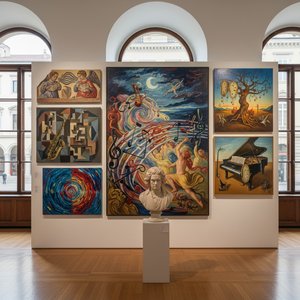
Harmonies on Canvas: Exploring the Visual Representation of Music in Art History
Explore the fascinating history of music's visual representation in art! From ancient symbolism to modern abstraction, discover how artists have captured sound and emotion on canvas. Expert insights & stunning examples.
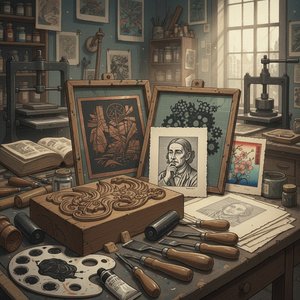
The Enduring Legacy of Printmaking: Techniques, Themes & Artistic Innovation Across Centuries
Explore the rich history of printmaking with OriginalUniqueArt. Discover techniques from intaglio to lithography, learn about collecting valuable prints & find museum-quality reproductions. Expert insights for art enthusiasts and collectors.

Giclée Prints: Archival Quality & Aesthetic Nuances for the Discerning Collector
Explore the world of giclée prints with OriginalUniqueArt. Learn about archival quality, aesthetic nuances & investment potential. Expert guidance for discerning art collectors seeking museum-quality reproductions and lasting value.

Echoes of Time: Exploring the Enduring Appeal & Historical Context of Vintage Art Prints
Explore the captivating world of vintage art prints! Discover their history, collecting tips & enduring appeal. Expert insights on chromolithography and building a legacy collection with OriginalUniqueArt.


