En venetiansk vävnad av makt och konst
Majestätiskt reser sig Palazzo Ducale, eller Dogepalatset, vid kanten av Markusplatsen som så mycket mer än ett monument av sten och istrisk marmor; det är en fördjupande krönika över ett svunnet imperium. Att träda genom dess portar är att stiga in i ett levande vittnesbörd om den venetianska republikans bestående arv, där varje svindlande valv och intrikat utskärning viskar berättelser om politiska intriger, maritim dominans och en oöverträffad konstnärlig genialitet. Palatset fungerar som ett påtagligt eko av Venedigs extraordinära förflutna, en plats där rättvisans skuggor flätas samman med de livfulla, solkyssta nyanserna i renässansens mästerverk. Dess själva fundament berättar en historia om transformation, från en befäst borg från 800-talet – byggd för att avvärja slaviska räder – till Dogens praktfulla och vidsträckta säte, vilket speglar stadens resa från en sårbar utpost till en global maritim stormakt.
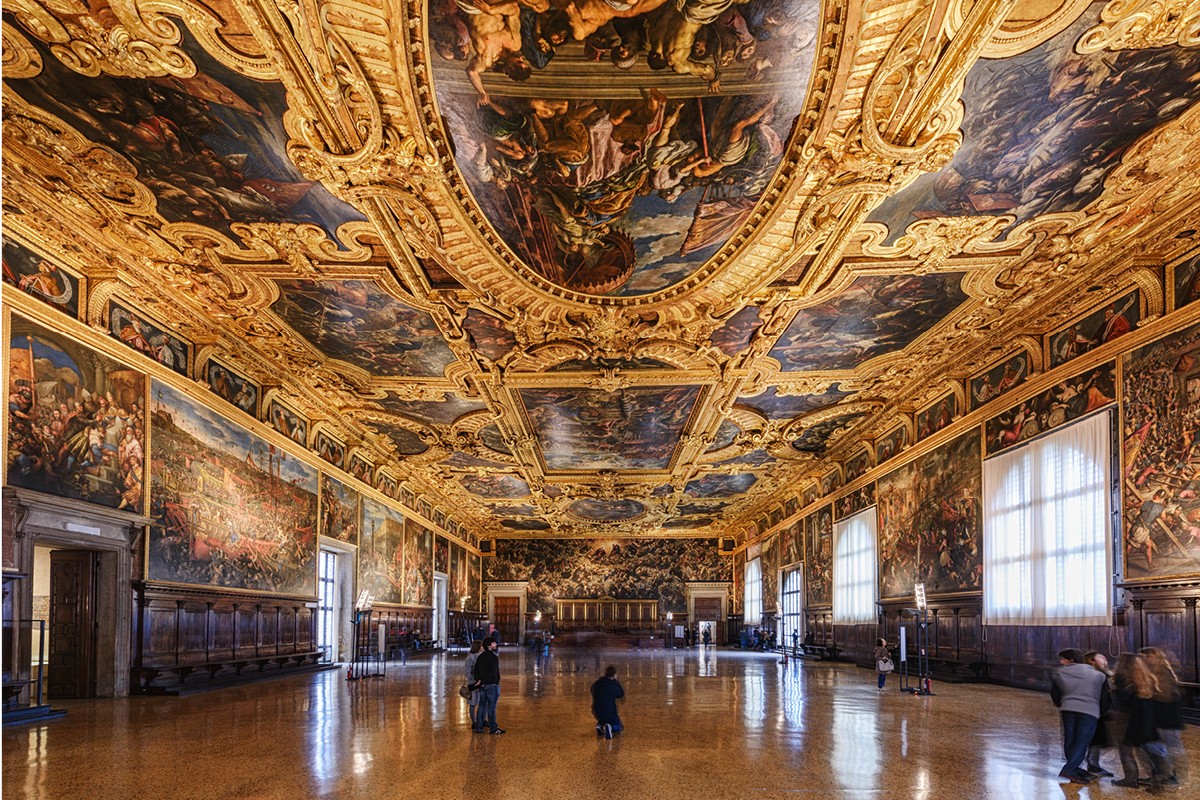
Palatsets arkitektur är en hisnande dialog mellan stilar, en unik fusion som speglar Venedigs position i skärningspunkten mellan öst och väst. Den yttre fasaden, med sitt rytmiska samspel mellan delikat gotisk masverk och tung, solid murverk, hämtar djup inspiration från bysantinska förebilder, främst den närliggande Markuskyrkan. Denna arkitektoniska innovation representerar ett medvetet avsteg från traditionella fästningsliknande strukturer, till förmån för en estetik präglad av lätthet och dynamik. Innanför murarna intensifieras storslagenheten i rum som Sala del Maggior Consiglio . Här överväldigar Stora rådssalens enorma skala sinnena, dominerad av Tintorettos monumentala Paradiset . Denna svindlande duk, som sträcker sig över 37 meter i längd, fungerar som ett kraftfullt visuellt manifest för Venedigs hängivenhet till medborgerlig dygd och gudomlig nåd, och kastar ett himmelskt sken över själva hjärtat av den venetianska styrningen.
En skattkammare av dekorativ prakt
För den kräsne samlaren och älskaren av fina detaljer erbjuder palatset en skattkammare av dekorativ prakt som sträcker sig långt bortom ren ornamentik. Salarna är prydda med Veroneses Venedigs triumf , en fest av färger och opulent detaljrikedom som hyllar republikens maritima förmåga. Utöver dessa storslagna dukar finner man den venetianska hantverksskicklighetens känsliga själ i intrikata vävnader som skildrar bibliska berättelser, samt det utsökta glashantverket som en gång utgjorde stadens ekonomiska hjärtslag. Palatset bjuder även in till utforskning av sina mer gåtfulla hörn genom specialiserade turer, såsom Den hemliga resvägen , som avslöjar dolda kammare och passager där statens mest väktade hemligheter en gång förvarades.
Oavsett om man beundrar Tizians mästerliga ljusspel eller följer den kartografiska precisionen hos Lafreri-skolan, finner besökaren sig omsluten av en atmosfär där konst och auktoritet är oskiljaktigt sammanflätade. Idag förblir Palazzo Ducale ett levande kulturellt epicentrum som ständigt utvecklas genom utställningar som överbryggar klyftan mellan uråldrig tradition och moderna perspektiv. Nyligen genomförda visningar har fördjupat sig i den venetianska glaskonstens delikata hantverk och den bysantinska mosaikens djupa inflytande, vilket säkerställer att palatsets berättelse förblir lika dynamisk som det hav som en gång skyddade det. För inredningsarkitekter och konstentusiaster som söker inspiration står palatset som den ultimata referensen för lyx, skala och den harmoniska integrationen av arkitektur och finkonst.