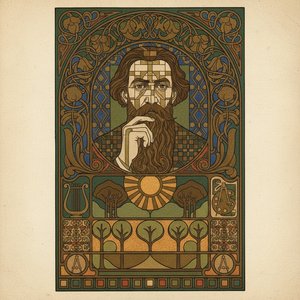
The Wiener Werkstätte: A Pioneer of Modern Design
- Origin and Establishment: The Wiener Werkstätte, meaning "Vienna Workshop," was established in 1903 by Koloman Moser, Josef Hoffmann, and Fritz Waerndorfer. It emerged from the Vienna Secession, a progressive alliance of artists and designers founded in 1897.
- Core Philosophy: The workshop aimed to unite fine art and applied arts, producing high-quality utilitarian objects with artistic merit. They sought to elevate craftsmanship and create a "Gesamtkunstwerk" – a total work of art where every element was aesthetically unified.
- Influence and Style: Inspired by the Arts & Crafts movement and drawing from Viennese traditions, the Wiener Werkstätte developed a distinctive style characterized by geometric forms, meticulous detail, and a blend of traditional craftsmanship with modern design principles.
Key Figures and Their Contributions
- Josef Hoffmann (1870-1956): A leading architect and designer, Hoffmann was instrumental in shaping the Wiener Werkstätte's aesthetic. He designed iconic furniture pieces, interiors, and buildings like the Palais Stoclet, showcasing a blend of functionality and artistic expression.
- Koloman Moser (1874-1918): A graphic designer and painter, Moser contributed significantly to the workshop’s visual identity through his designs for posters, book covers, and decorative panels. His work emphasized geometric abstraction and stylized ornamentation.
- Dagobert Peche (1887-1923): Known for his "Spiky Baroque" style, Peche created intricate metalwork, textiles, and folk-art inspired designs that added a unique flair to the Wiener Werkstätte’s output.
- Other Notable Artists: The workshop also featured contributions from artists like Valerie Wieselthier (ceramics), Anton Hanak (sculpture), and Josefine Pola Weinbach (textiles).
Development and Major Achievements
- Early Years (1903-1914): The workshop initially focused on producing a wide range of objects, including furniture, ceramics, glassware, jewelry, textiles, and fashion. They emphasized high-quality materials and meticulous craftsmanship.
- The Palais Stoclet (1905-1911): This luxurious residence in Brussels, designed by Josef Hoffmann, is considered a masterpiece of the Wiener Werkstätte and a prime example of the Gesamtkunstwerk concept. It integrated architecture, interior design, furniture, and decorative arts into a cohesive whole.
- Expansion and Challenges: Following World War I, the workshop faced financial difficulties and material shortages. Attempts to expand its base were unsuccessful, leading to eventual closure in 1932.
Historical Significance and Legacy
- Pioneering Modern Design: The Wiener Werkstätte played a crucial role in the development of modern design by advocating for the integration of art and craft, emphasizing functional beauty, and promoting innovative design solutions.
- Influence on Bauhaus and Art Deco: Its principles and aesthetic influenced later movements like the Bauhaus school and Art Deco style, contributing to the broader evolution of 20th-century design.
- Revival of Craftsmanship: The workshop’s commitment to high-quality craftsmanship helped revive traditional skills and techniques in a rapidly industrializing world.
- Enduring Impact: Today, the Wiener Werkstätte is recognized as a significant chapter in art history, celebrated for its innovative designs, artistic collaborations, and lasting impact on modern aesthetics.
Frågor och svar
Hur kan jag se alla konstverk av Wiener Werkstätte?
Alla verk av Wiener Werkstätte på denna webbplats kan utforskas via artistens Samtliga konstverk-sida.
Finns det en översikt över alla de motiv som Wiener Werkstätte målade?
Wiener Werkstättes verk kan utforskas efter motiv på artistens Ämnesindex-sida.
Var och när föddes Wiener Werkstätte?
Wiener Werkstätte föddes i Vienna år 1903.