Porträtt av Theo van Doesburg

Theo van Doesburgs målningar: De 100 mest kända, ur ett galleris perspektiv

Uppdaterad november 2026 · rangordnad efter vår popularitetspoäng (sökningar, besök och beställningar för varje verk) · 225 verk av Theo van Doesburg i vår katalog

Kortfattat

Ur galleriets perspektiv är Theo van Doesburgs mest kända målning Counter composition XV (1925). Rhythm of a Russian Dance och Troelstra (1910) fullbordar trion som alla känner igen. Av de 225 verk av Theo van Doesburg i vår katalog presenterar galleriet nedan de 100 mest kända, var och en som ett original med sitt år, sitt museum och vad som gör det unikt.

1883 – 1931, Utrecht De stijl Flest verk: Centraal Museum

Galleriets 10 främsta målningar av Theo van Doesburg

1
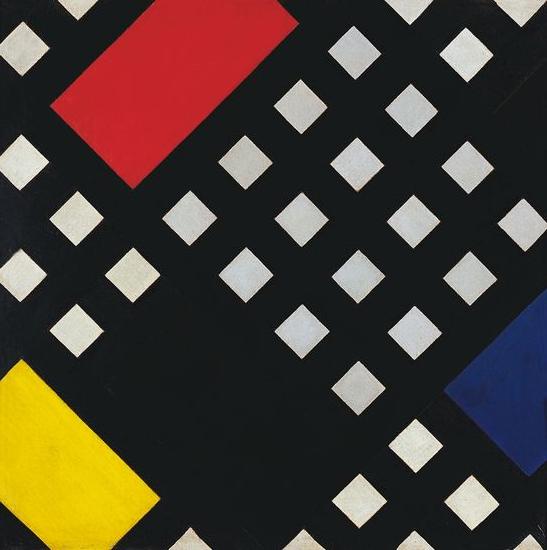
Counter composition XV (1925) av Theo van Doesburg

Counter composition XV

1925 · Acrylic On Canvas

Theo van Doesburg's "Counter Composition XV," painted in 1925, isn’t merely a painting; it’s a distilled essence of the De Stijl movement – a radical declaration of order and universal harmony. This deceptively simple work, executed against a stark white canvas, pulsates with an underlying tension born from the careful orchestration of geometric forms and primary colors. It represents a pivotal moment in 20th-century art, moving beyond representational imagery to…

2
Rhythm of a Russian Dance av Theo van Doesburg

Rhythm of a Russian Dance

Oil On Canvas

The composition consists of an arrangement of intersecting horizontal and vertical lines that form a series of rectangular and square shapes. These geometric forms overlap across the canvas, creating a sense of depth through visual layering rather than traditional perspective. The color palette is restricted to white, black, blue, pink, and gold or yellow hues. Each color is applied in flat planes with minimal shading, resulting in a smooth and…

3
Troelstra (1910) av Theo van Doesburg

Troelstra

1910 · Charcoal

The artwork Troelstra is a monochromatic portrait rendered in charcoal on paper, dating to 1910. The composition is tightly focused on the head and shoulders of the subject, creating an intimate and close-up view. The man's face occupies the majority of the frame, characterized by an asymmetrical arrangement where features are not proportionally accurate. A collar or cravat is visible around the neck, providing a sense of formality to the…

4
Study for Composition VIII (The Cow) (1918) av Theo van Doesburg

Study for Composition VIII (The Cow)

1918 · Oil

A cow is reduced to a series of intersecting planes. In this 1918 study, the animal is no longer a creature of flesh and breath, but a rhythmic arrangement of vertical and horizontal lines. The subject is stripped of its organic curves, replaced by the sharp precision of a geometric skeleton. Green blocks of color anchor the composition, cutting through a field of white and black. There is a tension…

5
Composition (The Cow) (1917) av Theo van Doesburg

Composition (The Cow)

1917 · Pencil

The eye meets Composition (The Cow), a work that captures a moment of radical transformation. Created by the artist Theo van Doesburg, this piece emerges from 1917, a time when the boundaries of representation begin to fracture. The subject, a cow, exists here not as a living creature of flesh and breath, but as a series of energetic, geometric investigations. It is a study of form that seeks to find…

6
Composition (1923) av Theo van Doesburg

Composition

1923 · Oil On Canvas

The canvas known as Composition emerges from the mind of Theo van Doesburg, a work that captures a specific moment in 1923. This piece exists as a precise arrangement of form and color, born from a period of intense creative focus. The artist, Theo van Doesburg, brings a sense of equilibrium to the surface, translating abstract thought into a tangible presence. It is a work that demands attention through its…

7
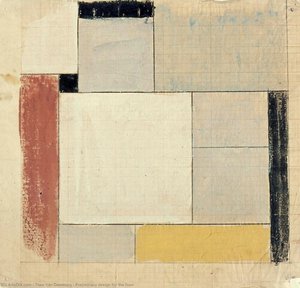
Preliminary design for the floor (1923) av Theo van Doesburg

Preliminary design for the floor

1923 · Pencil

The gaze meets Preliminary design for the floor, a work that breathes with the structured intent of Theo van Doesburg. Created in 1923, this piece exists as a vision for a specific space: a tiled floor intended for the De Vonk holiday home located in Noordwijkerhout. It is a moment of pure architectural thought captured on paper, where the abstract becomes a tangible plan for a lived environment.

8
Composition (1931) av Theo van Doesburg

Composition

1931 · Oil

The painting titled Composition is a work by the artist Theo van Doesburg. Created in 1931, this piece occupies a small, intimate space of 31 x 24 cm. It exists as a quiet arrangement of form and color, captured within its rectangular boundaries.

9
Portrait of a man with hat (1908) av Theo van Doesburg

Portrait of a man with hat

1908 · Oil On Board · Kunstmuseum Den Haag, Hag

The portrait presents a close-up, bust-length view of a man wearing a hat. The subject's face occupies the central portion of the frame, positioned slightly to the left. The lighting is low-key, catching the left side of the forehead and the cheek, while the remaining features recede into deep shadow. This use of chiaroscuro creates a sense of depth through the contrast between light and dark. The color palette is…

10
Self-portrait with beard (1905) av Theo van Doesburg

Self-portrait with beard

1905 · Oil On Canvas · Centraal Museum, Utrecht

Self-portrait with beard by Theo van Doesburg is a close-up portrait executed about 1905. The composition focuses on the head and neck of a single male figure. This subject is depicted with a beard, positioned against a dark and indistinct background. The arrangement centers the viewer's attention on the physical presence of the man's face.

Theo van Doesburgs målningar, rankade 11 till 100

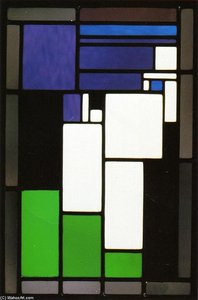
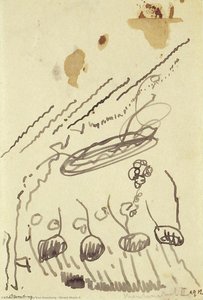
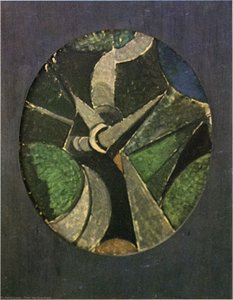
11Portrait of Agnita Feis (1904) av Theo van DoesburgPortrait of Agnita Feis1904 · Centraal Museum 12Female Nude (1904) av Theo van DoesburgFemale Nude1904 13Portrait of a Man with Hat (1909) av Theo van DoesburgPortrait of a Man with Hat1909 14Portrait of a Man with Hat (1908) av Theo van DoesburgPortrait of a Man with Hat1908 15Portrait of Christian Leibbrandt (1908) av Theo van DoesburgPortrait of Christian Leibbrandt1908 16Portrait of Agnita Feis (1906) av Theo van DoesburgPortrait of Agnita Feis1906 · Centraal Museum 17Smiling man (self-portrait?) (1907) av Theo van DoesburgSmiling man (self-portrait?)1907 · Centraal Museum 18Workman head (1906) av Theo van DoesburgWorkman head1906 · Centraal Museum 19Man with moustache and cap (self-portrait?) (1907) av Theo van DoesburgMan with moustache and cap (self-portrait?)1907 · Centraal Museum 20Portrait of a boy en profil (1906) av Theo van DoesburgPortrait of a boy en profil1906 · Centraal Museum 21Workmanshead (1906) av Theo van DoesburgWorkmanshead1906 · Centraal Museum 22Portrait of Agnita Feis with closed eyes (1906) av Theo van DoesburgPortrait of Agnita Feis with closed eyes1906 · Centraal Museum 23Portrait of een man met baret (1908) av Theo van DoesburgPortrait of een man met baret1908 24Don Juan (1910) av Theo van DoesburgDon Juan1910 25Burgerman (1910) av Theo van DoesburgBurgerman1910 26Archangel (1910) av Theo van DoesburgArchangel1910 27Abraham Kuyper (1910) av Theo van DoesburgAbraham Kuyper1910 28Farmer (1910) av Theo van DoesburgFarmer1910 29Alderman of education (1910) av Theo van DoesburgAlderman of education1910 30Quérido (1910) av Theo van DoesburgQuérido1910 31Frederik van Eeden (1910) av Theo van DoesburgFrederik van Eeden1910 32Old Faun (self portrait) (1909) av Theo van DoesburgOld Faun (self portrait)1909 33Dutch peasent girl (1913) av Theo van DoesburgDutch peasent girl1913 · Centraal Museum 34Portrait of A. J. J. de Winter (1916) av Theo van DoesburgPortrait of A. J. J. de Winter1916 35Study for Composition VIII (The Cow) (1917) av Theo van DoesburgStudy for Composition VIII (The Cow)1917 36Beggar (1914) av Theo van DoesburgBeggar1914 · Centraal Museum 37Abstract portrait (1915) av Theo van DoesburgAbstract portrait1915 · Museum de Lakenhal 38Portrait of Nelly van Doesburg (1899-1975) (1922) av Theo van DoesburgPortrait of Nelly van Doesburg (1899-1975)1922 · Museum de Lakenhal 39Self portrait (1928) av Theo van DoesburgSelf portrait1928 · Centraal Museum 40Nelly van Doesburg Viewed from behind, and a harbor scene (1924) av Theo van DoesburgNelly van Doesburg Viewed from behind, and a harbor scene1924 41Dancing man from sketchbook 60 (1931) av Theo van DoesburgDancing man from sketchbook 601931 42Archer (1919) av Theo van DoesburgArcher1919 · Szépművészeti Múzeum 43Tripartite stained glass window av Theo van DoesburgTripartite stained glass window 44Self portrait with hat (1909) av Theo van DoesburgSelf portrait with hat1909 · Centraal Museum 45Café Aubette, Strasbourg, France (Preliminary color scheme for ceiling and short walls of ballroom) (1927) av Theo van DoesburgCafé Aubette, Strasbourg, France (Preliminary color scheme for ceiling and short walls of ballroom)1927 · MoMA - Museum of Modern Art 46Self portrait with hat (1909) av Theo van DoesburgSelf portrait with hat1909 47Composition I (still life) (1916) av Theo van DoesburgComposition I (still life)1916 · Kröller-Müller Museum 48Landscape (1901) av Theo van DoesburgLandscape1901 49Figure on Bridge in Forest (1903) av Theo van DoesburgFigure on Bridge in Forest1903 50Woman in Landscape (1903) av Theo van DoesburgWoman in Landscape1903 · Centraal Museum 51Figure on a Bridge in a Forest (1903) av Theo van DoesburgFigure on a Bridge in a Forest1903 · Centraal Museum 52Landscape (1901) av Theo van DoesburgLandscape1901 · Centraal Museum 53River Landscape with Steeple and Mill (1900) av Theo van DoesburgRiver Landscape with Steeple and Mill1900 54A Child (1904) av Theo van DoesburgA Child1904 55Landscape with hay cart, church towers and windmill (1901) av Theo van DoesburgLandscape with hay cart, church towers and windmill1901 · Centraal Museum 56Still Life (1906) av Theo van DoesburgStill Life1906 57Tree (1906) av Theo van DoesburgTree1906 · Centraal Museum 58Banister post, Huis De Lange, Alkmaar av Theo van DoesburgBanister post, Huis De Lange, Alkmaar 59Portrait of Nelly van Doesburg av Theo van DoesburgPortrait of Nelly van Doesburg 60Self portrait (1906) av Theo van DoesburgSelf portrait1906 61Cover of ''The masks'' (1910) av Theo van DoesburgCover of ''The masks''1910 62The discarded basket (1913) av Theo van DoesburgThe discarded basket1913 · Centraal Museum 63Haystacks (1913) av Theo van DoesburgHaystacks1913 · Centraal Museum 64Study for Composition X (1917) av Theo van DoesburgStudy for Composition X1917 65Composition VI (on black fond) (1917) av Theo van DoesburgComposition VI (on black fond)1917 66Composition (The Cow) (1917) av Theo van DoesburgComposition (The Cow)1917 67Composition (The Cow) (8) (1917) av Theo van DoesburgComposition (The Cow) (8)1917 68Cover of "Balance" by J. Elgenhuis (1916) av Theo van DoesburgCover of "Balance" by J. Elgenhuis1916 69Composition (The Cow) (1917) av Theo van DoesburgComposition (The Cow)1917 70Composition (The Cow) (1917) av Theo van DoesburgComposition (The Cow)1917 71Composition (The Cow) (1917) av Theo van DoesburgComposition (The Cow)1917 72Krishna playing a flute (1916) av Theo van DoesburgKrishna playing a flute1916 73Lena in interieur (1917) av Theo van DoesburgLena in interieur1917 74Colour design for a chimney (1917) av Theo van DoesburgColour design for a chimney1917 75Design for a tile floor, and entrance hall (1917) av Theo van DoesburgDesign for a tile floor, and entrance hall1917 76Stained glass composition ''Woman'' (1917) av Theo van DoesburgStained glass composition ''Woman''1917 77Potrait of Evert Rinsema (1915) av Theo van DoesburgPotrait of Evert Rinsema1915 78Abstract church (1915) av Theo van DoesburgAbstract church1915 79Dance II (1917) av Theo van DoesburgDance II1917 80Street Music I (1915) av Theo van DoesburgStreet Music I1915 81Dance I (1917) av Theo van DoesburgDance I1917 82Street Music II (1915) av Theo van DoesburgStreet Music II1915 83Design for a tile floor, and entrance hall (1917) av Theo van DoesburgDesign for a tile floor, and entrance hall1917 84Leaded glass composition I (1917) av Theo van DoesburgLeaded glass composition I1917 85The Cardplayers (1916) av Theo van DoesburgThe Cardplayers1916 86Composition with window with coloured glass III (1917) av Theo van DoesburgComposition with window with coloured glass III1917 87Composition II (Still life) (1916) av Theo van DoesburgComposition II (Still life)1916 88Landscape (1916) av Theo van DoesburgLandscape1916 89Portrait of Lena Milius (1915) av Theo van DoesburgPortrait of Lena Milius1915 90Dunes and sea (1912) av Theo van DoesburgDunes and sea1912 · Kröller-Müller Museum 91Still Life with Bottle (1919) av Theo van DoesburgStill Life with Bottle1919 · Museum de Lakenhal 92Still Life (1918) av Theo van DoesburgStill Life1918 93Plastic garden (Vases) (1919) av Theo van DoesburgPlastic garden (Vases)1919 94Study for Rhythm of a Russian Dance (1918) av Theo van DoesburgStudy for Rhythm of a Russian Dance1918 95Study for Rhythm of a Russian Dance (1918) av Theo van DoesburgStudy for Rhythm of a Russian Dance1918 96Landscape (study for composition XII) (1918) av Theo van DoesburgLandscape (study for composition XII)1918 97Composition in gray (Rag Time) (1919) av Theo van DoesburgComposition in gray (Rag Time)1919 · Solomon R. Guggenheim Museum 98Cover design for magazine ''Klei'' (1920) av Theo van DoesburgCover design for magazine ''Klei''1920 99Cover of ''Classic, Modern, Baroque'' (1920) av Theo van DoesburgCover of ''Classic, Modern, Baroque''1920 100Cover of ''Three lectures about the new art'' (1919) av Theo van DoesburgCover of ''Three lectures about the new art''1919

Theo van Doesburgs berömda målningar, period för period

Motiven som fångade Theo van Doesburgs blick

De fyra motiv som återkommer oftast i dessa originalverk, var och ett med sitt främsta exempel.

Museerna som förvarar Theo van Doesburgs originalverk

De 7 museer som innehar flest av målningarna på denna sida.

Museum Stad Verk av Theo van Doesburg Målningar från denna lista
Centraal Museum, UtrechtCentraal Museum Utrecht 33 Self-portrait with beard, Portrait of Agnita Feis, Portrait of Agnita Feis
Museum de Lakenhal, LeidenMuseum de Lakenhal Leiden 9 Abstract portrait, Portrait of Nelly van Doesburg (1899-1975), Still Life with Bottle
Kröller-Müller Museum, OtterloKröller-Müller Museum Otterlo 12 Composition I (still life), Dunes and sea
MoMA - Museum of Modern Art, New YorkMoMA - Museum of Modern Art New York 9 Café Aubette, Strasbourg, France (Preliminary color scheme for ceiling and short walls of ballroom)
Kunstmuseum Den Haag, HagKunstmuseum Den Haag Hag 4 Portrait of a man with hat
Solomon R. Guggenheim Museum, New YorkSolomon R. Guggenheim Museum New York 3 Composition in gray (Rag Time)
Szépművészeti Múzeum, BudapestSzépművészeti Múzeum Budapest 1 Archer

Theo van Doesburg, ett signaturverk per decennium

Verk per decennium

Välj ett decennium för att se originalverket som definierar det.

Theo van Doesburgs målningar: galleriets svar

Vilken av Theo van Doesburgs målningar är den mest kända av alla?Visa svaret

Counter composition XV (1925). Därefter följer Rhythm of a Russian Dance och Troelstra (1910).

Hur gammal var Theo van Doesburg när Counter composition XV färdigställdes?Visa svaret

42 år gammal: Counter composition XV är från 1925, och Theo van Doesburg föddes 1883.

Vilka är Theo van Doesburgs 10 främsta målningar?Visa svaret

Counter composition XV, Rhythm of a Russian Dance, Troelstra, Study for Composition VIII (The Cow), Composition (The Cow), Composition, Preliminary design for the floor, Composition, Portrait of a man with hat och Self-portrait with beard. Rankingen ovan visar varje verks årtal och museum.

Hur många verk skapade Theo van Doesburg?Visa svaret

Vår katalog innehåller 225 verk av Theo van Doesburg, daterade från 1900 till 1931.

Var hänger Theo van Doesburgs mest kända original?Visa svaret

Främst i Centraal Museum (Utrecht), Museum de Lakenhal (Leiden) och Kröller-Müller Museum (Otterlo). Museitabellen ovan listar alla.

När skapade Theo van Doesburg sina mest kända målningar?Visa svaret

Under 1910s: 56 av de 100 verk som finns på denna sida skapades då, varav Troelstra.

Vilka är Theo van Doesburgs tidigaste och senaste kända verk?Visa svaret

På den här sidan är det tidigaste River Landscape with Steeple and Mill (1900) och det senaste Composition (1931).

Vilka motiv återkom Theo van Doesburg till mest?Visa svaret

Face (24), Man (23) och Portrait (17), fördelat på 100 verk på denna sida.

Vilket medium arbetade Theo van Doesburg främst med?Visa svaret

Oil On Canvas, för 13 av de 100 verk som finns på denna sida.

Vilken konstinriktning förknippas Theo van Doesburg med?Visa svaret

De stijl, om man dömer efter originalen på denna sida.

Vilka original av Theo van Doesburg finns i Centraal Museums samlingar?Visa svaret

Self-portrait with beard, Portrait of Agnita Feis och Portrait of Agnita Feis: Centraal Museum, Utrecht har 20 av verken på denna sida.

Theo van Doesburg: konstnären

Theo van Doesburg: The Architect of Abstraction

Theo van Doesburg, född Christian Emil Marie Küpper i Utrecht 1883, var en konstnär vars inflytande sträckte sig långt bortom bara målarfärg och penseldrag. Han var en revolutionär kraft som omformade grundvalarna för modern konst, en visionär vars resa började mitt i de kvarvarande eko av Impressionism och Post-Impressionism – initialt återspeglande stilar som påminner om Vincent van Goghs intensitet både i ämnesval och känslomässig djup. Denna tidiga fas fungerade dock som ett avgörande förberedande steg, en nödvändig brygga till den radikala transformation som skulle definiera hans bestående arv. Ett avgörande ögonblick inträffade 1913 med hans möte med Wassily Kandinskys *Rückblicke*. Texten utlöste inom van Doesburg en djupare insikt: konstens sanna uttryck låg inte i att kopiera den yttre världen utan i att kanalisera en inre, andlig verklighet genom ren abstraktion. Detta övertygande föddes Neoplasticism, mer känd som De Stijl – en rörelse han grundade och skoningslöst försvarade, och där han blev dess mest passionerade förespråkare.

Formandet av ett nytt visuellt språk: Principerna för De Stijl

De Stijl var inte bara en konstnärlig stil; det var ett omfattande filosofiskt manifest översatt till visuell form. Van Doesburg trodde att konsten skulle reduceras till sina mest väsentliga element – raka linjer, rätvinklar och de primära färgerna röd, gul och blå, tillsammans med svart, vitt och grått. Denna sparsmakta palett föddes inte ur begränsning utan snarare av en önskan om universellhet – en tro att dessa grundläggande former resonerade med en underliggande kosmisk ordning. Han såg en *total* konstverk som sträckte sig bortom duken och omfattade arkitektur, design och till och med vardagliga föremål. Samarbete var nyckeln; van Doesburg arbetade nära tillsammans med arkitekter som J.J.P. Oud och Gerrit Rietveld, designade fönsterglas, möbler och hela interiörer som uttryckte De Stijs principer. Hans samarbeten sträckte sig även till andra konstnärer såsom Piet Mondrian, med vilka han grundade den inflytelserika tidskriften *De Stijl*, en plattform för att sprida deras idéer och locka likasinnade kreatörer. Trots sina gemensamma rötter uppstod dock spänningar mellan van Doesburg och Mondrian gällande Neoplasticisms rigiditet. Van Doesburg introducerade "Elementarism" 1926, vilket föreslog diagonala linjer och ett mer flytande tillvägagångssätt för komposition – en avvikelse som slutligen ledde till en splittring inom rörelsen, vilket avslöjade hans rastlösa anda och ständiga strävan efter konstnärlig innovation.

Utöver måleriet: En mångfacetterad konstnärlig vision

Medan han hyllades som målare var van Doesburgs konstnärliga ansträngningar otroligt mångsidiga. Han var en produktiv skribent, poet och kritiker, och använde sin penna för att uttrycka de teoretiska underbyggnaderna för De Stijl och utmana konventionella uppfattningar om konst. Hans engagemang i Dadaism i tidig 1920-tal breddade ytterligare hans konstnärliga horisonter, vilket ledde till experimentella verk som införlivade collage och typografi. Denna period såg honom också undervisa på Bauhaus, där han delade sina idéer med en ny generation konstnärer och designers. Han var inte nöjd med att stanna inom traditionella konstformer; van Doesburg sökte aktivt att integrera konst i vardagen, trodde att den hade kraften att transformera samhället. Hans design för interiörer och möbler var inte bara estetiska övningar utan försök att skapa harmoniska utrymmen som återspeglade De Stijs principer. Ett exempel är hans samarbete med Sophie Taeuber-Arp och Georges Vantongerloo vid designen av konstnärliga bostäder, vilket visade en holistisk syn på konstnärligt skapande – ett försök att bygga en värld *i* bilden av hans ideal.

En pionjär i modernismen: Arv och bestående inflytande

Theo van Doesburgs liv avslutades tragiskt 1931 vid 47 års ålder, men hans inflytande på modern konst är fortfarande djuptgående. De Stijl, även om den var relativt kortlivad som en sammanhängande rörelse, har utövat ett enormt inflytande på efterföljande konstutvecklingar, inklusive Bauhaus-design, Minimalism och Konstruktivism. Hans betoning på geometrisk abstraktion, ren färg och funktionell design resonerar fortfarande med konstnärer och designers idag. Hans verk tjänar som en påminnelse om att konst inte bara handlar om representation utan om utforskningen av grundläggande former och idéer. Van Doesburgs vision av en harmonisk värld – uttryckt genom språket för De Stijl – fortsätter att inspirera de som söker att skapa en vackrare och meningsfullare miljö.

Nyckelverk & bestående inflytande

  • Study for Simultaneous Compositions XXII (1922): Ett typiskt exempel på Neoplasticism, som visar rörelsens signatur geometriska former och begränsade färgpalett.
  • Composition with half values (1928): Demonstrerar van Doesburgs utforskning av tonal variationer inom De Stijs estetik.
  • Dancers (1917-1918): Representerar en övergångsfas i hans verk, som blandar figurativa element med framväxande abstrakta tendenser.
  • Samarbete om tidskriften *De Stijl*: En nyckelplattform för att sprida rörelsens idéer och främja dialog mellan konstnärer och intellektuella.
  • Elementarism (1926): Van Doesburgs försök att injicera dynamik i Neoplasticism, genom att introducera diagonala linjer och ett mer flytande tillvägagångssätt för komposition.