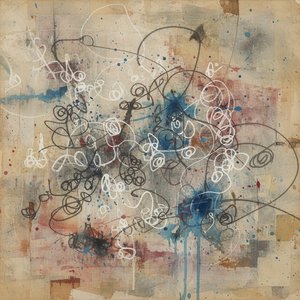
The Shadow of Survival
Amsterdam, 1903. A life begins that will eventually be defined by both the creative impulse and the profound darkness of the twentieth century. Gretha Leijden van Amstel, known to many as Greet van Amstel, moves through the early decades of the century with a growing sense of form and space. By 1920, she is in Berlin, living with her first husband, Lodewijk Lopes Cardozo. The city is a crucible of modernism, and here, the first tremors of contemporary art reach her. She returns to Amsterdam in 1923, seeking formal discipline at the Institute for Applied Arts Education. She studies under the sculptor Berend Jordens and finds her way into the studio of John Raedecker, absorbing the tactile language of sculpture and the weight of physical presence.
The trajectory of her life shifts violently in 1942. The art of form gives way to the struggle for existence. She spends ten months in Auschwitz, a period she later confronts through her writing. The horror is not abstract; it is personal. She witnesses the removal of her nineteen-year-old daughter to the gas chambers on August 31. She survives the mass liquidations and the death marches that claim so many others as the Russians approach in January 1945. She remains behind when others are driven away, escaping the final, sinister sweeps of the SS by a narrow margin. She emerges from the camp with a voice that refuses to be silenced.
A Dual Expression
Post-war life for van Amstel is a process of reconstruction, both personal and creative. She turns to the written word, beginning her work as a poet in 1957. Her writing carries the weight of her experience, seen in the long poem "And there was no darkness on the earth" completed in 1958. Her output is not limited to the page; she returns to visual expression, utilizing mixed painting techniques that she exhibits in 1971. Her work is a collision of different media and heavy histories.
Her engagement with the world remains active and often confrontational:
- She became a member of the Amsterdam Artists Working Group in 1973.
- In 1972, she provided testimony in a hearing of the second chamber regarding the "Drie van Breda."
- Her literary reflections include the collection "Forbidden to live."
The Final Years in Amsterdam
The political and the personal remain intertwined in her later years. She is a woman who lived with a passion for art and a commitment to political truth. Even as she approaches her seventies, she is a presence in the public sphere, speaking out against war criminals. She remains in her native city, Amsterdam, until her death on January 4, 1981. Her legacy is found in the tension between the physical objects she shaped and the words she used to describe the void left by history.
Frågor och svar
Kan jag studera Greet van Amstels färgval genom hela det konstnärliga skapandet?
Palettens genom för Greet van Amstel är en sida som presenterar färgprofilen i konstnärens samlade verk.
Var kan jag hitta Greet van Amstels konstverk sorterade efter färgpalett?
Sidan Efter färgpalett grupperar Greet van Amstels konstverk efter deras färgpaletter.
Hur hittar jag verk av Greet van Amstel inom ett specifikt tema?
Sidan Efter nyckelord för Greet van Amstel grupperar konstnärens verk efter nyckelord.