
 Förhandsvisa
 Skicka
 Dela
Dela
 Visa detaljer
 Guide
Guide

 Ladda ner
 Liknande objekt
 Röntgen
 Bildspel
 Frågor och svar
 Statistik
Flute Music

- 80.0 x 39.0 cm


 Visa mer
Giclée / Konsttryck
Giclée- eller canvasprint av museumskvalitet med snabb produktion och flexibla ytbehandlingsalternativ. ( Beställ handmålad reproduktion Byt till digital bild)




P118B Skr10

P118H Skr10

P118W Skr10

P438Z Skr10

P508JH Skr12

P508YH Skr12

P805H Skr10

P805Z Skr10

P919BZ Skr10

P919G Skr10

P919XJ Skr10

P959ZH Skr10

P968JZ Skr12

W106C Skr8

W218G Skr10

W218JH Skr8

W218Y Skr10

W307PJ Skr10

W316G Skr10

W316PJ Skr8

W316Y Skr10

W398PJ Skr8

W4111J Skr10

W500HY Skr15

W500JH Skr15

W692G Skr12

W849H Skr8

W940BG Skr15

W953PJ Skr8




Välj bland våra förinställda storlekar som motsvarar konstverkets ursprungliga proportioner.

Ange den bredd och höjd du behöver för att passa din ram eller vägg. Ett tryck kan endast beskäras, aldrig göras större än originalbilden, vilket innebär att ett format med en annan proportion leder till att en del av bilden går förlorad. Vi skickar en digital mockup för godkännande innan vi påbörjar tryckningen. Bilden som visas på denna sida visar inte den faktiska beskärningen — det är endast mockuppen som gör det.
Leverans över hela världen () på 2 veckor istället för standard 4/5 veckor. (4 november)

Fri expressfrakt över hela världen

Högkvalitativ linnecanvas

Fullständig fraktförsäkring

Garantier för återbetalning av tullavgifter

Garantier för exakt färgåtergivning

100 dagars returrätt (endast vid fel)

100% pengarna tillbaka-garanti

Mängdrabatt erbjuds
 Glasalternativet är endast tillgängligt i storlekar under 110 cm.

Flute Music
Giclée / Konsttryck
Storlek på reproduktion
-


Slutgiltigt pris
Skr 810
A Winter’s Reverie: Xu Beihong's "Flute Music"
Xu Beihong’s “Flute Music,” painted in 1926 during his formative years in Paris, is more than a portrait; it’s a poignant distillation of longing, domesticity, and the burgeoning spirit of modern Chinese art. The painting captures Jiang Biwei, Xu’s first wife, seated gracefully on a chair, her hands poised over a flute – an instrument that becomes a conduit for unspoken emotions within the intimate setting. It's a work deeply rooted in both traditional Chinese aesthetics and the innovative techniques he was absorbing from Western masters, representing a pivotal moment in his artistic evolution.
The scene unfolds within a modestly furnished studio, subtly suggested by the muted tones of the background – a suggestion of trees hinting at an outdoor setting, yet firmly grounded in the domesticity of a Parisian room. Xu Beihong masterfully employs a technique that blends Chinese ink wash painting with Western oil realism. The figure of Jiang Biwei is rendered with meticulous detail, capturing her delicate features and the subtle curve of her posture. Notice how he utilizes loose brushstrokes to convey the softness of her clothing and the gentle play of light on her face – a deliberate departure from the rigid formality often associated with traditional Chinese portraiture. The background trees are painted with a slightly looser style, creating an atmospheric depth that anchors the scene while maintaining a sense of intimacy.
Echoes of Tradition, Whispers of Modernity
“Flute Music” stands as a testament to Xu Beihong’s deliberate engagement with both Eastern and Western artistic traditions. He was deeply influenced by the classical Chinese emphasis on capturing the essence of a subject – its spirit and mood – through evocative brushwork and symbolic imagery. However, he wasn't content to simply replicate these established forms; instead, he sought to synthesize them with the techniques and perspectives he encountered in Europe. The use of oil paints, for instance, allowed him to achieve a level of realism and luminosity previously unattainable with traditional Chinese inks.
The painting’s historical context is crucial to understanding its emotional resonance. 1926 was a period of significant upheaval in China, marked by political instability and social change. Xu Beihong, like many artists of his generation, was grappling with the challenge of defining a new national identity—one that embraced both its rich cultural heritage and its aspirations for modernity. “Flute Music” reflects this internal struggle, capturing a moment of quiet contemplation amidst the turbulence of the era.
Symbolism in Silence
The flute itself is laden with symbolic weight. It represents not just musical expression but also communication—a means of conveying emotions that cannot be articulated through words. Jiang Biwei’s downward gaze as she plays suggests a sense of introspection, perhaps even melancholy. The posture of her hands, poised over the instrument, speaks to a yearning for connection and understanding within her marriage. The muted color palette further reinforces this mood—a subtle blend of blues, greens, and browns that evokes feelings of serenity and wistfulness.
Interestingly, Xu Beihong’s autobiography reveals his own dissatisfaction with his relationship at the time, hinting at a complex dynamic beneath the surface of this seemingly idyllic scene. The inscription on the painting itself – “Beihong, winter of the Bingyin year (1926)” – serves as a poignant reminder of the personal struggles that shaped the artist’s creative vision.
A Timeless Masterpiece for the Soul
“Flute Music” is more than just a beautiful painting; it's a window into the soul of a remarkable artist and a reflection on the complexities of human relationships. Its masterful blend of Eastern and Western influences, coupled with its evocative symbolism and emotional depth, ensures that it remains a timeless masterpiece—a testament to Xu Beihong’s genius and his enduring legacy in the world of art.
Frågor och svar
Var kan man se "Flute Music" av Xu Beihong utställd idag?
Originalet av "Flute Music" av Xu Beihong finns på CAFA Art Museum, Peking, Folkrepubliken Kina. En reproduktion gör det möjligt att visa verket i hemmet.
Kan "Flute Music" av Xu Beihong, som finns i samlingen på CAFA Art Museum, reproduceras lagligt?
Originalverket "Flute Music" finns på CAFA Art Museum och verket är allmän egendom – upphovsrätten har löpt ut.
Kan jag se "Flute Music" av Xu Beihong i olika ljus?
"Flute Music" kan utforskas lager för lager på verkets Röntgenanalys-sida, en interaktiv vy inspirerad av en konservators ljusbord med elva optiska lager av bilden.
Konstnärsbiografi
A Pioneer Bridging Worlds: The Life and Art of Xu Beihong
Xu Beihong, född Xu Shoukang 19 juli 1895 i den fridfulla staden Yixing i Jiangsu provinsen, står som en monumental figur i det 20:e århundradets kinesiska konsthistoria. Hans liv var en fascinerande berättelse om konstnärlig utveckling, dedikerad till att forma en ny väg för kinesisk målning – en som harmoniskt blandade de rika traditionerna från hans hemland med innovationerna från västerländsk konst. Från enkla början, rotad i klassisk kunskap och traditionell penseldragning under sin fars ledning, Xu Dazhang, en kämpande konstnär själv, präglades Beihongs tidiga liv av både konstnärligt talang och ekonomiska svårigheter. Denna formativa period inställde inte bara teknisk skicklighet utan också en djup uppskattning för kinesisk kultur och ett motståndskraftigt sinne som skulle definiera hans karriär. Familjens vandrande existens, målande porträtt och landskap för att försörja sig, exponerade honom för verkligheterna i det lantliga Kina och väckte en tidig ambition att höja statusen för konst och konstnärer. Ett avgörande ögonblick inträffade när han antog namnet “Beihong”, vilket betyder ”sorglig vildgås”, en reflektion kanske av hans unga ångest och ambitioner.The European Awakening: Forging a New Artistic Vision
Driven av en törst efter kunskap och ett önske om att modernisera kinesisk konst, företog Xu Beihong en transformativ resa till Europa 1917. Initialt studerade han i Tokyo, men snart säkrade han en eftertraktad stipendiat till det prestigefyllda École Nationale Supérieure des Beaux-Arts i Paris. Denna period visade sig vara avgörande för att forma hans konstnärliga filosofi och teknik. Djupt försjunken i hjärtat av europeisk konst, studerade han noggrant oljemålning och teckning, behärskade västerländska principer om perspektiv, komposition och realism. Även om han omfamnade dessa nya tekniker, förblev Xu Beihong kritisk mot vissa modernistiska trender som rådde vid den tiden, föredrog istället de klassiska traditioner han fann. Han antog det franska namnet “Ju Péon” under sin vistelse där, ett testamente till hans immersion i europeansk kultur. Men det var inte bara teknisk skicklighet han sökte; han strävade efter att förstå de underliggande principerna hos västerländsk konst och anpassa dem för att revitalisera kinesisk målning – en vision som uttrycktes i hans senare skrifter och undervisning. Denna period lade grunden för hans unika konstnärliga stil, karakteriserad av ett kraftfullt samspel mellan österländsk estetik och västerländska tekniker.Iconic Motifs and Artistic Style: A Synthesis of East and West
Återvände Xu Beihong till Kina 1927, inledde han en frodig karriär präglad av banbrytande verk som fångade andan i ett land som genomgick djupgående förändringar. Han blev snabbt känd för sina dynamiska representationer av hästar och fåglar – motiv som transcenderade ren representation till att bli kraftfulla symboler för styrka, frihet och nationell stolthet. Hans hästar, särskilt, hyllas för sin muskulösa gestaltning, energi och uttrycksfulla kraft, ofta målade galopp genom vidsträckta landskap med en känsla av okontrollerad ande. Galloping Horse, kanske hans mest ikoniska verk, exemplifierar detta perfekt – ett testamente till det kinesiska folkets vitalitet och motståndskraft. Utöver dessa signatursubjekt utmärkte sig Xu Beihong också i porträtt och historisk målning, demonstrerande sin behärskning av både oljemålning och traditionella tuschtekniker. Hans stil var karakteriserad av en unik blandning av kraftfulla penseldrag, precis detaljering och en mästervrksmässig kontroll över ljus och skugga. Han integrerade sömlöst västerländskt perspektiv och komposition i flödet av kinesisk penseldragning, vilket skapade ett visuellt språk som var både innovativt och djupt rotat i traditionen. Foolish Old Man Who Removed the Mountains, inspirerad av en traditionell kinesisk berättelse, exemplifierar hans förmåga att infusa klassiska teman med modern energi och social kommentar.Legacy and Influence: Shaping Modern Chinese Art Education
Xu Beihong’s inverkan sträckte sig långt bortom hans egna konstnärliga skapelser; han var också en banbrytande konstpedagog som djupt formade utvecklingen av modern kinesisk konstutbildning. Efter sin återkomst till Kina, hade han undervisningspositioner vid flera prestigefyllda universitet, inklusive National Central University och Peking University, där han obevekligt förespråkade reform av läroplanen. Han förespråkade införlivandet av västerländska teckningstekniker och oljemålning i traditionella kinesiska målarkurser, med den övertygelsen att denna integration var avgörande för att revitalisera kinesisk konstnärlig uttrycksförmåga. Efter grundandet av Folkrepubliken Kina 1949, blev han president för Central Academy of Fine Arts och ordförande för China Artists Association, vilket ytterligare befäste hans inflytande på nationens konstlandskap. Han tränade generationer av konstnärer som gick vidare att bli ledande figurer i kinesisk konst, bärande fram sin vision om en modern men kulturellt grundad estetik. Xu Beihong’s betoning på konstnärlig konception, vikten av livserfarenheter och integrationen av österländska och västerländska traditioner lämnade ett bestående intryck på kinesisk konsthistoria, vilket säkrade hans arv som en av dess mest inflytelserika figurer. Hans verk fortsätter att inspirera konstnärer och fängsla publiken över hela världen, fungerar som ett kraftfullt bevis på konstens varaktiga kraft att överbrygga kulturer och övervinna gränser.
Xu Beihong
1895 - 1953 , Kina
Kortfakta
- Artistic Movement Or Style: Modern kinesisk målning
- Artists Or Movements Influenced By This Artist: ['Moderna kinesiska konstnärer']
- Date Of Birth: 19 Juli 1895
- Date Of Death: 26 Sep 1953
- Full Name: Xu Beihong
- Nationality: Kinesisk
- Notable Artworks:
- Galopphäst
- Fånig äldre man
- Place Of Birth: Yixing, Kina
Relaterade artiklar

Beyond Symbolism: Exploring the Spiritual Landscapes of Mikalojus Konstantinas Čiurlionis's Art
Explore the captivating world of Mikalojus Konstantinas Čiurlionis, a pioneer of abstract art. Discover his unique blend of music and painting, spiritual themes, and lasting influence on Lithuanian culture. Learn more at OriginalUniqueArt.
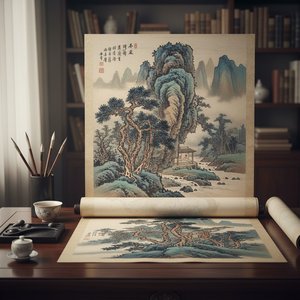
Pu Xinyu's 'Puru': A Legacy of Literati Painting & Emotional Resonance
Explore the captivating world of Pu Xinyu (Puru), the last great literati painter. Discover his imperial heritage, masterful ink wash techniques & enduring legacy – a valuable addition to any discerning art collection.
The Timeless Beauty of Chinese Calligraphy: An Exploration of Ink, Spirit, and the Art of the Brush
Embark on a profound journey through the soul of Chinese calligraphy. Explore the historical mastery of ink, brush, and script, from ancient Zhuanshu to elegant running script, and discover how this timeless art form reflects the enduring spirit of classical East Asian aesthetics.
Xie Zhiliu: A Legacy of Ink Wash Painting & Modern Chinese Literati Tradition
Explore the legacy of Xie Zhiliu, a master of Chinese ink wash painting & prominent figure in modern art. Discover his techniques, influences, and contributions to literati tradition. A guide for discerning collectors.
Harmonies on Canvas: Exploring the Visual Representation of Music in Art History
Explore the fascinating history of music's visual representation in art! From ancient symbolism to modern abstraction, discover how artists have captured sound and emotion on canvas. Expert insights & stunning examples.
