
() ·
A painting made for you, by hand
Handgjord oljereproduktion
Handmålad olja på duk i din valda storlek och ram, tillverkad efter beställning av våra konstnärer. ( Byt till tryck Byt till digital bild)
Beskrivning av samlarobjekt
William Zorach’s ‘Untitled (mural study)’ (1943) captures dynamic naval life with realism & stylized elements. Oil on canvas, rich colors, & layered depth – a powerful work reflecting American identity.
Konstnärens biografi
Explore William Zorach (1889-1966), a Lithuanian-American sculptor & painter who championed Cubism. Discover his direct carving, vibrant watercolors & legacy!
 Visa mer
from ·
Chapter 1
How large should it be?
Slide to change the size; the picture on the left shows the frame at its real width. The proportions of the original are kept.
Välj bland våra förinställda storlekar som motsvarar konstverkets ursprungliga proportioner.

Ange den bredd och höjd du behöver för att passa din ram eller din vägg. Eftersom detta är handmålat kan konstnären, vid ett annat format, måla lite mer runt bilden eller beskära den något – det är du som väljer. Vi skickar en digital mockup för godkännande innan målningen påbörjas. Bilden som visas på denna sida representerar inte det slutgiltiga resultatet — det är endast mockuppen som visar det.
Chapter 2
How should it arrive?
Choose the edges of the stretched canvas
Choose your frame

White Skr1

Blurside Skr1

Extended Skr1

P118B Skr10

P118H Skr10

P118W Skr10

P438Z Skr10

P508JH Skr12

P508YH Skr12

P805H Skr10

P805Z Skr10

P919BZ Skr10

P919G Skr10

P919XJ Skr10

P959ZH Skr10

P968JZ Skr12

W106C Skr8

W218G Skr10

W218JH Skr8

W218Y Skr10

W307PJ Skr10

W316G Skr10

W316PJ Skr8

W316Y Skr10

W398PJ Skr8

W4111J Skr10

W500HY Skr15

W500JH Skr15

W692G Skr12

W849H Skr8

W940BG Skr15

W953PJ Skr8

H24-GOLD Skr30

H24-SILVER Skr30

H36-GOLD Skr45

H36-SILVER Skr45
Inramad
Moulding: . Overall size with the frame: .
Chapter 3
Who paints it, and should anything change?
After order, OriginalUniqueArt.com team will email client for instructions and provide a mockup preview
Leverans över hela världen () på 3–4 veckor istället för standard 5 veckor. (2 november). Inga kompromisser med kvaliteten.
Chapter 4
The finishing touches
A nameplate, as in a museum?
Detaljer för graverad bronsplatta
This elegant plaque features the artist's name and the title of the artwork, finely engraved for a timeless presentation.
It is made from bronze with a refined, elegant finish. The text is precisely laser-engraved for a sharp and permanent result. Measuring 9x2 cm, the plaque is compact yet easy to read. It's built to be durable and scratch-resistant, offering a professional, museum-quality look. Mounting is simple thanks to the included adhesive backing.
Detaljer för transparent akrylplatta
The plaque includes essential engraved details such as the artist's name, the title of the artwork, the date it was created, the type of media used-like oil on canvas or watercolor-a brief description of the piece, and a QR code that links to the complete artwork information.
It is crafted from clear acrylic, offering a sleek, modern appearance. The text is UV-engraved in black to ensure strong visual contrast. With a size of 10x15 cm, it ensures optimal readability. It comes equipped with two metal hooks for secure wall mounting. The plaque is designed to be weather-resistant, making it suitable for various environments, and it includes interactive features that work seamlessly with smartphone scanning.
Detaljer för svart akrylplatta
This elegant plaque includes engraved information such as the artist's name, the title of the artwork, the date it was created, the type of media used (like oil on canvas or watercolor), a short description of the artwork, and a QR code for quick access to more information.
The plaque itself is made from refined black acrylic with a premium finish. The text is laser-engraved in white for high contrast and readability. Its size is 10x15 cm, designed to be easy to read. It comes with two metal hooks for professional mounting. The design is sleek and fits any interior style. It is also weather-resistant and durable, with built-in digital integration for mobile compatibility.
A protective varnish?
When do you need it?
Chapter 5
Your painting, as you ordered it

Untitled (mural study)
Reproduktionsmetod
Storlek på reproduktion
-

Elitkonstnär av högsta klass
Mer detaljrikedom, finess och extra produktionstid
-

Inramning av reproduktion
-
-
För konstverk eller reproduktioner som är större än 105 cm (cirka 41 tum) på någon sida, levereras ramen som ett isärplockat kit. Denna metod säkerställer en trygg leverans och förhindrar skador under transport.
Professionell montering krävs – detta är inte en produkt för självmontering.
Kitet måste monteras och duken spännas av en erfaren professionell inramare med hjälp av trälim (ingår ej), en spänntång för duk och klämmor för att hålla sargen rak medan limmet torkar. Felaktig montering eller ojämn spänning av duken kan orsaka permanenta skador på konstverket och täcks
 För konstverk eller reproduktioner som är större än 105 cm (cirka 41 tum) på någon sida, levereras ramen som ett isärplockat kit. Denna metod säkerställer en trygg leverans och förhindrar skador under transport.
Alla massiva träribbor ingår, exakt tillkapade efter mått.
Monteras med de medföljande skruvarna, samt trälim för hörnfogarna, vilket inte ingår och måste anskaffas av din ramverkare.
Professionella verktyg krävs och ingår ej: en dukspännare och klämmor för att hålla listerna raka medan limmet torkar.
Viktigt:
Hörnjunctionerna kräver trälim, listerna måste hållas på plats med tvingar tills limmet har torkat helt, och för att spänna duken på den monterade ramen krävs en spänntång för duk. Inget av detta ingår i kitet. Vänligen kontakta en erfaren professionell rammakare innan du beställer denna storlek.

Namnskylt
-
-

Skyddande fernissa
Glansig fernissa (förstärker färgerna, skyddar mot ljus och fukt)
-

Anpassa mitt konstverk
Exempel på vad som kan ändras: Byt ut ansiktet mot ett foto från kunden; Lägg till ett husdjur (t.ex. byt ut en katt mot en hund); Inkludera ett dolt meddelande i bakgrunden; Ändra bakgrundens landskap eller detaljer.
-

Expressleverans
Leverans över hela världen () inom 3–4 veckor istället för standardiserade 5 veckor. (2 november). Inga kompromisser med kvaliteten.
-
Expressleverans
Leverans över hela världen () inom 5 veckor. (9 november).
Ingår
Slutgiltigt pris
Skr 5273
Glasalternativet är endast tillgängligt i storlekar under 110 cm.
Included with every order
- Fri expressfrakt över hela världen
- Högkvalitativ linnecanvas
- Fullständig fraktförsäkring
- Garantier för återbetalning av tullavgifter
- Garantier för exakt färgåtergivning
- 100 dagars returrätt (endast vid fel)
- 100% pengarna tillbaka-garanti
- Mängdrabatt erbjuds


 Förhandsvisa
 Skicka
 Dela
Dela
 Visa detaljer
 Guide
Guide

 Ladda ner
 Liknande objekt
 Röntgen
 Bildspel
 Q&A
Q&A Statistik
In numbers
- 1943the year it was painted
- 29frames to choose from
- standard sizes, in its own proportions
- 5weeks to paint and deliver it
About the original

- 143.0 x 49.0 cm


Detta konstverk är upphovsrättsligt skyddat
Konstverket som visas på denna sida skyddas av upphovsrättslagen, vilket innebär att vi inte lagligt kan skapa eller sälja en identisk reproduktion. Detta skydd upprätthålls genom internationella avtal såsom den Bernkonventionen och genom nationella lagar, inklusive de som fastställs av Amerikansk upphovsrättslag – Titel 17. Alla rättigheter förbehållna. Återgivning av konstverk är förbjuden utan skriftligt tillstånd från WahooArt.
Som ett respektfullt och lagligt alternativ erbjuder vi skräddarsydda, handmålade konstverk inspirerade av originalet. Våra skickliga och professionella konstnärer studerar noggrant originalets stil, stämning och konstnärliga essens för att skapa ett nytt, unikt verk som väcker samma känsla – samtidigt som det förblir en originell skapelse i egen rätt.
Denna metod följer fullt ut upphovsrättsliga regler eftersom den inte innebär kopiering eller duplicering av det skyddade konstverket. Istället är det en kreativ nytolkning – en ny målning som är influerad av originalet men inte identisk med det.

William Zorach
1887 - 1966, Russia
Quick facts about William Zorach
- Full Name: William Zorach
- Nationality: American
- Date Of Birth: 1887
- Date Of Death: 1966
- Place Of Birth: Jurbarkas, Russia
- Notable Artworks:
- Along the Rhone, Avignon (1910)
- Untitled (mural study) (1943)
- Artistic Movement Or Style: Cubism, Fauvism
- Artists Who Influenced This Artist: ['Elmer Brubeck']
- Artists Or Movements Influenced By This Artist: ['American Modernism']
Konstnärsbiografi
Early Life and Education
William Zorach, born Zorach Gorfinkel on February 28, 1889, in Jurbarkas, Lithuania (then part of the Russian Empire), was the eighth of ten children. His family emigrated to Cleveland, Ohio, in 1894. The Zorachs faced poverty and discrimination upon arrival in America. William left school after the seventh grade to support his family, working as a lithographer's apprentice. He later pursued artistic training at the Cleveland School of Art from 1905 to 1907, studying drawing and painting. In 1908, he moved to New York City and enrolled in the National Academy of Design. A pivotal moment arrived in 1910 when Zorach traveled to Paris, where he met Marguerite Thompson, who would become his wife and a fellow artist.Artistic Development and Influences
While in Paris, Zorach encountered European modern art movements like Fauvism and Cubism, significantly influencing his artistic direction. He exhibited at the Salon d’Automne, gaining early recognition. His return to America in 1912 coincided with the groundbreaking Armory Show of 1913, which introduced his work to a wider American audience. Zorach's paintings during this period reflected his embrace of these modernist styles. However, by 1922, he shifted his focus from painting to sculpture, a medium in which he would achieve lasting recognition. He pioneered the technique of direct carving, working directly with stone boulders and other materials without preliminary models. His sculptural style drew inspiration from Egyptian, Greek, and primitive art forms.Major Works and Artistic Style
Zorach's sculptures are characterized by their simplified geometric forms, expressive qualities, and depictions of family members, pets, and portraits. Notable works include *Spirit of Dance* for Radio City Music Hall, a large-scale bronze sculpture that exemplifies his ability to convey movement and emotion. His watercolors, often depicting the Maine coast where he lived, showcase his sensitivity to light, color, and atmosphere. Zorach's artistic style is marked by a directness and spontaneity in carving, emphasizing sculptural values while exploring themes of love, strength, and inner peace. He frequently used granite boulders, finding inspiration in their natural patterns and colors.Recognition and Legacy
Throughout his career, William Zorach received numerous accolades and commissions. In 1927, he was awarded the Logan Medal of the Arts. He became a member of the American Academy of Arts and Letters in 1953. For thirty-three years, he taught sculpture at the Art Students League of New York. His works are held in prestigious collections worldwide, including the Smithsonian American Art Museum, the Metropolitan Museum of Art, and the Brooklyn Museum. Zorach's legacy lies in his pioneering role in introducing European modernism to America, his innovative direct carving technique, and his ability to create emotionally resonant sculptures that celebrate human connection and the beauty of the natural world. He died on November 15, 1966, leaving behind a significant body of work that continues to inspire artists and art enthusiasts today.Relaterade artiklar
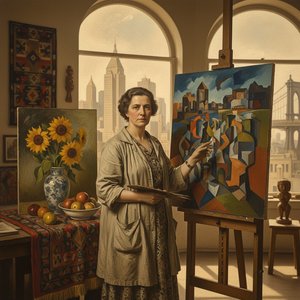
Marguerite Zorach: Pioneering American Modernism & Bridging Aesthetics
Explore the groundbreaking work of Marguerite Zorach, a pivotal figure in American Modernism. Discover her Fauvist paintings, collaborative spirit with William Zorach, and lasting influence on 20th-century art. A guide for collectors.
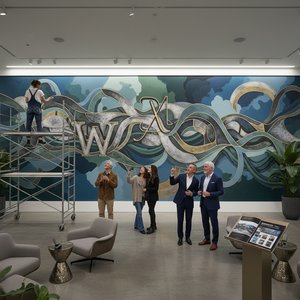
Hur en anpassad mural kan bli ditt varumärkes visuella identitet
Skapa en stark varumärkesidentitet med anpassade muraler! Vi hjälper hotell att stärka sin image och skapa minnesvärda gästupplevelser. Expertis & hög kvalitet.
Förankra Inredningen med Muralmålningar: En Omfattande Guide för Hotell- och Interiördesigners
Skapa en unik hotellupplevelse med muralmålningar! Vår omfattande guide ger expertråd om design, teknik och konstnärssamarbeten. Inspireras & lyft din interiördesign.

Förvandlande väggkonst: Hur muralkonst omdefinierar kök och badrum
Upptäck hur muralkonst kan förvandla ditt kök och badrum! Få inspiration, expertguider och trendspaning för en personlig och lyxig inredning. Läs mer nu!