

 Förhandsvisa
 Skicka
 Dela
Dela
 Visa detaljer
 Guide
Guide

 Ladda ner
 Liknande objekt
 Röntgen
 Bildspel
 Statistik
Attic Room
 Oil
Oil- WallArt
- Camden Town Group
 1918
1918- Modern
 51.0 x 51.0 cm
 Tate Liverpool
 Visa mer
Handgjord oljereproduktion
Handmålad olja på duk i din valda storlek och ram, tillverkad efter beställning av våra konstnärer. ( Byt till tryck Byt till digital bild)




P118B Skr10

P118H Skr10

P118W Skr10

P438Z Skr10

P508JH Skr12

P508YH Skr12

P805H Skr10

P805Z Skr10

P919BZ Skr10

P919G Skr10

P919XJ Skr10

P959ZH Skr10

P968JZ Skr12

W106C Skr8

W218G Skr10

W218JH Skr8

W218Y Skr10

W307PJ Skr10

W316G Skr10

W316PJ Skr8

W316Y Skr10

W398PJ Skr8

W4111J Skr10

W500HY Skr15

W500JH Skr15

W692G Skr12

W849H Skr8

W940BG Skr15

W953PJ Skr8




Välj bland våra förinställda storlekar som motsvarar konstverkets ursprungliga proportioner.

Ange den bredd och höjd du behöver för att passa din ram eller din vägg. Eftersom detta är handmålat kan konstnären, vid ett annat format, måla lite mer runt bilden eller beskära den något – det är du som väljer. Vi skickar en digital mockup för godkännande innan målningen påbörjas. Bilden som visas på denna sida representerar inte det slutgiltiga resultatet — det är endast mockuppen som visar det.
Efter beställning kommer OriginalUniqueArt.com team att mejla kunden för instruktioner och tillhandahålla en skissförhandsvisning
Leverans över hela världen () på 3–4 veckor istället för standard 5 veckor. (26 oktober). Inga kompromisser med kvaliteten.

Fri expressfrakt över hela världen

Högkvalitativ linnecanvas

Fullständig fraktförsäkring

Garantier för återbetalning av tullavgifter

Garantier för exakt färgåtergivning

100 dagars returrätt (endast vid fel)

100% pengarna tillbaka-garanti

Mängdrabatt erbjuds
 Glasalternativet är endast tillgängligt i storlekar under 110 cm.

Attic Room
Reproduktionsmetod
Storlek på reproduktion
-


Slutgiltigt pris
Skr 2978
A Sanctuary of Stillness: Exploring Ratcliffe's Attic Room
In the quiet corners of art history, certain works possess the unique ability to transform a mere space into a profound emotional experience. William Whitehead Ratcliffe’s Attic Room, painted in 1918, is one such masterpiece. This intimate portrayal of a domestic interior invites the viewer to step away from the clamor of the modern world and enter a realm of contemplative solitude. The painting captures a bedroom setting tucked within the eaves of an attic, where the soft, natural light filtering through a distant window breathes life into the humble objects scattered throughout the room. There is a palpable sense of peace in this composition, as if time itself has slowed to match the gentle rhythm of a resting soul.
The composition is masterfully arranged to guide the eye through a narrative of quiet companionship between objects. On the left, a bed serves as the anchor of the room, suggesting a place of rest and vulnerability. Nearby, a solitary chair waits, perhaps for a reader or a dreamer, adding a layer of human presence even in the absence of figures. The placement of two vases—one central and one toward the periphery—along with a delicate bottle, creates a rhythmic balance that speaks to the artist's training in the decorative arts. These elements are not merely decorations; they are the silent protagonists of a domestic drama, each contributing to an atmosphere of cozy, lived-in comfort.
Technique and the Camden Town Legacy
As a pioneer of the Camden Town Group, Ratcliffe brought a specific sensibility to his work—a dedication to capturing the vibrancy and immediacy of everyday life. In Attic Room, we see this through a technique that emphasizes texture and light. The way the light interacts with the surfaces of the furniture and the ceramic vessels suggests a profound understanding of how atmosphere is constructed through subtle tonal shifts. The brushwork, while controlled, retains a tactile quality that makes the fabric of the bed and the smoothness of the glass feel almost tangible to the viewer.
For the discerning collector or interior designer, this piece offers more than just visual beauty; it offers a mood. The painting’s palette and its focus on the "beauty in the mundane" make it an extraordinary choice for creating a focal point in a sophisticated living space. Whether placed in a sunlit study or a quiet corner of a bedroom, a high-quality reproduction of this work brings with it the historical weight of early twentieth-century English modernism. It serves as a window into a period where artists sought to find the extraordinary within the ordinary, making it an enduring inspiration for those who value art that speaks to the heart and elevates the home.
Frågor och svar
Vem har skapat "Attic Room"?
"Attic Room" tillskrivs William Whitehead Ratcliffe.
Vilket rum föreslås för visning av "Attic Room", med tanke på dess färgpalett?
Med sin Earthy-palett rekommenderas "Attic Room" av William Whitehead Ratcliffe för ett Bedroom. Färgerna är en del av anledningen till detta förslag.
Finns det ett faktablad om "Attic Room" av William Whitehead Ratcliffe för studenter?
Sidan Faktablad för elever för "Attic Room" av William Whitehead Ratcliffe erbjuder ett utskrivbart faktablad på två sidor: konstverket med sin identitetstabell, en tidslinje som placerar det i konstnärens livstid, andra verk av konstnären, den mätta färgpaletten samt färdiga citatmallar i fyra olika stilar.
Konstnärsbiografi
A Life Defined by Quiet Devotion
In the vibrant, often turbulent tapestry of early twentieth-century British art, certain names resonate with thunderous fame, while others whisper with a more profound, enduring grace. William Whitehead Ratcliffe belongs to that latter, more intimate category. A pioneer of the Camden Town Group, Ratcliffe was an artist whose life was characterized by a steadfast commitment to his craft, far removed from the pursuit of fleeting celebrity. Born on October 6th, 1870, in the tranquil village of Clenchwarton near Kings Lynn, Norfolk, his journey began in the modest surroundings of a draper’s assistant's family. Though his early years took him to the industrial landscape of Gorton, Manchester, the seeds of his artistic soul were sown through a disciplined pursuit of beauty and design.
Ratcliffe’s path was never one of sudden inspiration, but rather a gradual, deliberate unfolding of talent. While working as a clerk for a cotton merchant, he sought out evening classes at the Manchester School of Art. It was here that he encountered the influential Walter Crane, a master of the decorative arts who instilled in Ratcliffe a lifelong appreciation for the harmony between pattern and landscape. This early training in wallpaper design, gained while working for the Wallpaper Manufacturers’ Combine, would later manifest in his paintings as a unique sensitivity to texture, rhythm, and the quiet elegance of domestic objects.
The Crucible of Creativity: London and Letchworth
The turn of the century brought Ratcliffe to London, a move that would irrevocably alter the trajectory of his life. Drawn to the utopian ideals of the Garden City Movement, he settled in Letchworth Garden City in 1906. This experimental community became more than just a residence; it became a sanctuary for artistic experimentation and fellowship. It was within this setting that Ratcliffe formed a vital artistic circle alongside Harold Gilman and Richard Barry Parker. Under the mentorship and spirited encouragement of Gilman, Ratcliffe underwent a profound metamorphosis, turning his back on the commercial world of illustration to embrace the rigorous and rewarding pursuit of fine art.
Seeking to deepen his technical mastery, Ratcliffe enrolled at the Slade School of Fine Art in London. Studying under figures such as Frank Dobson, he refined his understanding of form and composition, blending the decorative sensibilities of his youth with a burgeoning interest in the immediacy of modern life. This period of formal education provided the structural foundation upon which he would build his most evocative works, allowing him to bridge the gap between the structured world of design and the fluid, emotive realm of painting.
A Legacy of Stillness and Light
The work of William Whitehead Ratcliffe is often characterized by a remarkable ability to find the extraordinary within the ordinary. As a member of the Camden Town Group, he shared their dedication to capturing the vibrancy of everyday existence, yet his approach often leaned toward a more contemplative, almost spiritual, stillness. His landscapes and interiors are not merely depictions of places, but explorations of atmosphere and emotion.
Consider the following hallmarks of his enduring artistic contribution:
- The Poetics of the Interior: In masterpieces such as Attic Room (1918), Ratcliffe transforms a simple domestic setting into a realm of profound solitude. Through the masterful use of soft, natural light filtering through eaves, he breathes life into humble objects—a bed, a chair, a solitary vase—creating a narrative of quiet companionship and peace.
- Landscape as Emotion: His depictions of the English countryside, such as Reflections, Ickleford, utilize Impressionistic brushwork to capture the tranquil beauty of rural life, emphasizing the tactile quality of the landscape.
- Architectural Essence: In works like Totnes, Devon (1931), he demonstrates a keen eye for the structural character of towns, capturing the idyllic harmony between architecture and the natural world.
Though he may not have shared the widespread fame of his contemporary Harold Gilman, Ratcliffe’s significance lies in his unwavering authenticity. He remained a full-time artist throughout his life, supported by the very community and family ties that nurtured his early growth. When he passed away in January 1955, he left behind a body of work that serves as a poignant reminder of the beauty found in the quiet corners of the world—a testament to an artist who found greatness not in the spotlight, but in the gentle rhythm of a life lived through art.

William Whitehead Ratcliffe
1870 - 1955
Kortfakta
- Full Name: William Whitehead Ratcliffe
- Nationality: British
- Date Of Birth: 1870
- Date Of Death: 1955
- Place Of Birth: Clenchwarton, Norfolk, UK
- Notable Artworks:
- Manor Farm, Norton
- Cottage Interior
- Artistic Movement Or Style: Camden Town Group
- Artists Who Influenced This Artist: ['Harold Gilman']
- Artists Or Movements Influenced By This Artist: ['Early 20th Century Art']
Relaterade artiklar
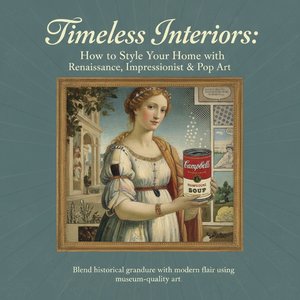
Bortom Flyktiga Trender: Att Kultivera Bestående Inredningsestetik Genom Renässansens Återklang, Impressionistiskt Ljus och Popkonstens Vibrans
Skapa ett bestående intryck med tidlös inredning! Upptäck renässansens harmoni, impressionismens ljus & popkonstens djärvhet. Expertkonsultation & handmålade reproduktioner på OriginalUniqueArt.
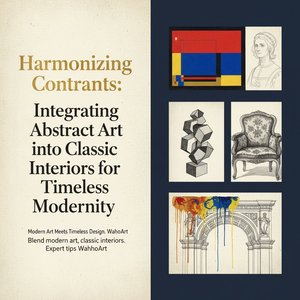
Harmonisk Kontrast: Att Integrera Samtida Konst i Klassiska Interiörer för Tidlös Modernitet
Skapa en tidlös och personlig interiör! Upptäck hur du harmoniskt integrerar samtida konst i klassiska rum med expertråd från OriginalUniqueArt. Kvalitetskonst för ditt hem.
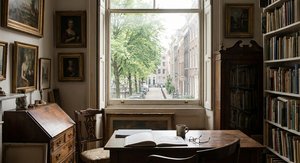
The Interior Gaze: Exploring Representations of Domestic Space in Art History
Explore the fascinating history of domestic interiors in art! From Dutch Masters to Impressionism, discover how artists captured home life & social meaning. Expert analysis and insights at OriginalUniqueArt.
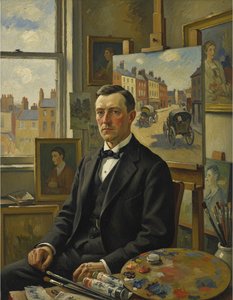
Robert Bevan: Pioneering British Post-Impressionism & the Camden Town Group's Intimate Vision
Explore the life & work of Robert Bevan, a pioneer of British Post-Impressionism and founding member of the Camden Town Group. Discover his vibrant landscapes and lasting impact on early 20th-century art.
Harmonisera Historia och Nyans: En Guide till Att Matcha Konststilar med Inredningsarkitektur för Balanserad Design
Harmonisera ditt hem med konst! Expertguide till att matcha konststilar med inredningsarkitektur för en balanserad och personlig design. Upptäck tips & inspiration.