 Byt till tryck
 Visa mer







































 För konstverk eller reproduktioner som är större än 105 cm (cirka 41 tum) på någon sida, levereras ramen som ett isärplockat kit. Denna metod säkerställer en trygg leverans och förhindrar skador under transport.


A Window into Victorian Sensibility: William Morris Hunt’s “Italian Boy”
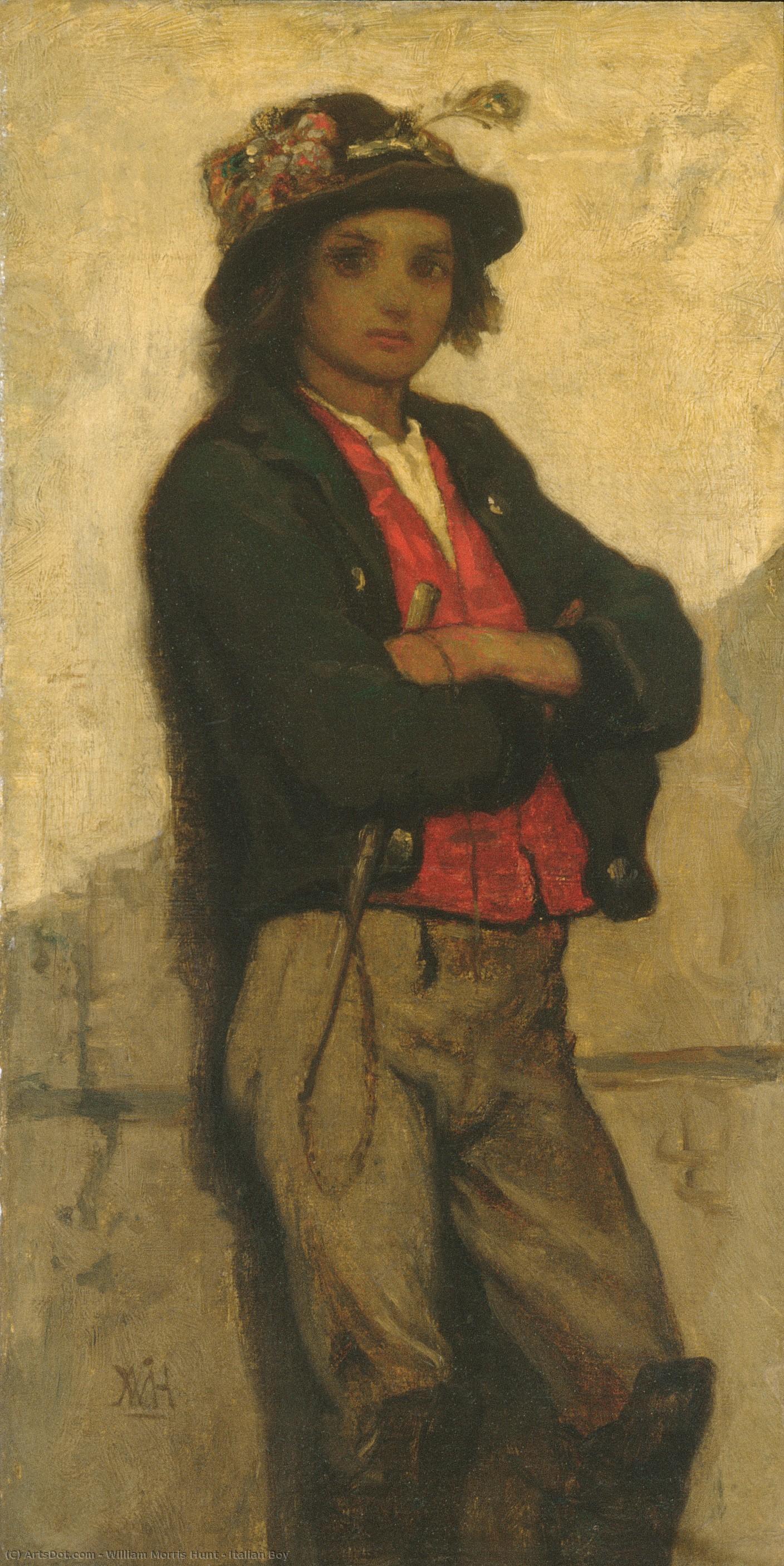
William Morris Hunt’s “Italian Boy,” completed in 1866, transcends mere portraiture; it embodies the spirit of the Barbizon School and captures a moment of contemplative beauty within the burgeoning American art scene. Painted during a period marked by fascination with European artistic traditions – particularly Millet’s landscapes – Hunt sought to infuse his work with a palpable sense of atmosphere and psychological depth.
- Subject Matter: The painting depicts a young man, dressed in a striking scarlet jacket adorned with white buttons, posed confidently before a stone wall. This deliberate positioning suggests an awareness of artistic convention, echoing the compositional strategies favored by Barbizon painters who prioritized capturing natural light and texture.
- Style & Technique: Hunt’s masterful brushwork exemplifies the Barbizon aesthetic—characterized by loose, expressive strokes that prioritize tonal variation over meticulous detail. The artist skillfully renders the stone wall with subtle shading, creating a grounding element against which the youthful figure is presented. Notice how light dances across his skin and clothing, conveying an impression of warmth and serenity.
- Historical Context: Produced in Boston during Hunt’s formative years as an artist, “Italian Boy” reflects the broader cultural currents of Victorian America. The fascination with classical ideals and the desire for artistic refinement were prevalent at the time, influencing artists like Hunt to emulate European masters and explore themes of moral virtue and spiritual contemplation.
- Symbolism & Emotion: Beyond its formal qualities, the painting speaks volumes about human character. The young man’s gaze directs outwards, hinting at an inner life brimming with curiosity and introspection. The subdued palette—dominated by earthy tones—contributes to a mood of quiet dignity and understated grace.
Influence of Millet & European Landscape Painting
Hunt's artistic vision was profoundly shaped by Jean-François Millet, whose depictions of rural life resonated deeply with American artists striving for authenticity. Like Millet, Hunt sought to portray the human figure within its natural surroundings, prioritizing observation and tonal harmony over idealized representation. This commitment to capturing the essence of nature aligns perfectly with the Barbizon School’s core principles.
The Metropolitan Museum of Art's Acquisition
“Italian Boy” holds a prominent place in The Metropolitan Museum of Art’s collection, demonstrating its enduring appeal and scholarly significance. Its inclusion underscores the museum’s dedication to preserving and disseminating American art history—a testament to Hunt’s contribution to shaping the artistic landscape of his time.
A Legacy of Luminosity & Detail
William Morris Hunt's “Italian Boy” remains a captivating exemplar of Barbizon painting, showcasing his remarkable ability to convey emotion and atmosphere through masterful technique. Its luminous brushstrokes and subtle tonal gradations continue to inspire artists and collectors alike—a timeless portrait that embodies the quiet elegance and contemplative spirit of Victorian America.
Frågor och svar
Vilket museum har originalet till "Italian Boy"?
"Italian Boy" av William Morris Hunt visas på Metropolitan Museum of Art, New York, United States of America. Museilistan avser originalverket, inte reproduktioner.
Vad rekommenderas för användning av "Italian Boy" av William Morris Hunt?
Det rekommenderade användningsområdet för "Italian Boy" av William Morris Hunt är Accent. Den kan även användas till andra ändamål.
Vilken storlek bör jag välja för tryck av "Italian Boy" till mitt rum?
För ett Living Room rekommenderas "Italian Boy" i tryckstorleken Medium.
 Förhandsvisa
 Skicka
 Dela
Dela
 Visa detaljer
 Guide
Guide

 Ladda ner
 Liknande objekt
 Röntgen
 Bildspel
 Frågor och svar
 Statistik





