

 Förhandsvisa
 Skicka
 Dela
Dela
 Visa detaljer
 Guide
Guide

 Ladda ner
 Liknande objekt
 Röntgen
 Bildspel
 Statistik
Figurer vid Stranden
 Akryl på duk
- Väggkonst
- Romantic Realism
 1835
1835 29.0 x 24.0 cm
 Russell
 Visa mer
Giclée / Konsttryck
Giclée- eller canvasprint av museumskvalitet med snabb produktion och flexibla ytbehandlingsalternativ. ( Beställ handmålad reproduktion Byt till digital bild)




P118B Skr10

P118H Skr10

P118W Skr10

P438Z Skr10

P508JH Skr12

P508YH Skr12

P805H Skr10

P805Z Skr10

P919BZ Skr10

P919G Skr10

P919XJ Skr10

P959ZH Skr10

P968JZ Skr12

W106C Skr8

W218G Skr10

W218JH Skr8

W218Y Skr10

W307PJ Skr10

W316G Skr10

W316PJ Skr8

W316Y Skr10

W398PJ Skr8

W4111J Skr10

W500HY Skr15

W500JH Skr15

W692G Skr12

W849H Skr8

W940BG Skr15

W953PJ Skr8




Välj bland våra förinställda storlekar som motsvarar konstverkets ursprungliga proportioner.

Ange den bredd och höjd du behöver för att passa din ram eller vägg. Ett tryck kan endast beskäras, aldrig göras större än originalbilden, vilket innebär att ett format med en annan proportion leder till att en del av bilden går förlorad. Vi skickar en digital mockup för godkännande innan vi påbörjar tryckningen. Bilden som visas på denna sida visar inte den faktiska beskärningen — det är endast mockuppen som gör det.
Leverans över hela världen () på 2 veckor istället för standard 4/5 veckor. (27 oktober)

Fri expressfrakt över hela världen

Högkvalitativ linnecanvas

Fullständig fraktförsäkring

Garantier för återbetalning av tullavgifter

Garantier för exakt färgåtergivning

100 dagars returrätt (endast vid fel)

100% pengarna tillbaka-garanti

Mängdrabatt erbjuds
 Glasalternativet är endast tillgängligt i storlekar under 110 cm.

Figurer vid Stranden
Giclée / Konsttryck
Storlek på reproduktion
-


Slutgiltigt pris
Skr 797
William Collins och Havets Stillhet – Ett Ögonblick av Idyl och Romantisk Sensibilitet
William Collins är en konstnär vars verk fascinerar genom sin förmåga att fånga essensen av romantiska idéer och känslor. Hans målning ”Figurer på Stranden” från 1835 är ett perfekt exempel på detta – ett mästerverk inom genrepiken som erbjuder både teknisk briljans och djup psykologisk reflektion över tidens atmosfär. Detta verk är inte bara en skönhet för ögat utan också ett viktigt dokument i den brittiska konsthistorien, vilket berättar historien om en konstnär vars ambition var att skapa bilder som skulle resonera hos sina samtida och fortsätta inspirera även idag. Collins arbetade främst inom romantisk stil, vilket präglades av fokus på känslor och fantasi snarare än strikt realism. Han hämtade inspiration från italienska och franska konsttraditioner, där ljusets effekt och användningen av färger var särskilt viktiga för att skapa atmosfär och förmedla emotionella stämningar. Tekniken som Collins använde var noggrant genomtänkt – han valde mjuka penseldrag och ett lätt fokus för att skapa en känsla av djup och realism samtidigt som han behöll den romantiska känslan av drömmande serenitet. Detta är särskilt tydligt i användningen av ljus och skugga, där solen lyser upp havet och människorna på stranden och skapar kontraster som förstärker bildens dramatik och emotionella laddning. Målningen förtjänar särskilt att studeras ur ett historiskt perspektiv. Året 1835 var en tid av betydande förändringar i Storbritannien – efter Napoleonskriget återhämtade landet sig från ekonomisk kris och romantiken blomstrade fram som konstnärlig och litterär rörelse. Collins verk återspeglar denna anda genom sina idylliciska scener av landsbygdsliv och kärlekens ögonblick, vilket är typiskt för den romantiska estetiken. Figuren på stranden symboliserar kanske längtan efter enkelhet och harmoni – ett önskemål om att återvända till naturen och bort från stadens brus och tumult. Barnets lekfulla aktivitet representerar oskuld och spontanitet, vilket är teman som ofta förekommer i romantisk konst och litteratur. Collins målning erbjuder inte bara estetiskt förtjusning utan också ett psykologiskt perspektiv på mänskliga relationer och känslor. De två kvinnorna och barnet är placerade i ett lugnt sammanhang där deras aktiviteter och uppmärksamheter riktas mot havet och varandra. Detta skapar en känsla av närvaro och intimitet, vilket är något som många konsthistoriker har betonat. Bildens mjuka färger och fokus förstärker denna atmosfär och bidrar till att skapa ett verk som väcker känslor av lugn och kärlek. ”Figurer på Stranden” är en klassisk illustration av romantisk konst – ett mästerverk som fortsätter att inspirera och förtjusas över hela världen.Frågor och svar
Vilken är den övergripande stämningen i "Figurer vid Stranden" av William Collins?
"Figurer vid Stranden" har en Romantisk atmosfär.
Är "Figurer vid Stranden" fri från upphovsrätt?
"Figurer vid Stranden" av William Collins är allmän egendom – upphovsrätten har löpt ut. Denna status avgör hur bilden av verket får återges.
Vilka är reproduktionsrättigheterna för "Figurer vid Stranden" på Russell?
Originalverket "Figurer vid Stranden" finns på Russell och verket är allmän egendom – upphovsrätten har löpt ut.
Konstnärsbiografi
A Life Immersed in Sentiment: The World of William Collins
Born in London in 1788, William Collins emerged as a significant voice within the British Romantic tradition, though his path to artistic recognition was subtly interwoven with familial and societal currents. His father, also named William Collins, was a respected painter and writer, providing young William with an early immersion into the world of art. This foundational exposure shaped his aesthetic sensibilities, yet his journey wasn’t simply one of direct imitation. While initially intended for a career mirroring his father's, Collins ultimately carved out a distinctive niche for himself, focusing on scenes that resonated deeply with Victorian audiences – idyllic portrayals of rural life and tender depictions of childhood innocence. His early education included time spent in Italy and France, experiences which instilled within him not only linguistic skills but also an appreciation for the light and atmosphere that would later characterize his landscapes. A period as a clerk at Antrobus & Co., tea merchants, proved deeply unsatisfying, yet it perhaps sharpened his observational skills, providing glimpses into the lives of ordinary people that would inform his artistic vision.The Blossoming of a Romantic Vision
Collins’s formal training began at the Royal Academy Schools in 1807, where he honed his technical abilities and developed his unique style. He quickly gained recognition, winning awards and exhibiting regularly. However, it was his departure from grand historical narratives or portraiture towards genre painting – scenes of everyday life – that truly defined him. Influenced by the Romantic movement, Collins didn’t merely depict landscapes; he imbued them with emotion. His paintings weren't simply representations of places but rather evocations of feeling, capturing fleeting moments of beauty and tranquility. He possessed a remarkable ability to portray children and those on the margins of society with dignity and compassion. Muted tones and a careful attention to natural light became hallmarks of his work, creating an atmosphere of gentle nostalgia. His paintings like “Barmouth Sands” or "Figures By A Cottage In An Extensive Wooded Landscape" exemplify this approach, inviting viewers into a world of quiet contemplation. He rivaled the popularity of John Constable, demonstrating his significant impact on British art during his time.Notable Works and Artistic Style
Collins’s oeuvre is characterized by a profound sensitivity to light and color—elements he skillfully employed to convey emotion and atmosphere. Among his most celebrated paintings are “Barmouth Sands,” capturing the dramatic coastline of Wales with breathtaking realism, and "The Stray Kitten," portraying a poignant moment of tenderness between a young boy and an abandoned feline. These works exemplify his distinctive style: soft brushstrokes, subtle gradations of tone, and a meticulous attention to detail—techniques that mirrored those championed by Constable and established him as a pivotal figure in the Romantic landscape tradition. Furthermore, “Three Children Under Tree” exemplifies Collins’s ability to capture the essence of childhood joy and innocence – themes central to his artistic vision.Family Legacy and Artistic Influence
William Collins's life extended beyond the easel; he was deeply connected to his family, notably as the father of Wilkie Collins—a celebrated novelist whose imaginative tales explored psychological complexities and captivated Victorian audiences. This familial bond undoubtedly fostered a creative environment within their home, nurturing an appreciation for storytelling and artistic expression. Collins’s meticulous observation of human behavior and his masterful rendering of natural landscapes profoundly influenced his son's literary endeavors, shaping his worldview and inspiring him to craft narratives that resonated with universal themes.A Lasting Impression: Historical Significance
William Collins stands as a testament to the transformative power of Romanticism—a movement that championed emotion, imagination, and an idealized vision of nature. His paintings transcended mere visual representation; they communicated profound feelings about human experience and the beauty of the natural world. He helped solidify genre painting's position as a respected artistic form, demonstrating that art could illuminate the complexities of everyday life while simultaneously elevating it to a realm of sublime contemplation. Today, William Collins’s legacy continues to inspire artists and captivate audiences with its enduring charm—a reminder that true artistry lies in capturing not just what we see but also what we feel.
William Collins
1824 - 1889 , Storbritannien
Kortfakta
- Artistic Movement Or Style: Romantik
- Artists Who Influenced This Artist: ['Constable']
- Date Of Birth: 1788
- Date Of Death: 1847
- Full Name: William Collins
- Nationality: Brittisk
- Notable Artworks:
- Barmouth Sands
- The Stray Kitten
- Figures By A Cottage
- Place Of Birth: London, UK
Relaterade artiklar

The Sublime and the Picturesque: Exploring Emotion & Nature in Romantic Landscape Painting
Explore the emotional power of Romantic landscape painting! Discover the sublime & picturesque traditions, key artists like Friedrich & Cole, and find your perfect artwork at OriginalUniqueArt.

Romantiska landskap: Topp 10 mästerverk som definierade en epok – OriginalUniqueArt.se
Utforska de 10 mest ikoniska mästerverken inom romantisk landskapsmålning! Lär känna Caspar David Friedrich, Turner & andra. Hitta inspiration och köp museumkvalitativa konsttryck på OriginalUniqueArt.com.
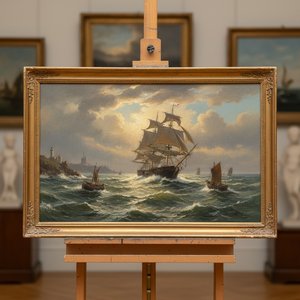
Henry Thomas Dawson: Navigating Light, Sea & Sentiment in Victorian Marine Painting
Explore the captivating world of Henry Thomas Dawson (1811-1878), a master of Victorian marine painting. Discover his evocative coastal scenes, landscapes & lasting artistic legacy. Learn about collecting Dawson's work and find reproductions at OriginalUniqueArt.

Evocations of Place: A Historical Journey Through Landscape Art
Explore the rich history of landscape art with OriginalUniqueArt. Discover renowned artists, movements like Impressionism & Romanticism, and expert guidance for collecting timeless pieces. Find your perfect serene escape today!

John Constables 25 Mästerverk: En Konstnärlig Resa i Det Engelska Landskapet | OriginalUniqueArt
Utforska John Constables 25 mest ikoniska målningar – romantikens mästare av det engelska landskapet. Upptäck historien, tekniken & skönheten i verk som 'Hay Wain'. Köp exklusiva konsttryck på OriginalUniqueArt.com.
