Förhandsvisa
 Skicka
 Dela
Dela
 Visa detaljer
 Guide
Guide

 Ladda ner
 Liknande objekt
 Röntgen
 Bildspel
 Frågor och svar
 Statistik
Upward


 Visa mer
Giclée / Konsttryck
Giclée- eller canvasprint av museumskvalitet med snabb produktion och flexibla ytbehandlingsalternativ. ( Beställ handmålad reproduktion Byt till digital bild)




P118B Skr10

P118H Skr10

P118W Skr10

P438Z Skr10

P508JH Skr12

P508YH Skr12

P805H Skr10

P805Z Skr10

P919BZ Skr10

P919G Skr10

P919XJ Skr10

P959ZH Skr10

P968JZ Skr12

W106C Skr8

W218G Skr10

W218JH Skr8

W218Y Skr10

W307PJ Skr10

W316G Skr10

W316PJ Skr8

W316Y Skr10

W398PJ Skr8

W4111J Skr10

W500HY Skr15

W500JH Skr15

W692G Skr12

W849H Skr8

W940BG Skr15

W953PJ Skr8




Välj bland våra förinställda storlekar som motsvarar konstverkets ursprungliga proportioner.

Ange den bredd och höjd du behöver för att passa din ram eller vägg. Ett tryck kan endast beskäras, aldrig göras större än originalbilden, vilket innebär att ett format med en annan proportion leder till att en del av bilden går förlorad. Vi skickar en digital mockup för godkännande innan vi påbörjar tryckningen. Bilden som visas på denna sida visar inte den faktiska beskärningen — det är endast mockuppen som gör det.
Leverans över hela världen () på 2 veckor istället för standard 4/5 veckor. (6 november)

Fri expressfrakt över hela världen

Högkvalitativ linnecanvas

Fullständig fraktförsäkring

Garantier för återbetalning av tullavgifter

Garantier för exakt färgåtergivning

100 dagars returrätt (endast vid fel)

100% pengarna tillbaka-garanti

Mängdrabatt erbjuds
 Glasalternativet är endast tillgängligt i storlekar under 110 cm.

Upward
Giclée / Konsttryck
Storlek på reproduktion
-


Slutgiltigt pris
Skr 809
A Visual Symphony of Form and Spirit
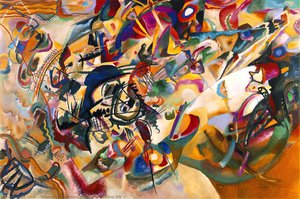
To stand before Wassily Kandinsky’s Upward is to step away from the tangible world and enter a realm where the boundaries of reality dissolve into a rhythmic dance of pure emotion. Created in 1929, this masterpiece serves as a profound testament to the era of abstract expressionism, acting less like a traditional painting and more like a visual manifesto. Kandinsky, a pioneer who sought to liberate art from the constraints of imitation, invites the viewer to abandon the safety of recognizable figures and instead surrender to a symphonic arrangement of color and geometry. The canvas does not merely hold pigment; it vibrates with an internal energy that speaks directly to the human psyche, making it an essential piece for any collector seeking art that transcends the mere decorative.
The composition is a masterful interplay of geometric elements—circles, squares, and triangles—arranged in a state of dynamic equilibrium. At its heart, a luminous yellow circle commands attention, acting as a beacon of optimism and vitality. This central form appears to float with a weightless grace above more intricate, smaller circles that populate the periphery, creating an illusion of immense depth and cosmic movement. The technique employed by Kandinsky is nothing short of meticulous; through a delicate layering of thin pigment washes, he achieved a remarkable luminosity. This process allows light to seem as though it is emanating from within the canvas itself, giving the shapes a translucent, ethereal quality that captivates the eye and stirs the soul.
The Intersection of Psychology and Geometry
Beyond its striking aesthetic, Upward is deeply rooted in the intellectual currents of the early 20th century. Created during the profound social shifts of the Weimar Republic, the work reflects the burgeoning interest in psychoanalysis championed by figures like Sigmund Freud. Kandinsky sought to translate the invisible frequencies of the unconscious mind into a visual language. In this piece, every shape functions as a "visual musical note." The tension between the dominant, bright elements and the grounding presence of darker, more stable dots symbolizes the eternal struggle between opposing forces within the human experience—joy and sorrow, stability and chaos, movement and stillness.
For the interior designer or the discerning art enthusiast, this work offers a unique opportunity to introduce a sense of intellectual depth and sophisticated energy into a space. The palette, characterized by its bold use of yellow contrasted against deep blacks and subtle grays, provides a focal point that is both commanding and contemplative. Whether placed in a modern gallery setting or as a centerpiece in a contemporary living space, a high-quality reproduction of Upward brings with it the transformative power of Kandinsky’s vision, turning any room into a sanctuary of abstract thought and spiritual resonance.
Frågor och svar
Hur gammal var Wassily Wassilyevich Kandinsky när hen skapade "Upward"?
När "Upward" skapades år 1929, var Wassily Wassilyevich Kandinsky – född 1866 – 63 år gammal.
Är "Upward" av Wassily Wassilyevich Kandinsky en rekommenderad present, och till vem?
"Upward" föreslås som en gåva till Corporate Gift, med Accent i åtanke.
Vilken konststil och vilken epok kan "Upward" av Wassily Wassilyevich Kandinsky placeras i?
"Upward" tillhör den Geometric Abstraction rörelsen och dess skapare verkade under talet-eran.
Konstnärsbiografi
A Life Immersed in Color and Spirit
Wassily Wassilyevich Kandinsky, född i Moskva 1866, var en revolutionär figur som oåterkalleligt förändrade konstens gång. Hans resa var inte en av omedelbar konstnärlig kallning; han var ursprungligen tänkt att ha en karriär inom juridik och ekonomi vid Moskvas universitet, men det var en djupgående möte med impressionistisk målning – särskilt Claude Monets “Häckar” – och en gripande upplevelse under bevittnandet av Wagners opera “Lohengrin” som tändes inom honom en oemotståndlig önskan att ägna sig åt konst. Detta avgörande ögonblick, som inträffade runt 30 års ålder, markerade inte bara ett karriärbyte utan en fullständig perspektivförändring, och lade grunden för hans pionjärarbete inom abstraktion. Han flyttade snart till München och antog en plats vid den prestigefyllda konstakademien där han studerade under Franz von Stuck, men även inom formell utbildning längtade Kandinskys anda efter utforskning bortom konventionella gränser.
Tidiga influenser inkluderade rysk folkkonst, som inhämtades genom en etnografisk expedition till Vologda-regionen 1889, vilket väckte en fascination för livfulla färgpaletter och symboliska bilder. Denna grundläggande utforskning var inte bara ett estetiskt val utan rotade sig i en djup kulturell koppling och en växande förståelse för hur konst kunde kommunicera bortom det bokstavliga. Han såg potentialen i att använda färg som ett språk, liknande musikens förmåga att uttrycka känslor.
The Dawn of Abstraction: From Expressionism to Inner Necessity
Kandinskys tidiga verk visar en stark expressionistisk tendens, präglad av djärva färger och emotionell intensitet – verk som “Papeln (Poplars)” från 1902 exemplifierar denna period. Men han var inte nöjd med att bara representera den yttre världen; han sökte att uttrycka inre verkligheter, andliga sanningar som överträffade rent visuell representation. Denna strävan ledde honom gradvis bort från representativ konst och mot en revolutionerande utforskning av färg, form och deras emotionella resonans. Han var fascinerad av hur färger kunde förmedla känslor och stämningar, och detta blev en central del av hans konstnärliga process.
Han började se på färg som mer än bara en beskrivning av verkligheten; han ansåg att den hade en egen kraft och inneboende betydelse. Han studerade hur olika färger kunde påverka betraktarens sinne, och experimenterade med att kombinera dem för att skapa specifika känslor. Detta påverkades starkt av hans växande intresse för Theosophia, en andlig rörelse som betonade esoterisk kunskap och universell broderskap. Ju djupare han grävde i dessa idéer, desto mer abstraherade Kandinskys målningar, lämnade igenom igenkännliga former till förmån för abstrakta kompositioner drivna av en “inre nödvändighet”. Detta var inte bara att avstå från representation; det handlade om att upptäcka ett nytt visuellt språk som kunde uttrycka de obegripliga domänerna av känslor och andlighet.
Geometric Harmony and Spiritual Resonance
Perioden efter hans engagemang i den inflytelserika konstgruppen Der Blaue Reiter (De Blå Ryttarna), som han grundade i München 1911, såg en ytterligare utveckling i Kandinskys stil. Medan tidigare verk ofta visade flytande, organiska former, började han utforska geometrisk abstraktion, med fokus på interaktionen mellan cirklar, trianglar och kvadrater. “Several Circles” (140 x 140 cm) står som ett exempel på denna fas – en dynamisk komposition där färg och form samverkar i en harmonisk men energirik dans. Han såg geometriska former som innehöll inneboende symbolik, och deras arrangemang inom duken kunde väcka specifika känslor.
Han ansåg att dessa former inte bara var visuella element utan också hade djupare andliga betydelser. Kandinsky trodde att de hade en egen kraft och inneboende betydelse, och att deras arrangemang i målningen kunde väcka specifika känslor hos betraktaren. Hans teoretiska skrifter, särskilt “Concerning the Spiritual in Art” (1911), artikulerade dessa övertygelser, och lade grunden för en ny förståelse av abstrakt konst som ett verktyg för att uttrycka djupgående andliga sanningar. Han argumenterade för att konsten inte skulle syfta till att imitera naturen utan snarare att avslöja konstnärens inre värld och koppla samman med betraktaren på en djupare, mer intuitiv nivå.
Bauhaus Influence and Lasting Legacy
Utbrottet av första världskriget tvingade Kandinsky till flykt tillbaka till Ryssland 1914, men efter den ryska revolutionen fann han sig alltmer i konflikt med det rådande konstliga klimatet. År 1920 accepterade han en undervisningsposition vid Bauhaus-skolan i Tyskland, där han djupt påverkade generationer av konstnärer med sina teorier om färg, form och abstraktion. Bauhaus erbjöd en idealisk miljö för Kandinsky att ytterligare utveckla sina idéer och utforska nya kreativa vägar.
Han fortsatte att experimentera med geometriska former och livfulla färger, ofta genom att använda lager av impasto-teknik för att skapa texturerade ytor som ökade djupet och komplexiteten i sina kompositioner – som syns i senare verk som “An Intimate Party” (1942). Efter stängningen av Bauhaus på grund av nazisternas makt, flyttade Kandinsky till Frankrike, där han dog 1944. Hans inflytande på modern konst är obestridligt; han erkänns allmänt som en pionjär inom abstrakt expressionism och en nyckelperson i utvecklingen av icke-representativ målning. Hans verk finns i viktiga museer över hela världen, inklusive Tretyakov Gallery i Moskva, som bär hans monumentala “Composition VII”, ett testamente till hans konstnärliga vision och bestående arv.
Useful Links

Wassily Wassilyevich Kandinsky
1866 - 1944 , Ryssland
Kortfakta
- Artistic Movement Or Style: Abstrakt konst, Expressionism
- Artists Or Movements Influenced By This Artist: ['Abstrakt expressionism']
- Artists Who Influenced This Artist:
- Claude Monet
- Richard Wagner
- Date Of Birth: 1866
- Full Name: Wassily Wassilyevich Kandinsky
- Nationality: Rysk, Fransös
- Notable Artworks:
- Murnau med regnbåge
- Tempererad energi
- En intim fest
- Flera cirklar
- Place Of Birth: Moskva, Ryssland
Relaterade artiklar

Topp 10 mästerverk inom abstrakt expressionism – konst för ditt hem | OriginalUniqueArt.com
Utforska de 10 mest inflytelserika verken inom abstrakt expressionism – från Rothkos färgfält till Pollocks action painting. Lär känna konstnärerna och deras teknik. Hitta museumskvalitativa tryck på OriginalUniqueArt.com och förvandla ditt hem med tidlös konst!

Neo-Abstract Art: The High-Impact Evolution of Modern Visual Energy and Geometric Sophistication
Discover the power of Neo-Abstract art. Explore how bold geometric forms and high-impact visual energy are redefining modern design. Learn to curate sophisticated, high-energy spaces with the latest trends in contemporary abstraction and structural color.

Neo-Abstract Art Trend Forecast: High-Impact Geometric Compositions for Contemporary Commercial Interiors
Elevate commercial interiors with Neo-Abstract art. Discover how high-impact geometric compositions and custom oil reproductions provide scalable, sophisticated design solutions for hotels, restaurants, and corporate spaces. Expert procurement for large-scale hospitality projects.

Geometrisk Abstraktion: Topp 10 Mästverk som Formade Konsten | OriginalUniqueArt.com
Utforska de 10 mästerverk som definierade geometrisk abstraktion! Lär känna Mondrian, Kandinsky & Malevich. Hitta inspiration och museumskvalitativa konsttryck för ditt hem på OriginalUniqueArt.com. Upptäck hela samlingen online!

Kandinskys 25 Mästerverk: En Färgstark Resa i Abstrakt Konst | OriginalUniqueArt
Utforska Wassily Kandinskys 25 mest ikoniska verk – från expressionism till abstrakt konst. Lär känna historien bakom mästerverken och hitta inspiration för din heminredning med OriginalUniqueArt.com. Upptäck hela samlingen online!