

 Förhandsvisa
 Skicka
 Dela
Dela
 Visa detaljer

 Ladda ner
 Liknande objekt
 Röntgen
 Bildspel
 Statistik
St Stephen is Consecrated Deacon
 Acrylic On Canvas
- WallArt
- Venetian Renaissance
 1511
1511 148.0 x 231.0 cm
 Staatliche Museen zu Berlin
 Visa mer
Giclée / Konsttryck
Giclée- eller canvasprint av museumskvalitet med snabb produktion och flexibla ytbehandlingsalternativ. ( Beställ handmålad reproduktion Byt till digital bild)




P118B $10

P118H $10

P118W $10

P438Z $10

P508JH $12

P508YH $12

P805H $10

P805Z $10

P919BZ $10

P919G $10

P919XJ $10

P959ZH $10

P968JZ $12

W106C $8

W218G $10

W218JH $8

W218Y $10

W307PJ $10

W316G $10

W316PJ $8

W316Y $10

W398PJ $8

W4111J $10

W500HY $15

W500JH $15

W692G $12

W849H $8

W940BG $15

W953PJ $8




Välj bland våra förinställda storlekar som motsvarar konstverkets ursprungliga proportioner.

Du kan ange egna mått för att passa en specifik ram eller yta. Om det valda måttet inte överensstämmer med originalbildens proportioner kommer vi antingen att beskära konstverket eller utöka bilden med en speglad eller enfärgad kant. En digital mockup skickas för ditt godkännande innan produktionen påbörjas.
Vänligen notera att förhandsvisningen på skärmen inte återspeglar den faktiska beskärningen eller utökningen. Endast mockuppen visar den slutgiltiga kompositionen korrekt.
Även om anpassade storlekar är möjliga, rekommenderar vi att du väljer ett mått från den fördefinierade listan för att bevara de ursprungliga proportionerna.
Leverans över hela världen () på 2 veckor istället för standard 4/5 veckor. (16 september)

Fri expressfrakt över hela världen

Högkvalitativ linnecanvas

Fullständig fraktförsäkring

Garantier för återbetalning av tullavgifter

Garantier för exakt färgåtergivning

100 dagars returrätt (endast vid defekter)

100% pengarna tillbaka-garanti

Mängdrabatt erbjuds
 Glasalternativet är endast tillgängligt i storlekar under 110 cm.

St Stephen is Consecrated Deacon
Giclée / Konsttryck
Storlek på reproduktion
-


Slutgiltigt pris
$ 80
The Sacred Narrative of Vittore Carpaccio’s “St Stephen is Consecrated Deacon”
Vittore Carpaccio's "St Stephen is Consecrated Deacon," painted in 1511, isn’t merely a depiction of a biblical event; it’s a vibrant tableau brimming with Venetian artistry and profound spiritual resonance. This tempera on panel masterpiece, now residing within the Staatliche Museen in Berlin, transports us to a bustling Roman street scene, meticulously rendered with an almost photographic realism that was revolutionary for its time. Carpaccio, deeply influenced by the early Italian Renaissance – particularly Antonello da Messina’s mastery of perspective and detail – eschewed the prevailing humanist trends, instead embracing a more conservative style rooted in Byzantine iconography and the meticulous observation of the world around him. The painting captures not just a moment in St Stephen's life, but also the very essence of Venetian civic pride and religious fervor.A Scene of Ceremony and Community
The heart of the composition is undoubtedly St. Stephen himself, kneeling before St. Peter, who bestows upon him the sacred mantle of deacon. Carpaccio masterfully orchestrates a complex arrangement of figures – at least fourteen individuals are visible within the frame – creating a dynamic sense of movement and engagement. The scene unfolds against a backdrop of an identifiable Roman street, complete with architectural details that hint at the grandeur of the city. A striking horse stands to the left, adding a touch of theatricality and emphasizing the importance of this momentous occasion. The crowd is diverse, reflecting the cosmopolitan nature of Venice itself – merchants in their finery mingle with ordinary citizens, all drawn together by the spectacle unfolding before them. Carpaccio’s skill lies not just in depicting individual faces but in conveying the collective energy of a community witnessing a pivotal religious event.Technique and Symbolism: A Venetian Masterpiece
Carpaccio's technique is characterized by its meticulous detail and rich, layered colors. The tempera medium allowed for incredible luminosity and depth, particularly evident in the rendering of fabrics, textures, and architectural elements. Notice the subtle gradations of color used to depict the folds of clothing, the sheen of metal, and the varied surfaces of the buildings. The painting’s composition is carefully balanced, drawing the eye from St. Stephen's kneeling posture towards St. Peter and then outwards to encompass the entire scene. The use of perspective, though not entirely groundbreaking for its time, is remarkably sophisticated, creating a convincing illusion of depth and space. Symbolically, the painting is rich with meaning. The presence of the horse could represent Christ’s sacrifice, while the diverse crowd symbolizes the universal appeal of St. Stephen's message. The act of consecration itself signifies a transition – from earthly concerns to divine service – a central theme in Christian theology.Historical Context and Artistic Legacy
“St Stephen is Consecrated Deacon” was created during a period of significant artistic innovation in Venice, where the influence of Northern European painting—particularly the meticulous detail and realism of Flemish artists—was increasingly felt. Carpaccio skillfully blended these influences with his own distinctive style, creating a unique and compelling visual language. The painting’s subject matter – a biblical narrative – was also highly popular during this period, reflecting the growing importance of religious imagery in Venetian society. It's fascinating to consider that Carpaccio painted this work shortly before the completion of his monumental “Legend of St. Ursula,” demonstrating his continued engagement with large-scale narrative cycles. The painting’s enduring appeal lies not only in its technical brilliance but also in its ability to evoke a sense of immediacy and emotional connection, transporting us back to a vibrant moment in Christian history.A Timeless Reflection on Faith and Community
Ultimately, “St Stephen is Consecrated Deacon” transcends the boundaries of mere historical documentation. It’s a powerful meditation on faith, community, and the transformative power of belief. The painting's enduring legacy lies in its ability to capture the spirit of a pivotal moment – the consecration of St. Stephen as a deacon – with remarkable clarity and emotional depth. Reproductions of this masterpiece offer an opportunity to bring this extraordinary work into any setting, allowing viewers to experience firsthand the artistry and spiritual resonance that have captivated audiences for centuries.Konstnärsbiografi
Early Life and Training
Vittore Carpaccio, a prominent italian painter, was born in venice around 1465. He studied under the tutelage of gentile bellini, a renowned artist of the venetian school. This apprenticeship laid the foundation for carpaccio's future success. His family were fishermen and boat builders, shaping his early worldview and fostering an appreciation for craftsmanship—skills that would later translate into his artistic endeavors. Carpaccio’s artistic journey began with intensive observation of bellini’s techniques and stylistic choices, absorbing the Venetian tradition’s emphasis on luminous color palettes and balanced compositions.Artistic Style and Influences
Vittore Carpaccio's style was characterized by its conservative nature, showing minimal influence from the humanist trends that transformed italian renaissance painting during his lifetime. He largely rejected the radical experimentation championed by artists like Leonardo da Vinci, prioritizing instead a meticulous approach rooted in established conventions. His work was profoundly impacted by antonello da messina’s style—particularly his masterful use of chiaroscuro—and early netherlandish art, notably Pieter Bruegel the Elder's landscapes and Jan van Eyck’s detailed realism. This unique blend resulted in a distinctive Venetian aesthetic that blended Byzantine iconography with Northern European precision.Notable Works
Vittore Carpaccio achieved considerable fame during his lifetime through his monumental cycle depicting Saint Ursula’s Life—a series of nine paintings housed in the gallerie dell'accademia. These canvases exemplify carpaccio’s narrative prowess, skillfully conveying biblical stories with dramatic lighting and expressive figures. Glory of St. Ursula Altarpiece (1491) showcases carpaccio’s ability to capture ethereal beauty and spiritual contemplation, mirroring bellini’s luminous style. Miracle of the Relic of the Cross at the Ponte di Rialto (1494) demonstrates carpaccio's meticulous attention to detail and compositional balance—a hallmark of Venetian painting during his era. His other significant works include depictions of Mary Magdalene and Saint Jerome, reflecting a deep understanding of religious symbolism and humanist ideals.Career Highlights and Legacy
Carpaccio’s principal artistic output spanned from 1490 to 1519, securing his place among the early masters of the venetian renaissance. He was recognized as one of Venice's most respected artists, attracting commissions from wealthy patrons and elevating Venetian art to new heights. Unlike many of his contemporaries who embraced innovation, carpaccio steadfastly adhered to traditional methods—a decision that arguably preserved the Venetian artistic heritage for future generations. Despite being somewhat overshadowed by luminaries like Bellini and Giorgione, Carpaccio’s enduring legacy resides in his contribution to Venetian painting's stylistic canon and his masterful storytelling abilities. His work continues to inspire admiration for its beauty and psychological depth.References and Further Reading
Vittore Carpaccio’s artworks on OriginalUniqueArt Vittore Carpaccio on wikipedia The italian renaissance art movement on OriginalUniqueArt The Italian Renaissance Art Movement Discover more about vittore carpaccio and the venetian school on OriginalUniqueArt Vittore Carpaccio
Vittore Carpaccio
1465 - 1526 , Italien
Kortfakta
- Artistic Movement Or Style: Tidig venetiansk renässans
- Artists Who Influenced This Artist:
- Gentile Bellini
- Antonello da Messina
- Date Of Birth: Venice, Italien (c. 1465)
- Date Of Death: Koper, Italien (1526)
- Full Name: Vittore Carpaccio
- Nationality: Italien
- Notable Artworks:
- Den heliga Ursulas dröm
- Glorian av Sankt Ursula altarpiece
- Miraklet över korsets relik vid Ponte di Rialto
- Place Of Birth: Venetien
Relaterade artiklar

El Grecos 25 Mästerverk: En Konsthistorisk Resa för Hemmet & Själens Frid
Utforska El Grecos 25 mest ikoniska tavlor! Fördjupa dig i spansk renässanskonst, dramatik och sakrala motiv. Köp högkvalitativa konsttryck & inred med tidlösa mästerverk från OriginalUniqueArt.com.
Illuminating Surfaces: A Comprehensive Exploration of Tempera on Panel Painting Techniques & Historical Significance
Explore the rich history & techniques of tempera painting! Discover Renaissance masters like Botticelli & Fra Angelico, conservation insights, and the enduring legacy of this captivating art form. Learn more now!
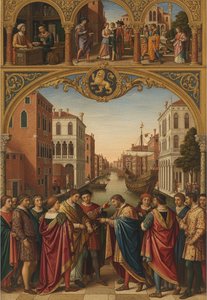
Vittore Carpaccio: Venetian Renaissance Narrative & the Poetics of Detail
Explore the captivating world of Vittore Carpaccio, a master storyteller of the Venetian Renaissance. Discover his intricate details, narrative cycles like 'The Legend of St. Ursula,' and unique artistic style.
Illuminating History: A Comprehensive Exploration of Tempera Painting Techniques & Artistic Legacy
Explore the rich history & techniques of tempera painting! Discover Renaissance masters like Botticelli & Fra Angelico, conservation insights, and the enduring legacy of this captivating art form.
Giotto di Bondones 25 Mästerverk: Konsthistoriens Bästa Verk för Ditt Hem
Utforska Giotto di Bondones 25 mest ikoniska konstverk! Fördjupa dig i italiensk renässans, fresker & tidig konsthistoria. Hitta inspiration och museumskvalitativa reproduktioner på OriginalUniqueArt.com.


