Visa i rummet
 Skicka
 Dela
Dela
 Detaljer
 Studentguide för konstverk

 Ladda ner
 Liknande objekt
 Röntgen
 Bildspel
 Besökstatistik
OND-II-VA


 Läs mer
Konstverket som visas på denna sida skyddas av upphovsrättslagen, vilket innebär att vi inte lagligt kan skapa eller sälja en identisk reproduktion. Detta skydd upprätthålls genom internationella avtal såsom den Bernkonventionen och genom nationella lagar, inklusive de som fastställs av Amerikansk upphovsrättslag – Titel 17. Alla rättigheter förbehållna. Återgivning av konstverk är förbjuden utan skriftligt tillstånd från WahooArt.
Denna metod följer fullt ut upphovsrättsliga regler eftersom den inte innebär kopiering eller duplicering av det skyddade konstverket. Istället är det en kreativ nytolkning – en ny målning som är influerad av originalet men inte identisk med det.
Giclée / Konsttryck
Giclée- eller canvasprint av museumskvalitet med snabb produktion och flexibla ytbehandlingsalternativ. ( Köp handmålat konstverk Byt till digital bildförsäljning)




P118B Skr10

P118H Skr10

P118W Skr10

P438Z Skr10

P508JH Skr12

P508YH Skr12

P805H Skr10

P805Z Skr10

P919BZ Skr10

P919G Skr10

P919XJ Skr10

P959ZH Skr10

P968JZ Skr12

W106C Skr8

W218G Skr10

W218JH Skr8

W218Y Skr10

W307PJ Skr10

W316G Skr10

W316PJ Skr8

W316Y Skr10

W398PJ Skr8

W4111J Skr10

W500HY Skr15

W500JH Skr15

W692G Skr12

W849H Skr8

W940BG Skr15

W953PJ Skr8




Välj bland våra förinställda storlekar som motsvarar konstverkets ursprungliga proportioner.

Ange den bredd och höjd du behöver, för att passa din ram eller din vägg. Ett tryck kan endast beskäras, aldrig göras större än bilden, vilket innebär att ett format med en annan formform leder till att en del av bilden går förlorad. Vi skickar en digital mockup för godkännande innan vi trycker något. Bilden som visas på denna sida visar inte den faktiska beskärningen — det är endast mockuppen som gör det.
Leverans över hela världen () på 2 veckor istället för standard 4/5 veckor. (24 oktober)

Fri expressfrakt över hela världen

Högkvalitativ linnecanvas

Fullständig fraktförsäkring

Garantier för återbetalning av tullavgifter

Garantier för exakt färgåtergivning

100 dagars returrätt vid fabrikationsfel

100% pengarna tillbaka-garanti

Mängdrabatt erbjuds
 Glasalternativet är endast tillgängligt i storlekar under 110 cm.

OND-II-VA
Giclée / Konsttryck
Reproduktionsstorlek
-


Totalpris
Skr 793
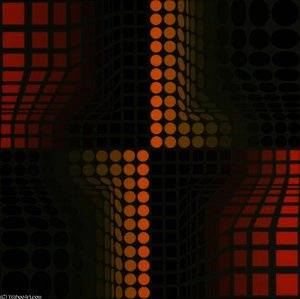
O N D - I I - V A: A Vortex of Perception by Victor Vasarely
Victor Vasarely’s “O N D - I I - V A” is more than just a painting; it's an invitation to experience the world through a radically altered lens. Created in the heart of the Op Art movement, this piece, executed with meticulous skill in oil media, embodies the core principles of optical illusion and dynamic visual vibration that defined Vasarely’s groundbreaking work. The swirling, interconnected spirals dominate the canvas, drawing the viewer into a mesmerizing dance of color and form – a testament to the artist's profound understanding of how our eyes perceive depth and movement.
- Style: Op Art - A revolutionary style that challenges traditional representation by manipulating visual perception.
- Medium: Oil on Canvas - The rich texture and subtle gradations achievable with oil paint are crucial to the work's three-dimensional effect.
- Color Palette: Predominantly Blue and Red – a bold, contrasting combination that intensifies the optical illusion.
Vasarely’s approach stemmed from a deep engagement with geometric abstraction and the principles of functional design, heavily influenced by his time at the Bauhaus-inspired Műhely workshop. He wasn't simply depicting an image; he was constructing an experience – one that actively engages the viewer’s eye and mind. The intricate network of spirals suggests a controlled chaos, a deliberate disruption of conventional spatial understanding. This piece resonates with similar works like “Rhombus-B” and “Tridim-Cis,” showcasing Vasarely's consistent exploration of spiral patterns within the Op Art framework.
The Genesis of an Illusion: Historical Context and Influences
"O N D - I I - V A" emerged during a period of significant artistic experimentation in the 1960s, mirroring the broader cultural shifts towards technological advancement and a fascination with the subconscious. The Op Art movement itself was a direct response to the increasing prevalence of mass-produced imagery and the desire to create art that actively engaged the viewer’s senses. Vasarely's work anticipated developments in fields like computer graphics and kinetic art, demonstrating a prescient understanding of how visual information would be processed in the future.
- Influences: The Bauhaus movement, functional design principles, and the exploration of optical illusions.
- Era: 1960s – A period of intense artistic innovation and experimentation.
Vasarely’s technical mastery is evident in the precise execution of the spiral composition. The smaller spirals are not merely decorative; they contribute to a complex interplay of visual cues that create a powerful sense of depth and movement. The use of oil media allows for subtle variations in tone and texture, enhancing the three-dimensional effect and contributing to the overall dynamism of the artwork. It’s a technique shared with other pioneers like Getulio Alviani, who similarly pushed the boundaries of artistic expression through innovative material experimentation.
Decoding the Symbolism: Spiral Patterns and Perception
The spiral motif in “O N D - I I - V A” transcends mere aesthetic appeal; it’s a potent symbol representing growth, evolution, and the cyclical nature of time. Within the context of Op Art, spirals are not simply decorative elements but carefully constructed visual puzzles designed to challenge our perceptions of space and form. The interconnectedness of the spirals suggests a complex system of relationships – mirroring the intricate workings of the human mind.
Emotional Impact: The artwork evokes feelings of wonder, curiosity, and perhaps even slight disorientation—a deliberate effect intended to stimulate the viewer’s senses and provoke contemplation on the nature of perception itself.A Legacy of Innovation: Ownership and Appreciation
“O N D - I I - V A” by Victor Vasarely represents a pivotal moment in art history, solidifying his place as one of the foremost figures of Op Art. Its enduring appeal lies not only in its striking visual impact but also in its intellectual rigor – a testament to Vasarely’s profound understanding of human perception. Owning a hand-painted reproduction of this iconic artwork is an investment in both artistic heritage and a unique piece of visual storytelling.
Frågor och svar
Vilket stämningsläge och vilken känsla uttrycker "OND-II-VA" av Victor Vasarely?
I "OND-II-VA" ackompanjeras en Modern stämning av en Energetic känsla.
Var kan jag se en förhandsvisning av "OND-II-VA"?
För att förhandsgranska en reproduktion av "OND-II-VA" av Victor Vasarely, öppna konstverkets Förhandsvisning-sida.
Är "OND-II-VA" ett av Victor Vasarelys mest populära verk?
"OND-II-VA" klassificeras som Iconic.
Om konstnären
A Life Forged in Geometry: The World of Victor Vasarely
Victor Vasarely, ungerska Győző Vásárhelyi, född 9 april 1906 i Pécs, Ungern, död 15 mars 1997 i Paris, Frankrike, var en ungersk målare och grafiker, från 1930 verksam i Frankrike. Hans konst är känd för sina geometriska abstraktioner, optiska illusioner och sin inflytande på både modern konst och design. Vasarelys resa till att bli en pionjär inom Op Art och kinetisk konst var allt annat än förutbestämd. Hans tidiga liv antydde en väg långt borta från duken; han studerade först medicin vid Eötvös Loránds universitet i Budapest. Men lockelsen av visuell expression var för stark, vilket ledde till att han lämnade medicinen för konstvärlden 1927 och gick med i Podolini-Volkmanns akademi. Detta beslut markerade inte bara en förändring i yrke utan också början på en livslång utforskning av de grundläggande principer som styr perception och form. En avgörande händelse var hans anmälan till Sándor Bortnyiks verkstad – Műhely – ett skola djupt influerad av Bauhaus-rörelsen. Här absorberade Vasarely principerna för funktionell design och geometrisk abstraktion, frö som skulle blomstra i hans signaturstil. Dessa formativa år var inte bara en fråga om att lära sig teknik; det handlade om att dekonstruera traditionella konstkonventioner och omfamna ett nytt visuellt språk rotat i logik och precision.From Early Abstraction to the Dawn of Op Art
Senare 1920-tal och tidiga 1930-tal vittnade om Vasarelys gradvisa avståndstagande från representativ konst, när han fördjupade sig i geometrisk abstraktion. Verk som "Blått Studie" och "Grönt Studie", skapade 1929, exemplifierar denna övergång – en medveten borttagning av berättande innehåll till förmån för ren form och färgrelationer. Även om han var påverkad av mästare som Piet Mondrian och Kazimir Malevich, var Vasarely inte nöjd med att bara efterlikna deras stilar. Han sökte transcendera sina föregångares statiska kompositioner, med målet att skapa en dynamik som aktivt engagerar betraktarens perception. Detta sökande ledde honom till Paris 1930, där han etablerade sig som grafisk designer och reklamartist, finslipade sina färdigheter samtidigt som han fortsatte att utveckla sin unika konstnärliga vision. Det var under denna period som han började experimentera med tekniker som senare skulle bli kännetecken för Op Art – manipulering av former och färger för att skapa illusioner av rörelse och djup. Fröna planterades för en revolution i visuell upplevelse.The Systematic Illusion: Defining a Movement
Under 1960-talet hade Victor Vasarely fullt ut etablerat sig som en ledande figur i den växande Op Art-rörelsen. Till skillnad från många konstnärer som förlitade sig på intuition och spontan uttryck, angav Vasarely sitt arbete med en distinkt systematisk metodik. Han använde rutnät och matematiska principer för att generera mönster som skapade kraftfulla optiska illusioner – visuella vibrationer, virvlande effekter och sensationer av djup där ingen fysiskt existerade. Detta handlade inte om bedrägeri; det var en fråga om att avslöja den inneboende dynamiken inom perceptionen själv. Han trodde på reproducerbarhet och bred tillgänglighet, med målet att demokratisera konsten genom att göra den tillgänglig bortom galleriernas och museernas gränser. Hans verk utmanade betraktarna att ifrågasätta sin egen visuella upplevelse, tvingande dem att aktivt delta i skapandet av mening. Denna medvetna engagemang med perception skiljde Op Art från andra rörelser och etablerade Vasarely som dess främsta företrädare. Han målade inte bara bilder; han konstruerade upplevelser.Historical Significance and Lasting Influence
Vasarelys bidrag till konsthistorien är mångfacetterat. Han gick utöver traditionella målningstekniker för att skapa verk som aktivt engagerar betraktarens perception. Hans systematiska metodik utmanade konventionella uppfattningar om konstnärlig kreativitet och banade väg för datorgenererad konst och digital design. Genom att omfamna reproducerbarhet och kommersiella tillämpningar suddade Vasarely ut gränserna mellan fin konst och populärkultur, lämnande ett bestående intryck på både den ena och den andra. Han skapade inte bara estetiskt tilltalande objekt; han genomförde visuella experiment som avslöjade grundläggande sanningar om hur vi ser världen. Hans verk fortsätter att resonera idag, påminner oss om kraften i abstraktion, skönheten i geometri och de oändliga möjligheterna för mänsklig kreativitet. Vasarelys inflytande sträcker sig bortom konstvärlden; han har djupt påverkat grafisk design, mode, inredningsdesign och till och med tidig datorgrafik, inspirerat generationer med sin innovativa vision och hans orubbliga engagemang för att utforska möjligheterna i perception.Key Works and Legacy
Vasarely’s artistic output spanned several decades, encompassing a vast range of works that exemplify his unique approach to visual art. Some notable examples include: "Blue Study" (1929), “Green Study” (1929), “Zebra” (1967), and the iconic “Suomi” tableware series created in collaboration with Rosenthal porcelain (1968). The Fondation Vasarely, established in Aix-en-Provence, serves as a vital resource for preserving and promoting his extensive body of work. A remarkable event – the inclusion of serigraphs aboard the French-Soviet spacecraft Salyut 7 in 1982 – symbolized the global recognition of his art and its connection to the broader human endeavor of exploration. Vasarely’s legacy remains a testament to his pioneering spirit and enduring influence on the world of modern art and design.
Victor Vasarely
1906 - 1997 , Kroatien
Snabbfakta
- Artistic Movement Or Style: Op Art, Kinestisk konst
- Artists Or Movements Influenced By This Artist:
- Grafisk design
- Inredningsdesign
- Artists Who Influenced This Artist:
- Piet Mondrian
- Kazimir Malevich
- Date Of Birth: 9 april 1906
- Date Of Death: 15 mars 1997
- Full Name: Victor Vasarely
- Nationality: Ungersk-fransk
- Notable Artworks:
- Blue Studie
- Green Studie
- Place Of Birth: Pécs, Kroatien
Relaterade artiklar

De 10 mest ikoniska målningarna i nyansen 'Skifferblått' – Konst & Inredning
Utforska de 10 mest ikoniska målningarna dominerade av nyansen 'skifferblått'. Lär känna Monet, Van Gogh & andra mästare. Hitta inspiration för din inredning och köp museumkvalitativa konsttryck på OriginalUniqueArt.com – din källa till tidlös skönhet.
The Allure of Azure: Exploring the Symbolic & Aesthetic Depths of Blue in Art History
Explore the rich history of blue in art! Discover its symbolism, from ancient pigments to modern masterpieces by Kandinsky & Seurat. Uncover the psychological impact and cultural meanings behind this captivating hue.

The Enduring Legacy of Oil on Canvas: Technique, History & Aesthetic Impact
Explore the rich history & techniques of oil painting – from Renaissance masters to Impressionism. Discover pigments, layering methods, and why this timeless medium endures. Expert insights for artists & art enthusiasts.

Olja på duk: En tidlös teknik – Historik, process och konstnärliga möjligheter
Utforska oljemålningskonsten! Lär dig om flamländsk teknik, materialval och historisk utveckling. Expertguider för både nybörjare och erfarna konstnärer – bevara dina målningar med bästa praxis.

Crimson Threads of Narrative: Exploring Symbolism & Representation in Artworks Featuring the Red Dress
Explore the rich symbolism of the red dress in art history! From ancient power displays to iconic portraits like Cézanne’s 'Madame Cezanne', discover the cultural and artistic significance behind this captivating color. Expert analysis & insights.