

 Visa i rummet
 Skicka
 Dela
Dela
 Detaljer
 Studentguide för konstverk

 Ladda ner
 Liknande objekt
 Röntgen
 Bildspel
 Besökstatistik
Ferruccio Busoni


 Läs mer
Giclée / Konsttryck
Giclée- eller canvasprint av museumskvalitet med snabb produktion och flexibla ytbehandlingsalternativ. ( Köp handmålat konstverk Byt till digital bildförsäljning)




P118B Skr10

P118H Skr10

P118W Skr10

P438Z Skr10

P508JH Skr12

P508YH Skr12

P805H Skr10

P805Z Skr10

P919BZ Skr10

P919G Skr10

P919XJ Skr10

P959ZH Skr10

P968JZ Skr12

W106C Skr8

W218G Skr10

W218JH Skr8

W218Y Skr10

W307PJ Skr10

W316G Skr10

W316PJ Skr8

W316Y Skr10

W398PJ Skr8

W4111J Skr10

W500HY Skr15

W500JH Skr15

W692G Skr12

W849H Skr8

W940BG Skr15

W953PJ Skr8




Välj bland våra förinställda storlekar som motsvarar konstverkets ursprungliga proportioner.

Ange den bredd och höjd du behöver, för att passa din ram eller din vägg. Ett tryck kan endast beskäras, aldrig göras större än bilden, vilket innebär att ett format med en annan formform leder till att en del av bilden går förlorad. Vi skickar en digital mockup för godkännande innan vi trycker något. Bilden som visas på denna sida visar inte den faktiska beskärningen — det är endast mockuppen som gör det.
Leverans över hela världen () på 2 veckor istället för standard 4/5 veckor. (23 oktober)

Fri expressfrakt över hela världen

Högkvalitativ linnecanvas

Fullständig fraktförsäkring

Garantier för återbetalning av tullavgifter

Garantier för exakt färgåtergivning

100 dagars returrätt vid fabrikationsfel

100% pengarna tillbaka-garanti

Mängdrabatt erbjuds
 Glasalternativet är endast tillgängligt i storlekar under 110 cm.

Ferruccio Busoni
Giclée / Konsttryck
Reproduktionsstorlek
-


Totalpris
Skr 793
A Window into Modernity: Decoding Boccioni’s “Portrait of Ferruccio Busoni”
Umberto Boccioni's 1916 portrait of the celebrated composer Ferruccio Busoni is more than a likeness captured on canvas; it’s a vibrant distillation of an era, a testament to artistic kinship, and a poignant reflection on the cusp of change. Painted in the final months of Boccioni’s tragically short life, the work embodies the core tenets of Futurism while simultaneously reaching beyond its boundaries, hinting at a deeper exploration of form and emotion. The scene unfolds outdoors, immersing Busoni within a lush environment that feels both grounding and dynamic. He is seated, partially obscured by a hat, creating an intriguing sense of mystery – not hiding, but rather inviting contemplation on the intellectual energy radiating from within.
The Energetic Brushstroke: Technique and Futurist Principles
Boccioni’s masterful technique is immediately apparent in the vigorous impasto—the thick application of oil paint that lends a tactile quality to the surface. This isn't merely about depicting texture; it’s about conveying energy, mirroring the dynamism Busoni himself embodied as a composer constantly pushing boundaries. The brushstrokes aren’t blended or smoothed but remain visible, swirling and flowing like currents of thought. Lines are predominantly organic, echoing the natural forms surrounding Busoni, yet they possess an underlying sense of controlled chaos characteristic of Futurist principles. Boccioni wasn't interested in strict realism; he sought to capture not just *what* Busoni looked like but the very essence of his presence and the intellectual atmosphere that enveloped him. The layering of colors builds depth while deliberately flattening perspective, prioritizing emotional impact over photographic accuracy. This approach allows the painting to vibrate with life, a visual equivalent of Busoni’s complex musical compositions.
A Moment Suspended: Historical Context and Artistic Dialogue
The year 1916 was a pivotal one, shadowed by the immense upheaval of World War I. Italy found itself embroiled in conflict, and even the celebratory fervor that initially defined Futurism began to grapple with the harsh realities of war. This portrait emerges from this tumultuous context as a quiet moment of contemplation amidst chaos. It’s a tribute not just to Busoni as an artist but also to the power of intellectual connection during times of uncertainty. Boccioni and Busoni shared a mutual respect, both innovators in their respective fields who challenged conventional norms. The painting can be seen as a visual dialogue between two forward-thinking minds, a recognition of kindred spirits navigating a rapidly changing world. The warm hues dominating Busoni’s clothing – oranges, reds, and yellows – contrast beautifully with the cooler blues and greens of the foliage, drawing the eye and creating a harmonious tension that reflects this artistic exchange.
Beyond Representation: Emotional Resonance and Interior Appeal
“Portrait of Ferruccio Busoni” transcends mere representation; it’s an evocation of mood and atmosphere. The swirling brushstrokes, vibrant colors, and dynamic composition create a sense of movement and energy that draws the viewer in. The partially obscured face invites projection, fostering a personal connection with the artwork. It's a painting that doesn't simply *show* you Busoni; it allows you to *feel* his presence. For collectors and interior designers, this piece offers a striking focal point for modern or eclectic spaces. Its Italian avant-garde sophistication adds depth and character to any room, particularly living rooms, studies, or music rooms where its energy and intellectual weight can be fully appreciated. It’s an investment not just in a beautiful object but in a powerful statement about artistic vision and the enduring legacy of Futurism.
Frågor och svar
Vilken reproduktionsstorlek rekommenderas för "Ferruccio Busoni" av Umberto Boccioni?
Rekommenderad tryckstorlek för "Ferruccio Busoni" är Large. Andra storlekar finns tillgängliga med samma proportioner.
Hur gammal var Umberto Boccioni när "Ferruccio Busoni" skapades?
När "Ferruccio Busoni" skapades år 1916, var Umberto Boccioni – född 1882 – 34 år gammal.
Finns det en guide för "Ferruccio Busoni" av Umberto Boccioni?
En Guide-sida finns tillgänglig för "Ferruccio Busoni" av Umberto Boccioni: ett utskrivbart faktablad om konstverket, utformat för studenter och undervisning i klassrummet.
Om konstnären
A Life Forged in Motion: The Revolutionary Vision of Umberto Boccioni
Umberto Boccioni, född i Reggio Calabria 1882, var en central figur i den italienska futuristiska rörelsen – en kraft som bröt mot konventionella konstnärliga normer och omfamnade det moderna världens dynamik. Hans liv, tragiskt avbrutet vid bara trettio-tre års ålder, blev ett levande bevis på denna passionerade tro på framsteg, fart och den kittlande energin hos maskinåldern. Boccionis tidiga år präglades av ständig omflyttning på grund av hans fars civila tjänst – en barndom som exponerade honom för en mångfald av landskap och inställde en rastlös anda inom honom. Denna nomadiska existens ledde slutligen till Rom, där han först studerade dekorativa konstformer innan han riktade in sig på målning, absorberade influenser från Liberty-stilen hos affischerkonstnärer vid tiden. Men det var hans möte med Futurismen, tändes av Filippo Tommaso Marinettis skrifter, som verkligen satte hans konstnärliga bana i brand.Embracing the Whirlwind: The Rise of a Futurist
Året 1910 visade sig vara en avgörande punkt för Boccioni. Han skrev under *Manifesto dei Pittori Futuristi*, vilket solidifierade hans engagemang för en rörelse som firade teknik, hastighet och till och med våld som emblem för moderniteten. Detta var inte bara ett estetiskt val; det var en filosofisk uppror mot traditionernas tyngd, en önskan att fånga själva essensen av en värld som färdades mot en osäker framtid. Boccioni blev snabbt en av Futurismens mest artikulerade teoretiker, utvidgande Marinettis initiala uttalanden och tillämpade dem på den visuella konsten. Han argumenterade för ett fullständigt brott med representativ noggrannhet, förespråkade istället målningar som förmedlade inte bara *vad* saker såg ut som, utan *hur* de kändes i rörelse – känslan av fart, formernas fragmentering, den överväldigande energin hos stadslivet. Hans tidiga verk, även om de fortfarande antydde influenser från Impressionism och Divisionism, började visa denna växande besatthet av dynamik. Verk som *The City Rises* (1910-1911) är monumentala i skala och ambition, skildrar den kaotiska konstruktionen av en modern stad – en virvelvind av mänskliga figurer, byggnader och maskiner som uttrycker Futurismens ideal.Deconstructing Reality: Technique and Themes
Boccionis konstnärliga utveckling präglades av ett alltmer radikalt tillvägagångssätt för form. Han avvek från traditionella synsätt på perspektiv och komposition, omfamnade fragmentering som ett sätt att förmedla rörelse och energi. Objekt brutna ner i sina beståndsdelar, kraftlinjer strålade utåt och färger blandades i virvlande mönster – allt designat för att skapa en känsla av visuell vibration. Denna dekonstruktion var inte bara stilistisk; den var rotad i Boccionis övertygelse om att verkligheten själv var flytande och ständigt förändrande. Han sökte att representera inte den statiska utseendet på saker, utan deras dynamiska essens. Detta illustreras kraftfullt i verk som *Dynamism of a Human Body* (1913), där en figur skildras inte som en fast form utan som en serie fragmenterade former som antyder rörelse genom rymden. Hans mest ikoniska skapelse, *Unique Forms of Continuity in Space* (1913), transcenderar måleriet helt – en bronsstaty som uttrycker Futurismens ideal med hänförande kraft. Figuren framstår som fångad mitt i ett steg, dess lemmar och torso förlängda och förvrängda, vilket förmedlar en känsla av stopplös momentum.Influences and Artistic Evolution
Boccioni’s artistic journey was shaped by a diverse range of influences. He initially studied under Giacomo Balla in Rome, absorbing the techniques of Divisionism – a style characterized by breaking down colors into small, distinct brushstrokes to create an effect of movement and vibration. This early exposure to divisionist principles would later inform his own approach to representing dynamism. Furthermore, he was deeply influenced by the writings of Friedrich Nietzsche, whose philosophy of eternal recurrence and the celebration of life’s fleeting beauty resonated with Boccioni's desire to capture the energy of the modern world. He also drew inspiration from Cubism, particularly its fragmentation of form and its exploration of multiple perspectives – although his approach differed significantly from Picasso and Braque’s analytical cubism, as Boccioni sought to represent movement rather than static representation.Legacy and Lasting Impact
Boccioni’s untimely death in 1916, under the horrors of World War I, tragically cut short a brilliant career. Despite this loss, his ideas and artworks continued to exert a profound influence on subsequent generations of artists. He profoundly influenced not only Futurist artists but also movements like Constructivism and Abstract Expressionism. His exploration of motion, dynamism, and the representation of modern life paved the way for new forms of artistic expression, challenging traditional notions of beauty and representation. His work is not merely about depicting motion; it's about embodying it. Umberto Boccioni remains a potent symbol of artistic innovation – a testament to the power of embracing change and challenging the status quo. He wasn’t simply an artist; he was a prophet of modernity, capturing the spirit of a world on the cusp of transformation and leaving behind a legacy that continues to reverberate through the art world today.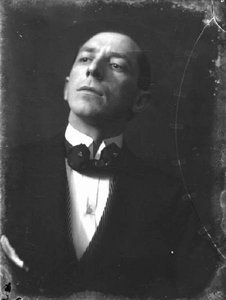
Umberto Boccioni
1882 - 1916 , Italien
Snabbfakta
- Artistic Movement Or Style: Futurism
- Artists Or Movements Influenced By This Artist:
- Konstruktivism
- Abstrckt expressionism
- Artists Who Influenced This Artist:
- Giacomo Balla
- Divisionism
- Date Of Birth: 1882-10-19
- Date Of Death: 1916-08-17
- Full Name: Umberto Boccioni
- Nationality: Italienare
- Notable Artworks:
- Dynamism mänsklig kropp
- Unika former av kontinuitet i rymden
- Staden stiger
- Place Of Birth: Reggio Calabria, Italien
Relaterade artiklar

Olja på duk: En tidlös teknik – Historik, process och konstnärliga möjligheter
Utforska oljemålningskonsten! Lär dig om flamländsk teknik, materialval och historisk utveckling. Expertguider för både nybörjare och erfarna konstnärer – bevara dina målningar med bästa praxis.

Umberto Boccioni: Dynamism, Futurist Ideals & the Evolution of Modern Sculpture
Explore the revolutionary art of Umberto Boccioni, a leading figure of Futurism. Discover his iconic sculptures & paintings, and delve into the movement's impact on modern art history with OriginalUniqueArt.

Olja på dukens bestående arv: Teknik, historia och samtida praktik
Utforska oljemåleriets rika historia och tekniker – från renässansens mästare till dagens konstnärer. Lär dig om material, metoder och konservering för att bevara konsten.

The Enduring Legacy of Oil on Canvas: Technique, History & Aesthetic Impact
Explore the rich history & techniques of oil painting – from Renaissance masters to Impressionism. Discover pigments, layering methods, and why this timeless medium endures. Expert insights for artists & art enthusiasts.
Speed, Power, and Motion: A Journey Through the Energetic Soul of Futurism
Explore the exhilarating energy of Futurism. From Italian dynamism to Russian Cubo-Futurism, journey through a masterclass in speed, power, and motion in art history with our expert cultural reflections.


