

 Förhandsvisa
 Skicka
 Dela
Dela
 Visa detaljer

 Ladda ner
 Liknande objekt
 Röntgen
 Bildspel
 Statistik
The Byam Family
 Oil On Canvas
- WallArt
- Romanticism
 1766
1766- Early Modern
 249.0 x 239.0 cm
 The Holburne Museum
 Visa mer
Giclée / Konsttryck
Giclée- eller canvasprint av museumskvalitet med snabb produktion och flexibla ytbehandlingsalternativ. ( Beställ handmålad reproduktion Byt till digital bild)




P118B $10

P118H $10

P118W $10

P438Z $10

P508JH $12

P508YH $12

P805H $10

P805Z $10

P919BZ $10

P919G $10

P919XJ $10

P959ZH $10

P968JZ $12

W106C $8

W218G $10

W218JH $8

W218Y $10

W307PJ $10

W316G $10

W316PJ $8

W316Y $10

W398PJ $8

W4111J $10

W500HY $15

W500JH $15

W692G $12

W849H $8

W940BG $15

W953PJ $8




Välj bland våra förinställda storlekar som motsvarar konstverkets ursprungliga proportioner.

Du kan ange egna mått för att passa en specifik ram eller yta. Om det valda måttet inte överensstämmer med originalbildens proportioner kommer vi antingen att beskära konstverket eller utöka bilden med en speglad eller enfärgad kant. En digital mockup skickas för ditt godkännande innan produktionen påbörjas.
Vänligen notera att förhandsvisningen på skärmen inte återspeglar den faktiska beskärningen eller utökningen. Endast mockuppen visar den slutgiltiga kompositionen korrekt.
Även om anpassade storlekar är möjliga, rekommenderar vi att du väljer ett mått från den fördefinierade listan för att bevara de ursprungliga proportionerna.
Leverans över hela världen () på 2 veckor istället för standard 4/5 veckor. (18 september)

Fri expressfrakt över hela världen

Högkvalitativ linnecanvas

Fullständig fraktförsäkring

Garantier för återbetalning av tullavgifter

Garantier för exakt färgåtergivning

100 dagars returrätt (endast vid defekter)

100% pengarna tillbaka-garanti

Mängdrabatt erbjuds
 Glasalternativet är endast tillgängligt i storlekar under 110 cm.

The Byam Family
Giclée / Konsttryck
Storlek på reproduktion
-


Slutgiltigt pris
$ 80
A Symphony of Status and Sentiment
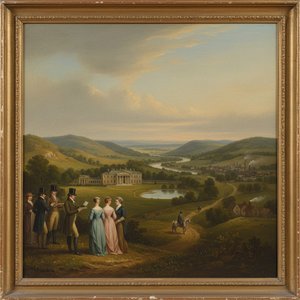
In the grand tradition of British portraiture, few works capture the delicate equilibrium between aristocratic prestige and intimate familial affection as masterfully as Thomas Gainsborough’s “The Byam Family.” Painted between 1762 and 1766, this monumental canvas serves as a breathtaking window into the heart of the Georgian era. At first glance, the viewer is struck by the sheer scale and presence of the composition, which presents George Byam III, his wife Louisa, and their daughter Selina not merely as subjects, but as icons of a stable and prosperous lineage. Gainsborough, a virtuoso of the brush, orchestrates a scene where the rugged textures of the English landscape meet the refined elegance of high society, creating an atmosphere that is simultaneously commanding and deeply moving.
The composition is anchored by a sense of profound stability. The figures are arranged with a central focus that draws the eye inward, toward the tender connection shared between parent and child. George Byam III stands as a pillar of authority on the left, his scarlet waistcoat and crimson sash acting as vibrant focal points that signal his social standing and vigor. In soft, poetic contrast, Louisa Byam occupies the right side of the frame, her pale blue silk gown radiating a serene grace that balances the bolder tones of her husband. Between them, young Selina embodies the very essence of innocence, her presence softening the formal grandeur of the portrait with a touch of youthful vulnerability.
Mastery of Light and Texture
To behold this work is to witness Gainsborough at the height of his technical prowess. The artist employs chiaroscuro with remarkable sophistication, utilizing dramatic shifts between light and shadow to sculpt the figures from their surroundings. This technique does more than provide depth; it breathes life into the very fabric of the painting. One can almost feel the weight of the heavy silks and the crispness of the linen through his meticulous brushwork. Gainsborough’s ability to render tonal gradations—the subtle transition of light across a cheekbone or the shimmering luster of a satin sleeve—demonstrates an unparalleled command over his medium.
Beyond the figures, the background serves as a textured, atmospheric stage. Reminiscent of the rolling Cotswolds hills, the landscape is rendered with a painterly freedom that hints at Gainsborough’s legendary skill in landscape painting. The interplay between the detailed, realistic rendering of the family and the more fluid, evocative treatment of the natural world creates a dynamic tension. For the discerning collector or interior designer, this duality makes the piece incredibly versatile; it possesses the formal dignity required for a stately study, yet its organic, earthy undertones allow it to integrate seamlessly into more contemporary, textured environments.
An Enduring Legacy for the Modern Collector
Historically, “The Byam Family” is much more than a family record; it is a visual manifesto of the Enlightenment. It reflects an era where portraiture was used to communicate social ideals, lineage, and the burgeoning ascendancy of the British landed gentry. The painting captures a moment in time when wealth was inextricably linked to land and legacy, yet it avoids the coldness often found in purely ceremonial works by infusing the scene with genuine warmth. There is an emotional resonance here—a sense of continuity and the enduring strength of the family unit—that transcends the eighteenth century.
For those seeking to adorn a space with art that inspires conversation and evokes a sense of history, a high-quality reproduction of this masterpiece offers an unparalleled opportunity. Whether placed in a grand hallway to command attention or in a quiet reading nook to provide a sense of classical calm, the painting brings with it the prestige of Gainsborough’s legacy. It is an investment in beauty, a tribute to the art of storytelling through paint, and a timeless addition to any curated collection of fine art.
Konstnärsbiografi
A Suffolk Beginning: The Early Life and Artistic Awakening
The story of Thomas Gainsborough, one of Britain’s most celebrated artists, unfolds not within the confines of a grand academy or bustling metropolis, but in the tranquil market town of Sudbury, Suffolk. Born in 1727, the youngest son of John Gainsborough, a weaver and wool merchant, young Thomas displayed an innate artistic sensibility from a remarkably early age. While his siblings pursued more conventional paths, Thomas’s world rapidly became consumed by drawing and painting – miniature self-portraits and delicate landscapes blossoming from his hand even before he reached ten years old. This precocious talent wasn't merely a childhood pastime; it was the burgeoning of a vision that would reshape British art. His father, recognizing this unique gift, encouraged its development, setting young Thomas on a path diverging sharply from the family trade. The Suffolk countryside itself became his first studio, imbuing his later works with a deep and abiding love for the natural world – a characteristic that would distinguish him throughout his career. This early immersion in landscape wasn’t simply about replicating what he saw; it was about *feeling* the essence of the English countryside, an emotional resonance that would permeate his canvases for decades to come.London and the Shaping of a Style: Influences and Early Commissions
In 1740, at the age of thirteen, Gainsborough journeyed to London, embarking on formal artistic training under Hubert Gravelot, a French engraver renowned for his elegant rococo style. This exposure proved pivotal, introducing him to refined techniques and fashionable aesthetics. However, it was his association with William Hogarth and the St Martin’s Lane Academy that truly began to mold his artistic identity. Initially influenced by Hogarth's narrative approach – often depicting moral tales through crowded scenes – Gainsborough soon charted his own course, developing a distinctive style characterized by its lightness of touch, fluid brushwork, and subtle color palettes. He absorbed lessons from various masters, including the Dutch landscape painters whose atmospheric effects he admired, yet resisted strict adherence to any single school, forging a path that blended observation with imagination. Returning to Sudbury after marrying Margaret Burr in 1746, Gainsborough established himself as a portraitist for the local gentry and mercantile classes. This period honed his skills in capturing likenesses and character, but it was during his subsequent move to Ipswich, and later Bath, that he began attracting a more sophisticated clientele – individuals who appreciated not just accurate representation, but also artistic flair and emotional depth.Bath and Beyond: Portraiture, Landscape, and Royal Patronage
The years spent in Bath (1759-1774) marked a significant turning point in Gainsborough’s career. The city was a hub of fashionable society, providing him with ample opportunities to paint portraits of the wealthy and influential. He quickly gained renown for his ability to capture not only physical resemblance but also the personality and social standing of his sitters. His portraits weren't merely depictions; they were statements about identity and status. He experimented with different lighting techniques and compositions, often incorporating elements of the surrounding landscape to create a sense of depth and atmosphere. However, even amidst the demands of portraiture, Gainsborough never abandoned his passion for landscape painting. In fact, he often seamlessly integrated landscapes into his portraits, creating compositions that celebrated both human subjects and the beauty of the natural world. This innovative approach – a hallmark of his style – set him apart from many of his contemporaries. The culmination of his success came with his move to London in 1774, where he established a studio on Pall Mall and became a founding member of the Royal Academy. He also secured royal patronage, becoming a favourite painter of King George III and Queen Charlotte, further solidifying his position as one of Britain’s leading artists. *Mrs. Thomas Gainsborough*, painted in 1785, exemplifies this period – an elegant portrait showcasing rococo style and muted tones.The Development of His Unique Style
Gainsborough's artistic journey was marked by a constant evolution. Initially influenced by the precision and detail of Dutch masters like Rembrandt, he gradually developed his own distinctive style, characterized by loose brushwork, atmospheric effects, and a subtle use of color. He rejected the rigid formality of earlier portraiture, opting for a more relaxed and intimate approach that captured the essence of his subjects rather than simply their outward appearance. His landscapes were equally innovative, eschewing the meticulous detail of topographical paintings in favor of evocative scenes that conveyed mood and atmosphere. He was particularly adept at capturing the fleeting effects of light and shadow, creating a sense of immediacy and spontaneity. Gainsborough’s ability to synthesize these diverse influences – from Dutch landscape painting to French rococo portraiture – resulted in a truly original style that would have a profound impact on subsequent generations of British artists.A Legacy of Innovation: Enduring Appeal and Influence
Thomas Gainsborough died in 1788, leaving behind a body of work that continues to captivate audiences today. His influence on subsequent generations of British artists is undeniable. He liberated portraiture from rigid formality, infusing it with spontaneity and emotional resonance. His loose brushwork and atmospheric effects paved the way for the Impressionists, while his lyrical landscapes inspired artists like John Constable, who deeply admired Gainsborough’s ability to capture the spirit of the English countryside. Gainsborough's legacy extends beyond technique; it lies in his profound understanding of human character and his unwavering commitment to artistic expression. He wasn’t simply a painter of portraits or landscapes; he was a storyteller, a poet of light and color, and a visionary who transformed British art. His paintings are a testament to the power of observation, imagination, and the enduring allure of the English landscape.
Thomas Gainsborough
1727 - 1788 , Storbritannien
Kortfakta
- Artistic Movement Or Style: Rococo, Porträtt
- Artists Or Movements Influenced By This Artist:
- Constable
- Impressionister
- Artists Who Influenced This Artist:
- Gravelot
- Hogarth
- Date Of Birth: 1727
- Date Of Death: 1788
- Full Name: Thomas Gainsborough
- Nationality: Brittisk
- Notable Artworks:
- Mrs. Gainsborough
- Mr & Mrs Andrews
- Place Of Birth: Sudbury, Storbritannien
Relaterade artiklar

Rokokons mästerverk: Topp 10 konstverk som definierade epoken | OriginalUniqueArt.com
Upptäck rokokons 10 mest ikoniska mästerverk! Lär känna Boucher, Watteau & andra stora konstnärer. Vackra målningar fyllda av pastellfärger och elegans. Hitta din favorit – utforska hela kollektionen online på OriginalUniqueArt.com.

Romantiska landskap: Topp 10 mästerverk som definierade en epok – OriginalUniqueArt.se
Utforska de 10 mest ikoniska mästerverken inom romantisk landskapsmålning! Lär känna Caspar David Friedrich, Turner & andra. Hitta inspiration och köp museumkvalitativa konsttryck på OriginalUniqueArt.com.
Thomas Barker of Bath: Landscape Painting & Societal Reflection in Early 19th-Century England
Explore the life & work of Thomas Barker of Bath, a key figure in 19th-century English Romanticism. Discover his Parisian success, iconic paintings like 'The Bride of Death', and lasting artistic legacy. Learn more at OriginalUniqueArt.

John Constables 25 Mästerverk: En Konstnärlig Resa i Det Engelska Landskapet | OriginalUniqueArt
Utforska John Constables 25 mest ikoniska målningar – romantikens mästare av det engelska landskapet. Upptäck historien, tekniken & skönheten i verk som 'Hay Wain'. Köp exklusiva konsttryck på OriginalUniqueArt.com.

Evocations of Place: A Historical Journey Through Landscape Art
Explore the rich history of landscape art with OriginalUniqueArt. Discover renowned artists, movements like Impressionism & Romanticism, and expert guidance for collecting timeless pieces. Find your perfect serene escape today!


