

 Visa i rummet
 Skicka
 Dela
Dela
 Detaljer
 Studentguide för konstverk

 Ladda ner
 Liknande objekt
 Röntgen
 Bildspel
 Besökstatistik
Sir Robert Clayton
 Oil On Canvas
- WallArt
- Romanticism
 1769
1769- Early Modern
 1010.0 x 1270.0 cm
 Walker Art Gallery
 Läs mer
Giclée / Konsttryck
Giclée- eller canvasprint av museumskvalitet med snabb produktion och flexibla ytbehandlingsalternativ. ( Köp handmålat konstverk Byt till digital bildförsäljning)




P118B Skr10

P118H Skr10

P118W Skr10

P438Z Skr10

P508JH Skr12

P508YH Skr12

P805H Skr10

P805Z Skr10

P919BZ Skr10

P919G Skr10

P919XJ Skr10

P959ZH Skr10

P968JZ Skr12

W106C Skr8

W218G Skr10

W218JH Skr8

W218Y Skr10

W307PJ Skr10

W316G Skr10

W316PJ Skr8

W316Y Skr10

W398PJ Skr8

W4111J Skr10

W500HY Skr15

W500JH Skr15

W692G Skr12

W849H Skr8

W940BG Skr15

W953PJ Skr8




Välj bland våra förinställda storlekar som motsvarar konstverkets ursprungliga proportioner.

Ange den bredd och höjd du behöver, för att passa din ram eller din vägg. Ett tryck kan endast beskäras, aldrig göras större än bilden, vilket innebär att ett format med en annan formform leder till att en del av bilden går förlorad. Vi skickar en digital mockup för godkännande innan vi trycker något. Bilden som visas på denna sida visar inte den faktiska beskärningen — det är endast mockuppen som gör det.
Leverans över hela världen () på 2 veckor istället för standard 4/5 veckor. (24 oktober)

Fri expressfrakt över hela världen

Högkvalitativ linnecanvas

Fullständig fraktförsäkring

Garantier för återbetalning av tullavgifter

Garantier för exakt färgåtergivning

100 dagars returrätt vid fabrikationsfel

100% pengarna tillbaka-garanti

Mängdrabatt erbjuds
 Glasalternativet är endast tillgängligt i storlekar under 110 cm.

Sir Robert Clayton
Giclée / Konsttryck
Reproduktionsstorlek
-


Totalpris
Skr 793
A Vision of Georgian Grandeur
To encounter Thomas Gainsborough’s “Sir Robert Clayton” is to step directly into the heart of the English Enlightenment, a period where aristocratic poise met a burgeoning fascination with the natural world. Completed in 1769, this masterful portrait serves as much more than a mere likeness of a prominent landowner; it is a profound meditation on status, character, and the quiet authority of the Georgian era. As the viewer’s eye meets the steady, composed gaze of Clayton, there is an immediate sense of encountering a man of substance. Gainsborough, at the height of his creative powers, does not simply paint a face, but rather constructs an aura of dignity that seems to radiate from the canvas itself.
The composition is a masterclass in balanced tension. Clayton stands with a posture that suggests both ease and command, positioned beside a heavy curtain that acts as a theatrical threshold between the intimate interior and the unseen world beyond. This subtle use of drapery—a hallmark of Gainsborough’s sophisticated approach—creates a sense of depth and mystery, inviting the observer to wonder about the landscape that lies just out of reach. The rich, crimson backdrop provides a striking warmth, a bold splash of color that symbolizes the prestige and political influence inherent in Clayton's social standing.
The Artistry of Light and Texture
Technically, the portrait is a triumph of chiaroscuro, the dramatic interplay of light and shadow that breathes life into the subject’s form. Gainsborough employs a delicate touch to sculpt the contours of Clayton’s face and the intricate folds of his attire. The dark suit, accented by the fine textures of a waistcoat and a meticulously rendered handkerchief, showcases the artist's ability to translate tactile reality onto a two-dimensional surface. His brushwork, though appearing fluid and effortless, is underpinned by a rigorous control that captures the subtle sheen of silk and the soft matte of wool with breathtaking precision.
Beyond the physical details, there is an emotional resonance found in the artist's light palette and easy strokes. While many of his contemporaries favored a more rigid, academic finish, Gainsborough infused his work with a rhythmic vitality. This movement is particularly evident in how the light catches the edges of the subject’s clothing and the subtle highlights on his skin, creating a sense of living, breathing presence. For the collector or interior designer, this piece offers a rare combination of formal elegance and organic warmth, making it an ideal centerpiece for spaces that demand both sophistication and a touch of historical soul.
A Timeless Legacy for the Modern Collector
For those seeking to infuse their surroundings with the spirit of British heritage, a high-quality reproduction of this work offers an unparalleled opportunity. The painting transcends its 18th-century origins, speaking to modern sensibilities through its themes of permanence and grace. It is a piece that does not merely decorate a wall but anchors a room, providing a conversation starter that bridges the gap between the historical past and the contemporary present.
Whether placed in a stately library, a refined dining room, or a curated gallery space, “Sir Robert Clayton” brings with it an atmosphere of intellectual curiosity and refined taste. It serves as a reminder of a time when art was used to capture the very essence of the human spirit, rendered through the lens of a master who understood that true beauty lies in the harmony between man and his environment.
Frågor och svar
Hur ljus är "Sir Robert Clayton" i sin helhet?
Sammantaget har "Sir Robert Clayton" registrerats som deep_shadow. Upplevd ljusstyrka beskriver hur ljust eller mörkt verket framstår.
Hur förhåller sig färgerna i "Sir Robert Clayton" till varandra?
Färgharmonin i "Sir Robert Clayton" beskrivs som Strong Color Unity.
Vilket stämningsläge och vilken känsla förenas i "Sir Robert Clayton"?
"Sir Robert Clayton" av Thomas Gainsborough förmedlar en Calm känsla inom en övergripande Elegant stämning.
Om konstnären
A Suffolk Beginning: The Early Life and Artistic Awakening
The story of Thomas Gainsborough, one of Britain’s most celebrated artists, unfolds not within the confines of a grand academy or bustling metropolis, but in the tranquil market town of Sudbury, Suffolk. Born in 1727, the youngest son of John Gainsborough, a weaver and wool merchant, young Thomas displayed an innate artistic sensibility from a remarkably early age. While his siblings pursued more conventional paths, Thomas’s world rapidly became consumed by drawing and painting – miniature self-portraits and delicate landscapes blossoming from his hand even before he reached ten years old. This precocious talent wasn't merely a childhood pastime; it was the burgeoning of a vision that would reshape British art. His father, recognizing this unique gift, encouraged its development, setting young Thomas on a path diverging sharply from the family trade. The Suffolk countryside itself became his first studio, imbuing his later works with a deep and abiding love for the natural world – a characteristic that would distinguish him throughout his career. This early immersion in landscape wasn’t simply about replicating what he saw; it was about *feeling* the essence of the English countryside, an emotional resonance that would permeate his canvases for decades to come.London and the Shaping of a Style: Influences and Early Commissions
In 1740, at the age of thirteen, Gainsborough journeyed to London, embarking on formal artistic training under Hubert Gravelot, a French engraver renowned for his elegant rococo style. This exposure proved pivotal, introducing him to refined techniques and fashionable aesthetics. However, it was his association with William Hogarth and the St Martin’s Lane Academy that truly began to mold his artistic identity. Initially influenced by Hogarth's narrative approach – often depicting moral tales through crowded scenes – Gainsborough soon charted his own course, developing a distinctive style characterized by its lightness of touch, fluid brushwork, and subtle color palettes. He absorbed lessons from various masters, including the Dutch landscape painters whose atmospheric effects he admired, yet resisted strict adherence to any single school, forging a path that blended observation with imagination. Returning to Sudbury after marrying Margaret Burr in 1746, Gainsborough established himself as a portraitist for the local gentry and mercantile classes. This period honed his skills in capturing likenesses and character, but it was during his subsequent move to Ipswich, and later Bath, that he began attracting a more sophisticated clientele – individuals who appreciated not just accurate representation, but also artistic flair and emotional depth.Bath and Beyond: Portraiture, Landscape, and Royal Patronage
The years spent in Bath (1759-1774) marked a significant turning point in Gainsborough’s career. The city was a hub of fashionable society, providing him with ample opportunities to paint portraits of the wealthy and influential. He quickly gained renown for his ability to capture not only physical resemblance but also the personality and social standing of his sitters. His portraits weren't merely depictions; they were statements about identity and status. He experimented with different lighting techniques and compositions, often incorporating elements of the surrounding landscape to create a sense of depth and atmosphere. However, even amidst the demands of portraiture, Gainsborough never abandoned his passion for landscape painting. In fact, he often seamlessly integrated landscapes into his portraits, creating compositions that celebrated both human subjects and the beauty of the natural world. This innovative approach – a hallmark of his style – set him apart from many of his contemporaries. The culmination of his success came with his move to London in 1774, where he established a studio on Pall Mall and became a founding member of the Royal Academy. He also secured royal patronage, becoming a favourite painter of King George III and Queen Charlotte, further solidifying his position as one of Britain’s leading artists. *Mrs. Thomas Gainsborough*, painted in 1785, exemplifies this period – an elegant portrait showcasing rococo style and muted tones.The Development of His Unique Style
Gainsborough's artistic journey was marked by a constant evolution. Initially influenced by the precision and detail of Dutch masters like Rembrandt, he gradually developed his own distinctive style, characterized by loose brushwork, atmospheric effects, and a subtle use of color. He rejected the rigid formality of earlier portraiture, opting for a more relaxed and intimate approach that captured the essence of his subjects rather than simply their outward appearance. His landscapes were equally innovative, eschewing the meticulous detail of topographical paintings in favor of evocative scenes that conveyed mood and atmosphere. He was particularly adept at capturing the fleeting effects of light and shadow, creating a sense of immediacy and spontaneity. Gainsborough’s ability to synthesize these diverse influences – from Dutch landscape painting to French rococo portraiture – resulted in a truly original style that would have a profound impact on subsequent generations of British artists.A Legacy of Innovation: Enduring Appeal and Influence
Thomas Gainsborough died in 1788, leaving behind a body of work that continues to captivate audiences today. His influence on subsequent generations of British artists is undeniable. He liberated portraiture from rigid formality, infusing it with spontaneity and emotional resonance. His loose brushwork and atmospheric effects paved the way for the Impressionists, while his lyrical landscapes inspired artists like John Constable, who deeply admired Gainsborough’s ability to capture the spirit of the English countryside. Gainsborough's legacy extends beyond technique; it lies in his profound understanding of human character and his unwavering commitment to artistic expression. He wasn’t simply a painter of portraits or landscapes; he was a storyteller, a poet of light and color, and a visionary who transformed British art. His paintings are a testament to the power of observation, imagination, and the enduring allure of the English landscape.
Thomas Gainsborough
1727 - 1788 , Storbritannien
Snabbfakta
- Artistic Movement Or Style: Rococo, Porträtt
- Artists Or Movements Influenced By This Artist:
- Constable
- Impressionister
- Artists Who Influenced This Artist:
- Gravelot
- Hogarth
- Date Of Birth: 1727
- Date Of Death: 1788
- Full Name: Thomas Gainsborough
- Nationality: Brittisk
- Notable Artworks:
- Mrs. Gainsborough
- Mr & Mrs Andrews
- Place Of Birth: Sudbury, Storbritannien
Relaterade artiklar

The Enduring Legacy of Oil on Canvas: Technique, History & Aesthetic Impact
Explore the rich history & techniques of oil painting – from Renaissance masters to Impressionism. Discover pigments, layering methods, and why this timeless medium endures. Expert insights for artists & art enthusiasts.
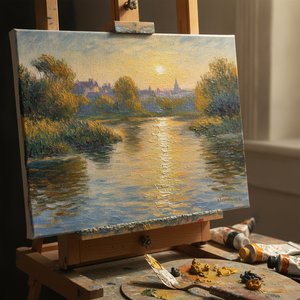
The Soul of Impressionism: Why Oil on Canvas Captures Eternal Light and Timeless Emotion
Discover the enchanting alchemy of Impressionism. Explore how the mastery of oil on canvas, through glazing and impasto, captures eternal light and emotion. Perfect for lovers of Monet and Van Gogh seeking the profound depth of hand-painted fine art.

Olja på duk: En tidlös teknik – Historik, process och konstnärliga möjligheter
Utforska oljemålningskonsten! Lär dig om flamländsk teknik, materialval och historisk utveckling. Expertguider för både nybörjare och erfarna konstnärer – bevara dina målningar med bästa praxis.
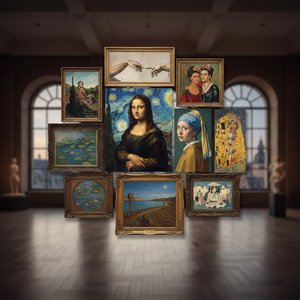
Topp 10 ikoniska oljemålningar som förändrade konsthistorien – OriginalUniqueArt.com
Utforska de 10 mest ikoniska oljemålningarna som revolutionerade konsthistorien! Lär känna Monet, Van Gogh och Da Vinci. Hitta inspiration & köp museumkvalitativa reproduktioner på OriginalUniqueArt.com – för en tidlös inredning.

Olja på dukens bestående arv: Teknik, historia och samtida praktik
Utforska oljemåleriets rika historia och tekniker – från renässansens mästare till dagens konstnärer. Lär dig om material, metoder och konservering för att bevara konsten.


