

 Förhandsvisa
 Skicka
 Dela
Dela
 Visa detaljer
 Guide
Guide

 Ladda ner
 Liknande objekt
 Röntgen
 Bildspel
 Q&A
Q&A Statistik
Landscape
 Oil On Canvas
- WallArt
- Baroque
 1747
1747- Early Modern
 29.0 x 33.0 cm
 Museum of Gloucester
 Visa mer
Giclée / Konsttryck
Giclée- eller canvasprint av museumskvalitet med snabb produktion och flexibla ytbehandlingsalternativ. ( Beställ handmålad reproduktion Byt till digital bild)




P118B Skr10

P118H Skr10

P118W Skr10

P438Z Skr10

P508JH Skr12

P508YH Skr12

P805H Skr10

P805Z Skr10

P919BZ Skr10

P919G Skr10

P919XJ Skr10

P959ZH Skr10

P968JZ Skr12

W106C Skr8

W218G Skr10

W218JH Skr8

W218Y Skr10

W307PJ Skr10

W316G Skr10

W316PJ Skr8

W316Y Skr10

W398PJ Skr8

W4111J Skr10

W500HY Skr15

W500JH Skr15

W692G Skr12

W849H Skr8

W940BG Skr15

W953PJ Skr8




Välj bland våra förinställda storlekar som motsvarar konstverkets ursprungliga proportioner.

Ange den bredd och höjd du behöver för att passa din ram eller vägg. Ett tryck kan endast beskäras, aldrig göras större än originalbilden, vilket innebär att ett format med en annan proportion leder till att en del av bilden går förlorad. Vi skickar en digital mockup för godkännande innan vi påbörjar tryckningen. Bilden som visas på denna sida visar inte den faktiska beskärningen — det är endast mockuppen som gör det.
Leverans över hela världen () på 2 veckor istället för standard 4/5 veckor. (31 oktober)

Fri expressfrakt över hela världen

Högkvalitativ linnecanvas

Fullständig fraktförsäkring

Garantier för återbetalning av tullavgifter

Garantier för exakt färgåtergivning

100 dagars returrätt (endast vid fel)

100% pengarna tillbaka-garanti

Mängdrabatt erbjuds
 Glasalternativet är endast tillgängligt i storlekar under 110 cm.

Landscape
Giclée / Konsttryck
Storlek på reproduktion
-


Slutgiltigt pris
Skr 804
A Vision of Rural Tranquility: The Early Mastery of Thomas Gainsborough
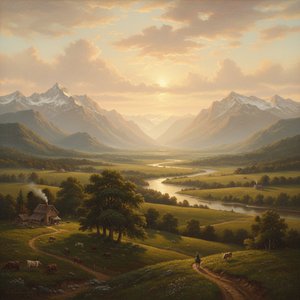
In the quiet, rolling landscapes of the Suffolk countryside, a profound artistic journey began. Long before he became a titan of the Georgian era, a young Thomas Gainsborough was already translating the textures of his world onto canvas. His early work, such as the evocative Landscape with Sandpit, serves as a breathtaking window into the genesis of a master. Painted around 1746-1747, this piece captures a moment of serene coastal beauty, where the soft, autumnal glow of an evening sky meets the rugged, tactile reality of the dunes. It is not merely a depiction of scenery; it is an invitation to step into a world where time seems to slow, and the boundaries between the observer and the natural world begin to dissolve.
The composition is a masterclass in balance and atmospheric depth. At its heart, a solitary figure—perhaps a reflection of the artist himself—rests peacefully beneath the protective shade of a tree, nestled near a prominent sandpit. This placement creates a poignant focal point that anchors the viewer's gaze amidst the sweeping elements of the landscape. Above, a sky filled with soft, drifting clouds adds a layer of movement and drama, while the distant flight of two birds introduces a sense of life and freedom to the stillness. For the discerning collector or interior designer, this painting offers a perfect equilibrium of weight and lightness, making it an ideal centerpiece for spaces that demand both presence and peace.
Technique and the Language of Light
Gainsborough’s technical prowess is evident in his sophisticated use of atmospheric perspective, a technique he refined by studying the great Dutch masters. Through subtle gradations of color and delicate tonal variations, he creates an illusion of immense depth, pulling the viewer's eye from the immediate textures of the foreground sand and foliage toward the hazy, infinite horizon. His brushwork is both meticulous and expressive; one can almost feel the grit of the sand and the rustle of the leaves through his masterful application of oil on canvas.
The palette is a sophisticated arrangement of earthy browns, muted greens, and the warm, golden hues of twilight. This restrained color scheme does not overwhelm the senses but rather fosters an atmosphere of quiet contemplation. For those looking to enhance a room with art, this piece provides a neutral yet emotionally resonant foundation, capable of complementing both classical and contemporary decor through its timeless aesthetic and organic warmth.
Symbolism and the Romantic Spirit
Beyond its surface beauty, the painting vibrates with symbolic significance. The solitary figure serves as a powerful emblem of introspection and the human connection to the earth—themes that would later become central to the burgeoning Romantic movement. This sense of communion with nature suggests a deeper, spiritual resonance, where the landscape is not just a backdrop but a living, breathing entity capable of reflecting the human soul.
To possess a reproduction of such a work is to bring more than just decoration into a home; it is to invite a legacy of British artistic heritage. Whether placed in a sunlit library or a sophisticated study, this landscape acts as a window to a lost era of pastoral grace, offering a perennial sense of calm and an enduring connection to the sublime beauty of the natural world.
Frågor och svar
Hur kan jag få en digital fil av "Landscape" av Thomas Gainsborough?
En digital bild av "Landscape" av Thomas Gainsborough kan köpas på dess sida för Digital bild i hög upplösning: en högupplöst digital bildnedladdning.
Förvaras "Landscape" i sin konstnärs hemland?
Nej – konstverket förvaras utomlands. "Landscape" finns i United Kingdom, medan Thomas Gainsborough föddes i Storbritannien.
Hur harmoniska är färgerna i "Landscape" av Thomas Gainsborough?
"Landscape" av Thomas Gainsborough uppvisar en Strong Color Unity färgharmoni.
Konstnärsbiografi
A Suffolk Beginning: The Early Life and Artistic Awakening
The story of Thomas Gainsborough, one of Britain’s most celebrated artists, unfolds not within the confines of a grand academy or bustling metropolis, but in the tranquil market town of Sudbury, Suffolk. Born in 1727, the youngest son of John Gainsborough, a weaver and wool merchant, young Thomas displayed an innate artistic sensibility from a remarkably early age. While his siblings pursued more conventional paths, Thomas’s world rapidly became consumed by drawing and painting – miniature self-portraits and delicate landscapes blossoming from his hand even before he reached ten years old. This precocious talent wasn't merely a childhood pastime; it was the burgeoning of a vision that would reshape British art. His father, recognizing this unique gift, encouraged its development, setting young Thomas on a path diverging sharply from the family trade. The Suffolk countryside itself became his first studio, imbuing his later works with a deep and abiding love for the natural world – a characteristic that would distinguish him throughout his career. This early immersion in landscape wasn’t simply about replicating what he saw; it was about *feeling* the essence of the English countryside, an emotional resonance that would permeate his canvases for decades to come.London and the Shaping of a Style: Influences and Early Commissions
In 1740, at the age of thirteen, Gainsborough journeyed to London, embarking on formal artistic training under Hubert Gravelot, a French engraver renowned for his elegant rococo style. This exposure proved pivotal, introducing him to refined techniques and fashionable aesthetics. However, it was his association with William Hogarth and the St Martin’s Lane Academy that truly began to mold his artistic identity. Initially influenced by Hogarth's narrative approach – often depicting moral tales through crowded scenes – Gainsborough soon charted his own course, developing a distinctive style characterized by its lightness of touch, fluid brushwork, and subtle color palettes. He absorbed lessons from various masters, including the Dutch landscape painters whose atmospheric effects he admired, yet resisted strict adherence to any single school, forging a path that blended observation with imagination. Returning to Sudbury after marrying Margaret Burr in 1746, Gainsborough established himself as a portraitist for the local gentry and mercantile classes. This period honed his skills in capturing likenesses and character, but it was during his subsequent move to Ipswich, and later Bath, that he began attracting a more sophisticated clientele – individuals who appreciated not just accurate representation, but also artistic flair and emotional depth.Bath and Beyond: Portraiture, Landscape, and Royal Patronage
The years spent in Bath (1759-1774) marked a significant turning point in Gainsborough’s career. The city was a hub of fashionable society, providing him with ample opportunities to paint portraits of the wealthy and influential. He quickly gained renown for his ability to capture not only physical resemblance but also the personality and social standing of his sitters. His portraits weren't merely depictions; they were statements about identity and status. He experimented with different lighting techniques and compositions, often incorporating elements of the surrounding landscape to create a sense of depth and atmosphere. However, even amidst the demands of portraiture, Gainsborough never abandoned his passion for landscape painting. In fact, he often seamlessly integrated landscapes into his portraits, creating compositions that celebrated both human subjects and the beauty of the natural world. This innovative approach – a hallmark of his style – set him apart from many of his contemporaries. The culmination of his success came with his move to London in 1774, where he established a studio on Pall Mall and became a founding member of the Royal Academy. He also secured royal patronage, becoming a favourite painter of King George III and Queen Charlotte, further solidifying his position as one of Britain’s leading artists. *Mrs. Thomas Gainsborough*, painted in 1785, exemplifies this period – an elegant portrait showcasing rococo style and muted tones.The Development of His Unique Style
Gainsborough's artistic journey was marked by a constant evolution. Initially influenced by the precision and detail of Dutch masters like Rembrandt, he gradually developed his own distinctive style, characterized by loose brushwork, atmospheric effects, and a subtle use of color. He rejected the rigid formality of earlier portraiture, opting for a more relaxed and intimate approach that captured the essence of his subjects rather than simply their outward appearance. His landscapes were equally innovative, eschewing the meticulous detail of topographical paintings in favor of evocative scenes that conveyed mood and atmosphere. He was particularly adept at capturing the fleeting effects of light and shadow, creating a sense of immediacy and spontaneity. Gainsborough’s ability to synthesize these diverse influences – from Dutch landscape painting to French rococo portraiture – resulted in a truly original style that would have a profound impact on subsequent generations of British artists.A Legacy of Innovation: Enduring Appeal and Influence
Thomas Gainsborough died in 1788, leaving behind a body of work that continues to captivate audiences today. His influence on subsequent generations of British artists is undeniable. He liberated portraiture from rigid formality, infusing it with spontaneity and emotional resonance. His loose brushwork and atmospheric effects paved the way for the Impressionists, while his lyrical landscapes inspired artists like John Constable, who deeply admired Gainsborough’s ability to capture the spirit of the English countryside. Gainsborough's legacy extends beyond technique; it lies in his profound understanding of human character and his unwavering commitment to artistic expression. He wasn’t simply a painter of portraits or landscapes; he was a storyteller, a poet of light and color, and a visionary who transformed British art. His paintings are a testament to the power of observation, imagination, and the enduring allure of the English landscape.
Thomas Gainsborough
1727 - 1788 , Storbritannien
Kortfakta
- Artistic Movement Or Style: Rococo, Porträtt
- Artists Or Movements Influenced By This Artist:
- Constable
- Impressionister
- Artists Who Influenced This Artist:
- Gravelot
- Hogarth
- Date Of Birth: 1727
- Date Of Death: 1788
- Full Name: Thomas Gainsborough
- Nationality: Brittisk
- Notable Artworks:
- Mrs. Gainsborough
- Mr & Mrs Andrews
- Place Of Birth: Sudbury, Storbritannien
Relaterade artiklar
Thomas Hill: Luminosity, Landscape & the American Pastoral Ideal
Explore the luminous landscapes of Thomas Hill, a pivotal figure in the Hudson River School & Luminism movements. Discover his artistic journey, philosophical depth, and enduring legacy with OriginalUniqueArt.

Evocations of Place: A Historical Journey Through Landscape Art
Explore the rich history of landscape art with OriginalUniqueArt. Discover renowned artists, movements like Impressionism & Romanticism, and expert guidance for collecting timeless pieces. Find your perfect serene escape today!

Rokokons mästerverk: Topp 10 konstverk som definierade epoken | OriginalUniqueArt.com
Upptäck rokokons 10 mest ikoniska mästerverk! Lär känna Boucher, Watteau & andra stora konstnärer. Vackra målningar fyllda av pastellfärger och elegans. Hitta din favorit – utforska hela kollektionen online på OriginalUniqueArt.com.

John Constables 25 Mästerverk: En Konstnärlig Resa i Det Engelska Landskapet | OriginalUniqueArt
Utforska John Constables 25 mest ikoniska målningar – romantikens mästare av det engelska landskapet. Upptäck historien, tekniken & skönheten i verk som 'Hay Wain'. Köp exklusiva konsttryck på OriginalUniqueArt.com.

Romantiska landskap: Topp 10 mästerverk som definierade en epok – OriginalUniqueArt.se
Utforska de 10 mest ikoniska mästerverken inom romantisk landskapsmålning! Lär känna Caspar David Friedrich, Turner & andra. Hitta inspiration och köp museumkvalitativa konsttryck på OriginalUniqueArt.com.


