Contemporary Realism · 1874
Forgiven (Thomas Faed, 1874)
Thomas Faed (1826–1900) skapade Forgiven. Den är från 1874. Det tillhör Contemporary Realism-rörelsen. Den är utförd i Oil On Canvas. Verket finns bevarat på Guildhall Art Gallery i London, Storbritannien. Måtten är 36 × 48 cm.
- 1874
- Oil On Canvas
- 36 × 48 cm
- Guildhall Art Gallery, London

 Förhandsvisa

 Handmålad oljemålning
 Skicka
 Dela
 Faktablad för elever


 Ladda ner
 Liknande objekt
 Röntgen
 Bildspel
 Frågor och svar

 Statistik
Forgiven i korthet
- Titel
- Forgiven
- Konstnär
- Thomas Faed (1826–1900)
- Konstnär född i
- Gatehouse of Fleet, Storbritannien
- Datum
- 1874
- Material
- Oil On Canvas
- Mått
- 36 × 48 cm
- Utställningsplats
- Guildhall Art Gallery, London, Storbritannien
- Rörelse
- Contemporary Realism
- Tidsperiod
- 19th Century
- Motiv
- family portrait, domestic scene, victorian era, warmth, rural life, intimate moment
Vad föreställer Forgiven?
Identification of Forgiven by Thomas Faed
In this intimate oil on canvas, titled Forgiven, the Scottish artist Thomas Faed explores the quietude of domestic life. Created in 1874, the work offers a glimpse into the sentimental realism that defined much of Faed's career. The piece is modest in scale, measuring 36 x 48 cm, which encourages a close, personal encounter with the figures depicted.
Faed, born in 1826 in Gatehouse of Fleet, United Kingdom, possessed a particular sensitivity to the textures of everyday existence. Through Forgiven, he captures a specific moment of familial connection, utilizing the medium of oil to build a sense of warmth within a humble setting. The work remains a significant example of his ability to translate human emotion into a visual narrative.
The Composition and Visual Elements
The scene unfolds within a dimly lit, rustic interior, capturing a quiet moment of domesticity. At the center of the composition, a family group is gathered around a table, consisting of an older man, a woman, and a young child. The arrangement feels somewhat cluttered, with various objects scattered throughout the space to suggest a lived-in, humble setting. This density of detail creates a sense of immediacy, as if we have stumbled upon a private, unposed instance of daily life.
Lighting is used with great subtlety here. The primary source of illumination emanates from a fireplace located on the left side of the frame, casting soft light across the figures and creating deep shadows that provide a sense of volume. This interplay of light and shadow allows for a clear sense of depth, achieved through the careful layering of the figures and the surrounding furniture. The atmosphere remains somber and quiet, grounded by a color palette dominated by muted greens, browns, and grays.
Technique and Style
The work is executed in oil on canvas, utilizing a painterly technique that prioritizes the immediate sensation of the scene. You can see the visible brushstrokes throughout the composition, which lend a sense of immediacy to the domestic setting. The lines are predominantly organic and slightly loose, avoiding the rigid precision of more academic works. This approach allows the forms to settle into the space with a natural, unforced quality.
The lighting is subdued, emanating from a fireplace to the side, which has a profound effect on how the shapes are perceived. Because of this soft illumination, the edges of the figures and objects lack sharpness; instead, they appear somewhat softened, blending gently into the shadows. This creates a palpable sense of volume and depth within the rustic interior. You can feel the tactile nature of the environment through the way the paint is applied to the rough wooden surfaces and the heavy folds of the fabric.
Where to See This Work Today
You may find this work at the Guildhall Art Gallery in London, United Kingdom. It is part of the collection held by the City of London, England. The gallery is situated within the Moorgate area, offering a quiet space to observe the nuances of Faed's brushwork.
The museum itself is housed in a stone building designed in a semi-Gothic style. It provides a dignified setting for such intimate domestic scenes. If you find yourself in the city, the architecture of the gallery complements the historical weight of the pieces within its walls.
Related Works by Thomas Faed
To understand the breadth of Faed's output, one might look toward his earlier compositions, such as His Only Pair, which dates from about 1860. This period of his career also produced Listeners Ne'er Hear Any Good Of Themselves, a work that reflects his interest in the nuances of human interaction. His ability to handle narrative was further demonstrated in The Last of the Clan, completed in 1865. These pieces offer a glimpse into the development of his specific approach to genre painting and the quietude of domestic life.
Several of his most significant paintings are held in permanent collections, allowing for a deeper study of his technical skill. The Silken Gown is part of the collection at the Tate Gallery. In the Aberdeen Art Gallery, one can find both Highland Mary and The Reaper. These works, alongside celebrated pieces like The Motherless Bairn and Scott and His Literary Friends at Abbotsford, illustrate the range of his subject matter, from intimate studies to more expansive, literary-inspired scenes.
Vilket museum har Forgiven?
Guildhall Art Gallery
London, Storbritannien
En väv av tid: Där viktoriansk prakt möter romerska ekon I det bultande hjärtat av Londons historiska City-distrikt erbjuder Guildhall Art Gallery mycket mer än bara en visning av dukar; det utgör en djupgående sensorisk resa genom mänsklig civilisations lager. Att kliva in är att träda in i ett rum där den viktorianska erans förfinade elegans andas sida vid sida med de råa och bestående stenarna från det romerska Britannien. Denna unika institution uppnår en sällsynt bedrift inom museivärlden genom att sömlöst väva samman nittonde århundradets mästares delikata penseldrag med de påtagliga, underjordiska ekona av ett antikt imperium.

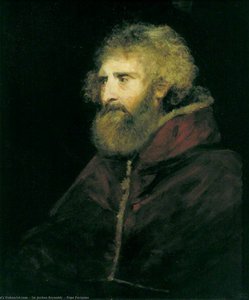

Högupplösta bilder av Forgiven
Allmän egendom: konstnären avled 1900.
Thomas Faed, Forgiven (1874), Guildhall Art Gallery. Allmän egendom
Frågor om Forgiven besvarade
Var kan jag se originalet av "Forgiven" av Thomas Faed?
Originalet av "Forgiven" finns att se på Guildhall Art Gallery, London, Storbritannien.
När skapades "Forgiven"?
"Forgiven" av Thomas Faed skapades år 1874.
Vilket medium är "Forgiven" av Thomas Faed utförd i?
Thomas Faed använde tekniken Oil On Canvas för "Forgiven". Tekniken definierar det ursprungliga verkets materiella karaktär.
Vilka är de faktiska måtten på "Forgiven" av Thomas Faed?
Originalet av "Forgiven" av Thomas Faed mäter 36 x 48 cm.
Vad föreställer "Forgiven"?
Teman som återfinns i "Forgiven" av Thomas Faed inkluderar family portrait, domestic scene, victorian era, warmth, rural life, intimate moment, family bonds, soft lighting. Tillsammans sammanfattar de verkets motiv.
Är "Forgiven" fri från upphovsrätt?
"Forgiven" av Thomas Faed är allmän egendom – upphovsrätten har löpt ut. Denna status avgör hur bilden av verket får återges.
Vem har skapat "Forgiven"?
"Forgiven" tillskrivs Thomas Faed.
Vilken konstnärlig inriktning tillhör "Forgiven" av Thomas Faed?
"Forgiven" av Thomas Faed tillhör Contemporary Realism-rörelsen. Denna rörelse ger det stilistiska sammanhanget för verket.
Var i Thomas Faeds karriär placerar sig "Forgiven"?
"Forgiven" representerar Thomas Faeds Mature Period.
Om konstnären, Thomas Faed

1826–1900, Storbritannien
Thomas Faed
Ett arv av skotsk sentimentalitet Thomas Faed intar en unik plats i den skotska konsthistorien, och beskrivs ofta med den djupa vördnad man kan känna inför Robert Burns inflytande på den skotska visan. Född i Kirkcudbrightshire vid Barlay Mill, var Faed en del av en anmärkningsvärd familj av kreatörer; hans bröder James och John, tillsammans med hans syster Susan, delade alla denna djupa konstnärliga kallelse. Hans tidiga liv var rotat i Galloways karga men vackra landskap, en miljö som utan tvivel gav näring åt den värme och hemtrevnad som återfinns i hans mest älskade verk. Efter att ha genomgått sin formella konstutbildning vid designskolan i Edinburgh påbörjade han en resa som skulle föra honom från Skottlands hjärta till de prestigefyllda ateljéerna i London.
Andra verk av Thomas Faed
 Worn Out
 Highland Mary1857
 Faults on Both Sides1861
 The Doctor's Visit1889
Essäer om Forgiven
 The Timeless Beauty of Oil on Canvas: A Masterclass in Texture, Impasto, and Artistic MasteryDiscover the profound allure of oil on canvas. Explore the mastery of impasto textures, the science of pigment longevity, and expert guides…
 Masterpieces of Quinten Metsys: The Top 25 Essential ArtworksExplore 25 iconic works by Quinten Metsys, the master of the Antwerp School. Discover his Flemish Renaissance gems on OriginalUniqueArt.com.
 Masterpieces of Realism: The Top 25 Artworks by Thomas EakinsExplore the top 25 masterpieces of American Realism by Thomas Eakins. Discover his iconic works and find curated art on OriginalUniqueArt.c…