
 Förhandsvisa
 Skicka
 Dela
Dela
 Visa detaljer
 Guide
Guide

 Ladda ner
 Liknande objekt
 Röntgen
 Bildspel
 Q&A
Q&A Statistik
Ryttare utan häst

- 45.0 x 60.0 cm


 Visa mer
Giclée / Konsttryck
Giclée- eller canvasprint av museumskvalitet med snabb produktion och flexibla ytbehandlingsalternativ. ( Beställ handmålad reproduktion Byt till digital bild)




P118B Skr10

P118H Skr10

P118W Skr10

P438Z Skr10

P508JH Skr12

P508YH Skr12

P805H Skr10

P805Z Skr10

P919BZ Skr10

P919G Skr10

P919XJ Skr10

P959ZH Skr10

P968JZ Skr12

W106C Skr8

W218G Skr10

W218JH Skr8

W218Y Skr10

W307PJ Skr10

W316G Skr10

W316PJ Skr8

W316Y Skr10

W398PJ Skr8

W4111J Skr10

W500HY Skr15

W500JH Skr15

W692G Skr12

W849H Skr8

W940BG Skr15

W953PJ Skr8




Välj bland våra förinställda storlekar som motsvarar konstverkets ursprungliga proportioner.

Ange den bredd och höjd du behöver för att passa din ram eller vägg. Ett tryck kan endast beskäras, aldrig göras större än originalbilden, vilket innebär att ett format med en annan proportion leder till att en del av bilden går förlorad. Vi skickar en digital mockup för godkännande innan vi påbörjar tryckningen. Bilden som visas på denna sida visar inte den faktiska beskärningen — det är endast mockuppen som gör det.
Leverans över hela världen () på 2 veckor istället för standard 4/5 veckor. (1 november)

Fri expressfrakt över hela världen

Högkvalitativ linnecanvas

Fullständig fraktförsäkring

Garantier för återbetalning av tullavgifter

Garantier för exakt färgåtergivning

100 dagars returrätt (endast vid fel)

100% pengarna tillbaka-garanti

Mängdrabatt erbjuds
 Glasalternativet är endast tillgängligt i storlekar under 110 cm.

Ryttare utan häst
Giclée / Konsttryck
Storlek på reproduktion
-


Slutgiltigt pris
Skr 804
Jean-Louis André Théodore Géricault och Ryttare utan Häst
Ryttare utan Häst är ett mästerverk av den franska romantikern Jean-Louis André Théodore Géricault, skapat 1817. Detta imponerande konstverk fångar en dynamisk scen från Romerska Karnevalen där ett antal personer färdas på hästar i tävling eller konkurrens. Bildens komposition är komplex och dramatisk, vilket återspeglar Géricaults förmåga att skapa verk som väcker känslor och engagerar tittaren. Detta arbete är särskilt känt för sitt användande av teknik och dess historiska betydelse inom konsthistorien.- Bildens beskrivning: Bilden visar en grupp människor som rider hästar i vad som verkar vara ett lopp eller tävling. Flera hästar syns i scenen, vissa placerade närmare framförgrunden och andra längre bakom. Ryttarna på dessa hästar är engagerade i olika steg av rörelse vilket skapar en spännande atmosfär. Förutom huvudgruppen av människor som rider häst finns det också en man vid mitten av målningen som verkar observera händelsen. Dessutom förekommer två hundar i scenen, en placerad till vänster sida och en på höger sida av bilden. Bildens övergripande komposition antyder att den fångar ett spännande ögonblick under detta hästlopp eller tävling.
- Storlek: Verkets mått är 45 x 60 cm vilket ger en imponerande skala och möjliggör för detaljerade reproduktioner av hög kvalitet.
- Årtal: Målningen skapades år 1817, vilket placerar den mitt i Romantikens blomstringstid och dess fokus på känslor och dramatik.
Konstnärlig Stil och Teknik
Géricaults stil är starkt präglad av romantiken, där fokus ligger på att förmedla känslor och skapa ett känsla av rörelse och dynamik. Han använde sig av teknik som var innovativ för sin tid och hämtade inspiration från både klassisk konst och samtida observationer. Verkets färger är djupa och intensiva, vilket förstärker den dramatiska atmosfären och fångar ljuset på ett sätt som är karakteristiskt för romantiken. Géricaults användning av perspektiv och komposition bidrar till att skapa en känsla av realism och engagemang hos tittaren.- Romantisk Inspirationskälla: Géricault hämtade inspiration från Rubens och Michelangelo, vilket märks i verkets struktur och användning av ljus och skugga.
- Färgpalett: Verkets färgpalett är rik och komplex och använder djupa toner för att skapa en dramatisk effekt.
Historiskt Kontext och Symbolism
Ryttare utan Häst skapades under Romerska Karnevalen, vilket var ett stort offentligt evenemang där hästar tävlade i lopp. Detta arbete är inte bara en teknisk prestation utan också ett kulturellt dokument som återspeglar samhällets intressen och värderingar vid tiden. Bildens symboliska betydelse ligger i dess representation av mänsklig kamp och triumf över naturkrafterna, vilket är teman som återkommer genom hela romantiken.- Romerska Karnevalen: Karnevalen var ett viktigt kulturellt evenemang där hästar tävlade i lopp och detta arbete fångar denna atmosfär perfekt.
- Symbolik: Ryttare utan Häst är laddad med symbolisk betydelse och förmedlar teman om styrka, rörelse och mänsklig ambition.
Emotionell Impact och Reproduktion
Ryttare utan Häst har haft ett stort emotionellt genomslag hos publiken genom sina dramatiska färger och komposition. Detta mästerverk är perfekt för att skapa högkvalitativa reproduktioner som kan inspirera och engagera människor över hela världen. En väl gjord reproduktion kommer att låta tittaren uppleva konstverkets kraft och skönhet på ett sätt som är nära originalet.Frågor och svar
Varifrån kommer besökarna till "Ryttare utan häst" av Théodore Géricault?
Sidan Besöksstatistik för "Ryttare utan häst" av Théodore Géricault presenterar statistik över publika besök: månatliga besök för detta konstverk, en jämförelse med konstnärens mest sedda verk samt varifrån besökarna kommer.
Vilken emotionell ton förmedlar Romantic Painting-stilen i "Ryttare utan häst"?
"Ryttare utan häst" förmedlar en Dramatisk emotionell ton inom Romantic Painting-rörelsen.
Hur hög är kontrasten i "Ryttare utan häst" av Théodore Géricault?
Ljus-mörker-kontrasten i "Ryttare utan häst" är registrerad som Balanserad. Kontrast beskriver hur starkt ljusa och mörka partier skiljer sig åt.
Konstnärsbiografi
A Life Forged in Romantic Fire
Jean-Louis André Théodore Géricault, a name that echoes through the annals of French art history, was born into a world poised on the cusp of dramatic transformation. Emerging from Rouen in 1791, his early years unfolded amidst the reverberations of revolution and the burgeoning ambitions of Napoleon’s reign. Though inheriting a comfortable existence through his family's legal and business endeavors – including a thriving tobacco enterprise – Géricault’s destiny wasn’t one of law or commerce, but rather within the vibrant realm of artistic expression. His initial training under Claude Joseph Vernet, a master of English sporting art, instilled in him a keen eye for anatomy and movement, particularly evident in his depictions of powerful horses. However, this foundational education soon led him to seek deeper knowledge independently, immersing himself within the hallowed halls of the Louvre, where he embarked on a profound dialogue with the masters of the past.The Louvre as Academy: A Dialogue with Masters
From 1810 to 1815, the Louvre became Géricault’s true academy – not merely a place for observation, but a crucible for artistic development. He didn't simply copy the works of Rubens, Titian, Velázquez, and Rembrandt; he engaged in a complex dialogue with their philosophies, absorbing their techniques and striving to understand the very essence of their art. This period was pivotal in shaping his distinctive style, characterized by dramatic chiaroscuro – the intense contrast between light and shadow – dynamic compositions that seemed to vibrate with energy, and an overwhelming emotionality that set him apart from his contemporaries. He wasn’t simply replicating; he was internalizing, distilling the core principles of these masters into a uniquely personal vision. His early works, such as *The Charging Chasseur* (1812), already hinted at this emerging sensibility, showcasing a boldness of execution and a fascination with movement that recalled Rubens's energetic canvases. He continued to explore equestrian themes, honing his skills in capturing the power and grace of horses – a subject that would remain a recurring motif throughout his career, reflecting both an artistic passion and a personal connection to the animal world.The Raft of the Medusa: A Monument to Human Suffering
Géricault’s name is inextricably linked with *The Raft of the Medusa* (1818-1819), a monumental canvas that transcends mere historical depiction and becomes a searing indictment of human fallibility and societal injustice. Inspired by the harrowing true story of the shipwreck of the French frigate Méduse in 1816, where negligence and incompetence led to unimaginable suffering for its passengers, the painting is a visceral portrayal of desperation, hope, and despair. Géricault undertook meticulous research – interviewing survivors, studying corpses at hospitals, and even constructing a scale model of the raft itself – to ensure accuracy and, crucially, to imbue his work with an overwhelming sense of realism and emotional truth. The resulting masterpiece isn’t simply a depiction of tragedy; it's an immersive experience that confronts viewers with the raw reality of human suffering. The composition, built around two pyramidal structures – one representing despair and death, the other embodying hope and potential rescue – creates a dynamic tension that draws the eye across the canvas, forcing the viewer to confront the agonizing choices and desperate struggles of those adrift at sea. *The Raft of the Medusa* was controversial upon its exhibition at the Salon of 1819, sparking political debate and solidifying Géricault’s reputation as a daring and unconventional artist. The painting's impact extended beyond the art world, becoming a symbol of governmental incompetence and human resilience in the face of unimaginable hardship.Beyond Tragedy: Military Themes and Artistic Legacy
While *The Raft of the Medusa* remains his most celebrated achievement, Géricault’s artistic output encompassed a broader range of subjects. He continually returned to military themes – evident in works like *Wounded Cuirassier* (1814) and *The Derby of Epsom* (1821) – demonstrating a fascination with drama, heroism, and the psychological toll of conflict. These paintings reveal his continued exploration of human emotion under duress, often focusing on the physical and emotional scars left by war. He also ventured into portraiture and lithography, further expanding his artistic repertoire and experimenting with new techniques. Tragically, Géricault’s life was cut short at the age of 32 in 1824, following years of suffering from riding accidents and a chronic tubercular infection. His premature death robbed the art world of a prodigious talent, but his influence on subsequent generations of artists – particularly Eugène Delacroix – was profound. He is remembered as a pioneer of Romanticism, an artist who dared to confront difficult truths and imbue his work with a powerful emotional resonance that continues to captivate audiences today. His bronze figure reclines, brush in hand, on his tomb at Père Lachaise Cemetery in Paris, above a low-relief panel depicting the harrowing scene from *The Raft of the Medusa* – a fitting tribute to an artist who dedicated his life to capturing the complexities and contradictions of the human condition.Key Characteristics & Influences
- Romanticism: Géricault is considered one of the first French Romantic painters, moving away from Neoclassical ideals towards emotional intensity and dramatic expression.
- Dramatic Composition: His paintings are known for their dynamic compositions, often utilizing diagonal lines and contrasting light and shadow to create a sense of movement and tension.
- Realism & Research: Géricault was committed to realism, conducting extensive research – including studying corpses and interviewing survivors – to ensure the accuracy and emotional impact of his work.
- Influence of Old Masters: He drew inspiration from Baroque masters like Rubens, Titian, and Velázquez, adopting their techniques for dramatic lighting and expressive brushwork.
- Focus on Human Suffering: His art often depicts scenes of tragedy, despair, and the darker aspects of human experience, reflecting a Romantic fascination with intense emotions.

Théodore Géricault
1791 - 1824 , Frankrike
Kortfakta
- Artistic Movement Or Style: Romantism
- Artists Or Movements Influenced By This Artist: ['Delacroix']
- Artists Who Influenced This Artist:
- Rubens
- Titian
- Velázquez
- Date Of Birth: 1791-09-26
- Date Of Death: 1824-01-26
- Full Name: Jean-Louis André Théodore Géricault
- Nationality: Fransk
- Notable Artworks:
- Raftet av Medusa
- Wounded Cuirassier
- Derby Epsom
- Place Of Birth: Rouen, Frankrike
Relaterade artiklar

The Equine Muse: A Historical & Artistic Exploration of Horses in Painting
Explore the captivating history of horses in painting! Discover Renaissance masterpieces, Baroque grandeur & expert insights for collecting equestrian art. Learn about symbolism, techniques & lasting value with OriginalUniqueArt.

Émile Jean Horace Vernet: Romantic Realism & Depicting 19th-Century Life
Explore the life & art of Émile Jean Horace Vernet, a master of Romantic Realism. Discover his captivating battle scenes, portraits, and Orientalist works – a window into 19th-century France. Learn about his techniques & enduring legacy.

1800-talets Mästverk: 10 Konstverk som Definierade en Epok | OriginalUniqueArt
Upptäck 1800-talets mest ikoniska konstverk! Från romantik till impressionism – utforska Monet, Renoir och Manet. Lär känna historien bakom mästerverken & hitta inspiration för din heminredning på OriginalUniqueArt.com.

Romantic Realism's Finest: 10 Masterpieces for Your Home | OriginalUniqueArt
Explore 10 defining masterpieces of Romantic Realism! Discover Courbet, Millet & Daumier's powerful paintings—capturing emotion and social realities. Find museum-quality reproductions for your home at OriginalUniqueArt.com.
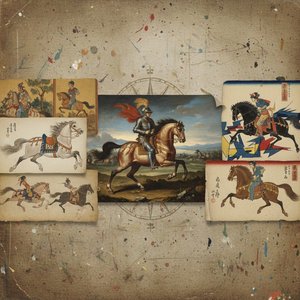
The Noble Steed on Canvas: A Historical & Artistic Exploration of Horse Painting Across Cultures
Explore the rich history of horse painting! Discover masterpieces from Stubbs to Munnings & learn about symbolism, techniques & artists. Find museum-quality reproductions at OriginalUniqueArt.


